Tuning Wiki

This is a historical revision. Read the current page or return to its history.

Page organisation in this revision
Page type
Technical article
Subject
Car makes
Parent
Section level
Applies to
No ECU-specific applicability
Tool groups
None
Manufacturers
Land Rover

Changes from revision 12 to revision 15

Removed text is struck through; added text is highlighted.

Country of origin: United Kingdom. Part of Car makes and the history of the motor car.

Land Rover began in 1948 as a utilitarian four-wheel-drive model built by the Rover Company and evolved into a global marque spanning rugged utility vehicles, family 4×4s and luxury SUVs. Since 2013 the brand has operated within Jaguar Land Rover Limited (JLR), owned by Tata Motors. Wikipedia: Land Rover; Wikipedia: Jaguar Land Rover.

History and ownership eras

Land Rover's engineering, chassis architecture and powertrain sourcing closely track changes in corporate ownership from post-war Rover through British Leyland, BMW, Ford and Tata Motors.
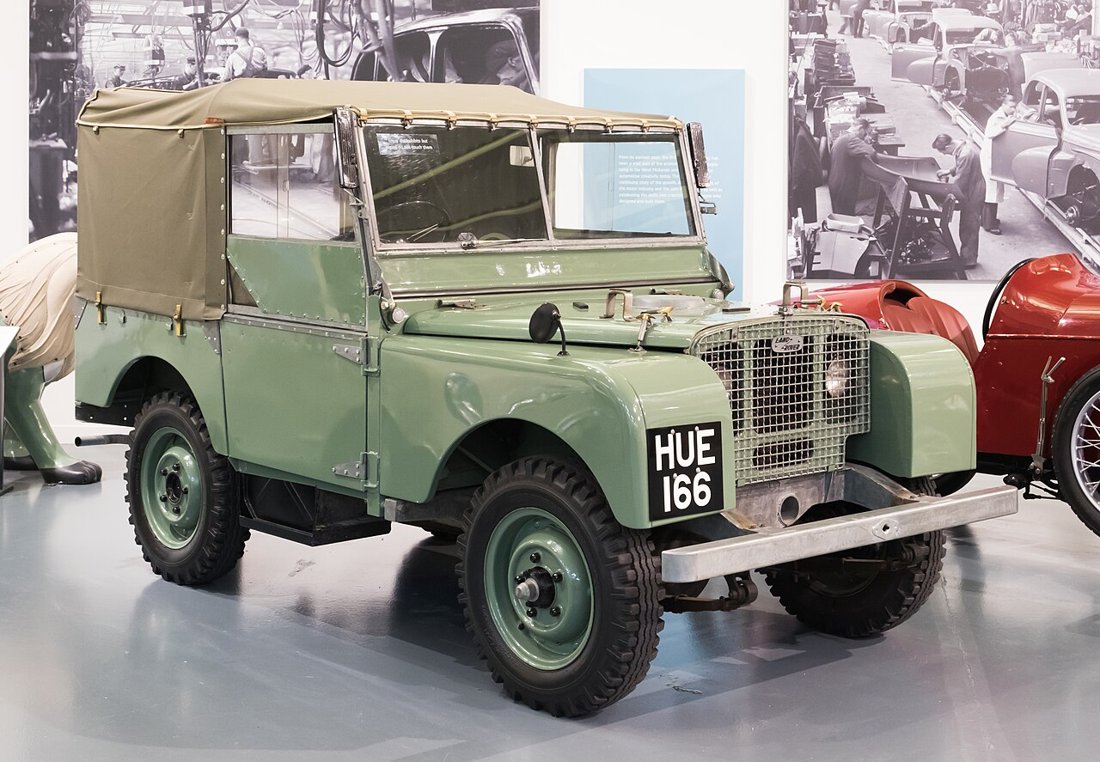
HUE 166, a 1948 pre-production Land Rover. Photo: DeFacto, Wikimedia Commons, CC BY-SA 4.0; resized and re-encoded.

1947–1967: Rover Company origins

In 1947, Rover chief designer Maurice Wilks and managing director Spencer Wilks developed a four-wheel-drive utility prototype ("Centre Steer") using a surplus Jeep chassis and axles. The first production Land Rover launched on 30 April 1948 at the Amsterdam Motor Show. Built at Solihull with corrosion-resistant aluminium-alloy body panels over a boxed-section steel ladder frame, early vehicles were designed for agricultural and field service with power take-off (PTO) provisions. Rover received a Royal Warrant from King George VI in 1951, and successive Series I (1948), Series II (1958) and Series IIA (1961) updates expanded wheelbases and engine choices. Wikipedia: Land Rover.

1967–1994: British Leyland, Range Rover and standalone Land Rover Ltd

Rover became part of Leyland Motor Corporation in 1967 and British Leyland (BL) in 1968. In 1970, the marque launched the original Range Rover, pairing permanent four-wheel drive and long-travel coil springs with the aluminium Rover V8. Following the 1975 Ryder Report, BL established Land Rover Limited as a separate subsidiary in 1978, and Rover passenger-car assembly moved out of Solihull to Cowley by 1980–1982 so Solihull could concentrate on Land Rover vehicles and engines. Coil-sprung utility replacements for the Series III arrived as the One Ten (1983) and Ninety (1984), renamed Defender in 1990 shortly after the 1989 debut of the family-oriented Discovery. Under British Aerospace from 1988, Land Rover operated inside Rover Group plc. Wikipedia: Land Rover; Wikipedia: Land Rover engines.

1994–2000: BMW ownership

BMW acquired Rover Group plc in January 1994, just before the second-generation Range Rover (P38A) launched in September 1994. Under BMW, Land Rover introduced its first unibody model, the Freelander (1997), developed the five-cylinder Td5 diesel (1998) from the Rover L-series architecture, and engineered the third-generation Range Rover (L322)—the first full-size Range Rover with a monocoque body and all-independent suspension—before selling Land Rover to Ford in 2000. Wikipedia: Land Rover; Wikipedia: Range Rover (L322).

2000–2008: Ford Premier Automotive Group

Ford purchased Land Rover in 2000 and placed it alongside Jaguar in its Premier Automotive Group. During this period, Land Rover introduced the Discovery 3 / LR3 (2004) on an Integrated Body Frame, the first Range Rover Sport (L320, 2005) and the Freelander 2 (2006). Rover V8 usage ended in 2004 and Solihull engine production closed in 2007 as Land Rover adopted Jaguar AJ-V8 petrol engines, Ford/PSA Lion V6/V8 diesels (AJD) and Ford Duratorq four-cylinder diesels. Wikipedia: Land Rover; Wikipedia: Land Rover engines.

2008–present: Tata Motors and Jaguar Land Rover

Tata Motors completed its acquisition of Jaguar and Land Rover from Ford on 2 June 2008, and merged Land Rover Limited and Jaguar Cars Limited into Jaguar Land Rover Limited on 1 January 2013. JLR expanded manufacturing to Halewood (Range Rover Evoque and Discovery Sport), Nitra in Slovakia (Discovery 5 and Defender L663), Wolverhampton's Engine Manufacturing Centre (modular Ingenium petrol and diesel engines from 2015), and overseas sites in India, Brazil and China (Chery Jaguar Land Rover). Traditional body-on-frame construction ended when the classic Defender finished in 2016 and the Discovery 5 moved to the aluminium D7u monocoque in 2017, followed by the D7x Defender (L663, 2020) and MLA-Flex Range Rover (L460) and Range Rover Sport (L461) in 2022 with mild-hybrid, plug-in hybrid and electric powertrains. Wikipedia: Jaguar Land Rover; Wikipedia: Jaguar Land Rover car platforms.

PeriodOwner / corporate structureKey engineering and model milestones 1948–1967Rover CompanySeries I, II and IIA; ladder-frame alloy utility 4×4s, 1.6/2.0 IOE and 2.25-litre OHV fours. 1967–1986Leyland / British Leyland (Land Rover Ltd from 1978)Range Rover (1970) with Rover V8, Series III (1971), One Ten (1983) and Ninety (1984). 1986–1994Rover Group (British Aerospace from 1988)200Tdi (1989) and 300Tdi (1994) diesels, Discovery (1989), Defender naming (1990). 1994–2000BMWRange Rover P38A (1994), Freelander (1997), Td5 inline-five (1998), L322 development. 2000–2008Ford Motor Company (Premier Automotive Group)Range Rover L322 (2001), Discovery 3 (2004), Range Rover Sport (2005), Freelander 2 (2006), AJD/AJ-V8 transition. 2008–presentTata Motors (Jaguar Land Rover Ltd from 2013)Range Rover Evoque (2011), aluminium L405/L494/L462, Ingenium engines (2015), Velar (2017), Defender L663 (2020), MLA-Flex L460/L461 (2022).

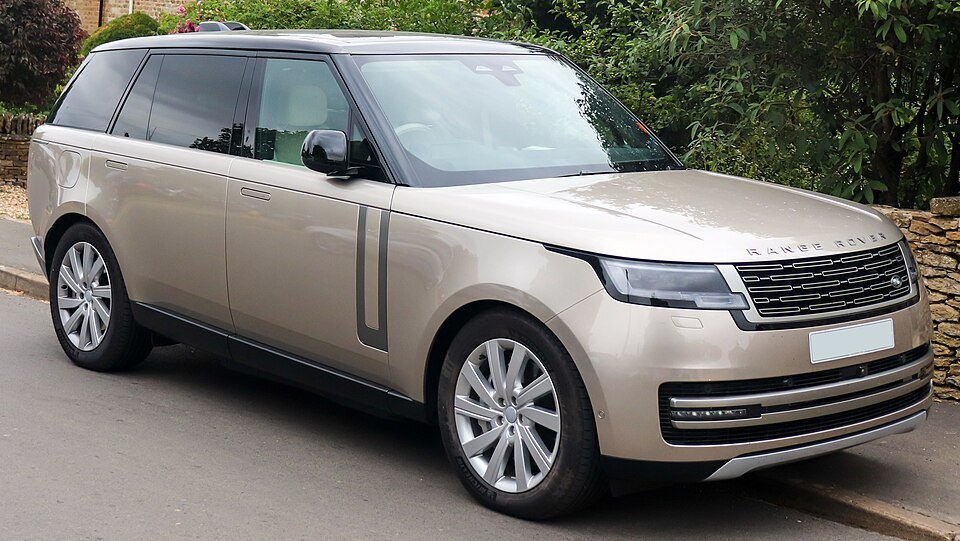
A later-generation Range Rover; the pictured vehicle is a P440e. Photo: Vauxford, Wikimedia Commons, CC BY-SA 4.0; resized and re-encoded.

Model families and generations

Each Land Rover model family has its own dedicated Tuning Wiki guide covering full generation histories, body styles, complete engine lists, transmissions and ECUs.
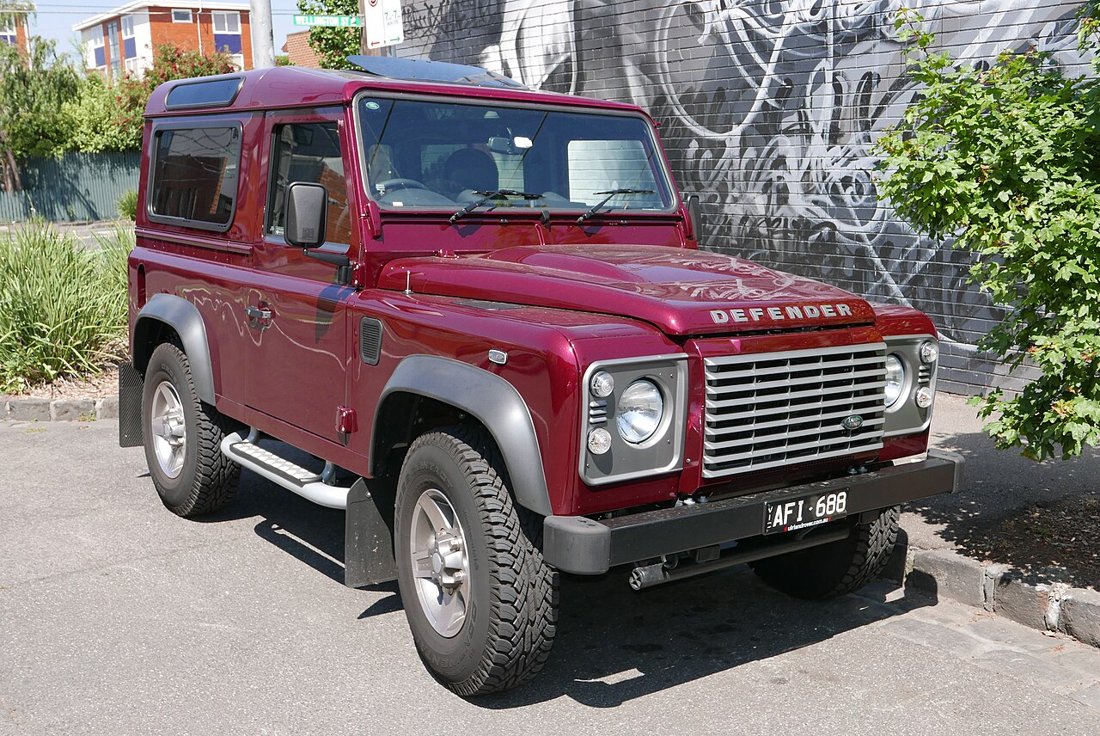
A classic Land Rover Defender 90 (L316). Photo: OSX, Wikimedia Commons, Public domain; resized and re-encoded.

Model familyGenerations and productionPlatform and key characteristicsDedicated model guide Series I, II, IIA & III1948–1985Boxed ladder frame, leaf springs, part-time 4WD; 1.6/2.0 IOE, 2.0/2.25 petrol and diesel fours, 2.6 six and 3.5 V8 (Stage One).Land Rover Series I, II and III: models and engines Ninety / One Ten / Classic Defender (L316)1983–2016Ladder frame with coil springs and permanent 4WD; 2.25/2.5 fours, Rover V8, 200Tdi, 300Tdi, Td5, 2.4/2.2 Duratorq and Works V8.Land Rover Defender classic: models and engines Defender (L663)2020–presentD7x aluminium monocoque in 90, 110 and 130 body styles; 2.0/3.0 Ingenium petrol and diesel, P400e PHEV, 5.0 AJ133 SC V8 and 4.4 twin-turbo BMW S68 (OCTA).Land Rover Defender (L663): models and engines Range RoverClassic (1970–1995), P38A (1994–2001), L322 (2001–2012), L405 (2012–2021), L460 (2022–present)Evolved from coil-sprung ladder frame (Classic/P38A) to steel unibody (L322), D7u aluminium monocoque (L405) and MLA-Flex (L460).Range Rover: generations and selected engines Range Rover SportL320 (2005–2013), L494 (2013–2022), L461 (2022–present)L320 used an Integrated Body Frame shared with Discovery 3; L494 moved to D7u aluminium unibody; L461 uses MLA-Flex (incl. SVR & SV).Range Rover Sport: generations and engines Range Rover EvoqueL538 (2011–2018), L551 (2018–present)Transverse D8/PTA platforms (3-door, 5-door and Convertible), 2WD and AWD, Ford EcoBoost/Duratorq then Ingenium I3/I4 and P300e PHEV.Range Rover Evoque: generations and engines Range Rover VelarL560 (2017–present)Longitudinal D7a aluminium architecture; Ingenium I4/I6, AJD V6, AJ126 SC V6, P400e PHEV and 5.0 AJ133 SC V8 SVAutobiography Dynamic.Range Rover Velar: models and engines Discovery1 (1989–1998), 2 (1998–2004), 3/LR3 (2004–2009), 4/LR4 (2009–2016), 5/L462 (2017–present)Moved from Range Rover-derived ladder frame (1 & 2) to Integrated Body Frame (3 & 4) and D7u aluminium monocoque (5).Land Rover Discovery: generations and engines FreelanderFreelander 1 L314 (1997–2006), Freelander 2/LR2 L359 (2006–2014)Land Rover's first monocoque; Rover K/KV6/L-Series and BMW M47R (L314), then Ford EUCD with Volvo SI6, EcoBoost and DW12/Duratorq (L359).Land Rover Freelander: generations and engines Discovery SportL550 (2014–present)Transverse D8 (then PTA) compact 5+2 SUV replacing Freelander 2; Ford EcoBoost/Duratorq (MY2015), Ingenium I4/I3 PHEV, ZF 9HP / Aisin 8-auto.Land Rover Discovery Sport: models and engines

Selected cars and engines

Examples below highlight notable technical milestones and forced-induction applications rather than a complete production list. Engine and equipment specifications vary with year and market.

CarWhy it mattersEvidenceSeries I / DefenderRugged four-wheel-drive vehicles spanning several eras; the original Series I and later Defenders are distinct models.Model referenceRange RoverA luxury-oriented four-wheel-drive range with multiple generations and engine options.Model referenceRange Rover supercharged 5.0 V8, selected applicationsThe Eaton guide records specified factory TVS1900 examples; confirm vehicle and OE supercharger part number.Eaton fitment guideDiscoveryA family-oriented four-wheel-drive range produced across five generations.Model referenceDefender OCTA (L663) & L460 / L461 V8Selected 2024+ models adopt the 4.4-litre twin-turbo mild-hybrid BMW S68 V8 alongside earlier N63 applications on L460.BMW S68 engines; Defender (L663)

More models and representative engines

These are specific examples rather than every engine offered. Equipment, output and capacity can change with model year and market; identify the exact vehicle before ordering parts.

A Discovery 3 TDV6. Photo: Vauxford, Wikimedia Commons, CC BY-SA 4.0; resized and re-encoded.

Model and versionEngine or powertrainEvidenceDefender Td52.5-litre Td5 five-cylinder turbo diesel with electronic unit injectors in the specified Defender generation.Manufacturer or technical sourceDiscovery 3 TDV62.7-litre V6 turbo diesel (AJD-V6) in the specified Discovery 3 version.Manufacturer or technical sourceRange Rover Classic V8Early Range Rover production used a 3.5-litre Rover V8 petrol engine; later capacities (3.9 and 4.2) and diesel versions differed.Manufacturer or technical sourceFreelander TD42.0-litre four-cylinder turbo diesel (BMW M47R) in the specified first-generation Td4.Manufacturer or technical sourceFreelander 2 SD42.2-litre four-cylinder turbo diesel in the specified Freelander 2 version; separate from the earlier BMW-derived Td4.Freelander guide; EDC16CP39 reference

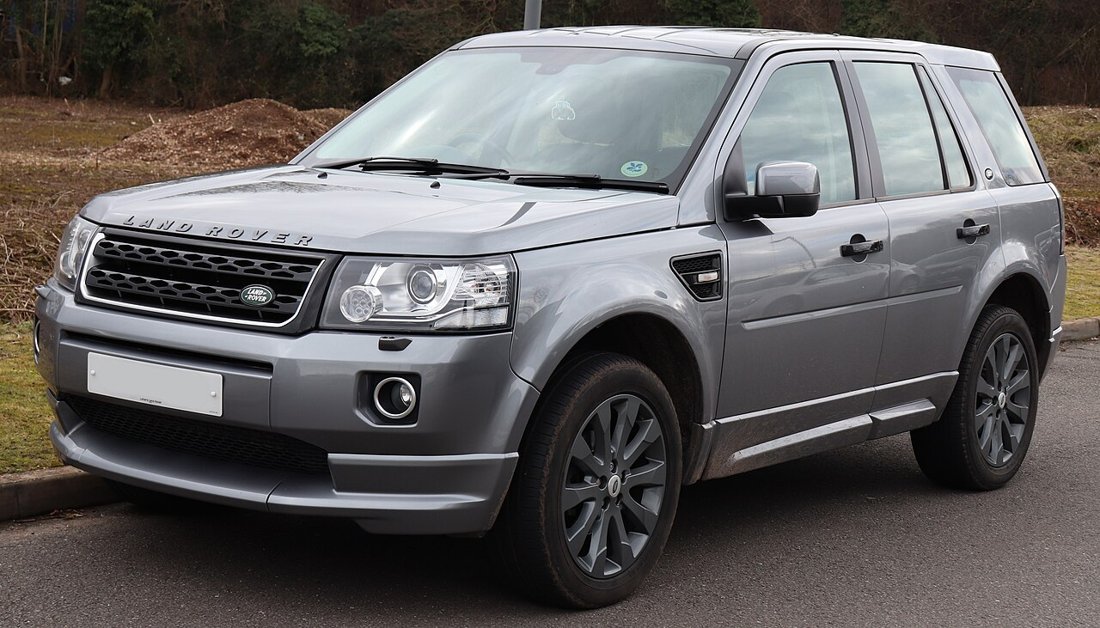
A Land Rover Freelander 2 SD4. Photo: Vauxford, Wikimedia Commons, CC BY-SA 4.0; resized and re-encoded.

Prototypes, concept cars and development projects

Alongside series-production models, Rover, Land Rover and JLR built experimental prototypes, motor-show concepts and engineering testbeds. For the full catalogue see Land Rover military, prototype and specialist vehicles.

Vehicle or projectPeriodEngineering details and outcomeSource Centre Steer prototype1947Single experimental Land Rover prototype built on a Willys Jeep chassis and axles with a Rover P3 1.6-litre petrol engine, P3 gearbox and centrally mounted steering wheel; replaced by side-steered pre-production Series I vehicles (including HUE 166) before the 1948 launch.Wikipedia: Centre Steer Road Rover1951–1958Rover P4-based two-wheel-drive estate/utility development cars led by Gordon Bashford to combine saloon comfort with rugged chassis hardware; shelved in 1958 before work resumed in 1966 on what became the Range Rover.Wikipedia: Range Rover Project "BOP" / "Golden Rod"1966Rover North America prototype fitting a Buick-Olds-Pontiac aluminium V8 into an 88-inch Series IIA Station Wagon; helped pave the way for the factory Rover V8-powered Series III Stage One (1979–1985).Wikipedia: Land Rover series Range Rover "Velar" prototypes1967–1970First Range Rover prototype (SYE 157F, 1967), followed by 40 pre-production development vehicles including 26 road-registered "Velar"-badged test cars (YVB 151H–YVB 177H) used to disguise the 1970 Range Rover prior to launch.Wikipedia: Range Rover 101FC 6×6 powered-trailer trials1970sSmall batch of pre-production 101 Forward Control prototypes fitted with a PTO-driven trailer axle to create a 6×6; abandoned before series production due to instability when turning or traversing rough terrain.Wikipedia: 101 Forward Control Project Iceberg1979–1983British Leyland and Perkins Engines project to develop naturally aspirated (~100 hp) and turbocharged (~150 hp) diesel versions of the 3.5-litre Rover V8; cancelled due to alloy head/cooling failures and Solihull line constraints, though strengthened crankshaft castings carried over to the 4.2-litre Range Rover Classic LSE.Wikipedia: Rover V8 engine Land Rover Llama (110 Forward Control)1985–1988Eleven prototypes and one production vehicle built on a thickened One Ten chassis with a detuned 3.5-litre Rover V8, LT85 five-speed gearbox and LT230 transfer box to bid for an MoD 101FC replacement; cancelled in 1988 after failing to secure the military contract.Wikipedia: Land Rover Llama Project Jay & Project CB40 (Pathfinder)Late 1980s–1990sInternal development codenames for the Range Rover-chassis Discovery (launched 1989) and Rover Group's Canley Building 40 unibody compact 4×4 that launched as the Freelander (1997).Discovery; Freelander Range Stormer2004Land Rover's first complete motor-show concept (2004 Detroit Auto Show): a 3-door gullwing performance coupé that previewed the 2005 Range Rover Sport (L320).Wikipedia: Range Rover Sport Land Rover LRX & Freelander 2 ERAD2008The 2008 Detroit LRX concept previewed the Range Rover Evoque (2011) with a proposed Electric Rear Axle Drive (ERAD) hybrid system; a pair of Freelander 2 ERAD diesel-electric prototypes also appeared at the 2008 London Motor Show.Wikipedia: Land Rover DC100 & DC100 Sport2011Pair of 100-inch-wheelbase Defender replacement concepts (3-door 2.0 diesel and 2-seat 2.0 petrol pickup) unveiled at the 2011 Frankfurt Motor Show; not built for production.Wikipedia: Land Rover Defender Leopard 1 & Electric Defender2013Zero-emission Defender research vehicles (70 kW / 330 N⋅m electric drive, ~80 km range), including the All-Terrain Electric Defender shown at the 2013 Geneva Motor Show.Wikipedia: Land Rover Discovery Vision Concept20142014 New York Auto Show concept previewing Discovery 5 (L462) styling along with "Transparent Bonnet" and laser-assisted lighting technology.Wikipedia: Land Rover Discovery Project Cortex & Remote-Control Defender2018–2019Off-road autonomous driving research initiative (Project Cortex, 2018) and low-speed external remote-control Defender system announced in 2019.Wikipedia: Land Rover Defender Wolf Series II2026D7x-platform military tender vehicle launched in September 2026 to compete for the UK MoD Light Mobility Vehicle programme.Wikipedia: JLR platforms

Military, armoured and specialist conversions

Land Rovers have served extensively with British, Commonwealth and international armed forces, police services and emergency agencies, alongside specialist agricultural, fire, forestry and off-road racing conversions. See the dedicated Land Rover military, prototype and specialist vehicles page for full specifications.

Purpose-built and standard military models

Vehicle or variantService / periodRole and technical differencesSource Series I–III GS, FFR & B40 trialsUK MoD & Commonwealth, 1948–1980sEarly Army trials tested a Rolls-Royce B40 engine in an 81-inch Series I before adopting standard Rover/Land Rover engines. Military General Service (12V) and Fitted For Radio (24V, suppressed ignition, heavy-duty generator) fleets included 88- and 109-inch models and late Series III heavy-duty 109 soft-tops.Wikipedia: Land Rover series 1/2-ton Lightweight ("Airportable")UK, Dutch & Danish forces, 1968–1984Narrowed by 4 inches (100 mm) on an 88-inch Series IIA/III chassis with detachable doors, upper body sides, windscreen and tilt so it could fit a standard pallet and be lifted by a Westland Wessex helicopter; export Dutch/Danish models used 2.25-litre diesels.Wikipedia: 1/2 ton Lightweight 101 Forward Control ("One Tonne FC")British Army & RAF Regiment, 1972–1978Cab-over gun tractor powered by a 3.5-litre Rover V8 under the cab to tow the L118 Light Gun or Rapier missile/radar trailers and maximise aircraft cargo packing; also built in ambulance, radio and ~21 electronic-warfare "Vampire" variants.Wikipedia: 101 Forward Control Land Rover Wolf (Defender XD) & WMIK / RWMIK+UK MoD & export forces, 1994–presentUprated military Defender 90 (TUL HS) and 110 (TUM HS) powered by the 300Tdi with strengthened chassis/axles. The Weapons Mount Installation Kit (WMIK / RWMIK+, developed with Ricardo plc) strips the bodywork for roll cages and heavy weapon mounts; also operated by the Netherlands, Lithuania, Czech Republic (Defender Military Armoured 4) and Lebanon.Wikipedia: Land Rover Wolf Series IIA/III & Defender 130 AmbulancesBritish Armed Forces, 1960s–present109-inch Series IIA/III (FV18067, bodywork by Marshalls of Cambridge) and later Defender 130 military ambulances.Wikipedia: Land Rover Australian Army Gunbuggy, Perentie 4×4/6×6 & LRPV / SRVAustralian Army & SASR, 1950s–2019+Included 72 Series 2 106 mm recoilless-rifle anti-tank "gunbuggies", followed by the locally assembled Land Rover Perentie (over 2,500 4×4 and 400 6×6 110-derived units with galvanised chassis and Isuzu 3.9-litre 4BD1 / 4BD1-T diesels), adapted into 6×6 Long Range Patrol Vehicles (LRPV) and 4×4 Surveillance Reconnaissance Vehicles (SRV).Perentie; LRPV New Zealand Army Stage One V8 & "Skippy"New Zealand Army, 1951–2006Early Australian-built Series I–IIA batches (including BLMC NZ-remanufactured "Skippy" vehicles) followed by 566 109-inch Stage One V8 24V FFR vehicles (1982–1986), ~20 of which received 300Tdi and disc-brake conversions for UNPROFOR Bosnia duty.Wikipedia: Land Rover series

Special forces, armoured patrol and specialist conversions

SAS "Pink Panther" (LRDPV): Roughly 100 Series IIA 109-inch vehicles converted by Marshalls of Cambridge for desert reconnaissance (doors and windscreens removed, light pink camouflage, sun compass, grenade launchers, machine-gun ring and long-range tanks), followed later by Series III and Defender 90/110 patrol conversions. Wikipedia: Land Rover series. US Army 75th Ranger Regiment RSOV (1992): Sixty Defender 110-based Ranger Special Operations Vehicles built by Land Rover's Special Operations Vehicle Department in weapons-carrier, medical and communications configurations. Wikipedia: RSOV. Shorts Shorland (1965–1990s): Over 1,000 armoured internal-security patrol cars built by Short Brothers in Belfast, initially on the Series IIA 109 chassis with a Ferret-derived machine-gun turret and continuing through Defender-based Series 5 vehicles. Wikipedia: Shorland. Northern Ireland & armoured Defender patrol vehicles (VPK, Hotspur, Tangi, Snatch, Pangolin): Ranged from add-on Vehicle Protection Kits (VPK) and the Wales-built 1970s Hotspur to the Royal Ulster Constabulary's coil-sprung, air-conditioned Land Rover Tangi (1986), Glover Webb APV, the NP Aerospace / Ricardo Snatch (CAMAC CAV 100, 1992 onwards on heavy-duty 110 V8/300Tdi chassis, later upgraded as Snatch 2 / Otokar chassis builds), PSNI Pangolin, and factory B6-armoured Range Rover / Discovery 4 Sentinel builds. Export armoured Defenders also include the MDT David, VBL Gladiador and INKAS Superior. Land Rover; Snatch; Tangi. Forward Control, fire appliances, tracked & expedition builds: Civilian/military heavy-duty derivations include the Series IIA & IIB Forward Control (1962–1974) and 1-Ton 109 (including MoD TACR1 fire tenders), Carmichael & Sons 6×6 Range Rover RAF airfield fire appliances (TACR2), RAF Mountain Rescue Service fleets, Dunlop rail-road Series IIA conversions, James Cuthbertson's tracked Series II, Roadless Traction's "Forest Rover" on tractor tyres, and the Series III V8-powered Centaur half-track (using an Alvis Scorpion belt drive). Land Rover; Land Rover series. Motorsport, SVO & Bowler: Factory and specialist off-road vehicles include Camel Trophy and Land Rover G4 Challenge builds, the 250 North American Discovery XD Special Vehicles editions (1997), and Bowler Motors rally-raid machines (Tomcat, Wildcat, Nemesis and Defender-based Project CSP 575), acquired by JLR Special Vehicle Operations (SVO) in 2019.

Engine families across Land Rover eras

Because Land Rover changed corporate parents several times, vehicles of a similar badge can house completely unrelated engine architectures and fuel-injection systems.

Engine familyRepresentative capacitiesFuel and inductionSelected Land Rover applications and wiki links Rover IOE & Land Rover OHV utility fours1.6, 2.0, 2.25, 2.5 L (petrol & diesel); 2.6 L petrol I6Solex/Zenith/Weber or SU carburettors; mechanical CAV/Lucas rotary pumps; 19J Diesel Turbo (1986)Series I–III, Ninety / One Ten, early Defender Land Rover 200Tdi & 300Tdi2.5 L (2,495 cc) I4Direct-injection turbo diesel with intercooler; Bosch VE rotary pump (EDC on auto 300Tdi)Defender, Discovery 1, Range Rover Classic (1989–2006); 200Tdi & 300Tdi tuning guide Land Rover Td5 (10P / 15P / 16P)2.5 L (2,498 cc) I5Cam-driven Lucas electronic unit injectors, Garrett GT2052S turbo; last Solihull-built Land Rover engineDefender and Discovery 2 (1998–2007); Td5 tuning guide Rover V8 (Buick-derived)3.5, 3.9, 4.0, 4.2, 4.6 L V8SU/Stromberg carbs, then Lucas 4CU, 14CUX, GEMS and Bosch M5.2.1Range Rover Classic & P38A, Discovery 1 & 2, Defender V8, 101FC (1970–2004) BMW-era inline-fours, sixes & V8s2.0 I4 diesel (M47R), 2.5 I6 diesel (M51), 2.9 I6 diesel (M57), 4.4 V8 (M62TUB44)Common-rail or rotary-pump diesel; petrol Bosch ME7.2Freelander 1 Td4, Range Rover P38A 2.5 D, Range Rover L322 (early TD6 & 4.4 V8) Ford / PSA diesels & Jaguar petrol V6/V8s2.2/2.4 Duratorq I4; 2.7/3.0 AJD V6; 3.6/4.4 AJD V8; 3.0 AJ126 SC V6; 4.4/4.2/5.0 AJ-V8Common-rail piezo/solenoid diesel (EDC16CP39, EDC17CP42, etc.); petrol N/A & Eaton TVS superchargedDefender (2007–2016; 2.4/2.2 TDCi guide), Freelander 2, Discovery 3/4, Range Rover L322/L405, Sport, Velar JLR Ingenium & modern BMW V81.5 I3 (AJ150), 2.0 I4 (AJ200/D), 3.0 I6 (AJ300/D); 4.4 twin-turbo BMW S68 / N63Turbocharged, twincharged / 48V MHEV and PHEV; selected 2021+ diesels use Bosch MD1CP017Evoque, Discovery Sport, Velar, Discovery 5, Defender L663, Range Rover L405/L460, Sport L494/L461Engine familyRepresentative capacitiesFuel and inductionSelected Land Rover applications and wiki links Rover IOE & Land Rover OHV utility fours1.6, 2.0, 2.25, 2.5 L (petrol & diesel); 2.6 L petrol I6Solex/Zenith/Weber or SU carburettors; mechanical CAV/Lucas rotary pumps; 19J Diesel Turbo (1986)Series I–III, Ninety / One Ten, early Defender Land Rover 200Tdi & 300Tdi2.5 L (2,495 cc) I4Direct-injection turbo diesel with intercooler; Bosch VE rotary pump (EDC on auto 300Tdi)Defender, Discovery 1, Range Rover Classic (1989–2006) Land Rover Td5 (10P / 15P / 16P)2.5 L (2,498 cc) I5Cam-driven Lucas electronic unit injectors, Garrett GT2052S turbo; last Solihull-built Land Rover engineDefender and Discovery 2 (1998–2007); Td5 tuning guide Rover V8 (Buick-derived)3.5, 3.9, 4.0, 4.2, 4.6 L V8SU/Stromberg carbs, then Lucas 4CU, 14CUX, GEMS and Bosch M5.2.1Range Rover Classic & P38A, Discovery 1 & 2, Defender V8, 101FC (1970–2004) BMW-era inline-fours, sixes & V8s2.0 I4 diesel (M47R), 2.5 I6 diesel (M51), 2.9 I6 diesel (M57), 4.4 V8 (M62TUB44)Common-rail or rotary-pump diesel; petrol Bosch ME7.2Freelander 1 Td4, Range Rover P38A 2.5 D, Range Rover L322 (early TD6 & 4.4 V8) Ford / PSA diesels & Jaguar petrol V6/V8s2.2/2.4 Duratorq I4; 2.7/3.0 AJD V6; 3.6/4.4 AJD V8; 3.0 AJ126 SC V6; 4.4/4.2/5.0 AJ-V8Common-rail piezo/solenoid diesel (EDC16CP39, EDC17CP42, etc.); petrol N/A & Eaton TVS superchargedDefender (2007–2016), Freelander 2, Discovery 3/4, Range Rover L322/L405, Sport, Velar JLR Ingenium & modern BMW V81.5 I3 (AJ150), 2.0 I4 (AJ200/D), 3.0 I6 (AJ300/D); 4.4 twin-turbo BMW S68 / N63Turbocharged, twincharged / 48V MHEV and PHEV; selected 2021+ diesels use Bosch MD1CP017Evoque, Discovery Sport, Velar, Discovery 5, Defender L663, Range Rover L405/L460, Sport L494/L461

Aftermarket tuners and engineering specialists

Alongside factory Special Vehicle Operations (SVO), a long-established independent tuning and restoration sector supports Land Rover engines, ECUs, drivetrains and bespoke builds. Each company below has its own dedicated page alongside the Land Rover aftermarket tuners and specialists directory.Rover V8 & classic engine specialists: RPi Engineering (Rover V8 builds, 3.5-to-4.6 upgrades, spares and LPG), Tornado Systems (Lucas 4CU/14CUX/GEMS, Bosch M5.2.1 and Omex/MoTeC/DTA mapping), V8 Developments (stroked/bored Rover V8s up to 5.4 L), Turner Engineering (remanufactured classic Land Rover engines & AMC heads) and JE Motorworks (Rover V8 tuning, Td5 remaps and bespoke V8 Defenders). Diesel ECU, turbo & cooling specialists: Alive Tuning, Bell Auto Services (BAS Remaps), IRB Developments, AlliSport, TD5Inside and Empire Tuning (Td5, Tdi, TDCi, TDV6/TDV8 and Ingenium calibrations, hybrid/VNT turbos and uprated intercoolers). Modern JLR V8, coachbuilt & motorsport specialists: Paramount Performance (5.0 SC V8 pulleys/Harrop/remaps), Overfinch, Twisted Automotive, Urban Automotive and Bowler Motors. Drivetrain, clutch & brake specialists: Ashcroft Transmissions (heavy-duty gearboxes, LT230 transfer cases, torque converters and diffs) and LOF Clutches (heavy-duty clutches, MT-82 shaft kits and big brake kits).Alongside factory Special Vehicle Operations (SVO), a long-established independent tuning and restoration sector supports Land Rover engines, ECUs, drivetrains and bespoke builds. See the full Land Rover aftermarket tuners and specialists directory for details and sources.Rover V8 & classic engine specialists: RPi Engineering (v8engines.com, Rover V8 builds, 3.5-to-4.6 upgrades, spares and LPG), Tornado Systems (tornadosystems.com, Lucas 4CU/14CUX/GEMS and Bosch M5.2.1 chip tuning & dyno mapping), V8 Developments (v8developments.co.uk, stroked/bored Rover V8s up to 5.4 L), Turner Engineering (turnerengineering.co.uk, remanufactured classic Land Rover engines) and JE Motorworks (jemotorworks.co.uk, Rover V8 tuning, Td5 remaps and bespoke V8 Defenders). Diesel ECU, turbo & cooling specialists: Alive Tuning, Bell Auto Services (BAS Remaps), IRB Developments, AlliSport, TD5Inside and Empire Tuning (Td5, Tdi, TDCi, TDV6/TDV8 and Ingenium calibrations, hybrid/VNT turbos and uprated intercoolers). Modern JLR V8, coachbuilt & motorsport specialists: Paramount Performance (5.0 SC V8 pulleys/Harrop/remaps), Overfinch, Twisted Automotive, Urban Automotive and Bowler Motors. Drivetrain, clutch & brake specialists: Ashcroft Transmissions (heavy-duty gearboxes, LT230 transfer cases, torque converters and diffs) and LOF Clutches.

Transmissions, ECUs and diagnostics

Drivetrain and electronic architectures also shifted across eras, affecting how workshops identify, diagnose and calibrate Land Rover vehicles:

Manual and early automatic gearboxes: Classic Defender and Discovery 1/2 models used five-speed LT77 and R380 manuals (and later six-speed MT-82 on 2007–2016 Defenders) alongside four-speed ZF 4HP22 automatics. Wikipedia: Land Rover Defender. ZF 5HP, 6HP, 8HP and 9HP automatics: Early L322 V8 models used the ZF 5HP24 (while early L322 TD6 used GM 5L40-E). Mid-2000s longitudinal models transitioned to the ZF 6HP26/6HP28 (with Land Rover-specific Bosch GS19.04, GS19.11 and Continental 5WK75020AA mechatronics), followed by the ZF 8HP on L405, L494, Discovery 4/5, Velar, Defender L663 and L460. Transverse Evoque and Discovery Sport automatics adopted the ZF 9HP48/9HP50 (JLR 9HP48 TCM; LR125943 9HP50 TCM). Diesel ECU identification and Td5 tuning: See Land Rover diesel tuning and ECU identification for MSB vs. NNN Td5 controllers, TD4 EDC17CP42 and mild-hybrid MD1CP017 considerations, 200Tdi and 300Tdi tuning guide, Land Rover Td5 tuning guide and 2.4 and 2.2 TDCi tuning guide. Diagnostics and CAN networks: Factory diagnostics evolved from TestBook and T4/T4H to JLR IDS, Symptom Driven Diagnostics (SDD), Pathfinder and TOPIx Cloud (Jaguar and Land Rover diagnostics; Land Rover diagnostics). Pre-DoIP JLR platforms share a 500 kbit/s HS-CAN and 125 kbit/s MS-CAN topology bridged by the cluster or gateway, moving to DoIP on 2017+ architectures (Jaguar and Land Rover CAN bus systems).Manual and early automatic gearboxes: Classic Defender and Discovery 1/2 models used five-speed LT77 and R380 manuals (and later six-speed MT-82 on 2007–2016 Defenders) alongside four-speed ZF 4HP22 automatics. Wikipedia: Land Rover Defender. ZF 5HP, 6HP, 8HP and 9HP automatics: Early L322 V8 models used the ZF 5HP24 (while early L322 TD6 used GM 5L40-E). Mid-2000s longitudinal models transitioned to the ZF 6HP26/6HP28 (with Land Rover-specific Bosch GS19.04, GS19.11 and Continental 5WK75020AA mechatronics), followed by the ZF 8HP on L405, L494, Discovery 4/5, Velar, Defender L663 and L460. Transverse Evoque and Discovery Sport automatics adopted the ZF 9HP48/9HP50 (JLR 9HP48 TCM; LR125943 9HP50 TCM). Diesel ECU identification and Td5 tuning: See Land Rover diesel tuning and ECU identification for MSB vs. NNN Td5 controllers, TD4 EDC17CP42 and mild-hybrid MD1CP017 considerations, and Land Rover Td5 tuning guide for map structures and validation. Diagnostics and CAN networks: Factory diagnostics evolved from TestBook and T4/T4H to JLR IDS, Symptom Driven Diagnostics (SDD), Pathfinder and TOPIx Cloud (Jaguar and Land Rover diagnostics; Land Rover diagnostics). Pre-DoIP JLR platforms share a 500 kbit/s HS-CAN and 125 kbit/s MS-CAN topology bridged by the cluster or gateway, moving to DoIP on 2017+ architectures (Jaguar and Land Rover CAN bus systems).

Identifying a car and engine

Use the VIN, market, model year and engine code when researching servicing, tuning or parts. A single model name or badge—such as Defender, TD4, V8 or Range Rover—may span ladder-frame or monocoque chassis, naturally aspirated, turbocharged, supercharged, mild-hybrid or plug-in hybrid powertrains, and Rover, BMW, Ford, Jaguar or Ingenium controllers. Factory fitment, military/armoured builds and aftermarket conversions are distinguished in the linked guides.

Related marques: Rover: history and cars and Jaguar: history and cars.

Sources and related reading

See Land Rover engine failures and common problems for sourced timing-drive, crankshaft and Ingenium issues and service checks.See Land Rover petrol tuning and ECU identification for engine-specific maps, upgrades and validation.

Wikipedia: Land Rover — marque history, timeline, ownership eras, concepts, military variants and engines. Wikipedia: Jaguar Land Rover — 2008–present corporate structure, plants and operations. Wikipedia: Land Rover engines — Solihull-designed four- and five-cylinder engines (1957–2007). Wikipedia: Ingenium engine family and Jaguar Land Rover car platforms — modern modular engines and D7/D8/PTA/MLA-Flex platforms. Tuning Wiki: Land Rover aftermarket tuners and specialists. Tuning Wiki: Land Rover diesel tuning and ECU identification. Tuning Wiki: illustrated turbocharged-car timeline. Tuning Wiki: supercharger types and Eaton guides.

Rendered revisions

Open each version to inspect formatting, tables and photographs.

Revision 12: Land Rover: history and cars

Country of origin: United Kingdom. Part of Car makes and the history of the motor car.

Land Rover began in 1948 as a utilitarian four-wheel-drive model built by the Rover Company and evolved into a global marque spanning rugged utility vehicles, family 4×4s and luxury SUVs. Since 2013 the brand has operated within Jaguar Land Rover Limited (JLR), owned by Tata Motors. Wikipedia: Land Rover; Wikipedia: Jaguar Land Rover.

History and ownership eras

Land Rover's engineering, chassis architecture and powertrain sourcing closely track changes in corporate ownership from post-war Rover through British Leyland, BMW, Ford and Tata Motors.

HUE 166, a 1948 pre-production Land Rover Series I.
HUE 166, a 1948 pre-production Land Rover. Photo: DeFacto, Wikimedia Commons, CC BY-SA 4.0; resized and re-encoded.

1947–1967: Rover Company origins

In 1947, Rover chief designer Maurice Wilks and managing director Spencer Wilks developed a four-wheel-drive utility prototype ("Centre Steer") using a surplus Jeep chassis and axles. The first production Land Rover launched on 30 April 1948 at the Amsterdam Motor Show. Built at Solihull with corrosion-resistant aluminium-alloy body panels over a boxed-section steel ladder frame, early vehicles were designed for agricultural and field service with power take-off (PTO) provisions. Rover received a Royal Warrant from King George VI in 1951, and successive Series I (1948), Series II (1958) and Series IIA (1961) updates expanded wheelbases and engine choices. Wikipedia: Land Rover.

1967–1994: British Leyland, Range Rover and standalone Land Rover Ltd

Rover became part of Leyland Motor Corporation in 1967 and British Leyland (BL) in 1968. In 1970, the marque launched the original Range Rover, pairing permanent four-wheel drive and long-travel coil springs with the aluminium Rover V8. Following the 1975 Ryder Report, BL established Land Rover Limited as a separate subsidiary in 1978, and Rover passenger-car assembly moved out of Solihull to Cowley by 1980–1982 so Solihull could concentrate on Land Rover vehicles and engines. Coil-sprung utility replacements for the Series III arrived as the One Ten (1983) and Ninety (1984), renamed Defender in 1990 shortly after the 1989 debut of the family-oriented Discovery. Under British Aerospace from 1988, Land Rover operated inside Rover Group plc. Wikipedia: Land Rover; Wikipedia: Land Rover engines.

1994–2000: BMW ownership

BMW acquired Rover Group plc in January 1994, just before the second-generation Range Rover (P38A) launched in September 1994. Under BMW, Land Rover introduced its first unibody model, the Freelander (1997), developed the five-cylinder Td5 diesel (1998) from the Rover L-series architecture, and engineered the third-generation Range Rover (L322)—the first full-size Range Rover with a monocoque body and all-independent suspension—before selling Land Rover to Ford in 2000. Wikipedia: Land Rover; Wikipedia: Range Rover (L322).

2000–2008: Ford Premier Automotive Group

Ford purchased Land Rover in 2000 and placed it alongside Jaguar in its Premier Automotive Group. During this period, Land Rover introduced the Discovery 3 / LR3 (2004) on an Integrated Body Frame, the first Range Rover Sport (L320, 2005) and the Freelander 2 (2006). Rover V8 usage ended in 2004 and Solihull engine production closed in 2007 as Land Rover adopted Jaguar AJ-V8 petrol engines, Ford/PSA Lion V6/V8 diesels (AJD) and Ford Duratorq four-cylinder diesels. Wikipedia: Land Rover; Wikipedia: Land Rover engines.

2008–present: Tata Motors and Jaguar Land Rover

Tata Motors completed its acquisition of Jaguar and Land Rover from Ford on 2 June 2008, and merged Land Rover Limited and Jaguar Cars Limited into Jaguar Land Rover Limited on 1 January 2013. JLR expanded manufacturing to Halewood (Range Rover Evoque and Discovery Sport), Nitra in Slovakia (Discovery 5 and Defender L663), Wolverhampton's Engine Manufacturing Centre (modular Ingenium petrol and diesel engines from 2015), and overseas sites in India, Brazil and China (Chery Jaguar Land Rover). Traditional body-on-frame construction ended when the classic Defender finished in 2016 and the Discovery 5 moved to the aluminium D7u monocoque in 2017, followed by the D7x Defender (L663, 2020) and MLA-Flex Range Rover (L460) and Range Rover Sport (L461) in 2022 with mild-hybrid, plug-in hybrid and electric powertrains. Wikipedia: Jaguar Land Rover; Wikipedia: Jaguar Land Rover car platforms.

PeriodOwner / corporate structureKey engineering and model milestones
1948–1967Rover CompanySeries I, II and IIA; ladder-frame alloy utility 4×4s, 1.6/2.0 IOE and 2.25-litre OHV fours.
1967–1986Leyland / British Leyland (Land Rover Ltd from 1978)Range Rover (1970) with Rover V8, Series III (1971), One Ten (1983) and Ninety (1984).
1986–1994Rover Group (British Aerospace from 1988)200Tdi (1989) and 300Tdi (1994) diesels, Discovery (1989), Defender naming (1990).
1994–2000BMWRange Rover P38A (1994), Freelander (1997), Td5 inline-five (1998), L322 development.
2000–2008Ford Motor Company (Premier Automotive Group)Range Rover L322 (2001), Discovery 3 (2004), Range Rover Sport (2005), Freelander 2 (2006), AJD/AJ-V8 transition.
2008–presentTata Motors (Jaguar Land Rover Ltd from 2013)Range Rover Evoque (2011), aluminium L405/L494/L462, Ingenium engines (2015), Velar (2017), Defender L663 (2020), MLA-Flex L460/L461 (2022).
A later-generation Range Rover; the pictured vehicle is a P440e.
A later-generation Range Rover; the pictured vehicle is a P440e. Photo: Vauxford, Wikimedia Commons, CC BY-SA 4.0; resized and re-encoded.

Model families and generations

Each Land Rover model family has its own dedicated Tuning Wiki guide covering full generation histories, body styles, complete engine lists, transmissions and ECUs.

A classic Land Rover Defender 90.
A classic Land Rover Defender 90 (L316). Photo: OSX, Wikimedia Commons, Public domain; resized and re-encoded.
Model familyGenerations and productionPlatform and key characteristicsDedicated model guide
Series I, II, IIA & III1948–1985Boxed ladder frame, leaf springs, part-time 4WD; 1.6/2.0 IOE, 2.0/2.25 petrol and diesel fours, 2.6 six and 3.5 V8 (Stage One).Land Rover Series I, II and III: models and engines
Ninety / One Ten / Classic Defender (L316)1983–2016Ladder frame with coil springs and permanent 4WD; 2.25/2.5 fours, Rover V8, 200Tdi, 300Tdi, Td5, 2.4/2.2 Duratorq and Works V8.Land Rover Defender classic: models and engines
Defender (L663)2020–presentD7x aluminium monocoque in 90, 110 and 130 body styles; 2.0/3.0 Ingenium petrol and diesel, P400e PHEV, 5.0 AJ133 SC V8 and 4.4 twin-turbo BMW S68 (OCTA).Land Rover Defender (L663): models and engines
Range RoverClassic (1970–1995), P38A (1994–2001), L322 (2001–2012), L405 (2012–2021), L460 (2022–present)Evolved from coil-sprung ladder frame (Classic/P38A) to steel unibody (L322), D7u aluminium monocoque (L405) and MLA-Flex (L460).Range Rover: generations and selected engines
Range Rover SportL320 (2005–2013), L494 (2013–2022), L461 (2022–present)L320 used an Integrated Body Frame shared with Discovery 3; L494 moved to D7u aluminium unibody; L461 uses MLA-Flex (incl. SVR & SV).Range Rover Sport: generations and engines
Range Rover EvoqueL538 (2011–2018), L551 (2018–present)Transverse D8/PTA platforms (3-door, 5-door and Convertible), 2WD and AWD, Ford EcoBoost/Duratorq then Ingenium I3/I4 and P300e PHEV.Range Rover Evoque: generations and engines
Range Rover VelarL560 (2017–present)Longitudinal D7a aluminium architecture; Ingenium I4/I6, AJD V6, AJ126 SC V6, P400e PHEV and 5.0 AJ133 SC V8 SVAutobiography Dynamic.Range Rover Velar: models and engines
Discovery1 (1989–1998), 2 (1998–2004), 3/LR3 (2004–2009), 4/LR4 (2009–2016), 5/L462 (2017–present)Moved from Range Rover-derived ladder frame (1 & 2) to Integrated Body Frame (3 & 4) and D7u aluminium monocoque (5).Land Rover Discovery: generations and engines
FreelanderFreelander 1 L314 (1997–2006), Freelander 2/LR2 L359 (2006–2014)Land Rover's first monocoque; Rover K/KV6/L-Series and BMW M47R (L314), then Ford EUCD with Volvo SI6, EcoBoost and DW12/Duratorq (L359).Land Rover Freelander: generations and engines
Discovery SportL550 (2014–present)Transverse D8 (then PTA) compact 5+2 SUV replacing Freelander 2; Ford EcoBoost/Duratorq (MY2015), Ingenium I4/I3 PHEV, ZF 9HP / Aisin 8-auto.Land Rover Discovery Sport: models and engines

Selected cars and engines

Examples below highlight notable technical milestones and forced-induction applications rather than a complete production list. Engine and equipment specifications vary with year and market.

CarWhy it mattersEvidence
Series I / DefenderRugged four-wheel-drive vehicles spanning several eras; the original Series I and later Defenders are distinct models.Model reference
Range RoverA luxury-oriented four-wheel-drive range with multiple generations and engine options.Model reference
Range Rover supercharged 5.0 V8, selected applicationsThe Eaton guide records specified factory TVS1900 examples; confirm vehicle and OE supercharger part number.Eaton fitment guide
DiscoveryA family-oriented four-wheel-drive range produced across five generations.Model reference
Defender OCTA (L663) & L460 / L461 V8Selected 2024+ models adopt the 4.4-litre twin-turbo mild-hybrid BMW S68 V8 alongside earlier N63 applications on L460.BMW S68 engines; Defender (L663)

More models and representative engines

These are specific examples rather than every engine offered. Equipment, output and capacity can change with model year and market; identify the exact vehicle before ordering parts.

A Discovery 3 TDV6.
A Discovery 3 TDV6. Photo: Vauxford, Wikimedia Commons, CC BY-SA 4.0; resized and re-encoded.
Model and versionEngine or powertrainEvidence
Defender Td52.5-litre Td5 five-cylinder turbo diesel with electronic unit injectors in the specified Defender generation.Manufacturer or technical source
Discovery 3 TDV62.7-litre V6 turbo diesel (AJD-V6) in the specified Discovery 3 version.Manufacturer or technical source
Range Rover Classic V8Early Range Rover production used a 3.5-litre Rover V8 petrol engine; later capacities (3.9 and 4.2) and diesel versions differed.Manufacturer or technical source
Freelander TD42.0-litre four-cylinder turbo diesel (BMW M47R) in the specified first-generation Td4.Manufacturer or technical source
Freelander 2 SD42.2-litre four-cylinder turbo diesel in the specified Freelander 2 version; separate from the earlier BMW-derived Td4.Freelander guide; EDC16CP39 reference
A Land Rover Freelander 2 SD4.
A Land Rover Freelander 2 SD4. Photo: Vauxford, Wikimedia Commons, CC BY-SA 4.0; resized and re-encoded.

Prototypes, concept cars and development projects

Alongside series-production models, Rover, Land Rover and JLR built experimental prototypes, motor-show concepts and engineering testbeds. For the full catalogue see Land Rover military, prototype and specialist vehicles.

Vehicle or projectPeriodEngineering details and outcomeSource
Centre Steer prototype1947Single experimental Land Rover prototype built on a Willys Jeep chassis and axles with a Rover P3 1.6-litre petrol engine, P3 gearbox and centrally mounted steering wheel; replaced by side-steered pre-production Series I vehicles (including HUE 166) before the 1948 launch.Wikipedia: Centre Steer
Road Rover1951–1958Rover P4-based two-wheel-drive estate/utility development cars led by Gordon Bashford to combine saloon comfort with rugged chassis hardware; shelved in 1958 before work resumed in 1966 on what became the Range Rover.Wikipedia: Range Rover
Project "BOP" / "Golden Rod"1966Rover North America prototype fitting a Buick-Olds-Pontiac aluminium V8 into an 88-inch Series IIA Station Wagon; helped pave the way for the factory Rover V8-powered Series III Stage One (1979–1985).Wikipedia: Land Rover series
Range Rover "Velar" prototypes1967–1970First Range Rover prototype (SYE 157F, 1967), followed by 40 pre-production development vehicles including 26 road-registered "Velar"-badged test cars (YVB 151H–YVB 177H) used to disguise the 1970 Range Rover prior to launch.Wikipedia: Range Rover
101FC 6×6 powered-trailer trials1970sSmall batch of pre-production 101 Forward Control prototypes fitted with a PTO-driven trailer axle to create a 6×6; abandoned before series production due to instability when turning or traversing rough terrain.Wikipedia: 101 Forward Control
Project Iceberg1979–1983British Leyland and Perkins Engines project to develop naturally aspirated (~100 hp) and turbocharged (~150 hp) diesel versions of the 3.5-litre Rover V8; cancelled due to alloy head/cooling failures and Solihull line constraints, though strengthened crankshaft castings carried over to the 4.2-litre Range Rover Classic LSE.Wikipedia: Rover V8 engine
Land Rover Llama (110 Forward Control)1985–1988Eleven prototypes and one production vehicle built on a thickened One Ten chassis with a detuned 3.5-litre Rover V8, LT85 five-speed gearbox and LT230 transfer box to bid for an MoD 101FC replacement; cancelled in 1988 after failing to secure the military contract.Wikipedia: Land Rover Llama
Project Jay & Project CB40 (Pathfinder)Late 1980s–1990sInternal development codenames for the Range Rover-chassis Discovery (launched 1989) and Rover Group's Canley Building 40 unibody compact 4×4 that launched as the Freelander (1997).Discovery; Freelander
Range Stormer2004Land Rover's first complete motor-show concept (2004 Detroit Auto Show): a 3-door gullwing performance coupé that previewed the 2005 Range Rover Sport (L320).Wikipedia: Range Rover Sport
Land Rover LRX & Freelander 2 ERAD2008The 2008 Detroit LRX concept previewed the Range Rover Evoque (2011) with a proposed Electric Rear Axle Drive (ERAD) hybrid system; a pair of Freelander 2 ERAD diesel-electric prototypes also appeared at the 2008 London Motor Show.Wikipedia: Land Rover
DC100 & DC100 Sport2011Pair of 100-inch-wheelbase Defender replacement concepts (3-door 2.0 diesel and 2-seat 2.0 petrol pickup) unveiled at the 2011 Frankfurt Motor Show; not built for production.Wikipedia: Land Rover Defender
Leopard 1 & Electric Defender2013Zero-emission Defender research vehicles (70 kW / 330 N⋅m electric drive, ~80 km range), including the All-Terrain Electric Defender shown at the 2013 Geneva Motor Show.Wikipedia: Land Rover
Discovery Vision Concept20142014 New York Auto Show concept previewing Discovery 5 (L462) styling along with "Transparent Bonnet" and laser-assisted lighting technology.Wikipedia: Land Rover Discovery
Project Cortex & Remote-Control Defender2018–2019Off-road autonomous driving research initiative (Project Cortex, 2018) and low-speed external remote-control Defender system announced in 2019.Wikipedia: Land Rover
Defender Wolf Series II2026D7x-platform military tender vehicle launched in September 2026 to compete for the UK MoD Light Mobility Vehicle programme.Wikipedia: JLR platforms

Military, armoured and specialist conversions

Land Rovers have served extensively with British, Commonwealth and international armed forces, police services and emergency agencies, alongside specialist agricultural, fire, forestry and off-road racing conversions. See the dedicated Land Rover military, prototype and specialist vehicles page for full specifications.

Purpose-built and standard military models

Vehicle or variantService / periodRole and technical differencesSource
Series I–III GS, FFR & B40 trialsUK MoD & Commonwealth, 1948–1980sEarly Army trials tested a Rolls-Royce B40 engine in an 81-inch Series I before adopting standard Rover/Land Rover engines. Military General Service (12V) and Fitted For Radio (24V, suppressed ignition, heavy-duty generator) fleets included 88- and 109-inch models and late Series III heavy-duty 109 soft-tops.Wikipedia: Land Rover series
1/2-ton Lightweight ("Airportable")UK, Dutch & Danish forces, 1968–1984Narrowed by 4 inches (100 mm) on an 88-inch Series IIA/III chassis with detachable doors, upper body sides, windscreen and tilt so it could fit a standard pallet and be lifted by a Westland Wessex helicopter; export Dutch/Danish models used 2.25-litre diesels.Wikipedia: 1/2 ton Lightweight
101 Forward Control ("One Tonne FC")British Army & RAF Regiment, 1972–1978Cab-over gun tractor powered by a 3.5-litre Rover V8 under the cab to tow the L118 Light Gun or Rapier missile/radar trailers and maximise aircraft cargo packing; also built in ambulance, radio and ~21 electronic-warfare "Vampire" variants.Wikipedia: 101 Forward Control
Land Rover Wolf (Defender XD) & WMIK / RWMIK+UK MoD & export forces, 1994–presentUprated military Defender 90 (TUL HS) and 110 (TUM HS) powered by the 300Tdi with strengthened chassis/axles. The Weapons Mount Installation Kit (WMIK / RWMIK+, developed with Ricardo plc) strips the bodywork for roll cages and heavy weapon mounts; also operated by the Netherlands, Lithuania, Czech Republic (Defender Military Armoured 4) and Lebanon.Wikipedia: Land Rover Wolf
Series IIA/III & Defender 130 AmbulancesBritish Armed Forces, 1960s–present109-inch Series IIA/III (FV18067, bodywork by Marshalls of Cambridge) and later Defender 130 military ambulances.Wikipedia: Land Rover
Australian Army Gunbuggy, Perentie 4×4/6×6 & LRPV / SRVAustralian Army & SASR, 1950s–2019+Included 72 Series 2 106 mm recoilless-rifle anti-tank "gunbuggies", followed by the locally assembled Land Rover Perentie (over 2,500 4×4 and 400 6×6 110-derived units with galvanised chassis and Isuzu 3.9-litre 4BD1 / 4BD1-T diesels), adapted into 6×6 Long Range Patrol Vehicles (LRPV) and 4×4 Surveillance Reconnaissance Vehicles (SRV).Perentie; LRPV
New Zealand Army Stage One V8 & "Skippy"New Zealand Army, 1951–2006Early Australian-built Series I–IIA batches (including BLMC NZ-remanufactured "Skippy" vehicles) followed by 566 109-inch Stage One V8 24V FFR vehicles (1982–1986), ~20 of which received 300Tdi and disc-brake conversions for UNPROFOR Bosnia duty.Wikipedia: Land Rover series

Special forces, armoured patrol and specialist conversions

  • SAS "Pink Panther" (LRDPV): Roughly 100 Series IIA 109-inch vehicles converted by Marshalls of Cambridge for desert reconnaissance (doors and windscreens removed, light pink camouflage, sun compass, grenade launchers, machine-gun ring and long-range tanks), followed later by Series III and Defender 90/110 patrol conversions. Wikipedia: Land Rover series.
  • US Army 75th Ranger Regiment RSOV (1992): Sixty Defender 110-based Ranger Special Operations Vehicles built by Land Rover's Special Operations Vehicle Department in weapons-carrier, medical and communications configurations. Wikipedia: RSOV.
  • Shorts Shorland (1965–1990s): Over 1,000 armoured internal-security patrol cars built by Short Brothers in Belfast, initially on the Series IIA 109 chassis with a Ferret-derived machine-gun turret and continuing through Defender-based Series 5 vehicles. Wikipedia: Shorland.
  • Northern Ireland & armoured Defender patrol vehicles (VPK, Hotspur, Tangi, Snatch, Pangolin): Ranged from add-on Vehicle Protection Kits (VPK) and the Wales-built 1970s Hotspur to the Royal Ulster Constabulary's coil-sprung, air-conditioned Land Rover Tangi (1986), Glover Webb APV, the NP Aerospace / Ricardo Snatch (CAMAC CAV 100, 1992 onwards on heavy-duty 110 V8/300Tdi chassis, later upgraded as Snatch 2 / Otokar chassis builds), PSNI Pangolin, and factory B6-armoured Range Rover / Discovery 4 Sentinel builds. Export armoured Defenders also include the MDT David, VBL Gladiador and INKAS Superior. Land Rover; Snatch; Tangi.
  • Forward Control, fire appliances, tracked & expedition builds: Civilian/military heavy-duty derivations include the Series IIA & IIB Forward Control (1962–1974) and 1-Ton 109 (including MoD TACR1 fire tenders), Carmichael & Sons 6×6 Range Rover RAF airfield fire appliances (TACR2), RAF Mountain Rescue Service fleets, Dunlop rail-road Series IIA conversions, James Cuthbertson's tracked Series II, Roadless Traction's "Forest Rover" on tractor tyres, and the Series III V8-powered Centaur half-track (using an Alvis Scorpion belt drive). Land Rover; Land Rover series.
  • Motorsport, SVO & Bowler: Factory and specialist off-road vehicles include Camel Trophy and Land Rover G4 Challenge builds, the 250 North American Discovery XD Special Vehicles editions (1997), and Bowler Motors rally-raid machines (Tomcat, Wildcat, Nemesis and Defender-based Project CSP 575), acquired by JLR Special Vehicle Operations (SVO) in 2019.

Engine families across Land Rover eras

Because Land Rover changed corporate parents several times, vehicles of a similar badge can house completely unrelated engine architectures and fuel-injection systems.

Engine familyRepresentative capacitiesFuel and inductionSelected Land Rover applications and wiki links
Rover IOE & Land Rover OHV utility fours1.6, 2.0, 2.25, 2.5 L (petrol & diesel); 2.6 L petrol I6Solex/Zenith/Weber or SU carburettors; mechanical CAV/Lucas rotary pumps; 19J Diesel Turbo (1986)Series I–III, Ninety / One Ten, early Defender
Land Rover 200Tdi & 300Tdi2.5 L (2,495 cc) I4Direct-injection turbo diesel with intercooler; Bosch VE rotary pump (EDC on auto 300Tdi)Defender, Discovery 1, Range Rover Classic (1989–2006)
Land Rover Td5 (10P / 15P / 16P)2.5 L (2,498 cc) I5Cam-driven Lucas electronic unit injectors, Garrett GT2052S turbo; last Solihull-built Land Rover engineDefender and Discovery 2 (1998–2007); Td5 tuning guide
Rover V8 (Buick-derived)3.5, 3.9, 4.0, 4.2, 4.6 L V8SU/Stromberg carbs, then Lucas 4CU, 14CUX, GEMS and Bosch M5.2.1Range Rover Classic & P38A, Discovery 1 & 2, Defender V8, 101FC (1970–2004)
BMW-era inline-fours, sixes & V8s2.0 I4 diesel (M47R), 2.5 I6 diesel (M51), 2.9 I6 diesel (M57), 4.4 V8 (M62TUB44)Common-rail or rotary-pump diesel; petrol Bosch ME7.2Freelander 1 Td4, Range Rover P38A 2.5 D, Range Rover L322 (early TD6 & 4.4 V8)
Ford / PSA diesels & Jaguar petrol V6/V8s2.2/2.4 Duratorq I4; 2.7/3.0 AJD V6; 3.6/4.4 AJD V8; 3.0 AJ126 SC V6; 4.4/4.2/5.0 AJ-V8Common-rail piezo/solenoid diesel (EDC16CP39, EDC17CP42, etc.); petrol N/A & Eaton TVS superchargedDefender (2007–2016), Freelander 2, Discovery 3/4, Range Rover L322/L405, Sport, Velar
JLR Ingenium & modern BMW V81.5 I3 (AJ150), 2.0 I4 (AJ200/D), 3.0 I6 (AJ300/D); 4.4 twin-turbo BMW S68 / N63Turbocharged, twincharged / 48V MHEV and PHEV; selected 2021+ diesels use Bosch MD1CP017Evoque, Discovery Sport, Velar, Discovery 5, Defender L663, Range Rover L405/L460, Sport L494/L461

Aftermarket tuners and engineering specialists

Alongside factory Special Vehicle Operations (SVO), a long-established independent tuning and restoration sector supports Land Rover engines, ECUs, drivetrains and bespoke builds. See the full Land Rover aftermarket tuners and specialists directory for details and sources.

  • Rover V8 & classic engine specialists: RPi Engineering (v8engines.com, Rover V8 builds, 3.5-to-4.6 upgrades, spares and LPG), Tornado Systems (tornadosystems.com, Lucas 4CU/14CUX/GEMS and Bosch M5.2.1 chip tuning & dyno mapping), V8 Developments (v8developments.co.uk, stroked/bored Rover V8s up to 5.4 L), Turner Engineering (turnerengineering.co.uk, remanufactured classic Land Rover engines) and JE Motorworks (jemotorworks.co.uk, Rover V8 tuning, Td5 remaps and bespoke V8 Defenders).
  • Diesel ECU, turbo & cooling specialists: Alive Tuning, Bell Auto Services (BAS Remaps), IRB Developments, AlliSport, TD5Inside and Empire Tuning (Td5, Tdi, TDCi, TDV6/TDV8 and Ingenium calibrations, hybrid/VNT turbos and uprated intercoolers).
  • Modern JLR V8, coachbuilt & motorsport specialists: Paramount Performance (5.0 SC V8 pulleys/Harrop/remaps), Overfinch, Twisted Automotive, Urban Automotive and Bowler Motors.
  • Drivetrain, clutch & brake specialists: Ashcroft Transmissions (heavy-duty gearboxes, LT230 transfer cases, torque converters and diffs) and LOF Clutches.

Transmissions, ECUs and diagnostics

Drivetrain and electronic architectures also shifted across eras, affecting how workshops identify, diagnose and calibrate Land Rover vehicles:

Identifying a car and engine

Use the VIN, market, model year and engine code when researching servicing, tuning or parts. A single model name or badge—such as Defender, TD4, V8 or Range Rover—may span ladder-frame or monocoque chassis, naturally aspirated, turbocharged, supercharged, mild-hybrid or plug-in hybrid powertrains, and Rover, BMW, Ford, Jaguar or Ingenium controllers. Factory fitment, military/armoured builds and aftermarket conversions are distinguished in the linked guides.

Related marques: Rover: history and cars and Jaguar: history and cars.

Sources and related reading

Revision 15: Land Rover: history and cars

Country of origin: United Kingdom. Part of Car makes and the history of the motor car.

Land Rover began in 1948 as a utilitarian four-wheel-drive model built by the Rover Company and evolved into a global marque spanning rugged utility vehicles, family 4×4s and luxury SUVs. Since 2013 the brand has operated within Jaguar Land Rover Limited (JLR), owned by Tata Motors. Wikipedia: Land Rover; Wikipedia: Jaguar Land Rover.

History and ownership eras

Land Rover's engineering, chassis architecture and powertrain sourcing closely track changes in corporate ownership from post-war Rover through British Leyland, BMW, Ford and Tata Motors.

HUE 166, a 1948 pre-production Land Rover Series I.
HUE 166, a 1948 pre-production Land Rover. Photo: DeFacto, Wikimedia Commons, CC BY-SA 4.0; resized and re-encoded.

1947–1967: Rover Company origins

In 1947, Rover chief designer Maurice Wilks and managing director Spencer Wilks developed a four-wheel-drive utility prototype ("Centre Steer") using a surplus Jeep chassis and axles. The first production Land Rover launched on 30 April 1948 at the Amsterdam Motor Show. Built at Solihull with corrosion-resistant aluminium-alloy body panels over a boxed-section steel ladder frame, early vehicles were designed for agricultural and field service with power take-off (PTO) provisions. Rover received a Royal Warrant from King George VI in 1951, and successive Series I (1948), Series II (1958) and Series IIA (1961) updates expanded wheelbases and engine choices. Wikipedia: Land Rover.

1967–1994: British Leyland, Range Rover and standalone Land Rover Ltd

Rover became part of Leyland Motor Corporation in 1967 and British Leyland (BL) in 1968. In 1970, the marque launched the original Range Rover, pairing permanent four-wheel drive and long-travel coil springs with the aluminium Rover V8. Following the 1975 Ryder Report, BL established Land Rover Limited as a separate subsidiary in 1978, and Rover passenger-car assembly moved out of Solihull to Cowley by 1980–1982 so Solihull could concentrate on Land Rover vehicles and engines. Coil-sprung utility replacements for the Series III arrived as the One Ten (1983) and Ninety (1984), renamed Defender in 1990 shortly after the 1989 debut of the family-oriented Discovery. Under British Aerospace from 1988, Land Rover operated inside Rover Group plc. Wikipedia: Land Rover; Wikipedia: Land Rover engines.

1994–2000: BMW ownership

BMW acquired Rover Group plc in January 1994, just before the second-generation Range Rover (P38A) launched in September 1994. Under BMW, Land Rover introduced its first unibody model, the Freelander (1997), developed the five-cylinder Td5 diesel (1998) from the Rover L-series architecture, and engineered the third-generation Range Rover (L322)—the first full-size Range Rover with a monocoque body and all-independent suspension—before selling Land Rover to Ford in 2000. Wikipedia: Land Rover; Wikipedia: Range Rover (L322).

2000–2008: Ford Premier Automotive Group

Ford purchased Land Rover in 2000 and placed it alongside Jaguar in its Premier Automotive Group. During this period, Land Rover introduced the Discovery 3 / LR3 (2004) on an Integrated Body Frame, the first Range Rover Sport (L320, 2005) and the Freelander 2 (2006). Rover V8 usage ended in 2004 and Solihull engine production closed in 2007 as Land Rover adopted Jaguar AJ-V8 petrol engines, Ford/PSA Lion V6/V8 diesels (AJD) and Ford Duratorq four-cylinder diesels. Wikipedia: Land Rover; Wikipedia: Land Rover engines.

2008–present: Tata Motors and Jaguar Land Rover

Tata Motors completed its acquisition of Jaguar and Land Rover from Ford on 2 June 2008, and merged Land Rover Limited and Jaguar Cars Limited into Jaguar Land Rover Limited on 1 January 2013. JLR expanded manufacturing to Halewood (Range Rover Evoque and Discovery Sport), Nitra in Slovakia (Discovery 5 and Defender L663), Wolverhampton's Engine Manufacturing Centre (modular Ingenium petrol and diesel engines from 2015), and overseas sites in India, Brazil and China (Chery Jaguar Land Rover). Traditional body-on-frame construction ended when the classic Defender finished in 2016 and the Discovery 5 moved to the aluminium D7u monocoque in 2017, followed by the D7x Defender (L663, 2020) and MLA-Flex Range Rover (L460) and Range Rover Sport (L461) in 2022 with mild-hybrid, plug-in hybrid and electric powertrains. Wikipedia: Jaguar Land Rover; Wikipedia: Jaguar Land Rover car platforms.

PeriodOwner / corporate structureKey engineering and model milestones
1948–1967Rover CompanySeries I, II and IIA; ladder-frame alloy utility 4×4s, 1.6/2.0 IOE and 2.25-litre OHV fours.
1967–1986Leyland / British Leyland (Land Rover Ltd from 1978)Range Rover (1970) with Rover V8, Series III (1971), One Ten (1983) and Ninety (1984).
1986–1994Rover Group (British Aerospace from 1988)200Tdi (1989) and 300Tdi (1994) diesels, Discovery (1989), Defender naming (1990).
1994–2000BMWRange Rover P38A (1994), Freelander (1997), Td5 inline-five (1998), L322 development.
2000–2008Ford Motor Company (Premier Automotive Group)Range Rover L322 (2001), Discovery 3 (2004), Range Rover Sport (2005), Freelander 2 (2006), AJD/AJ-V8 transition.
2008–presentTata Motors (Jaguar Land Rover Ltd from 2013)Range Rover Evoque (2011), aluminium L405/L494/L462, Ingenium engines (2015), Velar (2017), Defender L663 (2020), MLA-Flex L460/L461 (2022).
A later-generation Range Rover; the pictured vehicle is a P440e.
A later-generation Range Rover; the pictured vehicle is a P440e. Photo: Vauxford, Wikimedia Commons, CC BY-SA 4.0; resized and re-encoded.

Model families and generations

Each Land Rover model family has its own dedicated Tuning Wiki guide covering full generation histories, body styles, complete engine lists, transmissions and ECUs.

A classic Land Rover Defender 90.
A classic Land Rover Defender 90 (L316). Photo: OSX, Wikimedia Commons, Public domain; resized and re-encoded.
Model familyGenerations and productionPlatform and key characteristicsDedicated model guide
Series I, II, IIA & III1948–1985Boxed ladder frame, leaf springs, part-time 4WD; 1.6/2.0 IOE, 2.0/2.25 petrol and diesel fours, 2.6 six and 3.5 V8 (Stage One).Land Rover Series I, II and III: models and engines
Ninety / One Ten / Classic Defender (L316)1983–2016Ladder frame with coil springs and permanent 4WD; 2.25/2.5 fours, Rover V8, 200Tdi, 300Tdi, Td5, 2.4/2.2 Duratorq and Works V8.Land Rover Defender classic: models and engines
Defender (L663)2020–presentD7x aluminium monocoque in 90, 110 and 130 body styles; 2.0/3.0 Ingenium petrol and diesel, P400e PHEV, 5.0 AJ133 SC V8 and 4.4 twin-turbo BMW S68 (OCTA).Land Rover Defender (L663): models and engines
Range RoverClassic (1970–1995), P38A (1994–2001), L322 (2001–2012), L405 (2012–2021), L460 (2022–present)Evolved from coil-sprung ladder frame (Classic/P38A) to steel unibody (L322), D7u aluminium monocoque (L405) and MLA-Flex (L460).Range Rover: generations and selected engines
Range Rover SportL320 (2005–2013), L494 (2013–2022), L461 (2022–present)L320 used an Integrated Body Frame shared with Discovery 3; L494 moved to D7u aluminium unibody; L461 uses MLA-Flex (incl. SVR & SV).Range Rover Sport: generations and engines
Range Rover EvoqueL538 (2011–2018), L551 (2018–present)Transverse D8/PTA platforms (3-door, 5-door and Convertible), 2WD and AWD, Ford EcoBoost/Duratorq then Ingenium I3/I4 and P300e PHEV.Range Rover Evoque: generations and engines
Range Rover VelarL560 (2017–present)Longitudinal D7a aluminium architecture; Ingenium I4/I6, AJD V6, AJ126 SC V6, P400e PHEV and 5.0 AJ133 SC V8 SVAutobiography Dynamic.Range Rover Velar: models and engines
Discovery1 (1989–1998), 2 (1998–2004), 3/LR3 (2004–2009), 4/LR4 (2009–2016), 5/L462 (2017–present)Moved from Range Rover-derived ladder frame (1 & 2) to Integrated Body Frame (3 & 4) and D7u aluminium monocoque (5).Land Rover Discovery: generations and engines
FreelanderFreelander 1 L314 (1997–2006), Freelander 2/LR2 L359 (2006–2014)Land Rover's first monocoque; Rover K/KV6/L-Series and BMW M47R (L314), then Ford EUCD with Volvo SI6, EcoBoost and DW12/Duratorq (L359).Land Rover Freelander: generations and engines
Discovery SportL550 (2014–present)Transverse D8 (then PTA) compact 5+2 SUV replacing Freelander 2; Ford EcoBoost/Duratorq (MY2015), Ingenium I4/I3 PHEV, ZF 9HP / Aisin 8-auto.Land Rover Discovery Sport: models and engines

Selected cars and engines

Examples below highlight notable technical milestones and forced-induction applications rather than a complete production list. Engine and equipment specifications vary with year and market.

CarWhy it mattersEvidence
Series I / DefenderRugged four-wheel-drive vehicles spanning several eras; the original Series I and later Defenders are distinct models.Model reference
Range RoverA luxury-oriented four-wheel-drive range with multiple generations and engine options.Model reference
Range Rover supercharged 5.0 V8, selected applicationsThe Eaton guide records specified factory TVS1900 examples; confirm vehicle and OE supercharger part number.Eaton fitment guide
DiscoveryA family-oriented four-wheel-drive range produced across five generations.Model reference
Defender OCTA (L663) & L460 / L461 V8Selected 2024+ models adopt the 4.4-litre twin-turbo mild-hybrid BMW S68 V8 alongside earlier N63 applications on L460.BMW S68 engines; Defender (L663)

More models and representative engines

These are specific examples rather than every engine offered. Equipment, output and capacity can change with model year and market; identify the exact vehicle before ordering parts.

A Discovery 3 TDV6.
A Discovery 3 TDV6. Photo: Vauxford, Wikimedia Commons, CC BY-SA 4.0; resized and re-encoded.
Model and versionEngine or powertrainEvidence
Defender Td52.5-litre Td5 five-cylinder turbo diesel with electronic unit injectors in the specified Defender generation.Manufacturer or technical source
Discovery 3 TDV62.7-litre V6 turbo diesel (AJD-V6) in the specified Discovery 3 version.Manufacturer or technical source
Range Rover Classic V8Early Range Rover production used a 3.5-litre Rover V8 petrol engine; later capacities (3.9 and 4.2) and diesel versions differed.Manufacturer or technical source
Freelander TD42.0-litre four-cylinder turbo diesel (BMW M47R) in the specified first-generation Td4.Manufacturer or technical source
Freelander 2 SD42.2-litre four-cylinder turbo diesel in the specified Freelander 2 version; separate from the earlier BMW-derived Td4.Freelander guide; EDC16CP39 reference
A Land Rover Freelander 2 SD4.
A Land Rover Freelander 2 SD4. Photo: Vauxford, Wikimedia Commons, CC BY-SA 4.0; resized and re-encoded.

Prototypes, concept cars and development projects

Alongside series-production models, Rover, Land Rover and JLR built experimental prototypes, motor-show concepts and engineering testbeds. For the full catalogue see Land Rover military, prototype and specialist vehicles.

Vehicle or projectPeriodEngineering details and outcomeSource
Centre Steer prototype1947Single experimental Land Rover prototype built on a Willys Jeep chassis and axles with a Rover P3 1.6-litre petrol engine, P3 gearbox and centrally mounted steering wheel; replaced by side-steered pre-production Series I vehicles (including HUE 166) before the 1948 launch.Wikipedia: Centre Steer
Road Rover1951–1958Rover P4-based two-wheel-drive estate/utility development cars led by Gordon Bashford to combine saloon comfort with rugged chassis hardware; shelved in 1958 before work resumed in 1966 on what became the Range Rover.Wikipedia: Range Rover
Project "BOP" / "Golden Rod"1966Rover North America prototype fitting a Buick-Olds-Pontiac aluminium V8 into an 88-inch Series IIA Station Wagon; helped pave the way for the factory Rover V8-powered Series III Stage One (1979–1985).Wikipedia: Land Rover series
Range Rover "Velar" prototypes1967–1970First Range Rover prototype (SYE 157F, 1967), followed by 40 pre-production development vehicles including 26 road-registered "Velar"-badged test cars (YVB 151H–YVB 177H) used to disguise the 1970 Range Rover prior to launch.Wikipedia: Range Rover
101FC 6×6 powered-trailer trials1970sSmall batch of pre-production 101 Forward Control prototypes fitted with a PTO-driven trailer axle to create a 6×6; abandoned before series production due to instability when turning or traversing rough terrain.Wikipedia: 101 Forward Control
Project Iceberg1979–1983British Leyland and Perkins Engines project to develop naturally aspirated (~100 hp) and turbocharged (~150 hp) diesel versions of the 3.5-litre Rover V8; cancelled due to alloy head/cooling failures and Solihull line constraints, though strengthened crankshaft castings carried over to the 4.2-litre Range Rover Classic LSE.Wikipedia: Rover V8 engine
Land Rover Llama (110 Forward Control)1985–1988Eleven prototypes and one production vehicle built on a thickened One Ten chassis with a detuned 3.5-litre Rover V8, LT85 five-speed gearbox and LT230 transfer box to bid for an MoD 101FC replacement; cancelled in 1988 after failing to secure the military contract.Wikipedia: Land Rover Llama
Project Jay & Project CB40 (Pathfinder)Late 1980s–1990sInternal development codenames for the Range Rover-chassis Discovery (launched 1989) and Rover Group's Canley Building 40 unibody compact 4×4 that launched as the Freelander (1997).Discovery; Freelander
Range Stormer2004Land Rover's first complete motor-show concept (2004 Detroit Auto Show): a 3-door gullwing performance coupé that previewed the 2005 Range Rover Sport (L320).Wikipedia: Range Rover Sport
Land Rover LRX & Freelander 2 ERAD2008The 2008 Detroit LRX concept previewed the Range Rover Evoque (2011) with a proposed Electric Rear Axle Drive (ERAD) hybrid system; a pair of Freelander 2 ERAD diesel-electric prototypes also appeared at the 2008 London Motor Show.Wikipedia: Land Rover
DC100 & DC100 Sport2011Pair of 100-inch-wheelbase Defender replacement concepts (3-door 2.0 diesel and 2-seat 2.0 petrol pickup) unveiled at the 2011 Frankfurt Motor Show; not built for production.Wikipedia: Land Rover Defender
Leopard 1 & Electric Defender2013Zero-emission Defender research vehicles (70 kW / 330 N⋅m electric drive, ~80 km range), including the All-Terrain Electric Defender shown at the 2013 Geneva Motor Show.Wikipedia: Land Rover
Discovery Vision Concept20142014 New York Auto Show concept previewing Discovery 5 (L462) styling along with "Transparent Bonnet" and laser-assisted lighting technology.Wikipedia: Land Rover Discovery
Project Cortex & Remote-Control Defender2018–2019Off-road autonomous driving research initiative (Project Cortex, 2018) and low-speed external remote-control Defender system announced in 2019.Wikipedia: Land Rover
Defender Wolf Series II2026D7x-platform military tender vehicle launched in September 2026 to compete for the UK MoD Light Mobility Vehicle programme.Wikipedia: JLR platforms

Military, armoured and specialist conversions

Land Rovers have served extensively with British, Commonwealth and international armed forces, police services and emergency agencies, alongside specialist agricultural, fire, forestry and off-road racing conversions. See the dedicated Land Rover military, prototype and specialist vehicles page for full specifications.

Purpose-built and standard military models

Vehicle or variantService / periodRole and technical differencesSource
Series I–III GS, FFR & B40 trialsUK MoD & Commonwealth, 1948–1980sEarly Army trials tested a Rolls-Royce B40 engine in an 81-inch Series I before adopting standard Rover/Land Rover engines. Military General Service (12V) and Fitted For Radio (24V, suppressed ignition, heavy-duty generator) fleets included 88- and 109-inch models and late Series III heavy-duty 109 soft-tops.Wikipedia: Land Rover series
1/2-ton Lightweight ("Airportable")UK, Dutch & Danish forces, 1968–1984Narrowed by 4 inches (100 mm) on an 88-inch Series IIA/III chassis with detachable doors, upper body sides, windscreen and tilt so it could fit a standard pallet and be lifted by a Westland Wessex helicopter; export Dutch/Danish models used 2.25-litre diesels.Wikipedia: 1/2 ton Lightweight
101 Forward Control ("One Tonne FC")British Army & RAF Regiment, 1972–1978Cab-over gun tractor powered by a 3.5-litre Rover V8 under the cab to tow the L118 Light Gun or Rapier missile/radar trailers and maximise aircraft cargo packing; also built in ambulance, radio and ~21 electronic-warfare "Vampire" variants.Wikipedia: 101 Forward Control
Land Rover Wolf (Defender XD) & WMIK / RWMIK+UK MoD & export forces, 1994–presentUprated military Defender 90 (TUL HS) and 110 (TUM HS) powered by the 300Tdi with strengthened chassis/axles. The Weapons Mount Installation Kit (WMIK / RWMIK+, developed with Ricardo plc) strips the bodywork for roll cages and heavy weapon mounts; also operated by the Netherlands, Lithuania, Czech Republic (Defender Military Armoured 4) and Lebanon.Wikipedia: Land Rover Wolf
Series IIA/III & Defender 130 AmbulancesBritish Armed Forces, 1960s–present109-inch Series IIA/III (FV18067, bodywork by Marshalls of Cambridge) and later Defender 130 military ambulances.Wikipedia: Land Rover
Australian Army Gunbuggy, Perentie 4×4/6×6 & LRPV / SRVAustralian Army & SASR, 1950s–2019+Included 72 Series 2 106 mm recoilless-rifle anti-tank "gunbuggies", followed by the locally assembled Land Rover Perentie (over 2,500 4×4 and 400 6×6 110-derived units with galvanised chassis and Isuzu 3.9-litre 4BD1 / 4BD1-T diesels), adapted into 6×6 Long Range Patrol Vehicles (LRPV) and 4×4 Surveillance Reconnaissance Vehicles (SRV).Perentie; LRPV
New Zealand Army Stage One V8 & "Skippy"New Zealand Army, 1951–2006Early Australian-built Series I–IIA batches (including BLMC NZ-remanufactured "Skippy" vehicles) followed by 566 109-inch Stage One V8 24V FFR vehicles (1982–1986), ~20 of which received 300Tdi and disc-brake conversions for UNPROFOR Bosnia duty.Wikipedia: Land Rover series

Special forces, armoured patrol and specialist conversions

  • SAS "Pink Panther" (LRDPV): Roughly 100 Series IIA 109-inch vehicles converted by Marshalls of Cambridge for desert reconnaissance (doors and windscreens removed, light pink camouflage, sun compass, grenade launchers, machine-gun ring and long-range tanks), followed later by Series III and Defender 90/110 patrol conversions. Wikipedia: Land Rover series.
  • US Army 75th Ranger Regiment RSOV (1992): Sixty Defender 110-based Ranger Special Operations Vehicles built by Land Rover's Special Operations Vehicle Department in weapons-carrier, medical and communications configurations. Wikipedia: RSOV.
  • Shorts Shorland (1965–1990s): Over 1,000 armoured internal-security patrol cars built by Short Brothers in Belfast, initially on the Series IIA 109 chassis with a Ferret-derived machine-gun turret and continuing through Defender-based Series 5 vehicles. Wikipedia: Shorland.
  • Northern Ireland & armoured Defender patrol vehicles (VPK, Hotspur, Tangi, Snatch, Pangolin): Ranged from add-on Vehicle Protection Kits (VPK) and the Wales-built 1970s Hotspur to the Royal Ulster Constabulary's coil-sprung, air-conditioned Land Rover Tangi (1986), Glover Webb APV, the NP Aerospace / Ricardo Snatch (CAMAC CAV 100, 1992 onwards on heavy-duty 110 V8/300Tdi chassis, later upgraded as Snatch 2 / Otokar chassis builds), PSNI Pangolin, and factory B6-armoured Range Rover / Discovery 4 Sentinel builds. Export armoured Defenders also include the MDT David, VBL Gladiador and INKAS Superior. Land Rover; Snatch; Tangi.
  • Forward Control, fire appliances, tracked & expedition builds: Civilian/military heavy-duty derivations include the Series IIA & IIB Forward Control (1962–1974) and 1-Ton 109 (including MoD TACR1 fire tenders), Carmichael & Sons 6×6 Range Rover RAF airfield fire appliances (TACR2), RAF Mountain Rescue Service fleets, Dunlop rail-road Series IIA conversions, James Cuthbertson's tracked Series II, Roadless Traction's "Forest Rover" on tractor tyres, and the Series III V8-powered Centaur half-track (using an Alvis Scorpion belt drive). Land Rover; Land Rover series.
  • Motorsport, SVO & Bowler: Factory and specialist off-road vehicles include Camel Trophy and Land Rover G4 Challenge builds, the 250 North American Discovery XD Special Vehicles editions (1997), and Bowler Motors rally-raid machines (Tomcat, Wildcat, Nemesis and Defender-based Project CSP 575), acquired by JLR Special Vehicle Operations (SVO) in 2019.

Engine families across Land Rover eras

Because Land Rover changed corporate parents several times, vehicles of a similar badge can house completely unrelated engine architectures and fuel-injection systems.

Engine familyRepresentative capacitiesFuel and inductionSelected Land Rover applications and wiki links
Rover IOE & Land Rover OHV utility fours1.6, 2.0, 2.25, 2.5 L (petrol & diesel); 2.6 L petrol I6Solex/Zenith/Weber or SU carburettors; mechanical CAV/Lucas rotary pumps; 19J Diesel Turbo (1986)Series I–III, Ninety / One Ten, early Defender
Land Rover 200Tdi & 300Tdi2.5 L (2,495 cc) I4Direct-injection turbo diesel with intercooler; Bosch VE rotary pump (EDC on auto 300Tdi)Defender, Discovery 1, Range Rover Classic (1989–2006); 200Tdi & 300Tdi tuning guide
Land Rover Td5 (10P / 15P / 16P)2.5 L (2,498 cc) I5Cam-driven Lucas electronic unit injectors, Garrett GT2052S turbo; last Solihull-built Land Rover engineDefender and Discovery 2 (1998–2007); Td5 tuning guide
Rover V8 (Buick-derived)3.5, 3.9, 4.0, 4.2, 4.6 L V8SU/Stromberg carbs, then Lucas 4CU, 14CUX, GEMS and Bosch M5.2.1Range Rover Classic & P38A, Discovery 1 & 2, Defender V8, 101FC (1970–2004)
BMW-era inline-fours, sixes & V8s2.0 I4 diesel (M47R), 2.5 I6 diesel (M51), 2.9 I6 diesel (M57), 4.4 V8 (M62TUB44)Common-rail or rotary-pump diesel; petrol Bosch ME7.2Freelander 1 Td4, Range Rover P38A 2.5 D, Range Rover L322 (early TD6 & 4.4 V8)
Ford / PSA diesels & Jaguar petrol V6/V8s2.2/2.4 Duratorq I4; 2.7/3.0 AJD V6; 3.6/4.4 AJD V8; 3.0 AJ126 SC V6; 4.4/4.2/5.0 AJ-V8Common-rail piezo/solenoid diesel (EDC16CP39, EDC17CP42, etc.); petrol N/A & Eaton TVS superchargedDefender (2007–2016; 2.4/2.2 TDCi guide), Freelander 2, Discovery 3/4, Range Rover L322/L405, Sport, Velar
JLR Ingenium & modern BMW V81.5 I3 (AJ150), 2.0 I4 (AJ200/D), 3.0 I6 (AJ300/D); 4.4 twin-turbo BMW S68 / N63Turbocharged, twincharged / 48V MHEV and PHEV; selected 2021+ diesels use Bosch MD1CP017Evoque, Discovery Sport, Velar, Discovery 5, Defender L663, Range Rover L405/L460, Sport L494/L461

Aftermarket tuners and engineering specialists

Alongside factory Special Vehicle Operations (SVO), a long-established independent tuning and restoration sector supports Land Rover engines, ECUs, drivetrains and bespoke builds. Each company below has its own dedicated page alongside the Land Rover aftermarket tuners and specialists directory.

Transmissions, ECUs and diagnostics

Drivetrain and electronic architectures also shifted across eras, affecting how workshops identify, diagnose and calibrate Land Rover vehicles:

Identifying a car and engine

Use the VIN, market, model year and engine code when researching servicing, tuning or parts. A single model name or badge—such as Defender, TD4, V8 or Range Rover—may span ladder-frame or monocoque chassis, naturally aspirated, turbocharged, supercharged, mild-hybrid or plug-in hybrid powertrains, and Rover, BMW, Ford, Jaguar or Ingenium controllers. Factory fitment, military/armoured builds and aftermarket conversions are distinguished in the linked guides.

Related marques: Rover: history and cars and Jaguar: history and cars.

Sources and related reading

See Land Rover engine failures and common problems for sourced timing-drive, crankshaft and Ingenium issues and service checks.

See Land Rover petrol tuning and ECU identification for engine-specific maps, upgrades and validation.