Production: 1969–present (launched 1970). Model and production reference.
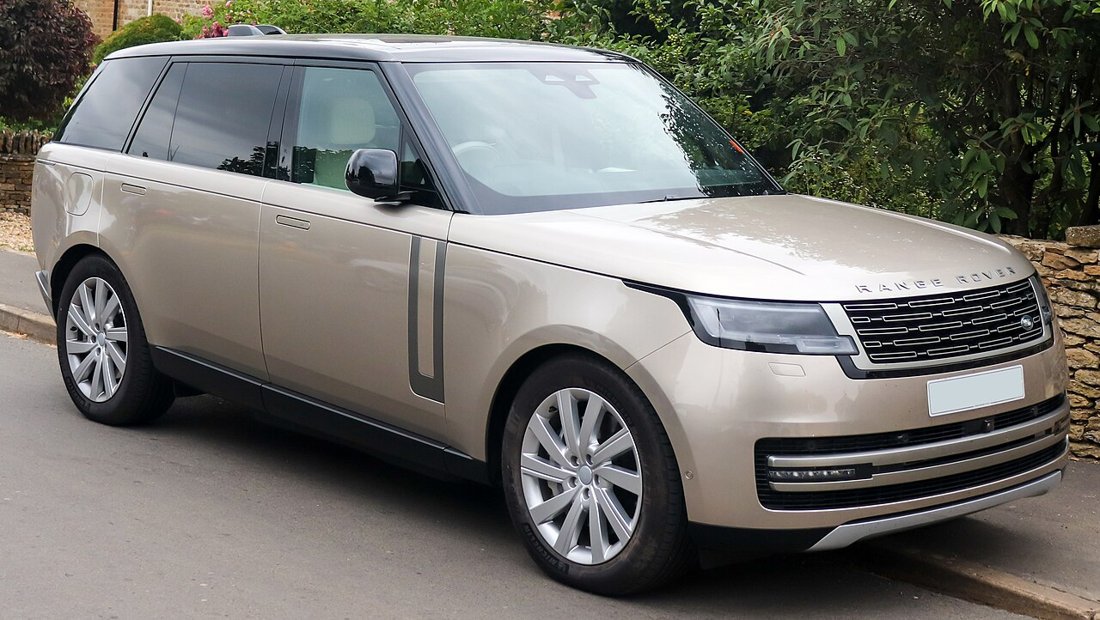

The flagship Range Rover has spanned five generations, evolving from a coil-sprung, ladder-frame two-door 4×4 in 1970 into a monocoque luxury SUV with mild-hybrid, plug-in hybrid and battery-electric powertrains. Related sub-models—Range Rover Sport, Range Rover Evoque and Range Rover Velar—are covered in their own guides. Wikipedia: Range Rover.
Generations overview
| Generation | Model code | Production | Chassis & suspension | Key engineering milestones |
|---|---|---|---|---|
| First generation ("Classic") | — | 1970–1996 (pre-prod 1969) | Box-section ladder frame, coil springs, live axles | Permanent 4WD, four-wheel disc brakes, 4-door added (1981), 108-in LWB Vogue LSE (1992); pre-launch prototypes badged "Velar". |
| Second generation | P38A (LP) | 1994–2001 | Updated LWB ladder frame, electronic air suspension, live axles | First Land Rover with electronically controlled diesel (BMW M51) and last to use the Rover V8; Lucas GEMS then Bosch Motronic V8 management. |
| Third generation | L322 | 2001–2012 | Steel unibody, four-wheel independent air suspension | Developed under BMW (E38/E39 electrics, M62 V8 & M57 diesel) before moving to Ford/Jaguar AJ-V8, AJD-V8 and ZF 6HP/8HP transmissions. |
| Fourth generation | L405 | 2012–2021 | D7u all-aluminium monocoque, cross-linked air suspension | First production all-aluminium 4×4 SUV (~420 kg lighter); added LWB, SDV6 Hybrid, P400e PHEV, Ingenium I6 MHEV and 565 PS SVAutobiography. |
| Fifth generation | L460 | 2022–present | MLA-Flex platform, air suspension, 4-wheel steering | SWB & LWB (up to 7 seats); Ingenium I6 MHEV/PHEV, BMW N63/S68 4.4 twin-turbo V8, and dual-motor EV550 (2026). |
First generation: Range Rover Classic (1970–1996)
Launched with a 3.5-litre Rover V8 and four-speed manual, the Range Rover gained Lucas fuel injection in 1984, VM Motori turbodiesels ("Turbo D", 1986), 3.9-litre V8 (MY1990) and 4.2-litre V8 (1992 LSE), and Land Rover's 200Tdi (1992) and 300Tdi (1994). JLR Classic: 40th birthday; Wikipedia: Range Rover Classic.
| Engine | Displacement & layout | Fuel / management | Representative output | Period |
|---|---|---|---|---|
| 3.5 Rover V8 (carburetted) | 3,528 cc OHV V8 | Dual Stromberg / SU carburettors | ~127–135 hp | 1970–1985 |
| 3.5 Rover V8 EFi | 3,528 cc OHV V8 | Lucas 4CU / 13CU / 14CUX | ~155–165 hp | 1984–1989 |
| 3.9 Rover V8 | 3,947 cc OHV V8 | Lucas 14CUX hot-wire | ~182–185 hp | 1989–1995 |
| 4.2 Rover V8 (Vogue LSE / County LWB) | 4,275 cc OHV V8 | Lucas 14CUX hot-wire | ~200 hp | 1992–1995 |
| 2.4 VM Motori Turbo D (Project Beaver) | 2,393 cc I4 IDI turbo diesel | Mechanical rotary injection | 112 hp (84 kW) | 1986–1989 |
| 2.5 VM Motori Turbo D (Project Otter) | 2,499 cc I4 IDI turbo diesel | Mechanical rotary injection | 119 hp (89 kW) | 1989–1992 |
| 2.5 Land Rover 200Tdi / 300Tdi | 2,495 cc I4 DI turbo diesel | Bosch VE rotary pump | 111 hp (83 kW); 264 N⋅m | 1992–1996 |
Second generation: P38A (1994–2001)
Based on the 108-inch LWB architecture, P38A offered five-speed manual or four-speed ZF automatic transmissions. Rover V8s moved from Lucas/SAGEM GEMS (pre-1999) to Bosch Motronic M5.2.1 ("Thor", post-1999). Wikipedia: Range Rover (P38A).
| Engine | Displacement & layout | Fuel / management | Output | Years |
|---|---|---|---|---|
| 4.0 Rover V8 | 3,947 cc OHV V8 | Lucas GEMS / Bosch M5.2.1 | 190 hp / 320 N⋅m (GEMS); 188 hp / 339 N⋅m (Bosch) | 1994–2001 |
| 4.6 Rover V8 | 4,552 cc OHV V8 | Lucas GEMS / Bosch M5.2.1 | 225–230 hp / 380 N⋅m (GEMS); 218 hp / 407 N⋅m (Bosch) | 1994–2001 |
| 2.5 D / DSE (BMW M51) | 2,497 cc SOHC I6 turbo diesel | Bosch VP37 / DDE 2.1 | 134–136 hp (100 kW) | 1994–2001 |
Third generation: L322 (2001–2012)
L322 dropped manual gearboxes in favour of automatic transmissions: ZF 5HP24 (early V8), GM 5L40-E (TD6), ZF 6HP26/6HP28 (2005–2012, including Bosch GS19.04 and Continental 5WK75020AA controllers), and ZF 8HP70 on the 2011–2012 4.4 TDV8. Wikipedia: Range Rover (L322).
| Model & engine | Displacement & layout | Management / forced induction | Power & torque | Years |
|---|---|---|---|---|
| 4.4 V8 (BMW M62TUB44) | 4,398 cc DOHC V8 | Bosch ME7.2 | 286 PS (282 hp); 440 N⋅m | 2002–2005 |
| 4.4 V8 (Jaguar AJ41) | 4,394 cc DOHC V8 | Naturally aspirated | 305 PS (301 hp); 440 N⋅m | 2005–2009 |
| 4.2 Supercharged (Jaguar AJ34S) | 4,197 cc DOHC V8 | Roots supercharged | 400 PS (395 hp); 560 N⋅m | 2005–2009 |
| 5.0 V8 (Jaguar AJ133) | 4,999 cc DOHC V8 | Direct injection N/A | 375 PS (370 hp); 510 N⋅m | 2009–2012 |
| 5.0 Supercharged (AJ133S) | 4,999 cc DOHC V8 | Eaton TVS supercharged | 510 PS (503 hp); 625 N⋅m | 2009–2012 |
| 3.0 Td6 (BMW M57) | 2,926 cc DOHC I6 turbo diesel | Common-rail (Bosch DDE) | 177 PS (175 hp); 390 N⋅m | 2002–2006 |
| 3.6 TDV8 (AJD-V8) | 3,630 cc DOHC V8 twin-turbo diesel | Piezo common-rail | 272 PS (268 hp); 640 N⋅m | 2006–2010 |
| 4.4 TDV8 (AJD-V8) | 4,367 cc DOHC V8 twin-turbo diesel | Common-rail; ZF 8HP70 | 313 PS (309 hp); 700 N⋅m | 2010–2012 |
Fourth generation: L405 (2012–2021)
All L405 models used the ZF 8HP eight-speed automatic with a two-speed transfer case. Wikipedia: Range Rover (L405).
| Model & engine | Displacement & layout | Power & torque | Notes / years |
|---|---|---|---|
| 2.0 P400e PHEV (Ingenium AJ200 + 85 kW motor) | 1,999 cc turbo I4 + PHEV | 404 PS (398 hp); 640 N⋅m | 2018–2021 (13.1 kWh battery) |
| 3.0 Supercharged V6 (AJ126) | 2,995 cc SC V6 | 340 or 380 PS; 450 N⋅m | 2014–2019 |
| 3.0 P360 / P400 MHEV (Ingenium AJ300) | 2,996 cc twincharged I6 MHEV | 360 or 400 PS; 495–550 N⋅m | 2019–2021 |
| 5.0 V8 N/A (AJ133) | 4,999 cc V8 | 375 PS; 510 N⋅m | Early MY2013 markets |
| 5.0 V8 Supercharged (AJ133) | 4,999 cc SC V8 (TVS R1900 on specified apps) | 510 / 525 / 550 / 565 PS; 625–700 N⋅m | Supercharged, Autobiography & SVAutobiography |
| 3.0 TDV6 / SDV6 (AJD-V6) | 2,993 cc turbo / twin-turbo V6 diesel | 250 / 258 / 275 / 300 PS; 600–650 N⋅m | 2012–2020 |
| 3.0 SDV6 Hybrid | 2,993 cc V6 diesel + 35 kW motor | 340 PS; 700 N⋅m | 2014–2017 |
| 3.0 D250 / D300 / D350 MHEV (Ingenium AJ300D) | 2,997 cc I6 twin-turbo diesel | 249–350 PS; 600–700 N⋅m | 2020–2021 |
| 4.4 SDV8 (AJD-V8) | 4,367 cc twin-turbo V8 diesel | 339–340 PS; 700–740 N⋅m | 2012–2020 |
Fifth generation: L460 (2022–present)
Built on the MLA-Flex platform with ZF 8HP automatic transmissions and front-axle-disconnect iAWD, plus the dual-motor battery-electric EV550 unveiled in September 2026. Wikipedia: Range Rover (L460).
| Designation | Powertrain | Combined output | Notes |
|---|---|---|---|
| P360 / P400 MHEV | 3.0-litre Ingenium AJ300 I6 turbo MHEV | 360 PS / 500 N⋅m; 400 PS / 550 N⋅m | 2022–present |
| P440e / P460e PHEV | 3.0-litre Ingenium I6 + 105/163 kW motor (38.2 kWh) | 440 PS / 620 N⋅m; 459–460 PS / 550 N⋅m | P460e replaced P440e for MY2024 |
| P510e / P550e PHEV | 3.0-litre Ingenium I6 + 105/163 kW motor (38.2 kWh) | 510 PS / 700 N⋅m; 550–560 PS / 800 N⋅m | P550e replaced P510e for MY2024 |
| P530 | 4.4-litre BMW N63 twin-turbo V8 MHEV | 530 PS (523 hp); 750 N⋅m | 2022–2023+ |
| P615 (SV) | 4.4-litre BMW S68 twin-turbo V8 MHEV | 615 PS (607 hp); 750 N⋅m | 2024–present |
| D250 / D300 / D350 | 3.0-litre Ingenium AJ300D twin-turbo I6 (MHEV in most markets) | 249–350 PS; 601–700 N⋅m | 2022–present |
| EV550 (Range Rover Electric) | Dual PMSM electric motors, 125 kWh (118.5 usable) Li-NMC | 550 PS (404 kW); 850 N⋅m | Unveiled September 2026 (800V architecture) |
Sources and related pages
See Land Rover engine failures and common problems for sourced timing-drive, crankshaft and Ingenium issues and service checks.
See Land Rover petrol tuning and ECU identification for engine-specific maps, upgrades and validation.
See the Range Rover 3.6 and 4.4 TDV8 tuning guide for ECU maps, upgrades and validation.
- Wikipedia: Range Rover — model history and generations.
- L322, L405 and L460 — generation specifications.
- Range Rover Sport, Range Rover Evoque and Range Rover Velar.
- Land Rover: history and cars and Eaton TVS R1900 supercharger.
Petrol tuning guides: classic Rover V8; supercharged V6/V8; Ingenium 2.0/3.0 petrol. Check each guide for engine and ECU applicability.