A dynamometer controller turns sensor readings and operator commands into load-control and test data. When an older dyno needs an upgrade, the choice may include its manufacturer's own replacement electronics, an independent retrofit package, or a combination of existing and new parts. The right choice depends on the specific dyno, brake, sensors, wiring and test requirements; neither “factory” nor “aftermarket” guarantees plug-in compatibility.
This guide compares the approaches and named examples. A factory manufacturer may also offer conversions for other makes, so the categories overlap. Equipment, firmware, licences and support vary with generation. See Dynamometer control systems and original equipment control systems.

What the controller has to control
An inertial dyno can calculate output from a calibrated rotating inertia and speed measurement without commanding an absorber. A braked dyno needs appropriate torque/speed inputs and, for automatic load control, an actuator and controller. Examples include an eddy-current brake driven by a field power supply, a water or oil brake controlled by a suitable valve, or an electric motor/generator operated through a compatible drive.
The controller's PWM, analogue or CAN command is not necessarily a high-current brake supply. A separate field power unit, valve actuator or inverter may be required. The PC program, real-time control electronics, remote handset and brake power stage can be separate parts. A graphing or data-acquisition package alone does not necessarily hold speed. A controller also cannot add active motoring or regeneration to an absorption-only brake.
Factory versus aftermarket at a glance
| Question | Factory system or manufacturer-supported upgrade | Aftermarket or independent retrofit |
|---|---|---|
| Intended fit | Designed or documented for specified manufacturer machines and generations. A later upgrade still needs model and serial-number verification. | Designed for a range of compatible dyno layouts, or engineered for an individual conversion. A supplier's make list is not proof for every model. |
| Existing parts | May retain original sensors, wiring and brake driver where the supported upgrade specifies this; other parts may need replacement. | May retain compatible sensors, brake or driver, but mismatched signals, wiring or worn parts can require adapters or replacement. |
| Software and features | Often retains a maker's workflow or adds its later software and options on supported hardware. | May add alternative software, sensor channels or test modes. Features depend on selected hardware and licence. |
| Integration and support | Model-specific instructions, spares and support may be available from the original maker or an approved service provider. | Independent supplier or installer can support legacy or mixed equipment; agree who integrates, commissions and supports the complete system. |
| Potential constraints | Support, operating-system compatibility, older spares or the upgrade path may be limited by generation. Check the quote. | Signal conditioning, brake power, calibration, safety circuits and vehicle-specific operation need engineering and verification. |
| Cost and downtime | Compare written quotations for the same scope: electronics, software/licence, wiring, sensors, power stage, installation, calibration and ongoing support. Neither approach is automatically cheaper or quicker. | |
Four-wheel drive and hub systems: compare the number of independent speed inputs, torque inputs, brake commands, power stages and control loops—not only whether the software shows four wheels. Mechanical and electronic axle synchronisation have different limits and vehicle requirements.
Examples of factory controllers and upgrades
These entries identify documented combinations. Other models or older control generations may differ. “Compatible” refers to the cited example, subject to the supplier's confirmation of the actual unit.
| System | Documented dynos / brake | Features and practical limitations |
|---|---|---|
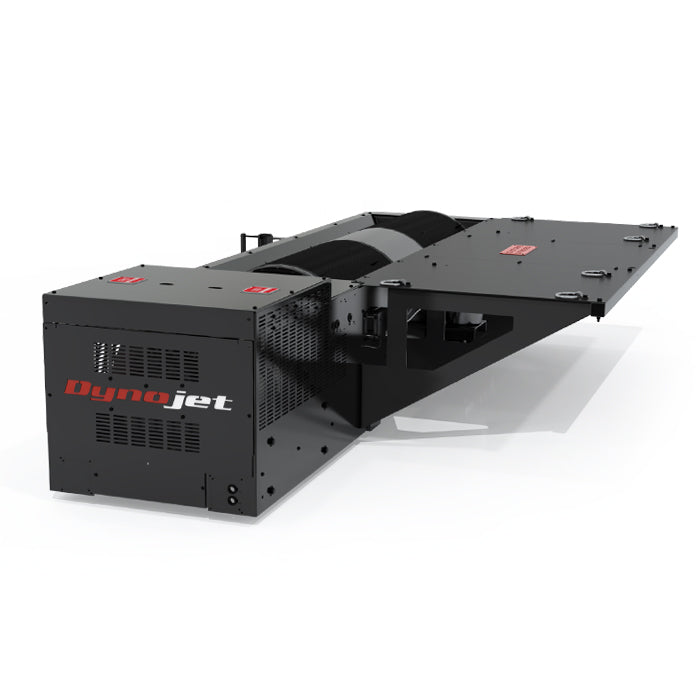
| Dynojet DynoWare RT / Power Core | Documented on the Vector-X4000 hub dyno with two eddy-current brake drivers; a separate manufacturer upgrade guide covers 200i/250i machines. X4000 manual; 200i/250i upgrade. | WinPEP 8 Dyno Control and Data Center provide control, logging and analysis on supported hardware. X4000 documentation identifies two speed pickups and load-cell calibration. Verify upgrade kit, existing brake and optional sensors; do not assume all Dynojet models interchange. |
| Dyno Dynamics Series II upgrade | Maker describes an upgrade for Series I chassis dynos and compatible older HUB2000 machines. Upgrade information. | Replaces the older Comms Hub/PDA arrangement with interface hardware, software and firmware; CAN/OBD and AFR options depend on package. Retains a manufacturer-supported path for listed machines; verify installed version, brake arrangement and migration. |
| Dynolyze hub control | Specified for the maker's 2- or 4-hub eddy-current systems. System details. | Lists individual hub PID calculation, speed/load-cell and brake-temperature inputs, with basic remote control without a PC and PC analysis. Channels and options depend on configuration. The 1,200 Hz quoted by the maker is brake-current control/PWM, not a complete-system accuracy claim. |
| Dynapack controller | Hydraulic Dynapack hub-pump systems; newer independent-hub hardware is described for compatible pods and cables. Manufacturer details. | Newer hardware permits separate hub or combined axle control. Earlier systems and upgrades vary. Determine mode suitability for the vehicle and driveline, and confirm exact existing hardware. |
| Mainline DynoLog CCS | CAN Control System offered on specified ProHub eddy-current dynos. ProHub AWD CCS. | The documented package describes speed, torque, ramp and road-load modes with CAN-based electronics. Sensors and options depend on model; earlier DynoLog equipment should be identified separately. |
| Rotronics Hubscan / Dynascan | Classic Hubscan and Hubscan Plus eddy-current hub systems. Manufacturer range. | The supplier describes Dynascan Essential with Hubscan and Advanced with Plus; the specified Plus package includes an IMP-A acquisition module. Hubscan AC is a separate electric machine family. Check options and generation. |
| ROTOTEST Energy HDC / DynoVision / Datmon | Energy electric motor/generator hub systems with drives, controller, torque transducers and speed sensing. System description; 4WD datasheet. | Real-time control, operating software and reporting are distinct parts; specified configurations support four-quadrant operation and road-load modules. Earlier VPA-RX hydraulic systems are different equipment. |
| SuperFlow WinDyn5 conversions | Supported SuperFlow engine/chassis machines and selected third-party systems, with water-brake and eddy-current conversions. Conversion information; eddy-current controllers. | A factory supplier's engineered conversion that also serves the retrofit market. Confirm the exact dyno, valve or power electronics, channels and commissioning scope. |
| Froude Texcel V4 | Industrial/engine-test systems: V4-H and HE for hydraulic, V4-EC and ECE for eddy-current arrangements. Texcel V4. | Engine variants include throttle control; valve and brake interfaces are specified for the installation. An industrial controller is not automatically a plug-in workshop hub-dyno kit. |
Examples of aftermarket and replacement systems
Retrofit products range from data logging only to complete closed-loop load-control packages. The source links below describe capabilities; they do not guarantee electrical or mechanical fit on every machine from a listed brand.
| System | Supported layouts and brake interface | Features, strengths and limitations |
|---|---|---|
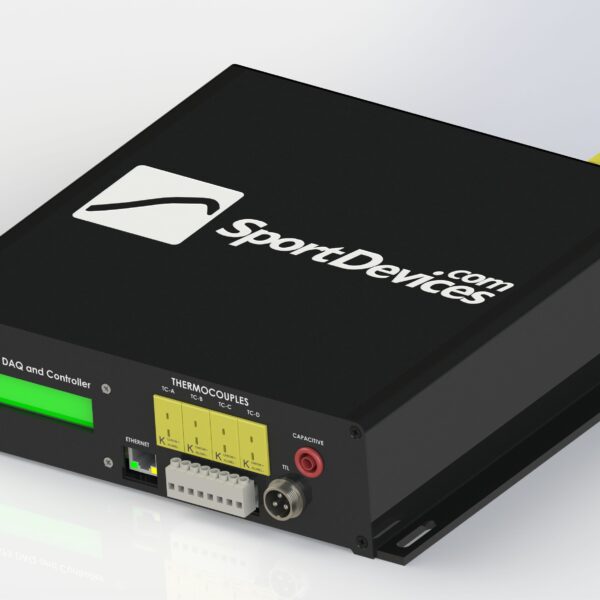
| SportDevices SP5 | Engine and roller-brake dynos; configured 2-hub use and optional AWD. Match the eddy-current supply and sensors. SP5 product details. | Two brake/roller speed and two load-cell inputs; six 0–5 V and eight K-type channels. Describes inertia, steady, ramp and fixed-brake modes. AWD requires firmware and additional pickup, cell and brake supply; verify kit and software options. |
| SportDevices SP6 / HUB-4 | Engine/roller applications and configured 2-hub or 4-hub systems; HUB-4 package lists four speed sensors, cells and brake supplies. SP6 product details. | Four speed inputs, up to four cells, eight analogue channels and two CAN buses. HUB-4 needs the specified activation and hardware; its additional channels do not make it compatible with every existing brake or loom. |
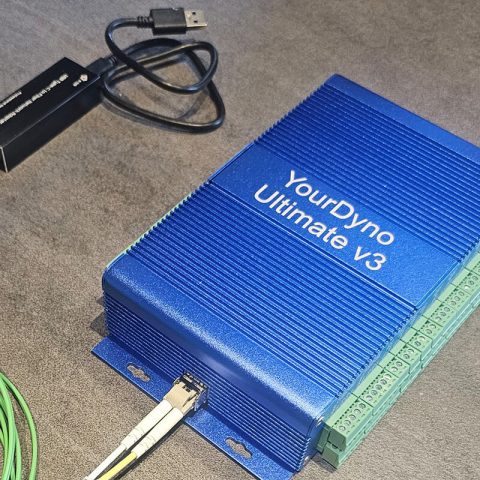
| YourDyno Standard / Ultimate | Offered for inertia, eddy-current, water-brake, engine, roller and hub applications with the appropriate drivers. Instrumentation guide. | Standard lists two RPM and two load-cell inputs and two brake commands; two Standard boxes can be configured for four hub brakes. Ultimate supports four load-cell inputs; channel counts vary by version. Match coil power supply or valve drive; CAN may require a licence. |
| PEREK DC2 / DC2L | Inertia and appropriately interfaced eddy-current or water-brake applications; DC2 supports 2/4-hub and unsynchronised AWD, while DC2L supports a more limited range including mechanically linked AWD chassis. DC2 specification. | DC2 has four load-cell and five general frequency inputs; DC2L has one of each, plus an engine-speed input. Separate matched brake power or valve actuation may be needed. The maker documents a specific Dynocom AWD conversion; do not infer universal fit. |
| Dynostar DAS A801 upgrade kit | Advertised chassis-roller conversion with eddy-current power supply, sensor and load cell. | Combines Dyno Station software, acquisition and junction boxes with a stated brake supply; confirm brake voltage/current, axle count and exactly which components are included in the quoted kit. |
| Accudyno Forza DS | Absorber applications including eddy-current and hydraulic controls via compatible interfaces; hub configuration requires its appropriate option. | Digital acquisition and load control; the cited listing excludes the eddy-current brake supply. Confirm supported sensors, power stage and installed version. |
| Performance Trends DataMite | Configurable engine and chassis inertia or absorber instrumentation; the maker lists retrofits to several makes. | Different DAQ sizes and software; brake-controller options are separate choices. Water-valve position control is not automatically closed-loop RPM hold; specify the required function and actuator. |
| Dastek upgrades via Advanced Dyno Solutions | Supplier advertises 2WD and 4WD upgrades for existing dynos. | Quote-specific controller, software and installation: confirm compatible original machine, channel count, brakes, power stage and supplied sensors before purchase. |
| Precision DynoTech DC-3 | Engine or chassis applications with compatible valve-stepper or eddy-current power-driver interfaces. DC-3 listing. | Lists multiple speed, load-cell and analogue inputs and outputs for a separate stepper driver or eddy-current power supply. Confirm software modes, actuator and number of independent control channels. Earlier DC-1/DC-2 are measurement-oriented. |
| SportDevices SP3 / DTec DYNertia3 | Older or measurement-focused instrumentation for inertia and/or existing manually controlled braked systems. | Neither cited system provides automatic closed-loop brake speed control by itself. An existing or separate suitable load controller is needed. Useful where data capture is the goal; not equivalent to a complete load-control upgrade. |
Brake-supply example: PEREK’s BD3 documentation names tested absorber brands including Frenelsa, KLAM, Pentar Kloft, Elektromex Centrum and Borghi & Saveri. This does not approve every coil or every BD3 version: match insulation, voltage, current and condition. PEREK also documents a Bosch FLA203/206 conversion guide with model-specific sensor considerations.
Choosing between repair, upgrade and replacement
- Retain or repair the original: useful when the existing supported package meets the required functions and parts, software and service are available. Diagnose the actual fault first; a controller replacement will not repair a damaged brake or bad wiring automatically.
- Use a maker-supported conversion: a documented upgrade can retain an established workflow and some original components. Check the exact serial number, included modules, operating system, licence, data migration and installation support.
- Use an independent conversion: can extend the working life of a sound mechanical dyno, or add channels and modes. Confirm precisely which sensors, brake supply, wiring and enclosures can be retained and who is responsible for integration and future support.
- Replace only acquisition: appropriate when an existing brake controller remains serviceable and logging needs improvement. Confirm that speed/load data and control remain correctly calibrated and synchronised.
Compatibility and commissioning checklist
- Record dyno manufacturer, model, serial and modifications; roller or hub layout, number of independently rotating shafts and absorbers; original controller, software and firmware.
- Identify each brake: eddy coil rated voltage/current and supply; hydraulic or water valve/actuator and feedback; or electric inverter interface. Ask whether the proposed controller includes a compatible power stage, not just its command signal.
- Match speed-pickup signal type, tooth count and frequency; torque sensor type, capacity and signal conditioning; engine RPM; weather, lambda, temperature, analogue, CAN or OBD sources. Confirm licences and independent channel counts.
- Specify required operating modes, AWD control arrangement, data export, report correction, old-run migration and operator controls. Confirm any vehicle-specific constraints with both equipment and vehicle makers.
- Agree installation scope, wiring records, emergency-stop and fault handling, brake and vehicle cooling, calibration equipment, training and support. Follow the relevant manufacturers' commissioning procedures and verify speed, load-cell calibration and response under controlled conditions.
When comparing results before and after conversion, record the gear, calibration, atmospheric correction, test mode and how the software accounts for roller or shaft inertia. Different sensor locations and processing methods can change reported figures; a new controller alone does not establish a change in vehicle performance. See measurement and interpreting results and test setup and safety.
Related: Dynamometer control systems · Factory controllers · SportDevices · YourDyno · PEREK · UK rebuilders.
Further controller manufacturer profiles
Dynostar · Accudyno · dynoKRAFT ADAQ · Performance Trends · DTec DYNertia · Precision DynoTech · 6dm · Hydra-Test · Tokyo Plant · SuperFlow WinDyn · Froude controllers · SAJ controllers.