Country of origin: United Kingdom. Part of Car makes and the history of the motor car.
Land Rover began in 1948 as a utilitarian four-wheel-drive model built by the Rover Company and evolved into a global marque spanning rugged utility vehicles, family 4×4s and luxury SUVs. Since 2013 the brand has operated within Jaguar Land Rover Limited (JLR), owned by Tata Motors. Wikipedia: Land Rover; Wikipedia: Jaguar Land Rover.
History and ownership eras
Land Rover's engineering, chassis architecture and powertrain sourcing closely track changes in corporate ownership from post-war Rover through British Leyland, BMW, Ford and Tata Motors.
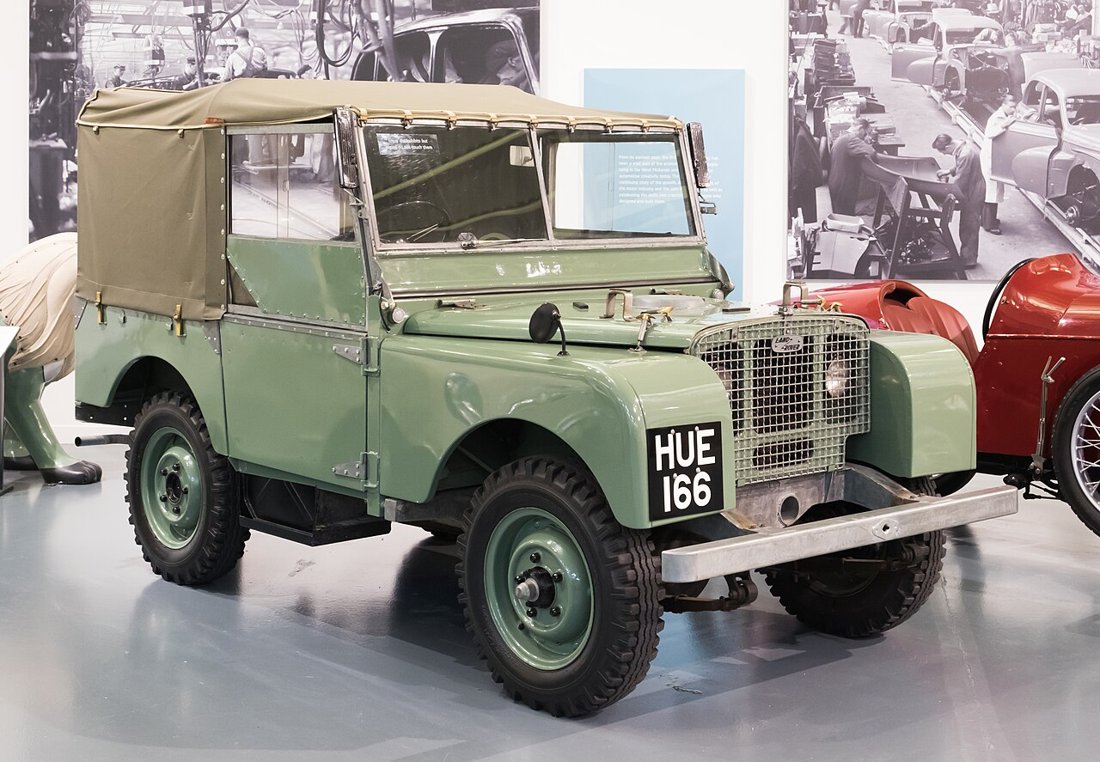

1947–1967: Rover Company origins
In 1947, Rover chief designer Maurice Wilks and managing director Spencer Wilks developed a four-wheel-drive utility prototype ("Centre Steer") using a surplus Jeep chassis and axles. The first production Land Rover launched on 30 April 1948 at the Amsterdam Motor Show. Built at Solihull with corrosion-resistant aluminium-alloy body panels over a boxed-section steel ladder frame, early vehicles were designed for agricultural and field service with power take-off (PTO) provisions. Rover received a Royal Warrant from King George VI in 1951, and successive Series I (1948), Series II (1958) and Series IIA (1961) updates expanded wheelbases and engine choices. Wikipedia: Land Rover.
1967–1994: British Leyland, Range Rover and standalone Land Rover Ltd
Rover became part of Leyland Motor Corporation in 1967 and British Leyland (BL) in 1968. In 1970, the marque launched the original Range Rover, pairing permanent four-wheel drive and long-travel coil springs with the aluminium Rover V8. Following the 1975 Ryder Report, BL established Land Rover Limited as a separate subsidiary in 1978, and Rover passenger-car assembly moved out of Solihull to Cowley by 1980–1982 so Solihull could concentrate on Land Rover vehicles and engines. Coil-sprung utility replacements for the Series III arrived as the One Ten (1983) and Ninety (1984), renamed Defender in 1990 shortly after the 1989 debut of the family-oriented Discovery. Under British Aerospace from 1988, Land Rover operated inside Rover Group plc. Wikipedia: Land Rover; Wikipedia: Land Rover engines.
1994–2000: BMW ownership
BMW acquired Rover Group plc in January 1994, just before the second-generation Range Rover (P38A) launched in September 1994. Under BMW, Land Rover introduced its first unibody model, the Freelander (1997), developed the five-cylinder Td5 diesel (1998) from the Rover L-series architecture, and engineered the third-generation Range Rover (L322)—the first full-size Range Rover with a monocoque body and all-independent suspension—before selling Land Rover to Ford in 2000. Wikipedia: Land Rover; Wikipedia: Range Rover (L322).
2000–2008: Ford Premier Automotive Group
Ford purchased Land Rover in 2000 and placed it alongside Jaguar in its Premier Automotive Group. During this period, Land Rover introduced the Discovery 3 / LR3 (2004) on an Integrated Body Frame, the first Range Rover Sport (L320, 2005) and the Freelander 2 (2006). Rover V8 usage ended in 2004 and Solihull engine production closed in 2007 as Land Rover adopted Jaguar AJ-V8 petrol engines, Ford/PSA Lion V6/V8 diesels (AJD) and Ford Duratorq four-cylinder diesels. Wikipedia: Land Rover; Wikipedia: Land Rover engines.
2008–present: Tata Motors and Jaguar Land Rover
Tata Motors completed its acquisition of Jaguar and Land Rover from Ford on 2 June 2008, and merged Land Rover Limited and Jaguar Cars Limited into Jaguar Land Rover Limited on 1 January 2013. JLR expanded manufacturing to Halewood (Range Rover Evoque and Discovery Sport), Nitra in Slovakia (Discovery 5 and Defender L663), Wolverhampton's Engine Manufacturing Centre (modular Ingenium petrol and diesel engines from 2015), and overseas sites in India, Brazil and China (Chery Jaguar Land Rover). Traditional body-on-frame construction ended when the classic Defender finished in 2016 and the Discovery 5 moved to the aluminium D7u monocoque in 2017, followed by the D7x Defender (L663, 2020) and MLA-Flex Range Rover (L460) and Range Rover Sport (L461) in 2022 with mild-hybrid, plug-in hybrid and electric powertrains. Wikipedia: Jaguar Land Rover; Wikipedia: Jaguar Land Rover car platforms.
| Period | Owner / corporate structure | Key engineering and model milestones |
|---|---|---|
| 1948–1967 | Rover Company | Series I, II and IIA; ladder-frame alloy utility 4×4s, 1.6/2.0 IOE and 2.25-litre OHV fours. |
| 1967–1986 | Leyland / British Leyland (Land Rover Ltd from 1978) | Range Rover (1970) with Rover V8, Series III (1971), One Ten (1983) and Ninety (1984). |
| 1986–1994 | Rover Group (British Aerospace from 1988) | 200Tdi (1989) and 300Tdi (1994) diesels, Discovery (1989), Defender naming (1990). |
| 1994–2000 | BMW | Range Rover P38A (1994), Freelander (1997), Td5 inline-five (1998), L322 development. |
| 2000–2008 | Ford Motor Company (Premier Automotive Group) | Range Rover L322 (2001), Discovery 3 (2004), Range Rover Sport (2005), Freelander 2 (2006), AJD/AJ-V8 transition. |
| 2008–present | Tata Motors (Jaguar Land Rover Ltd from 2013) | Range Rover Evoque (2011), aluminium L405/L494/L462, Ingenium engines (2015), Velar (2017), Defender L663 (2020), MLA-Flex L460/L461 (2022). |
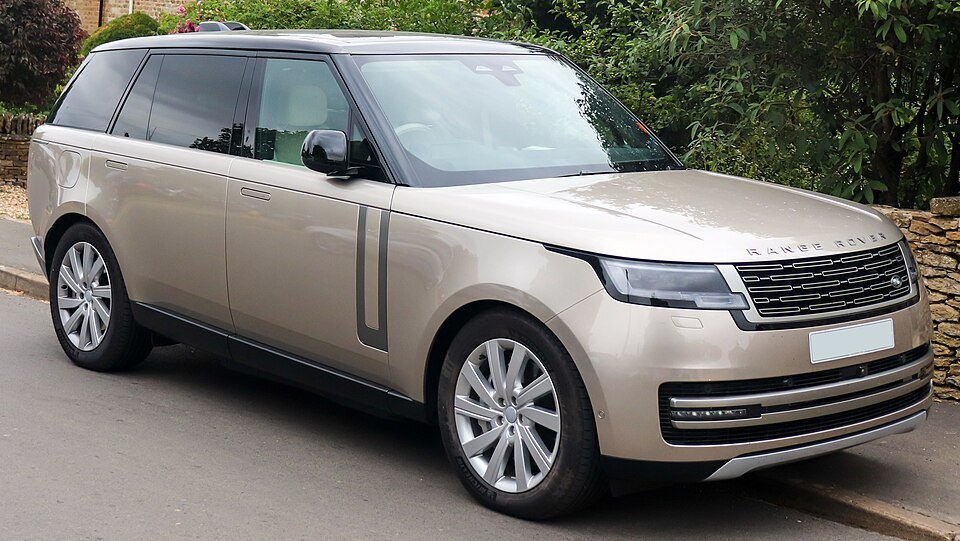

Model families and generations
The names Land Rover, Range Rover, Discovery and Defender cover distinct chassis architectures and model generations. Engine and equipment availability vary by market and model year; check the linked model guides for generation-level detail.
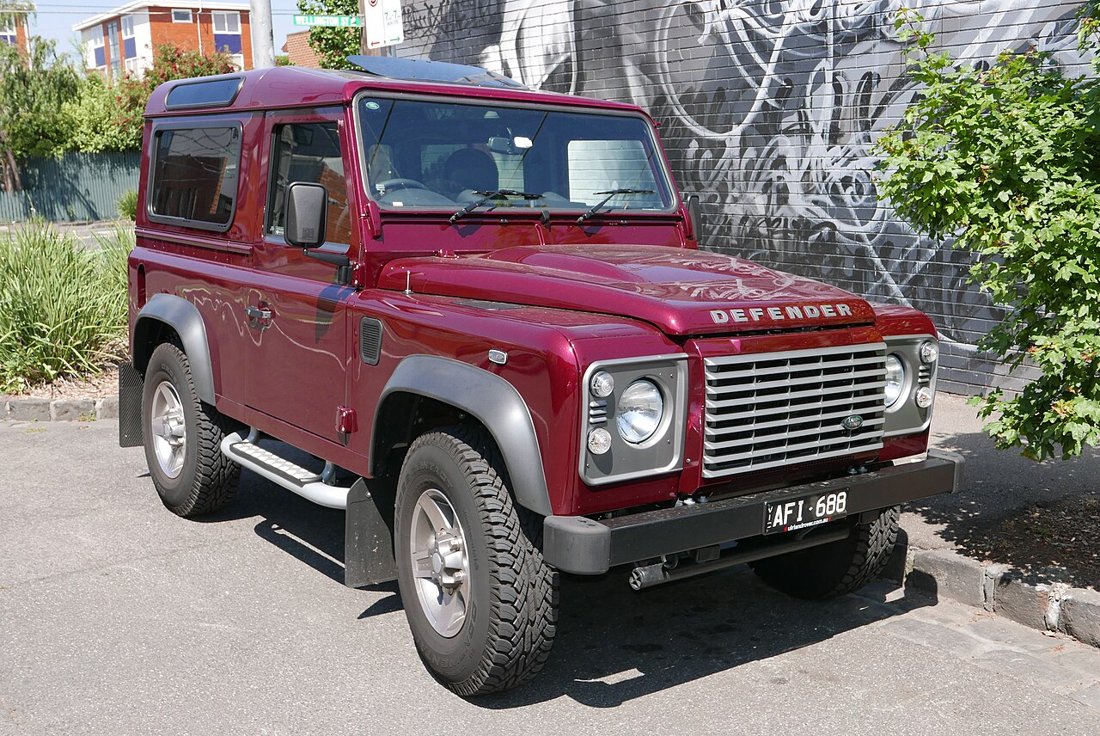

| Model family | Generations and production | Platform and key characteristics | Guide / reference |
|---|---|---|---|
| Series I, II, IIA & III | 1948–1985 | Boxed ladder frame, leaf springs, part-time 4WD; 1.6/2.0 IOE, 2.0/2.25 petrol and diesel fours, 2.6 six and 3.5 V8 (Stage One). | Series I–III models and engines |
| Ninety / One Ten / Classic Defender (L316) | 1983–2016 | Ladder frame with coil springs and permanent 4WD; 2.25/2.5 fours, Rover V8, 200Tdi, 300Tdi, Td5 and 2.4/2.2 Duratorq diesels. | Classic Defender models and engines |
| Defender (L663) | 2020–present | D7x aluminium monocoque in 90, 110 and 130 body styles; 2.0/3.0 Ingenium petrol and diesel, P400e PHEV, 5.0 AJ133 SC V8 (P525) and 4.4 twin-turbo BMW S68 (OCTA). | Wikipedia: Defender (L663) |
| Range Rover | Classic (1970–1995), P38A (1994–2001), L322 (2001–2012), L405 (2012–2021), L460 (2022–present) | Evolved from coil-sprung ladder frame (Classic/P38A) to steel unibody (L322), D7u aluminium monocoque (L405) and MLA-Flex (L460). | Range Rover generations |
| Range Rover Sport | L320 (2005–2013), L494 (2013–2022), L461 (2022–present) | L320 used an Integrated Body Frame shared with Discovery 3; L494 moved to D7u aluminium unibody; L461 uses MLA-Flex. | Wikipedia: Range Rover Sport |
| Range Rover Evoque & Velar | Evoque: L538 (2011–2018), L551 (2018–present); Velar: L560 (2017–present) | Evoque uses transverse D8/PTA platforms (introducing 2WD options); Velar uses longitudinal D7a aluminium architecture. | Evoque; Velar |
| Discovery | 1 (1989–1998), 2 (1998–2004), 3/LR3 (2004–2009), 4/LR4 (2009–2016), 5/L462 (2017–present) | Moved from Range Rover-derived ladder frame (1 & 2) to Integrated Body Frame (3 & 4) and D7u aluminium monocoque (5). | Discovery generations and engines |
| Freelander & Discovery Sport | Freelander 1 (1997–2006), Freelander 2/LR2 (2006–2014), Discovery Sport L550 (2014–present) | Transverse unibody compact/mid-size crossovers; Discovery Sport replaced Freelander 2 on D8 and later PTA platforms. | Freelander generations and engines |
Selected cars and engines
Examples below highlight notable technical milestones and forced-induction applications rather than a complete production list. Engine and equipment specifications vary with year and market.
| Car | Why it matters | Evidence |
|---|---|---|
| Series I / Defender | Rugged four-wheel-drive vehicles spanning several eras; the original Series I and later Defenders are distinct models. | Model reference |
| Range Rover | A luxury-oriented four-wheel-drive range with multiple generations and engine options. | Model reference |
| Range Rover supercharged 5.0 V8, selected applications | The Eaton guide records specified factory TVS1900 examples; confirm vehicle and OE supercharger part number. | Eaton fitment guide |
| Discovery | A family-oriented four-wheel-drive range produced across five generations. | Model reference |
| Defender OCTA (L663) & L460 / L461 V8 | Selected 2024+ models adopt the 4.4-litre twin-turbo mild-hybrid BMW S68 V8 alongside earlier N63 applications on L460. | BMW S68 engines; Defender (L663) |
More models and representative engines
These are specific examples rather than every engine offered. Equipment, output and capacity can change with model year and market; identify the exact vehicle before ordering parts.


| Model and version | Engine or powertrain | Evidence |
|---|---|---|
| Defender Td5 | 2.5-litre Td5 five-cylinder turbo diesel with electronic unit injectors in the specified Defender generation. | Manufacturer or technical source |
| Discovery 3 TDV6 | 2.7-litre V6 turbo diesel (AJD-V6) in the specified Discovery 3 version. | Manufacturer or technical source |
| Range Rover Classic V8 | Early Range Rover production used a 3.5-litre Rover V8 petrol engine; later capacities (3.9 and 4.2) and diesel versions differed. | Manufacturer or technical source |
| Freelander TD4 | 2.0-litre four-cylinder turbo diesel (BMW M47R) in the specified first-generation Td4. | Manufacturer or technical source |
| Freelander 2 SD4 | 2.2-litre four-cylinder turbo diesel in the specified Freelander 2 version; separate from the earlier BMW-derived Td4. | Freelander guide; EDC16CP39 reference |
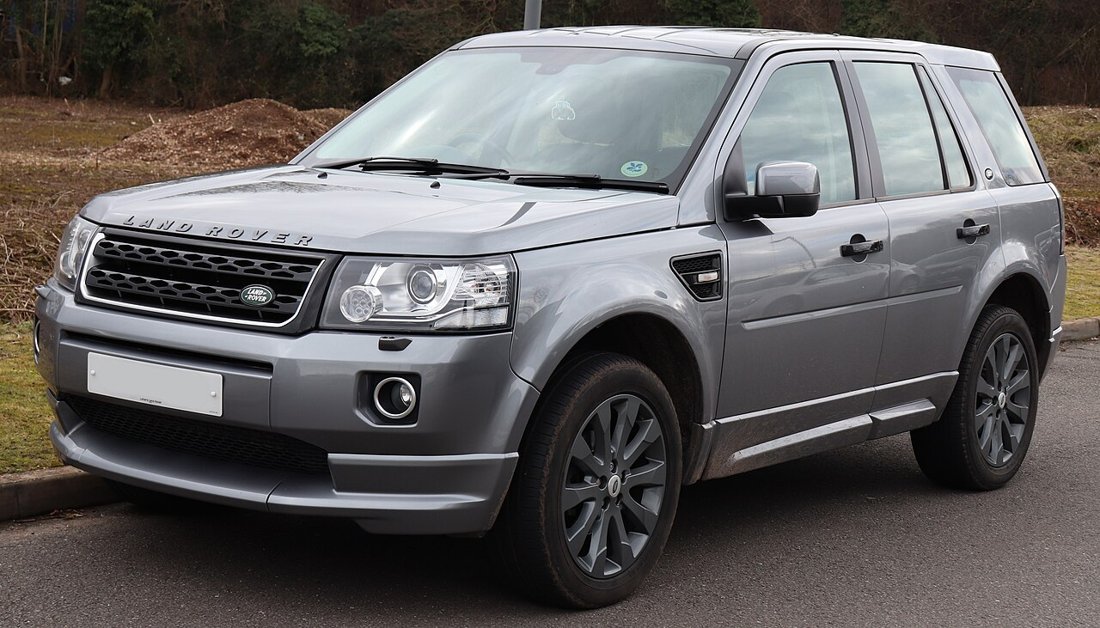

Engine families across Land Rover eras
Because Land Rover changed corporate parents several times, vehicles of a similar badge can house completely unrelated engine architectures and fuel-injection systems.
| Engine family | Representative capacities | Fuel and induction | Selected Land Rover applications and wiki links |
|---|---|---|---|
| Rover IOE & Land Rover OHV utility fours | 1.6, 2.0, 2.25, 2.5 L (petrol & diesel); 2.6 L petrol I6 | Solex/Zenith/Weber or SU carburettors; mechanical CAV/Lucas rotary pumps; 19J Diesel Turbo (1986) | Series I–III, Ninety / One Ten, early Defender |
| Land Rover 200Tdi & 300Tdi | 2.5 L (2,495 cc) I4 | Direct-injection turbo diesel with intercooler; Bosch VE rotary pump (EDC on auto 300Tdi) | Defender, Discovery 1, Range Rover Classic (1989–2006) |
| Land Rover Td5 (10P / 15P / 16P) | 2.5 L (2,498 cc) I5 | Cam-driven Lucas electronic unit injectors, Garrett GT2052S turbo; last Solihull-built Land Rover engine | Defender and Discovery 2 (1998–2007); Td5 tuning guide |
| Rover V8 (Buick-derived) | 3.5, 3.9, 4.0, 4.2, 4.6 L V8 | SU/Stromberg carbs, then Lucas 4CU, 14CUX, GEMS and Bosch M5.2.1 | Range Rover Classic & P38A, Discovery 1 & 2, Defender V8 (1970–2004) |
| BMW-era inline-fours, sixes & V8s | 2.0 I4 diesel (M47R), 2.5 I6 diesel (M51), 2.9 I6 diesel (M57), 4.4 V8 (M62TUB44) | Common-rail or rotary-pump diesel; petrol Bosch ME7.2 | Freelander 1 Td4, Range Rover P38A 2.5 D, Range Rover L322 (early TD6 & 4.4 V8) |
| Ford / PSA diesels & Jaguar petrol V6/V8s | 2.2/2.4 Duratorq I4; 2.7/3.0 AJD V6; 3.6/4.4 AJD V8; 3.0 AJ126 SC V6; 4.4/4.2/5.0 AJ-V8 | Common-rail piezo/solenoid diesel (EDC16CP39, EDC17CP42, etc.); petrol N/A & Eaton TVS supercharged | Defender (2007–2016), Freelander 2, Discovery 3/4, Range Rover L322/L405, Sport, Velar |
| JLR Ingenium & modern BMW V8 | 1.5 I3 (AJ150), 2.0 I4 (AJ200/D), 3.0 I6 (AJ300/D); 4.4 twin-turbo BMW S68 / N63 | Turbocharged, twincharged / 48V MHEV and PHEV; selected 2021+ diesels use Bosch MD1CP017 | Evoque, Discovery Sport, Velar, Discovery 5, Defender L663, Range Rover L405/L460, Sport L494/L461 |
Transmissions, ECUs and diagnostics
Drivetrain and electronic architectures also shifted across eras, affecting how workshops identify, diagnose and calibrate Land Rover vehicles:
- Manual and early automatic gearboxes: Classic Defender and Discovery 1/2 models used five-speed LT77 and R380 manuals (and later six-speed MT-82 on 2007–2016 Defenders) alongside four-speed ZF 4HP22 automatics. Wikipedia: Land Rover Defender.
- ZF 5HP, 6HP, 8HP and 9HP automatics: Early L322 V8 models used the ZF 5HP24 (while early L322 TD6 used GM 5L40-E). Mid-2000s longitudinal models transitioned to the ZF 6HP26/6HP28 (with Land Rover-specific Bosch GS19.04, GS19.11 and Continental 5WK75020AA mechatronics), followed by the ZF 8HP on L405, L494, Discovery 4/5, Velar, Defender L663 and L460. Transverse Evoque and Discovery Sport automatics adopted the ZF 9HP48/9HP50 (JLR 9HP48 TCM; LR125943 9HP50 TCM).
- Diesel ECU identification and Td5 tuning: See Land Rover diesel tuning and ECU identification for MSB vs. NNN Td5 controllers, TD4 EDC17CP42 and mild-hybrid MD1CP017 considerations, and Land Rover Td5 tuning guide for map structures and validation.
- Diagnostics and CAN networks: Factory diagnostics evolved from TestBook and T4/T4H to JLR IDS, Symptom Driven Diagnostics (SDD), Pathfinder and TOPIx Cloud (Jaguar and Land Rover diagnostics; Land Rover diagnostics). Pre-DoIP JLR platforms share a 500 kbit/s HS-CAN and 125 kbit/s MS-CAN topology bridged by the cluster or gateway, moving to DoIP on 2017+ architectures (Jaguar and Land Rover CAN bus systems).
Identifying a car and engine
Use the VIN, market, model year and engine code when researching servicing, tuning or parts. A single model name or badge—such as Defender, TD4, V8 or Range Rover—may span ladder-frame or monocoque chassis, naturally aspirated, turbocharged, supercharged, mild-hybrid or plug-in hybrid powertrains, and Rover, BMW, Ford, Jaguar or Ingenium controllers. Factory fitment and aftermarket conversions are distinguished in the linked guides.
Related marques: Rover: history and cars and Jaguar: history and cars.
Sources and related reading
- Wikipedia: Land Rover — marque history, timeline, ownership eras and engines.
- Wikipedia: Jaguar Land Rover — 2008–present corporate structure, plants and operations.
- Wikipedia: Land Rover engines — Solihull-designed four- and five-cylinder engines (1957–2007).
- Wikipedia: Ingenium engine family and Jaguar Land Rover car platforms — modern modular engines and D7/D8/PTA/MLA-Flex platforms.
- Tuning Wiki: Land Rover diesel tuning and ECU identification.
- Tuning Wiki: illustrated turbocharged-car timeline.
- Tuning Wiki: supercharger types and Eaton guides.