Rolls-Royce designed and built every engine in its cars from the first Royce 10 hp of 1904 until the late 1990s. The last in-house engine was the L410 aluminium V8, fitted to Rolls-Royce models until the Corniche of 2002. The Silver Seraph of 1998 introduced a BMW V12. Every Goodwood-built car since 2003 has used a BMW-derived V12, except the battery-electric Spectre.
Fuel and ignition systems followed a clear progression:
- Rolls-Royce's own carburettors, then Stromberg, Zenith and SU carburettors.
- Bosch K-Jetronic mechanical injection from 1980, first for Japan and then North America.
- Bosch Motronic electronic management from 1989, then Zytek management on the turbocharged V8s of the late 1990s.
- BMW engine management from 1998: Bosch Motronic on the Silver Seraph's M73, Bosch MED9.2 on the Phantom VII's N73 and, as reported by tuners, Continental MSD87 and Bosch MG1 on the twin-turbo N74 cars.
This page covers the engines and their management. The company history and the full model list are on Rolls-Royce: history and cars.
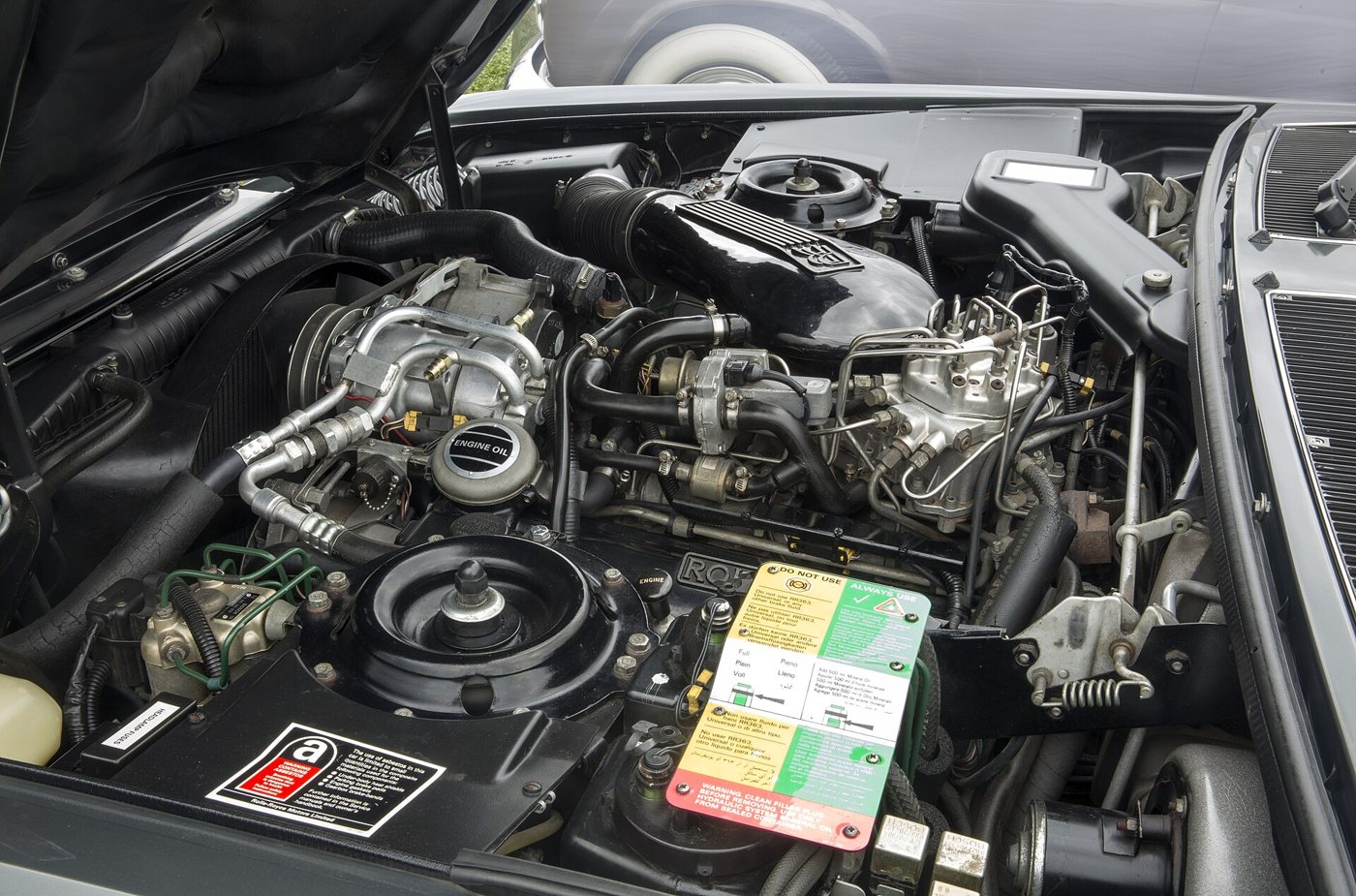

Summary by era
| Period | Engines | Fuel system | Ignition and control |
|---|---|---|---|
| 1904–1906 | Royce 2-, 3-, 4- and 6-cylinder IOE engines; 1905 V8 | Single carburettor | Coil |
| 1906–1939 | Side-valve 40/50 six; OHV sixes; Phantom III V12 | Rolls-Royce two-jet carburettor; Stromberg downdraught from 1936 | Trembler coil and magneto, later coil with standby magneto; twin ignition on the 40/50 and Phantom III |
| 1946–1959 | B-series IOE six and straight-eight | Stromberg, Zenith, then twin SU | Coil and contact breaker |
| 1959–1980 | L-series V8, 6,230 cc then 6,750 cc | Twin SU HD8, twin SU HIF7 from 1977; Solex 4A1 on some Corniche and Camargue cars | Points, then Lucas Opus electronic ignition from 1974 |
| 1980–1989 | L410 V8 | Bosch K-Jetronic (Japan 1980, North America 1981, all markets from the 1987 model year) | Electronic ignition |
| 1989–1993 | L410I V8 | Bosch K-/MK-Motronic | Bosch Motronic digital ignition |
| 1993–1997 | L410 V8, and turbocharged in the Flying Spur | Bosch Motronic M3.3 multipoint injection | Bosch M3.3 |
| 1996–2002 | Light-pressure turbocharged L410 V8 | Electronic sequential injection | Zytek |
| 1998–2002 | BMW M73 5.4-litre V12 (Silver Seraph, Park Ward) | Bosch Motronic multipoint injection | Two Bosch M5.2-family controllers |
| 2003–2016 | BMW N73B68 6.75-litre V12 (Phantom VII family) | Petrol direct injection, Valvetronic | Bosch MED9.2.x (see below) |
| 2009–2023 | BMW N74B66 6.6-litre twin-turbo V12 (Ghost I, Wraith, Dawn) | Direct injection | Continental MSD87 (tuner listings) |
| 2017– | BMW N74B68 6.75-litre twin-turbo V12 (Phantom VIII, Cullinan, Ghost II) | Direct injection | Bosch MG1CS201 reported for the Cullinan |
| 2023– | Two electrically excited synchronous motors (Spectre) | About 102 kWh battery | Control units not publicly documented |
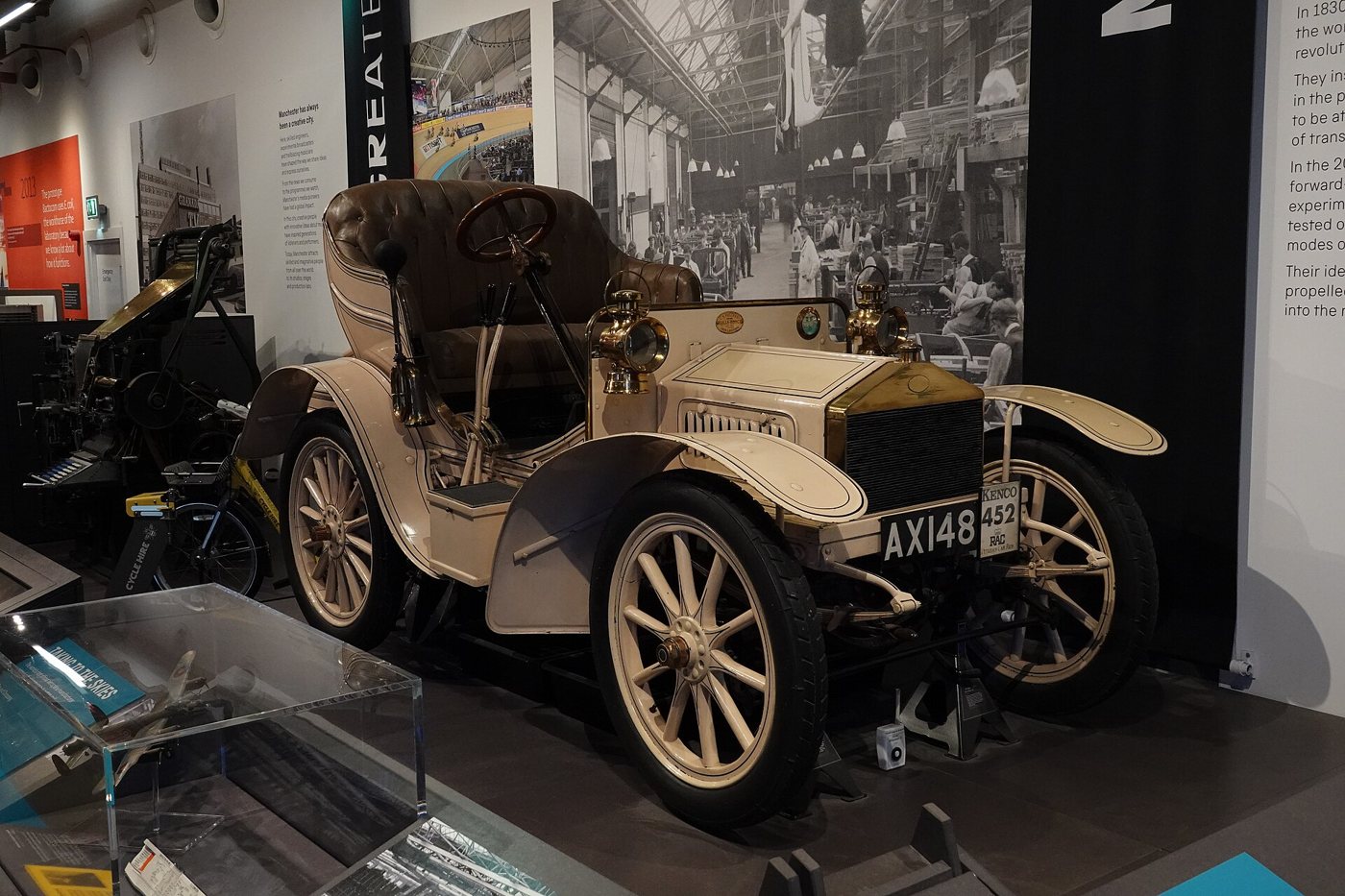
Early Royce engines, 1904–1906
Henry Royce's first engines were water-cooled, with an overhead inlet valve above a side exhaust valve (inlet-over-exhaust, or IOE). Each was built from the same 4 in (102 mm) bore and 5 in (127 mm) stroke cylinder. Multi-cylinder engines were cast in pairs of cylinders. That shared design let Rolls-Royce offer a range of 10 to 30 hp from common parts. The nominal ratings correspond to output at about 1,000 rpm.
| Model | Years | Layout | Capacity | Built |
|---|---|---|---|---|
| 10 hp | 1904–1906 | Twin, IOE | 1,800 cc, later 1,995 cc | 16 |
| 15 hp | 1905 | Three cylinders, IOE | 3,000 cc | 6 |
| 20 hp | 1905–1906 | Four cylinders in two pairs, IOE | 4,118 cc | 40 chassis |
| 30 hp | 1905–1906 | Six cylinders in three pairs, IOE | 6,000 cc | 37, possibly 38 |
| V-8 ("Legalimit") | 1905 | 90° V8, side valves | 3,535 cc (82.5 × 82.5 mm) | 3 |
The V-8 was a town car governed to the 20 mph legal limit. It is the only Rolls-Royce model with no surviving example.

The 40/50 Silver Ghost and the inter-war sixes
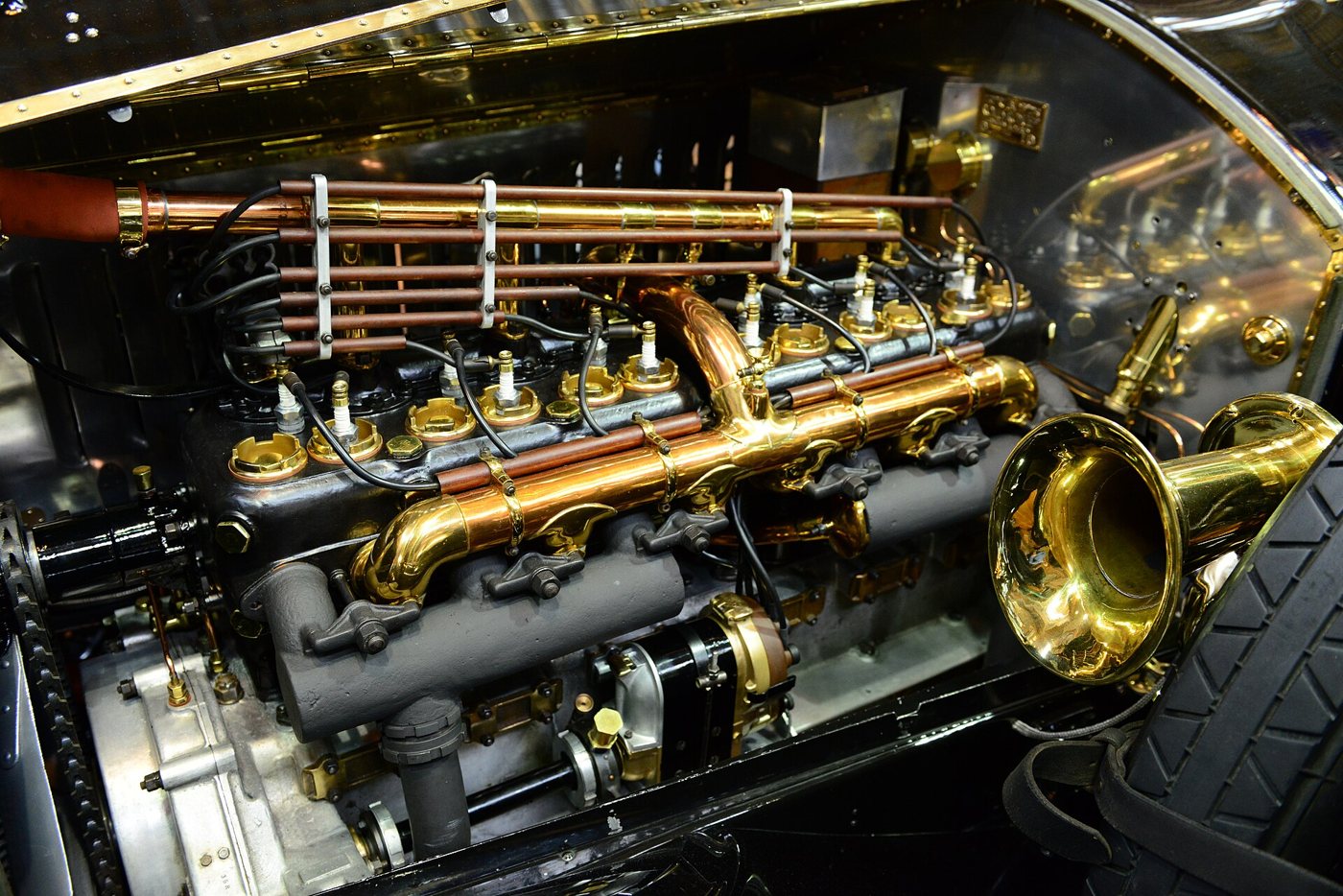
The 40/50 hp of 1906 used a side-valve inline six cast as two blocks of three cylinders. It had a seven-bearing crankshaft and two spark plugs per cylinder.
- Capacity: 7,036 cc (114.3 × 114.3 mm) at first; 7,428 cc from 1910, from a 4¾ in stroke.
- Output: about 48 bhp at 1,250 rpm initially, rising to about 80 bhp at 2,250 rpm in late cars.
- Ignition: trembler coil and magneto at first, with a magneto or coil option from 1921.
Its 15,000-mile trial of 1907 established the company's reputation for reliability.

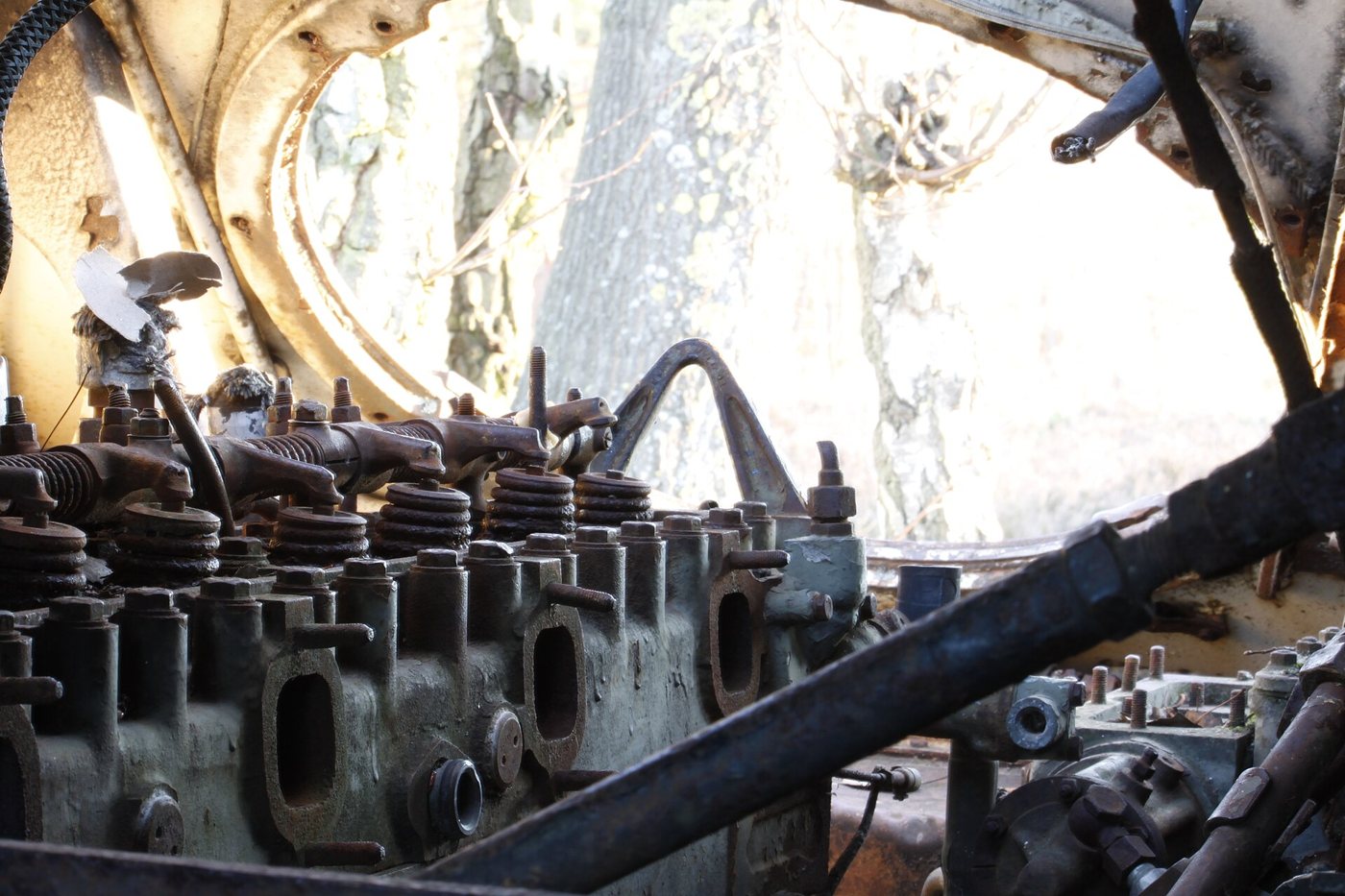
From 1922 Rolls-Royce changed to overhead valves operated by pushrods:
- Twenty (1922): 3,127 cc OHV six (76 × 114 mm).
- 20/25 (1929): enlarged to 3,669 cc (82 × 114 mm). It used a Rolls-Royce two-jet carburettor, replaced by a single-jet expanding type in 1934, and coil ignition with a standby magneto.
- 25/30 (1936): enlarged to 4,257 cc. It changed to a Stromberg downdraught carburettor and dropped the magneto.
- Wraith (1938): kept the 4,257 cc capacity with a crossflow cylinder head.
The large cars used a 7,668 cc OHV six (108 × 139.7 mm):
- Phantom (1925): later called the Phantom I, the first car with this engine.
- Phantom II (1929): same engine with a crossflow head and unit gearbox. The manufacturer quotes about 120 hp for the Phantom II.
Phantom III V12
The Phantom III of 1936 had Rolls-Royce's first production car V12.
- Construction: a 60° aluminium-alloy engine of 7,338 cc (82.5 × 114.3 mm), with a single central camshaft and pushrod overhead valves.
- Tappets: hydraulic at first, replaced by solid tappets from 1938.
- Ignition: two coils, two distributors and 24 plugs.
- Output: the manufacturer gives 165 hp at launch and 180 hp later.
Sources disagree on whether it had one twin-choke Stromberg or two Strombergs.


B-series engines, 1946–1959
Before the war Rolls-Royce designed a rationalised family of engines with shared parts, in four, six and eight cylinders. They had overhead inlet valves and side exhaust valves (the "F-head" layout). Production began at Crewe in 1946–47.
The six-cylinder version powered these cars and their Bentley equivalents:
- Silver Wraith: 4,257 cc to 1951, then 4,566 cc, then 4,887 cc from 1955.
- Silver Dawn: 4,257 cc, then 4,566 cc.
- Silver Cloud I: 4,887 cc (95.25 × 114.3 mm), 6.6:1 compression.
Carburation changed over the period:
- Silver Dawn: a Stromberg AAV26, replaced by a Zenith DBVC42 in 1952.
- Bentley Mark VI (right-hand drive): twin SU carburettors.
- Silver Cloud I: twin SU carburettors from September 1957.
The B-series straight-eight powered the 18 Phantom IVs built for royalty and heads of state. It was 5,675 cc in the first fifteen cars and 6,516 cc in the last three. Rolls-Royce never published outputs; the Silver Cloud I is commonly estimated at about 155 hp.
The same family powered many British military and commercial vehicles:
| Engine | Layout | Capacity | Rated output | Typical uses |
|---|---|---|---|---|
| B40 | Four | 2,838 cc | 80 bhp | Austin Champ |
| B60 | Six | 4,256 cc | 120 bhp | Ferret, Humber military vehicles |
| B61 | Six | 4,887 cc | 140 bhp | Commercial and military |
| B80 | Eight | 5,675 cc | 160 bhp | Saracen, Saladin |
| B81 | Eight | 6,516 cc | 185 bhp | Stalwart, FV430 series |
The FB60 was a short-stroke, aluminium-block derivative of 3,909 cc with twin SU carburettors. It produced 175 bhp and was supplied to BMC for the Vanden Plas Princess 4-litre R (1964–1968).

L-series aluminium V8, 1959–2002
The 90° V8 introduced in the Silver Cloud II and Phantom V in 1959 served every Crewe Rolls-Royce until 1998. It continued in the Corniche until 2002 and in Bentleys until 2020.
- Construction: aluminium-silicon alloy block and heads, with wet cylinder liners.
- Valve gear: a single central camshaft and pushrod-operated overhead valves, two per cylinder.
- Firing order: 1-5-4-8-6-3-7-2.
The production engine family is designated L410. "L380" refers to a smaller development engine, not to the 6.2-litre production version.
| Version | Years (Rolls-Royce) | Capacity | Bore × stroke | Notes |
|---|---|---|---|---|
| 6.2-litre | 1959–1970 | 6,230 cc | 104.14 × 91.44 mm | Silver Cloud II/III, Phantom V, early Phantom VI and Silver Shadow. Twin SU, 1¾ in (Cloud II) then 2 in (Cloud III); 9:1 compression with an 8:1 option. |
| 6.75-litre | 1970–2002 | 6,750 cc | 104.14 × 99.06 mm | Longer stroke. Silver Shadow from 1970, Phantom VI from 1978, and all later V8 Rolls-Royces. |
Suffixes in the engine designation identify later specifications:
- L410I: fuel-injected, 1986.
- L410IT: injected and turbocharged, 1987.
- L410ITI: intercooled turbo, 1991.
- L410MT and MT/S: 1997.
The Bosch application catalogue lists the Rolls-Royce engines as L410M (Corniche, 1993–1994) and L410MN1T (Silver Spirit and Spur, 1993–1997).
Turbocharged V8s
Turbocharging began with the Bentley Mulsanne Turbo of 1982, which had a Garrett turbocharger blowing through a Solex 4A1 carburettor sealed inside the vee. Rolls-Royce-badged turbo cars were few:
- Corniche S (1995): 25 cars.
- Flying Spur (1994): 134 cars, Garrett T4, about 360 bhp.
- New Silver Spirit and Silver Spur (1996 model year on): a light-pressure Garrett turbocharger, about 300 bhp in the 1997 Spur.
- Park Ward limousine (1996–1999).
- Corniche (2000–2002): light-pressure turbo, 325 bhp and 738 Nm.
Power outputs
Rolls-Royce long refused to publish engine outputs. Period magazines reported this policy, and the company described output only as "sufficient" or "adequate"; no primary brochure source has been traced for "adequate". Contemporary estimates and registration figures:
- About 220–240 bhp for the 6.2-litre engine in the Silver Cloud II and III.
- About 189 hp for the carburettor 6.75-litre Silver Shadow.
- 232 bhp at 4,320 rpm for the first fuel-injected 6.75-litre engines, falling to about 220 bhp by 1989.

BMW V12 engines, 1998 onwards
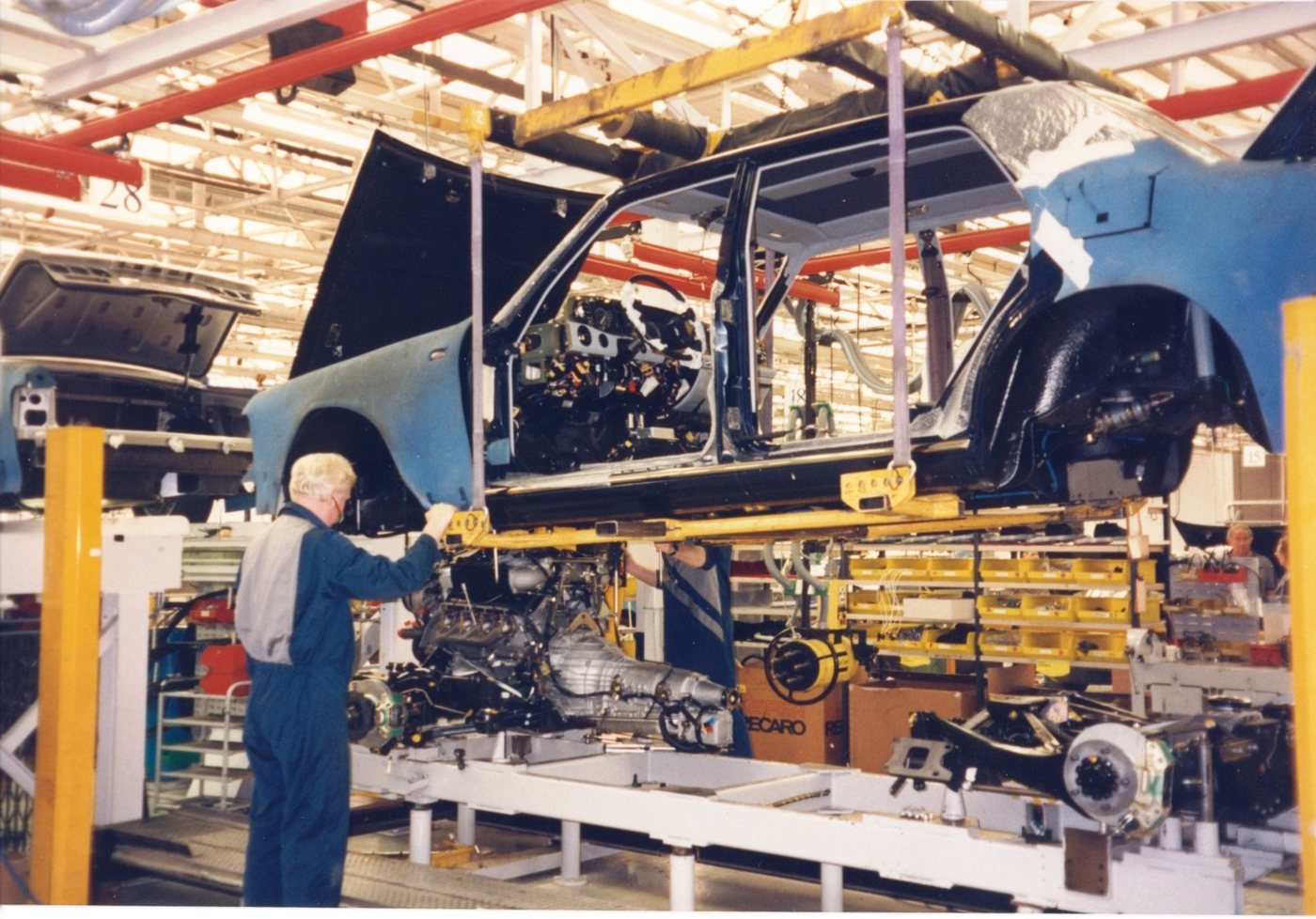
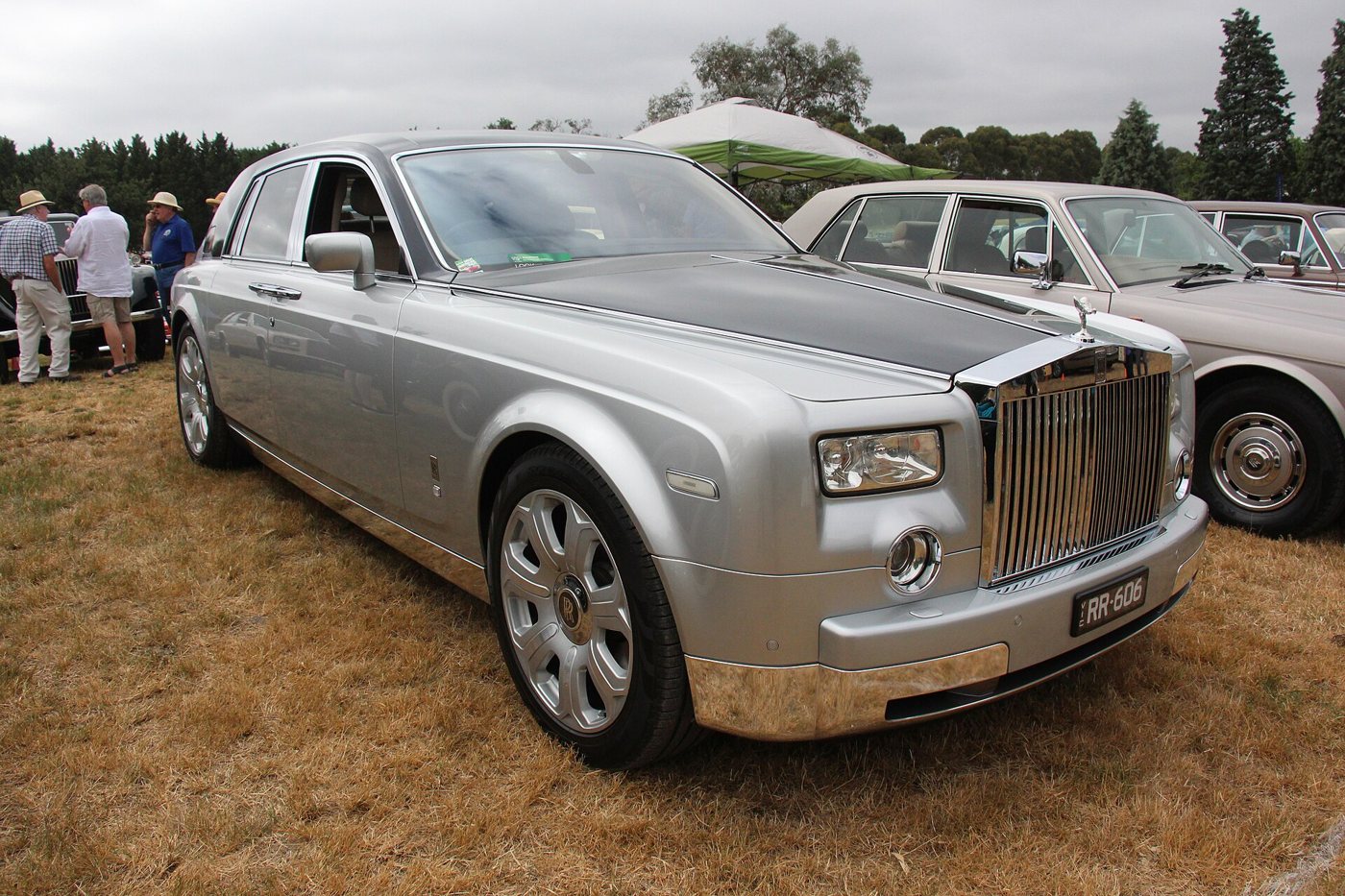
BMW supplied the V12 for the Silver Seraph of 1998. Every combustion-engined Rolls-Royce built at Goodwood since 2003 has used a BMW V12 developed or adapted for the marque.
| Engine | Models | Years | Capacity and layout | Output |
|---|---|---|---|---|
| BMW M73 (M73TU B54) | Silver Seraph; Park Ward (long wheelbase) | 1998–2002 | 5,379 cc, 60° SOHC V12, 2 valves per cylinder, 10.0:1 | 240 kW at 5,000 rpm; 490 Nm at 3,900 rpm |
| BMW N73B68 | Phantom VII, Phantom Coupé, Phantom Drophead Coupé, Series II | 2003–2016 | 6,749 cc V12, 92 × 84.6 mm, direct injection, Valvetronic, double-VANOS, 11.0:1, naturally aspirated | 338 kW (460 PS) at 5,350 rpm; 720 Nm at 3,500 rpm |
| BMW N74B66 | Ghost (first generation) | 2009–2020 | 6,592 cc twin-turbo V12, direct injection, no Valvetronic, 10.0:1 | 420 kW (570 PS); 780 Nm. Black Badge 450 kW (612 PS), 840 Nm |
| Wraith | 2013–2023 | 465 kW (632 PS); 800 Nm. Black Badge 870 Nm | ||
| Dawn | 2015–2023 | 420 kW (571 PS); 820 Nm. Black Badge about 442 kW, 840 Nm | ||
| BMW N74B68 | Phantom VIII and Series II | 2017– | 6,750 cc twin-turbo V12, direct injection | 420 kW (571 PS) at 5,000 rpm; 900 Nm from 1,700 rpm |
| Cullinan and Series II | 2018– | 420 kW; 850 Nm. Black Badge 441 kW (600 PS), 900 Nm | ||
| Ghost (second generation) and Series II | 2020– | 420 kW; 850 Nm at 1,600 rpm. Black Badge 600 PS, 900 Nm |
The N73B68 is unique to Rolls-Royce. Compared with the BMW 760i's N73B60 it has a larger bore and a longer stroke. Coachbuilt cars use the N74B68 on Phantom VIII mechanicals:
- Boat Tail (3 cars, 2021).
- Droptail (4 cars, 2023–2025).
The Wraith and Dawn Black Badge torque figures come from a manufacturer brochure excerpt that could not be read in full.

Spectre electric drive
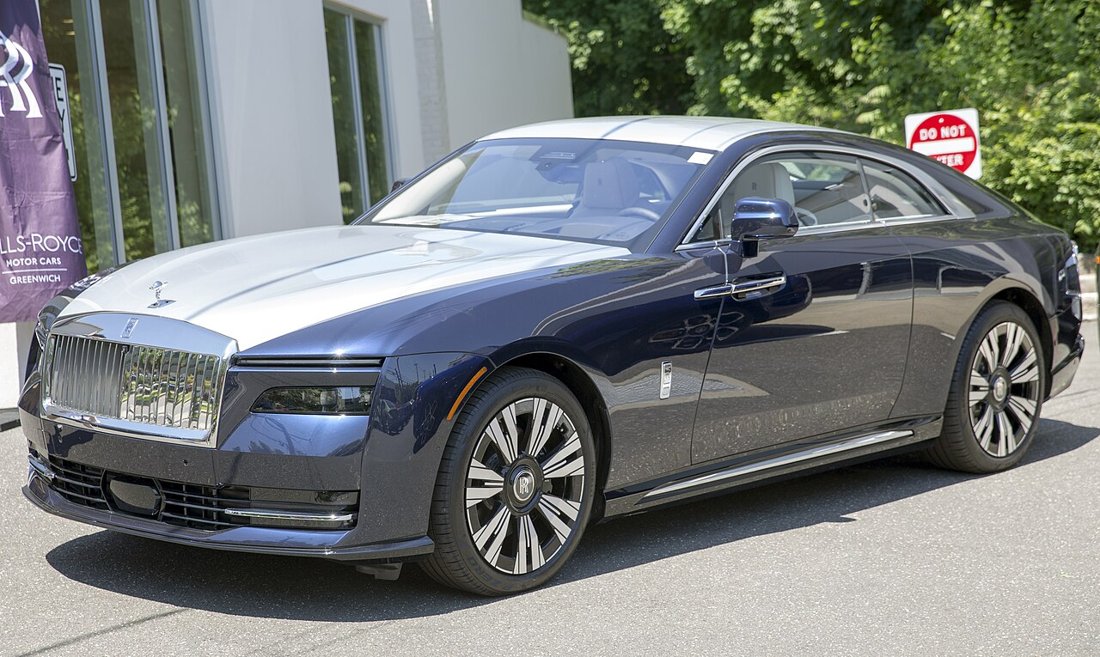
The Spectre (deliveries from late 2023) uses two BMW electrically excited synchronous motors, one on each axle, with a battery of about 102 kWh usable capacity.
| Version | Output | Torque |
|---|---|---|
| Spectre | 430 kW | 900 Nm |
| Black Badge Spectre (2025) | 485 kW | 1,075 Nm |
| Spectre Series II (announced June 2026) | 442 kW | 900 Nm (some press reports give 1,015 Nm) |
| Black Badge Spectre Series II | 500 kW | 1,100 Nm |
The Series II also brought longer range and faster charging. The Black Badge Spectre Series II is the most powerful Rolls-Royce produced so far. Rolls-Royce describes the car's electrical architecture in terms of about 141,200 sender-receiver functions and about 7 km of cable. The types of its individual control units have not been published.

Fuel, ignition and engine management in detail
The evidence column grades each identification:
- A: manufacturer, Bosch or SU catalogue data.
- B: period road test, specialist history or encyclopaedia.
- C: parts-vendor or tuner listing.
| Models | Years | Fuel system | Ignition / controller | Evidence |
|---|---|---|---|---|
| Silver Shadow (6.75 L), Corniche | 1970–1977 | Twin SU HD8 (2 in). SU lists specification AUD 526T for 1972–73 home, European and US cars. | Contact-breaker ignition until the Lucas Opus electronic system arrived in 1974, from VIN 20755 (North America) and VIN 22118 (other markets), with a Lucas 22C12 1.5 Ω coil and ballast resistor | A (SU) / C |
| Silver Shadow II, Silver Wraith II, Silver Spirit and Spur (carburettor markets) | 1977–1986 | Twin SU HIF7, emission-controlled, sealed adjustment | Opus-type electronic ignition | B / C |
| Corniche, Camargue | about 1975–1982 | Solex 4A1 four-barrel. The Camargue changed to it early in production (the changeover chassis is quoted as 31, 60 or 66). Many cars were later converted to SU because the Solex bodies warp. | Electronic | C |
| Silver Spirit, Silver Spur, Corniche (injection markets) | Japan 1980, North America 1981; all markets from 1987 model year | Bosch K-Jetronic continuous mechanical injection. Bosch lists control unit 0 280 800 017 for Silver Spirit, Spur and Corniche, 10/1980–12/1986. | Electronic ignition | A (Bosch) / B |
| Silver Spirit II, Silver Spur II, Corniche III and IV | 1989–1993 | Bosch K-Motronic, also written MK-Motronic: K-type mechanical metering with Motronic electronic control | Motronic digital ignition, twin distributors and coils. Rolls-Royce part UD72617, "CM engine Motronic", fits 1990–93 Spur, 1992–93 Spirit (chassis 44007–46740) and 1992–93 Corniche. | B / C |
| Silver Spirit III, Spur III, Corniche IV, Flying Spur | October 1993–1997 | Bosch Motronic M3.3 electronic multipoint injection | Bosch M3.3. The Bosch catalogue lists the Corniche (L410M) to 1994 and Silver Spirit and Spur (L410MN1T) to 1997. | A (Bosch catalogue) / B |
| New Silver Spirit and Spur, Park Ward limousine | 1996–2000 | Light-pressure turbo, 8:1 compression, electronic injection | Zytek engine management, as used on contemporary Bentley turbo models | B / C |
| Corniche | 2000–2002 | Light-pressure turbo L410MT | Not established; Zytek is likely by analogy with the contemporary Bentley Arnage Red Label | Inference |
| Silver Seraph, Park Ward | 1998–2002 | Bosch Motronic sequential multipoint injection; Siemens electronic throttle (EML) | Two Bosch Motronic controllers, one per cylinder bank, of the M5.2 family. A vendor lists the Seraph unit as ME5.2.1, Bosch 0 261 204 466; this exact variant is single-source. | B / C |
| Phantom VII, Coupé, Drophead Coupé (RR1–RR3) | 2003–2016 | High-pressure direct injection, Valvetronic | Bosch MED9.2.2, with Bosch numbers 0 261 S02 567 (Phantom RR1, 338 kW, 03/2003–12/2016) and 0 261 S02 893 (BMW 12 14 8 606 024). BMW's N73 documentation describes two identical controllers, master and slave, one per bank. The Phantom is presumed to use the same pair. Compare the MED9.2.1 on the BMW N73B60. | A (Bosch) / B |
| Ghost I, Wraith, Dawn (RR4–RR6) | 2009–2023 | Twin-turbo direct injection | Continental (Siemens) MSD87. Two DMEs are likely, as on the BMW 760Li N74, but this is not verified for Rolls-Royce. | C |
| Phantom VIII, Cullinan, Ghost II (RR11/12, RR31, RR21/22) | 2017– | Twin-turbo direct injection | Bosch MG1CS201 for the Cullinan, from one tuner listing. The BMW M760Li's N74 is listed with MG1CS003 or MG1CS201. Not established for the Phantom VIII and Ghost II. | C |
Two points need checking on the car itself:
- Silver Spirit IV and New Spur (1996): the Bosch catalogue lists Motronic M3.3 to 1997, while Rolls-Royce specialists give Zytek management for the turbocharged 1996 model-year cars. Both are probably correct for different builds. The chassis or engine number at which Zytek replaced M3.3 has not been published, so confirm the controller on the car.
- Phantom VII controller: sources variously give ME9.2, MED9.2.1 and MED9.2.2. The Bosch listings that name Rolls-Royce applications specify MED9.2.2. The other names are BMW-family generalisations.
Diagnostics
- BMW-era cars (2003 onwards): diagnosed with BMW ISTA through the 16-pin connector. Rolls-Royce service bulletins direct technicians to ISTA for the N74-engined RR11, RR12, RR21, RR22 and RR31 models. Model codes: RR1 (Phantom VII), RR4 (Ghost I), RR5 (Wraith), RR6 (Dawn), RR11 (Phantom VIII), RR31 (Cullinan). See specialist BMW diagnostic tools.
- Crewe cars, 1993–2006: covered by aftermarket scan tools such as an OMITEC unit that Rolls-Royce and Bentley specialists supplied.
- Earlier Motronic and K-Jetronic cars: follow Bosch test procedures; no factory fault-code procedure for pre-1993 cars has been traced.
Not established
- The carburettor type of the Silver Ghost, and whether the Phantom III had one or two Strombergs.
- Phantom VI carburation after 1975.
- Ignition hardware of the L410 after the Opus era.
- The Zytek hardware and part numbers for Rolls-Royce models.
- The engine management of the 2000–2002 Corniche.
- The controllers of the Phantom VIII and Ghost II.
- The bore and stroke of the N74B68.
- The Spectre's control-unit types.
Sources
- Models of the Marque: the 1900s, the Royce 10 hp, Rolls-Royce Motor Cars newsroom, 24 April 2024. Accessed 19 November 2026.
- Models of the Marque: the 1930s, the Phantom III, Rolls-Royce Motor Cars newsroom, 1 August 2024. Accessed 19 November 2026.
- Rolls-Royce 10 hp, 15 hp, 20 hp (1905), 30 hp and V-8 (1905), Wikipedia, secondary encyclopaedia articles. Accessed 19 November 2026.
- Rolls-Royce Silver Ghost, Twenty, 20/25, 25/30, Phantom I, Phantom II and Phantom III, Wikipedia. Accessed 19 November 2026.
- Rolls-Royce: Cars, Grace's Guide to British Industrial History, undated. Accessed 19 November 2026.
- Rolls-Royce B range engine, Silver Dawn, Silver Cloud, Phantom IV and Vanden Plas Princess, Wikipedia. Accessed 19 November 2026.
- Rolls-Royce–Bentley L-series V8 engine, Wikipedia. Accessed 19 November 2026.
- Rolls-Royce power outputs, Motor Sport, August 1963; A new Silver Shadow, Motor Sport, April 1977; Bentley Mulsanne Turbo, Motor Sport, June 1982. Period magazine reports. Accessed 19 November 2026.
- SU carburettor specification AUD 526T, Burlen/SU catalogue. Accessed 19 November 2026.
- Shadow, T2 and Corniche electronic ignition; HIF7 carburettor 1977–1986; SU conversion kit for Solex Corniche; Buyer's guide: Silver Spirit and Spur; 8:1 CR engine, 1996 MY turbo, Flying Spares, parts specialist listings. Accessed 19 November 2026.
- K-Jetronic 0 280 800 017 and MED9.2.2 0 261 S02 893, Bosch repair service application listings; the site returned errors when fetched, so the details come from search excerpts. Accessed 19 November 2026.
- Bosch vehicle component applications, manufacturer catalogue (independent PDF mirror). Accessed 17 November 2026.
- CM engine Motronic UD72617, Introcar, parts listing. Accessed 19 November 2026.
- Rolls-Royce Mk II Silver Spur 1989–93 and Silver Seraph 1998–02, australiancar.reviews, specialist reviews. Accessed 19 November 2026.
- Rolls-Royce Silver Spirit, Corniche (2000), Bentley Turbo R and Bentley Arnage, Wikipedia. Accessed 19 November 2026.
- BMW M73, BMW N73 and BMW N74, Wikipedia. Accessed 19 November 2026.
- Rolls-Royce Ghost, Phantom (2017), Cullinan and Spectre, Wikipedia. Accessed 19 November 2026.
- Rolls-Royce Ghost 6.6 V12, Wraith 6.6 V12 and Cullinan 6.75 V12, Byteflash, tuner ECU listings; Wraith 6.6 V12, Chiptuning Reseller, tuner listing. Accessed 19 November 2026.
- Rolls-Royce technical service bulletin, filed with NHTSA, 2021. Accessed 19 November 2026.
- Rolls-Royce Spectre performance data revealed, electrive, 18 October 2022; Spectre Series II, electrifying.com, June 2026; Spectre has 7 kilometres of cables, BMWBlog, 3 April 2022. Accessed 19 November 2026.