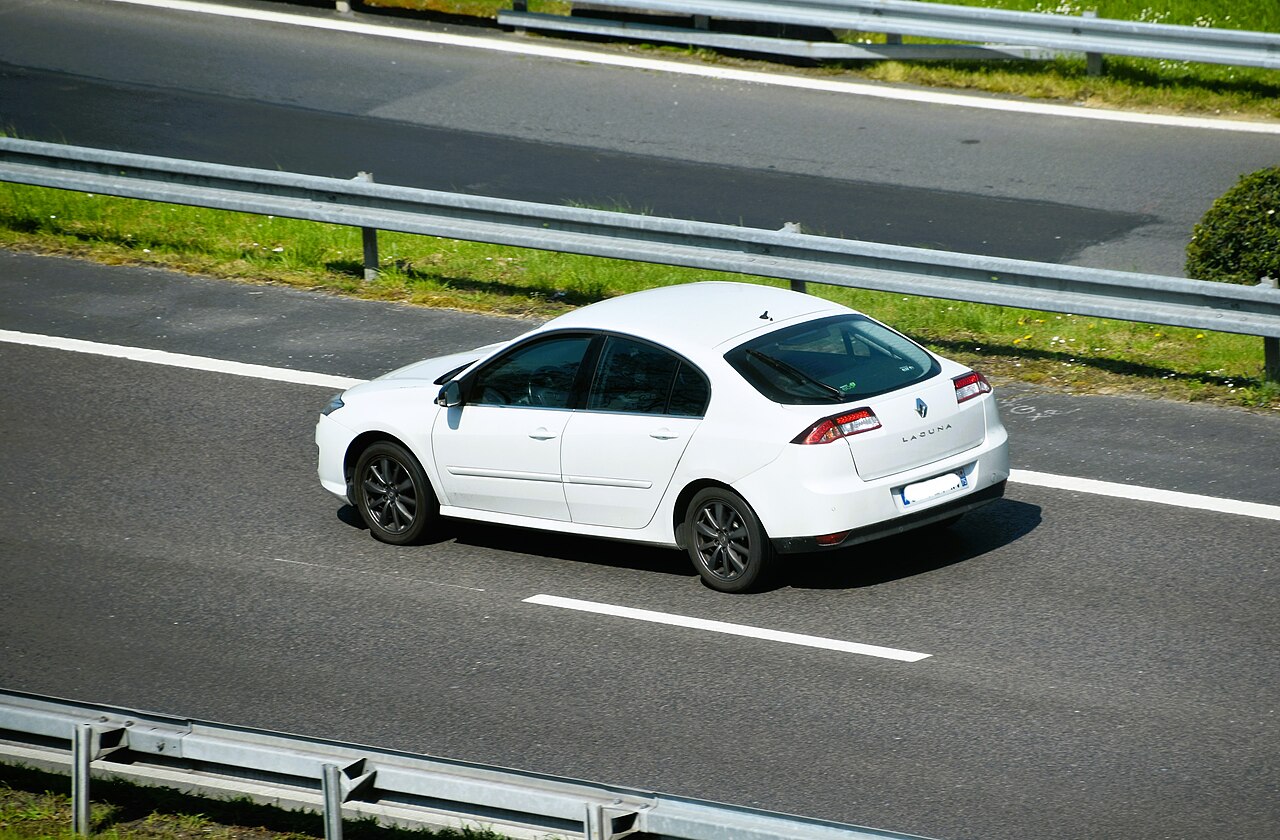

The M9R is the 2.0-litre common-rail diesel developed by the Renault–Nissan Alliance and first fitted to the Renault Laguna in 2006. It was used across Renault and Nissan cars, crossovers and vans. Late in 2018 it was redesigned as the M9R Gen 5 with different dimensions. This guide covers identifying the engine and controller, health checks before calibration, the calibration areas involved and how to validate the result. It does not give map addresses or values, which depend on the exact ECU software.
Engine identification
The original M9R displaces 1,995 cc with an 84 mm bore and 90 mm stroke and a 15.6:1 compression ratio. It is a turbocharged sixteen-valve engine with common-rail direct injection; versions from 96 kW (131 PS) use variable-geometry turbochargers. The Gen 5 engine from late 2018 has an 85 mm bore, 88 mm stroke, 1,997 cc and 16.0:1 compression, with an AdBlue system. Nissan MR engine, Wikipedia. The source is tagged as needing more citations.
| Version | Notes from the source |
|---|---|
| 66 and 85 kW | Lower-output Trafic II versions, later replaced by the 1.6 R-Type engine |
| 130 and 150 PS | The 150 PS version gives 340 N·m at 2,000 rpm; "Energy dCi 130" and "150" updates from 2011 |
| 175 PS | With particulate filter, in the Laguna and X-Trail |
| 180 PS | Laguna GT |
| 160, 190 and 200 PS | Gen 5 Blue dCi, from December 2018 |
Vehicles listed include the Renault Laguna, Mégane, Scénic, Koleos, Espace IV and V, Vel Satis, Latitude and Trafic; the Nissan Qashqai, X-Trail, Teana and Primastar; and the Vauxhall and Opel Vivaro. Read the full engine code from the engine plate and record the rated output, and establish whether the engine is an original M9R or a Gen 5 before anything else.
ECU identification
- Bosch EDC16CP33. Alientech lists EDC16CP33 on the 2.0 dCi in the Nissan Qashqai and X-Trail and the Renault Mégane, Mégane RS, Espace and Scénic, with torque, injection, limiter, turbo and rail functions in ECM Titanium. Alientech EDC16CP33 driver update. See Bosch EDC16CP33, which includes a photographed X-Trail 2.0 dCi unit.
- Bosch EDC17C42. AutoTuner lists OBD read and write for the Renault 2.0 dCi under EDC17C42, a controller it also lists on the 1.5, 1.6 and 2.3 dCi. AutoTuner, June 2018. Abrites lists the 2014 Primastar 2.0 dCi with EDC17C42 and a TC1767 processor. Abrites compatibility list.
- Bosch EDC17C11. The same Abrites list gives the 2012 and 2013 Primastar 2.0 dCi with EDC17C11 and a TC1766 processor, so the controller changed within one van range.
- Gen 5 engines. No source checked for this guide identifies the controller on the 2018-onward Gen 5. Unverified: identify it from the ECU label.
These are tool listings, not a factory build record, and none gives the engine suffix. Read the Bosch part number and software identification before choosing a file, definition or tool protocol. An EDC16CP33 file does not transfer to an EDC17C42 controller, and an EDC17C42 file from a 1.5 or 1.6 dCi does not transfer to the 2.0.
Health checks before tuning
- Injectors. Check injector condition and stored correction values. AutoTuner states that its protocol handles injector coding during writes on specified Renault EDC16CP33 units; confirm what the tool in use preserves before writing.
- Air, boost and aftertreatment. Check for boost leaks, variable-geometry turbo actuator faults, EGR problems and air-mass readings. Where a particulate filter is fitted, check its loading and regeneration history; on Gen 5 engines also check the AdBlue system.
- Fault memory. Read and understand all stored faults first.
- Driveline. Check the clutch, dual-mass flywheel, gearbox and, on four-wheel-drive models, the transfer components before increasing torque. On automatic cars, check gearbox torque limits as well as the engine's.
Calibration areas
EDC16 and EDC17 are torque-based. Changes to one area need matching changes elsewhere. See EDC16 torque fuel and tuning basics and EDC17 torque fuel and tuning basics. The main areas are:
- Driver demand and torque limits, including gearbox and driveline protection.
- Torque-to-fuel conversion and smoke limits, which tie the injected quantity to measured air mass.
- Boost control, including the target, its limits and variable-geometry actuator control. Stay within the turbocharger's operating range.
- Rail pressure and injection timing, which affect combustion pressure, noise and exhaust temperature.
- Protection strategies, which should remain active.
Work from a definition matched to the exact software identification; see Choosing ECU definition files.
Reading, writing and validation
Check the current documentation of the tool for the exact ECU and software, keep a verified copy of the original read, and support the battery voltage while programming. Renault's factory diagnostic application is described in Renault CLIP and Alliance Diagnostic Tool.
- Log requested and actual boost, air mass, injected quantity and rail pressure before and after the change, under the same conditions.
- Check for smoke, high exhaust temperature, clutch slip or gearbox faults and any new fault codes. Where a particulate filter is fitted, confirm that regeneration and differential-pressure readings remain normal.
Emissions and legal limits
Disabling or removing EGR, particulate-filter, AdBlue or other emissions equipment on a road vehicle can be unlawful and can fail inspection. Calibrate with all emissions equipment working. See Emissions cheating, defeat devices and enforcement cases.
Related pages
- Bosch EDC16CP33
- Renault M9T 2.3 dCi tuning guide
- Renault G9T 2.2 dCi tuning guide
- Renault G9U 2.5 dCi tuning guide
- Renault K9K 1.5 dCi tuning guide
Sources
- Wikipedia, Nissan MR engine, M9R section: dimensions, versions, vehicles and the 2018 Gen 5 redesign. Accessed 19 November 2026. Secondary source tagged as needing more citations.
- Alientech, ECM Titanium driver update for Bosch EDC16CP33. Undated. Accessed 19 November 2026. Tool coverage, not a build record.
- AutoTuner, Renault, Dacia, Nissan, Opel and Mercedes 1.5 to 2.3 dCi, Bosch EDC17C42, 14 June 2018. Accessed 19 November 2026.
- Abrites, ECU compatibility list, Primastar 2.0 dCi entries for 2012 to 2014. Accessed 19 November 2026; page numbers may shift.