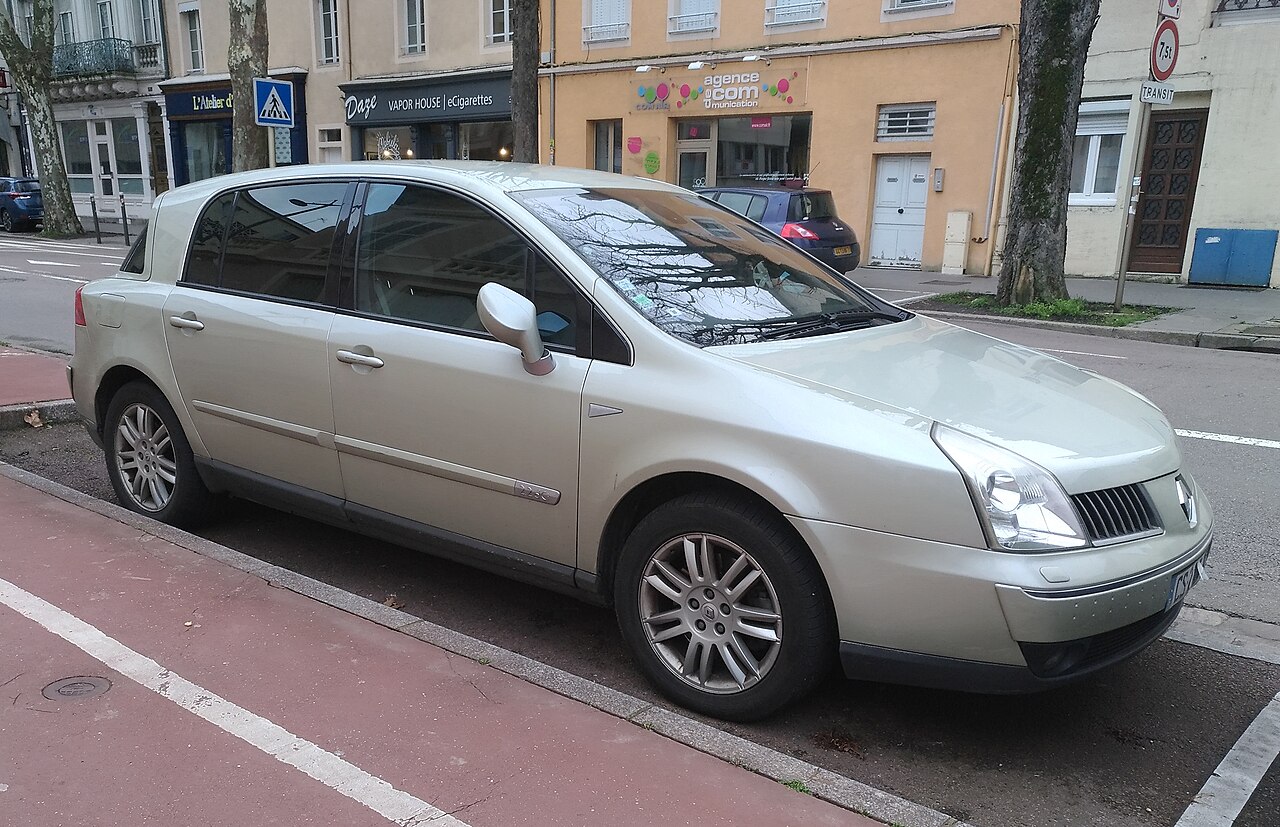

The Renault G9T is the 2.2-litre common-rail diesel of the G-Type family. It powered the larger Renault cars of the early 2000s, including the Laguna II, Espace IV, Vel Satis and Avantime, and the first-generation Master and its twins. This guide covers identifying the engine and controller, health checks before calibration, the calibration areas involved and how to validate the result. It does not give map addresses or values, which depend on the exact ECU software.
Engine identification
The G9T displaces 2,188 cc with an 87 mm bore and 92 mm stroke. It is a turbocharged, double-overhead-camshaft, sixteen-valve engine with common-rail direct injection and an 18.0:1 compression ratio. The G8T is the older indirect-injection 2.2 and the G9U is the 2.5 dCi. Renault G-Type engine, Wikipedia.
| Output | Torque | Year listed |
|---|---|---|
| 90 PS (66 kW) at 3,650 rpm | 260 N·m at 1,500 rpm | 2003 |
| 115 PS (85 kW) at 4,000 rpm | 296 N·m at 1,750 rpm | 2001 |
| 130 PS (96 kW) at 4,000 rpm | Not given | Not given |
| 150 PS (110 kW) at 4,000 rpm | 320 or 327 N·m at 1,750 rpm | 2002 |
The same source lists the G9T in the Espace IV, Vel Satis, Avantime and Laguna II, and in the Master II, Nissan Interstar and Opel and Vauxhall Movano from 1999 to 2003. Its table uses merged cells, so the pairing of some outputs and torque figures is inferred. Read the full engine code from the engine plate (for example G9T 600 or G9T 702) and record the vehicle's rated output.
ECU identification
No manufacturer source checked for this guide maps G9T versions to controllers. Tuning vendors and owners report Bosch EDC15 units on the earlier cars:
- Bosch EDC15C2. A tuning-file vendor lists the Vel Satis 2.2 dCi 150 hp, G9T, with an EDC15C2 at 320 N·m. See Bosch EDC15C2. Tool coverage, not a build record.
- Bosch EDC15C3. Owner discussion associates EDC15C3 with the Laguna II 2.2 dCi 150 hp. See Bosch EDC15C3. Unverified: owner reports, not Renault or Bosch documentation.
- Later Espace IV. Tuning listings suggest EDC16-generation controllers on later Espace IV 2.2 dCi models, but the details found were inconsistent. Unverified: identify from the ECU label.
Both EDC15C2 and EDC15C3 are also reported on Renault's 1.9 dCi, including a service listing for EDC15C2 on the Laguna 1.9 and 2.2 dCi, so the controller name alone does not identify the engine or software. Read the Bosch part number and software identification before choosing a file, definition or tool protocol. An EDC15 file does not transfer to an EDC16 controller, and a 1.9 dCi file does not transfer to the 2.2.
Health checks before tuning
- Injectors. Check injector condition and any stored correction values before judging fuelling.
- Air and boost. Check for boost leaks, turbocharger actuator faults, EGR problems and air-mass readings.
- Fault memory. Read and understand all stored faults first. A calibration change is not a fix for an existing fault.
- Driveline. Check the clutch, dual-mass flywheel where fitted and gearbox before increasing torque. On automatic cars, check gearbox torque limits as well as the engine's.
Calibration areas
EDC15 calibrates the engine mainly through injected quantity and its limiters; EDC16 adds a torque-based structure. The two need different definitions. See EDC15 fuel control and tuning basics and EDC16 torque fuel and tuning basics. The main areas are:
- Driver demand and quantity or torque limits, including gearbox protection.
- Smoke limits, which tie the injected quantity to measured air mass.
- Boost control, including the target and its limits. Stay within the turbocharger's operating range.
- Rail pressure and injection timing, which affect combustion pressure, noise and exhaust temperature.
- Protection strategies, which should remain active.
Work from a definition matched to the exact software identification; see Choosing ECU definition files.
Reading, writing and validation
Check the current documentation of the tool for the exact ECU and software, keep a verified copy of the original read, and support the battery voltage while programming. Renault's factory diagnostic application is described in Renault CLIP and Alliance Diagnostic Tool.
- Log requested and actual boost, air mass, injected quantity and rail pressure before and after the change, under the same conditions.
- Check for smoke, high exhaust temperature, clutch slip or gearbox faults, and any new fault codes.
Emissions and legal limits
Disabling or removing EGR or other emissions equipment on a road vehicle can be unlawful and can fail inspection. Calibrate with all emissions equipment working. See Emissions cheating, defeat devices and enforcement cases.
Related pages
- Renault G9U 2.5 dCi tuning guide
- Renault M9R 2.0 dCi tuning guide
- Renault F9Q 1.9 dCi tuning guide
- Renault K9K 1.5 dCi tuning guide
Sources
- Wikipedia, Renault G-Type engine: dimensions, outputs and vehicles. Accessed 19 November 2026. Secondary source; its output table uses merged cells.
- Chiptuning vendor listing, Renault Vel Satis 2.2 dCi 150 hp: G9T, Bosch EDC15C2, 320 N·m. Accessed 19 November 2026. Tool coverage, not a build record.
- Owner discussion of EDC15C3 on the Laguna II 2.2 dCi: Planète Renault. Unofficial; not confirmed by Renault or Bosch documentation.