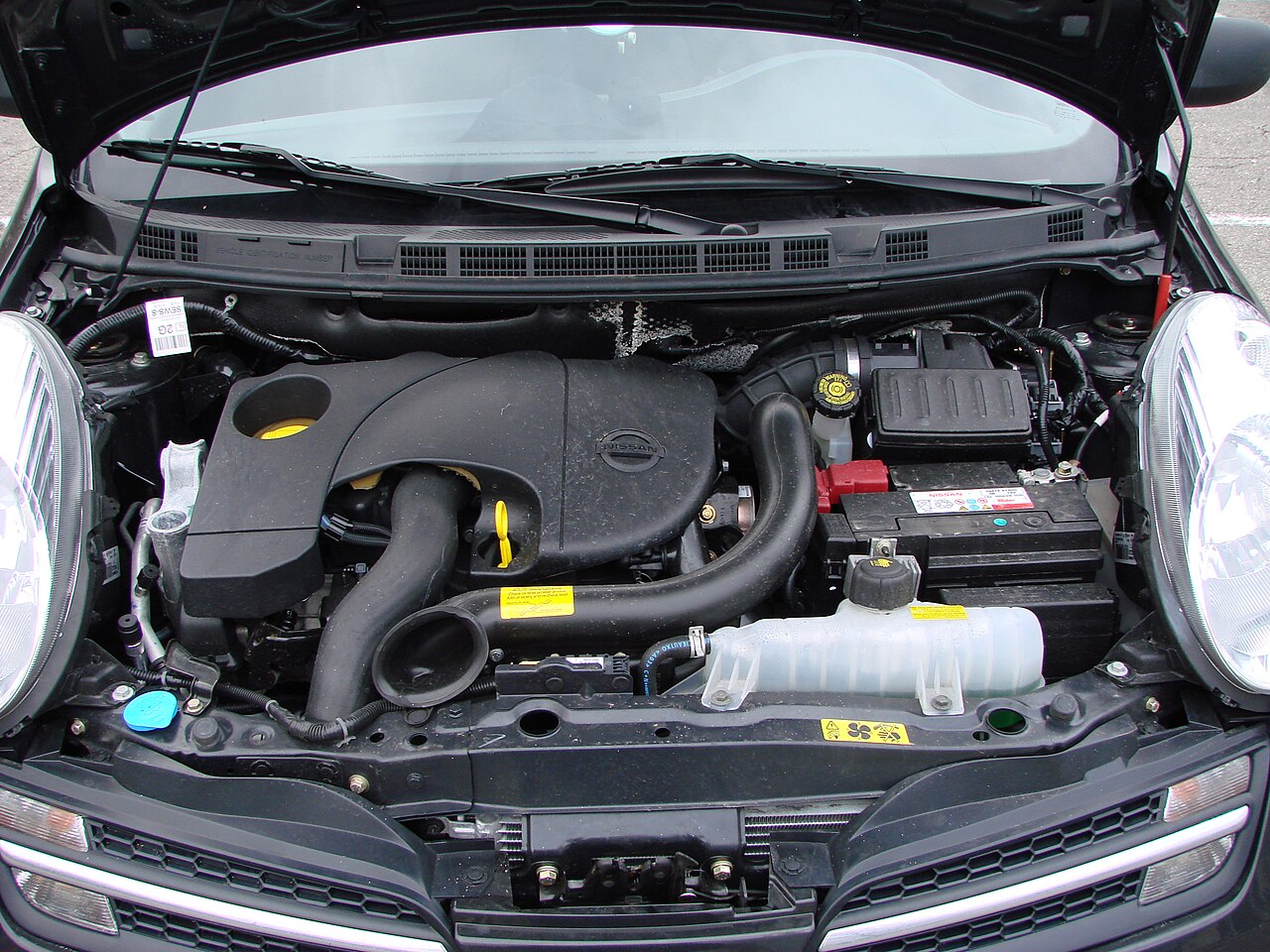

The Renault K9K is the 1.5 dCi four-cylinder common-rail diesel used across Renault, Dacia and Nissan models since 2001, and as the Mercedes-Benz OM607/OM608. This guide covers what to establish before calibrating one: the exact engine and controller, the health of the engine, the calibration areas involved and how to validate the result. It does not supply map addresses or values; those depend on the exact ECU software.
Engine identification
The K9K displaces 1,461 cc with a 76 mm bore and 80.5 mm stroke. It is a single-overhead-camshaft, eight-valve engine with a 15.2:1 compression ratio. Published outputs span about 65 to 115 PS, grouped by emissions standard as follows. Renault K-Type engine, Wikipedia.
| Emissions standard | Published outputs |
|---|---|
| Euro 3 | 65, 80 and 100 PS |
| Euro 4 | 70, 85 and 106 PS |
| Euro 5 | 75, 90 and 110 PS |
| Later BlueDCi (K9K 872/873/874) | 95 to 115 PS |
The same source describes low-power, high-power and variable-geometry-turbo versions, with Garrett and BorgWarner turbochargers, but does not map turbo type to each engine code. Enthusiast sources disagree about which outputs use a fixed or variable-geometry turbo and which have a particulate filter. Confirm the engine suffix (for example K9K 732 or K9K 896), turbocharger part number and aftertreatment on the vehicle itself rather than inferring them from the power rating.
ECU identification
The K9K has been paired with controllers from several suppliers. The family name alone does not identify the ECU, its software or how it can be read.
- Delphi. Wikipedia attributes the lower-power versions (up to 90 PS) to Delphi. Renault's DCM 1.2 fault-finding manual covers K9K 718, 724, 740, 750, 752, 766, 768, 800, 802 and 812 in Clio III, Modus, Mégane II/Scénic II, New Twingo and Kangoo 2. See Delphi DCM 1.1 for the Euro 3 generation, Delphi DCM 1.2 and Delphi DCM 3.4, which also lists Scénic III and Dacia Logan diagnostic coverage.
- Continental (formerly Siemens) SID. Wikipedia attributes the higher-power versions (95 PS and above) to Continental. Alientech lists SID301 and SID305 on K9K engines in Clio II, Mégane II and III, Scénic II, Kangoo II, Laguna II, Dacia Duster, Nissan Qashqai J10, Juke F15 and NV200. Alientech, February 2022. Tuning-tool lists also name SID307 and SID310 on later K9K applications; treat those as tool coverage, not build records.
- Bosch. Wikipedia states that Bosch replaced Delphi on Euro 5 versions, but that statement is marked as needing a citation. Abrites lists Bosch EDC17C42 on a 2017 Captur 1.5 dCi automatic. Tool listings show Bosch EDC17C84 on some later 1.5 dCi applications such as Clio IV. Unverified: confirm on the ECU label.
Read the hardware and software identification with the diagnostic tool and check the ECU label before selecting a file, tool protocol or procedure. Snap-on's coverage guide lists both DCM 1.2 and DCM 3.4 for the same Dacia Logan K9K years, which shows that model, year and engine alone are not enough.
Health checks before tuning
- Injectors and correction codes. On Renault's DCM 1.2 programme, each injector carries a C2I correction value that must be entered into the ECU after replacement. Check that the stored codes match the fitted injectors before judging fuelling. Follow the procedure for the exact ECU; DCM 1.2 instructions do not automatically apply to other controllers.
- Cylinder numbering. Renault's DCM 1.2 manual numbers cylinder 1 at the flywheel end. Use the vehicle's own documentation when reading per-cylinder data.
- Bottom end and oil. Owner and enthusiast sources repeatedly associate K9K crankshaft-bearing failures with long oil-change intervals, particularly on earlier engines. No Renault service bulletin was found to confirm this. Unverified: treat it as a reason to check oil history, oil pressure and bearing noise before increasing torque, not as an established failure rate.
- Air, boost and aftertreatment. Check for boost leaks, a sticking turbo actuator, EGR faults and, where fitted, particulate-filter loading and regeneration history. Clear and understand stored faults first.
Calibration areas
A K9K calibration follows the same principles as other torque-based common-rail diesels. Changes to one area need matching changes elsewhere:
- Driver demand and torque limits: the requested torque and the limiters that cap it, including gearbox and clutch protection.
- Torque-to-fuel conversion and smoke limits: injected quantity for a given torque, and the air-mass limits that prevent excessive smoke.
- Boost control: target boost, its limits and, on variable-geometry turbos, actuator control. Stay within the turbocharger's limits.
- Rail pressure and injection timing: pressure targets and start of injection, which affect combustion pressure, noise and exhaust temperature.
- Protection: exhaust-temperature and component-protection strategies should remain active.
Map names, axes and structure differ between Delphi, Continental and Bosch software. Work from a definition matched to the exact software identification; see Choosing ECU definition files.
Reading, writing and logging
Tool support depends on the controller and software version. AutoTuner lists OBD read and write for its supported DCM 3.4(+) SH7058/SH7059 group and Renault-group datalogging that includes DCM 3.4. Alientech lists SID301 and SID305 support for K-TAG and KESSv2. Check the tool's current documentation for the exact ECU, keep a verified copy of the original read and maintain a stable battery supply while programming.
Renault's factory diagnostic application is described in Renault CLIP and Alliance Diagnostic Tool.
Validation
- Log requested and actual boost, injected quantity, rail pressure, and requested and measured air mass before and after the change, under the same conditions.
- Check for smoke, exhaust temperature, clutch slip and any new fault codes.
- Where a particulate filter is fitted, confirm that regeneration and differential-pressure readings remain normal.
Emissions and legal limits
Disabling or removing EGR, particulate-filter or other emissions equipment on a road vehicle can be unlawful and can fail inspection. Calibrate with all emissions equipment working. See Emissions cheating, defeat devices and enforcement cases.
For Renault's larger 1.9 dCi diesel, see the Renault F9Q 1.9 dCi tuning guide.
Sources
- Wikipedia, Renault K-Type engine: dimensions, outputs by emissions standard, engine codes and supplier statements. Accessed 19 November 2026. Secondary source; one supplier statement is marked as needing a citation.
- Renault, DCM 1.2 injection fault-finding manual MR-413-X44-13B000, as cited on Delphi DCM 1.2.
- Snap-on 19.2 coverage guide and AutoTuner DCM 3.4(+) listings, as cited on Delphi DCM 3.4.
- Alientech, New driver update for ECU Continental SID301 and SID305, 14 February 2022. Tool coverage, not a build record.
- Bearing-failure and oil-interval reports: owner and enthusiast sources such as AutoHints K9K review. Unofficial; not confirmed by Renault documentation.