Removed text is struck through; added text is highlighted.
Country of origin: United Kingdom. Part of Car makes and the history of the motor car.
History and development
Colin Chapman founded the business that became Lotus, a British manufacturer whose road and racing cars are closely associated with light weight and chassis engineering. Wikipedia: Lotus history.
Lotus has used a range of engines from different manufacturers. The Elise and Exige also appeared with several factory supercharger installations, which are not necessarily interchangeable.
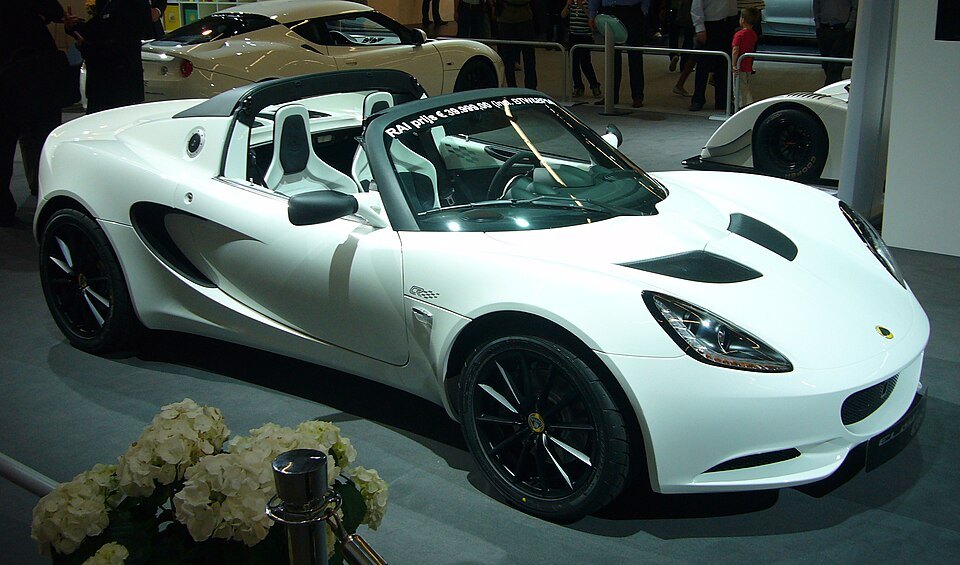
A Lotus Elise Club Racer; the pictured car is not identified as an Elise SC. Photo: Overlaet, Wikimedia Commons, CC BY-SA 3.0; resized and re-encoded.
Selected cars and engines
Examples are selected rather than a complete production list. Engine and equipment specifications can vary with year and market.
CarWhy it mattersEvidenceElise SC, 2008 model yearA 1.8-litre Toyota 2ZZ-GE four with an Eaton M45 rotor pack in a Lotus-specific integral housing.Eaton fitment guideExige 240RThe 1.8-litre Toyota 2ZZ-GE installation used an Eaton M62 and a roof-fed air-to-air intercooler.Eaton fitment guideElanA lightweight sports-car name used on different Lotus generations.Model referenceEspritA mid-engined sports car produced with several four-cylinder and V8 engines across its life.Model reference
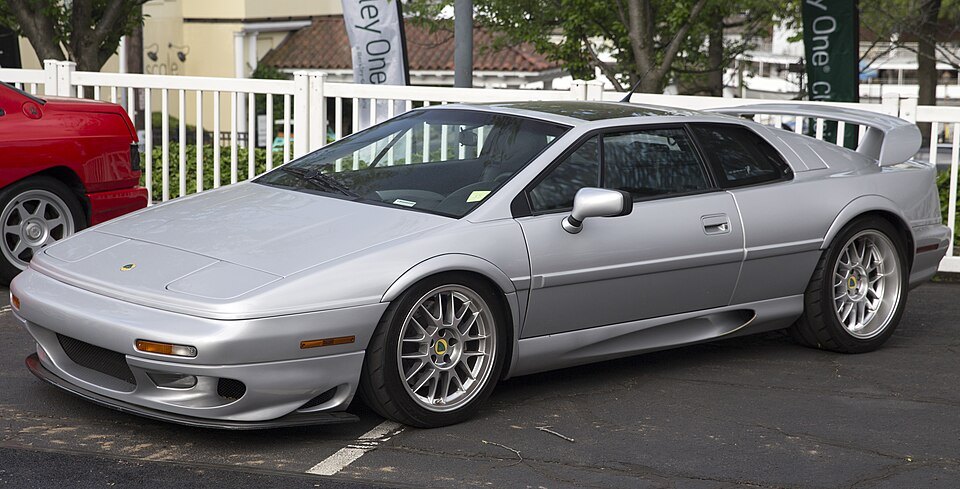
More models and representative enginesThese are specific examples rather than every engine offered. Equipment, output and capacity can change with model year and market; identify the exact vehicle before ordering parts.A Lotus Esprit V8. Photo: Mr.choppers, Wikimedia Commons, CC BY-SA 4.0; resized and re-encoded.Model and versionEngine or powertrainEvidenceEsprit V8A 3.5-litre Lotus 918 V8 with twin turbochargers; earlier four-cylinder Esprits had different engines.Manufacturer or technical sourceElan M100 SEA 1.6-litre turbocharged four-cylinder driving the front wheels in the SE.Manufacturer or technical sourceExige S V6A 3.5-litre supercharged Toyota-derived V6 in the V6 Exige S.Manufacturer or technical sourceEvoraEarly Evora models used a 3.5-litre naturally aspirated Toyota-derived V6; later versions were supercharged.Manufacturer or technical source
Identifying a car and engine
Use the VIN, market, model year and engine code when researching servicing, tuning or parts. A model badge may cover naturally aspirated, turbocharged, supercharged, hybrid or electric versions depending on the particular vehicle. Factory fitment and aftermarket conversions are distinguished in the linked guides.
Sources and related reading
Wikipedia: Lotus — marque history and further references.Tuning Wiki: illustrated turbocharged-car timeline.Tuning Wiki: supercharger types and Eaton guides.
Rendered revisions
Open each version to inspect formatting, tables and photographs.
Colin Chapman founded the business that became Lotus, a British manufacturer whose road and racing cars are closely associated with light weight and chassis engineering. Wikipedia: Lotus history.
Lotus has used a range of engines from different manufacturers. The Elise and Exige also appeared with several factory supercharger installations, which are not necessarily interchangeable.
Selected cars and engines
Examples are selected rather than a complete production list. Engine and equipment specifications can vary with year and market.
Car
Why it matters
Evidence
Elise SC, 2008 model year
A 1.8-litre Toyota 2ZZ-GE four with an Eaton M45 rotor pack in a Lotus-specific integral housing.
Use the VIN, market, model year and engine code when researching servicing, tuning or parts. A model badge may cover naturally aspirated, turbocharged, supercharged, hybrid or electric versions depending on the particular vehicle. Factory fitment and aftermarket conversions are distinguished in the linked guides.
Colin Chapman founded the business that became Lotus, a British manufacturer whose road and racing cars are closely associated with light weight and chassis engineering. Wikipedia: Lotus history.
Lotus has used a range of engines from different manufacturers. The Elise and Exige also appeared with several factory supercharger installations, which are not necessarily interchangeable.
A Lotus Elise Club Racer; the pictured car is not identified as an Elise SC. Photo: Overlaet, Wikimedia Commons, CC BY-SA 3.0; resized and re-encoded.
Selected cars and engines
Examples are selected rather than a complete production list. Engine and equipment specifications can vary with year and market.
These are specific examples rather than every engine offered. Equipment, output and capacity can change with model year and market; identify the exact vehicle before ordering parts.
Use the VIN, market, model year and engine code when researching servicing, tuning or parts. A model badge may cover naturally aspirated, turbocharged, supercharged, hybrid or electric versions depending on the particular vehicle. Factory fitment and aftermarket conversions are distinguished in the linked guides.