From exhaust energy to road-car boost
A turbocharger uses exhaust gas to drive a turbine connected by a shaft to an intake compressor. Compressing the incoming air can let an engine burn more fuel and make more power from its displacement. This idea developed in large engines and aircraft decades before it became a feature of performance cars, diesels and everyday engines. A turbocharger is exhaust driven; a conventional supercharger is mechanically driven from the engine.
This page follows selected milestones, from the early patents to cars and electrically assisted turbos. It is a history, not an exhaustive list of every turbocharged model. Launch, show, production, model-year and market dates can differ; the table says which date is intended where that distinction matters. Engine sizes refer to the stated original or representative version, not every version of a model.
Early turbocharger timeline
| Year | Milestone | Why it mattered |
|---|---|---|
| 1905 | Alfred Büchi's patent | The Swiss engineer patented a combined compressor, engine and exhaust-turbine arrangement. It was a foundation for the exhaust-driven turbocharger, rather than the beginning of all engine supercharging. ABB turbocharger history. |
| 1918 | Aircraft engine testing | General Electric's Sanford Moss tested an exhaust-driven compressor on a Liberty aircraft engine at Pikes Peak. Boost helped counter the power lost in thin air at altitude; later aircraft made extensive use of turbo-superchargers. GE history. |
| 1921 | Aircraft altitude record | A LePère biplane fitted with a Moss turbo-supercharger set an altitude record. Exhaust-driven boosting was proving its value in high-altitude aviation. GE history. |
| 1924 | Large-engine application | Brown Boveri, an ABB predecessor, delivered an early high-performance turbocharger for a large diesel engine. Large stationary, marine and rail engines were important early applications. ABB. |
| 1926 | Turbocharged passenger ships | Two ships with turbocharged MAN diesel engines entered the water. Marine engines became an important field for Büchi's technology. ABB Review history. |
| 1940s | Wartime aircraft | Turbo-superchargers supported high-altitude piston-engine aircraft, including the B-17, B-24 and B-29. They were piston-engine boosting systems, not jet engines. GE history. |
| 1951 | Turbocharged industrial diesel | Scania introduced its first turbocharged diesel engine, the 11.3-litre D810, for industrial and other heavy-duty uses. Large diesel use developed well before turbocharging became commonplace in passenger cars. Scania heritage. |
| Mid-1950s | Heavy equipment | Turbochargers spread into heavy machinery, including Caterpillar's D9 crawler tractor. These were commercial and industrial applications, not the first turbocharged passenger cars. Garrett history. |
| 1961 | Scania-Vabis truck engine | The company's 10-litre DS10 exhaust-turbocharged engine appeared in 75-series trucks, showing the move into road transport before mass adoption in passenger cars. Scania heritage. |

Timeline of turbocharged road cars: 1962–1989
The table uses representative engines and configurations. Power figures are shown where they are relevant to the milestone; horsepower standards and specifications changed by market and period.
| Year | Car and engine | What made it significant |
|---|---|---|
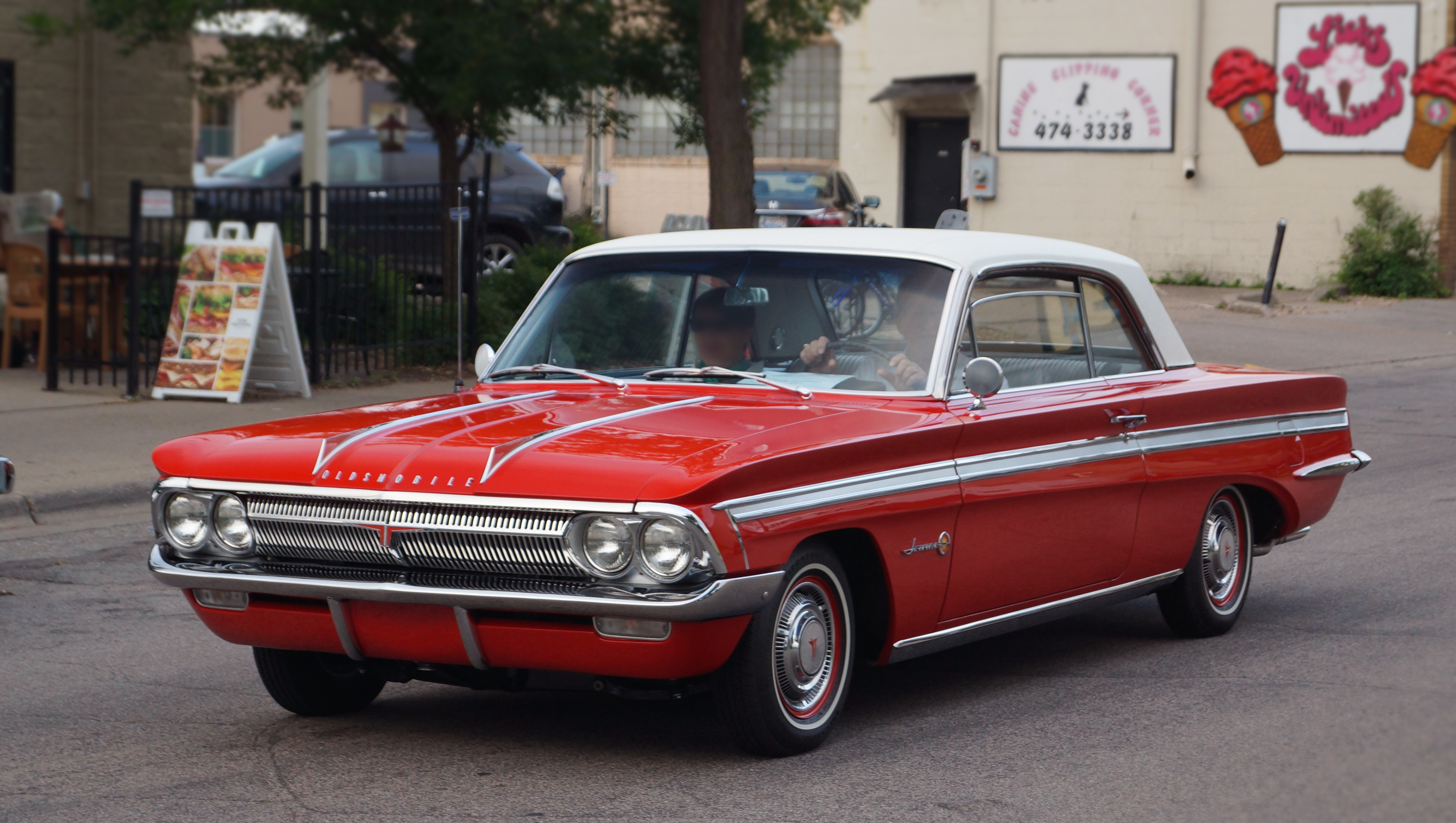
| 1962 | Oldsmobile F-85 Jetfire 3.5-litre (215 cu in) aluminium V8 | Introduced in April 1962; its Turbo-Rocket V8 made 215 hp. It was one of the first production turbocharged passenger cars and used a separate Turbo-Rocket fluid-injection system to help control knock. GM Heritage; Oldsmobile engineers' SAE paper. |
| 1962 | Chevrolet Corvair Monza Spyder 2.4-litre (145 cu in) air-cooled flat-six | A turbocharged Spyder option arrived during the 1962 model year. The 1963 specification lists 150 hp. It and the Jetfire were near-contemporary pioneers; accounts differ on which reached customers first. Autocar; GM 1963 specifications. |
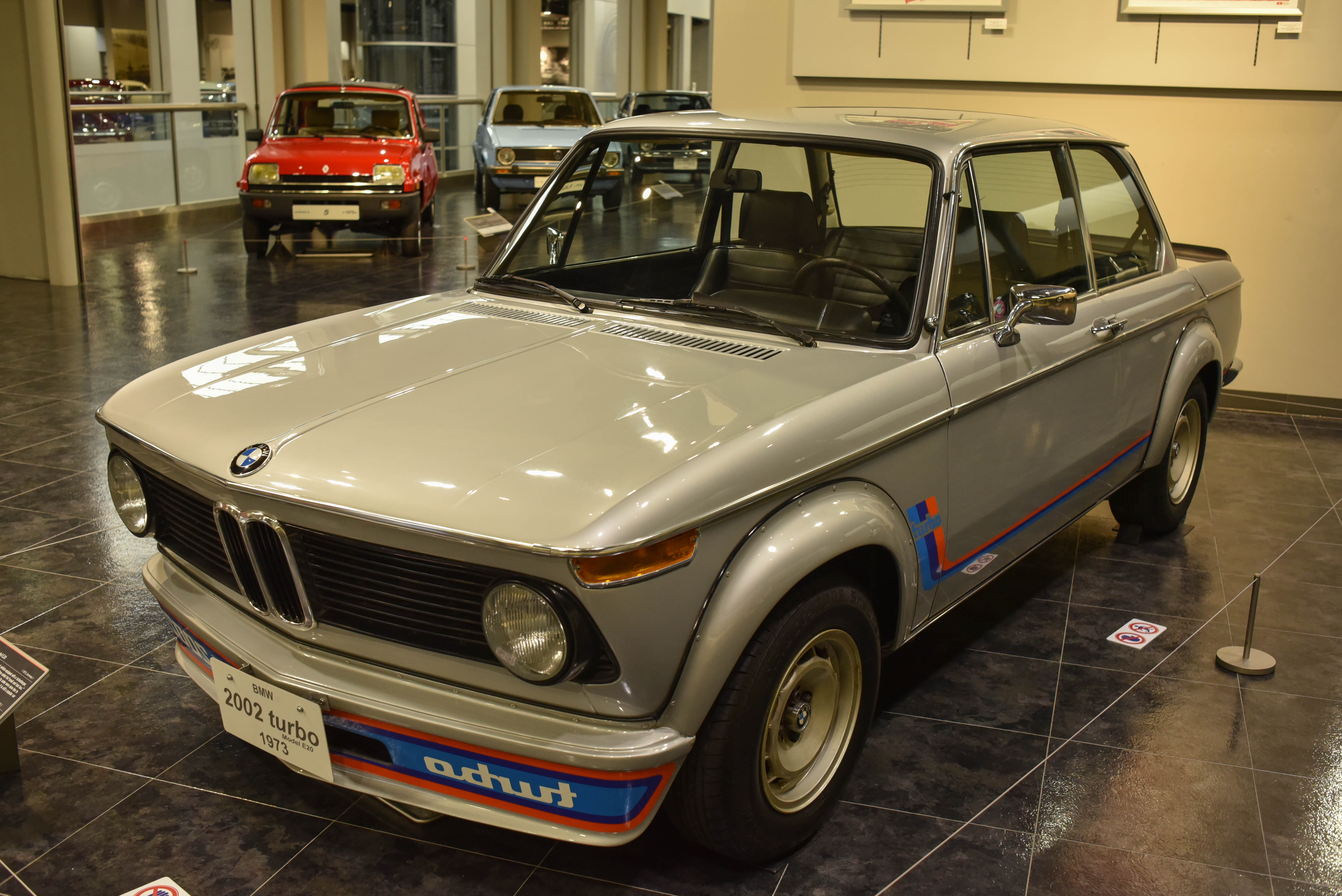
| 1973 | BMW 2002 turbo 1,990 cc inline-four | Shown at Frankfurt in September 1973, with production from October. BMW describes it as the first European production car with an exhaust turbocharger; it made 170 bhp. The 2002 turbo was a distinct model, based on the injected 2002 tii engine. BMW Classic. |
| 1974 reveal / 1975 delivery | Porsche 911 Turbo (930) 3.0-litre flat-six | Presented at Paris in 1974 and delivered from 1975. The original 260 PS turbo transferred Porsche's racing experience to a road-going 911. Porsche. |
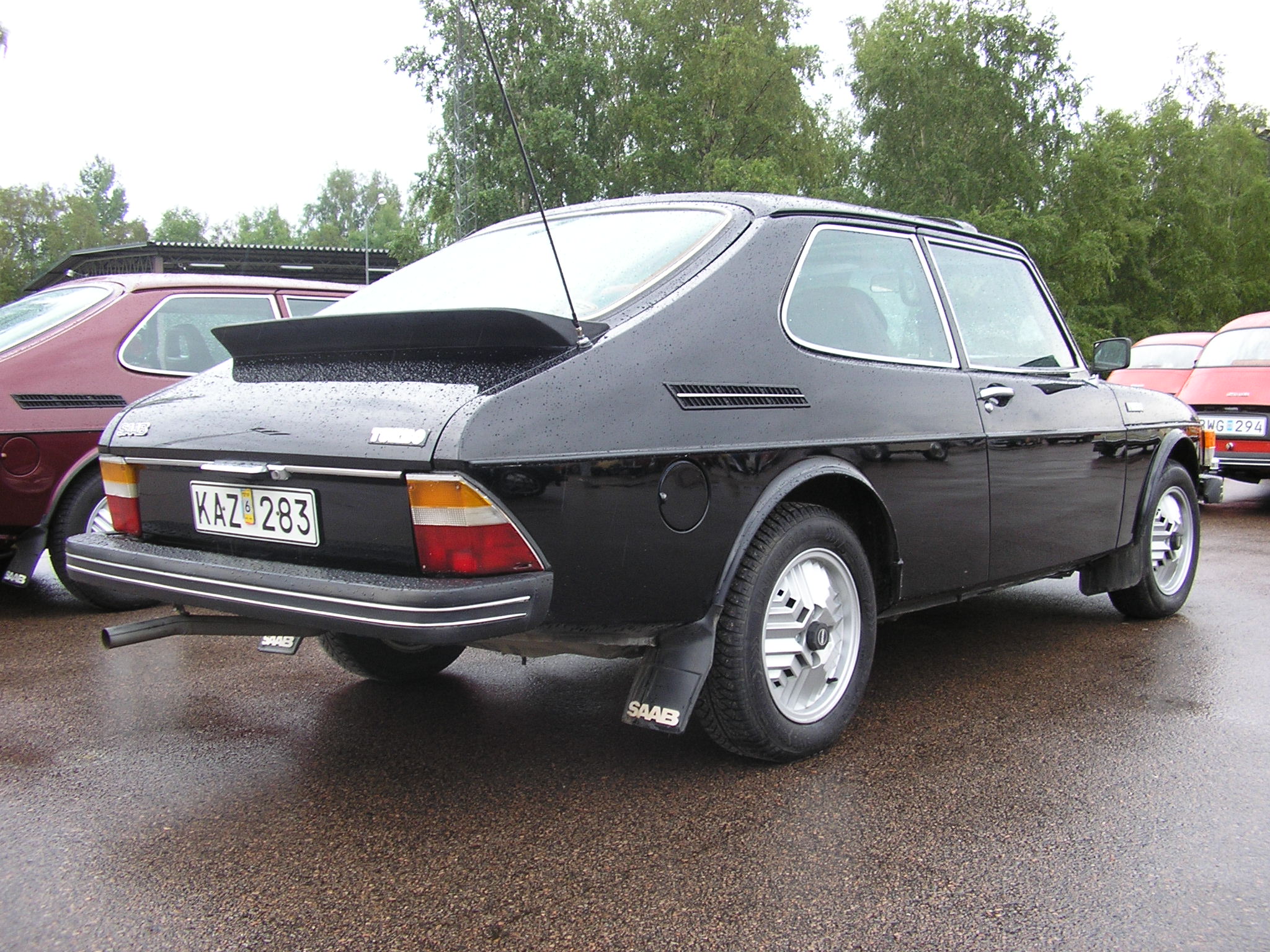
| 1977 / 1978 model year | Saab 99 Turbo 2.0-litre inline-four | Presented in 1977 and offered as a 1978 model. Saab brought turbo performance to a practical hatchback and helped make the idea familiar to more drivers. Saab Car Museum; Saab Museum model years. |
| 1977 / 1978 model year | Porsche 911 Turbo 3.3 3.3-litre flat-six | The revised 930 added an intercooler beneath the rear spoiler and a larger engine; Porsche quotes 300 PS. It illustrates the importance of charge cooling as boost and output rose. Porsche engines. |
| 1978 | Mercedes-Benz 300 SD (W116) 3.0-litre five-cylinder diesel | Mercedes identifies the 300 SD, initially for North America, as the first production passenger car with a turbocharged diesel engine. Turbocharging could also improve a diesel saloon's performance. Mercedes-Benz. |
| 1979 | Peugeot 604 Turbo D 2.3-litre four-cylinder diesel | A European-market turbo-diesel saloon. Peugeot credits it as the first turbo-diesel passenger car sold in Europe; the Mercedes 300 SD had appeared earlier in North America. Peugeot history, German. |
| 1980 | Audi quattro 2.1-litre inline-five | The original road quattro combined an intercooled turbo five-cylinder with permanent four-wheel drive; its subsequent rally success made that formula famous. Audi. |
| 1981 | Volvo 240 Turbo 2.1-litre inline-four | A turbocharged family-sized Volvo that later made a successful touring-car racing base. Volvo dates the road model's launch to 1981. Volvo Cars. |
| 1981 introduction / 1982 production | Maserati Biturbo Original Italian-market 1,996 cc V6 | A compact V6 with two small turbochargers; Maserati describes it as the first production car with a twin-turbo engine. Original 2.0-litre cars made 180 hp; later markets and versions differed. Maserati Classiche. |
| 1984 | Ford Escort RS Turbo 1.6-litre inline-four | A turbocharged hot hatch with a limited-slip differential, bringing boost to a compact front-wheel-drive performance Ford. Ford RS history, German PDF. |
| 1985 | Renault 5 GT Turbo 1.4-litre inline-four | A turbocharged, front-wheel-drive hot hatch. The GT Turbo was a different layout from the earlier mid-engined Renault 5 Turbo rally special. Renault Group. |
| 1986 production era | Porsche 959 2.85-litre flat-six | A twin-turbo, four-wheel-drive supercar using sequential turbocharging to help cover a broader speed range. Porsche presented it in 1985; production followed. Porsche 959 history. |
| 1986 | Ford Sierra RS Cosworth 2.0-litre inline-four | A rear-wheel-drive turbocharged road car with Cosworth-developed power and a strong connection to touring-car and rally competition. Ford history, Spanish. |
| 1988 | Honda Legend 2.0 V6 Turbo 2.0-litre V6 | Honda's petrol V6 used a variable “Wing Turbo” to regulate turbine flow. Variable turbine geometry is not exclusively a diesel development. Honda. |
| 1989 | Nissan Skyline GT-R (R32) 2,568 cc RB26DETT inline-six | The reborn GT-R combined twin turbos and electronically controlled all-wheel drive; its racing success made it a tuning favourite. Nissan Heritage. |
| 1989 introduction | Audi 100 TDI 2.5-litre inline-five diesel | A turbocharged direct-injection diesel that helped establish the TDI formula in passenger cars. Direct injection and turbocharging are separate technologies that can work together. Audi five-cylinder history. |

The BMW 2002 turbo: a European landmark
The 2002 turbo appeared at the Frankfurt show in September 1973. BMW lists production from October 1973 to June 1975, a 1,990 cc inline-four and 170 bhp. Its injected engine developed from the 2002 tii; the 2002 turbo was the turbocharged model, whereas the earlier 2002 ti and 2002 tii were separate naturally aspirated models. BMW describes the turbo as a European production-car first, not the world's first turbo car: the GM examples predate it. BMW Group Classic.

From niche performance to everyday cars
The Saab 99 Turbo helped give a practical road car the benefit of a boosted engine. Diesel cars took a different route: the Mercedes 300 SD and Peugeot 604 Turbo D used exhaust turbocharging to improve the performance of diesel saloons, while later electronic control, direct injection and common-rail fuel systems helped widen the appeal. Turbocharging, direct injection and common rail are distinct technologies, even though they were often combined. Saab Car Museum; Mercedes-Benz; Alfa Romeo.


Maserati Biturbo: two turbos on a production V6
Maserati introduced the Biturbo in December 1981 and lists 1982–1985 for the original version. The original Italian-market engine was a 1,996 cc 90-degree V6 with two small turbochargers and 180 hp. Maserati describes it as the first production car with a twin-turbo engine. The 1983 Biturbo S added two intercoolers; injection appeared on later i and Si versions. Export and subsequent models used different specifications, so a car's market and exact model matter when identifying its engine. Maserati Classiche.
In a typical parallel twin-turbo V-engine layout, each turbine can be fed by one cylinder bank and the compressors supply the engine together. A sequential arrangement brings the turbos or their flow paths into use at different operating points. Two turbos do not automatically mean sequential operation. For system layouts see forced induction.
Timeline of turbocharged road cars: 1991 onwards
| Year | Car and engine | What made it significant |
|---|---|---|
| 1991 | Bugatti EB110 3.5-litre V12 | Four turbochargers and four-wheel drive brought turbocharging into the supercar spotlight. Bugatti introduced the EB110 on 15 September 1991. Bugatti. |
| 1992 | Mitsubishi Lancer Evolution 2.0-litre 4G63 inline-four | Launched in October 1992 with an intercooled turbo engine and four-wheel drive; production numbers helped make the car eligible as a Group A rally base. Mitsubishi, Japanese. |
| 1992 | Subaru Impreza WRX 2.0-litre flat-four | The first WRX reached the Japanese market in 1992, combining a turbocharged boxer engine with all-wheel drive; later cars became synonymous with Subaru's rally programme. Availability and specifications differed by country. Subaru launch history; Subaru WRX history, Japanese. |
| 1993 | Toyota Supra A80 Turbo 3.0-litre 2JZ-GTE inline-six | The Japanese-market fourth-generation Supra launched in May 1993; its turbo variant used two turbos working sequentially. Some A80 Supras were naturally aspirated, and specification varied by market. Toyota 75-year history, Japanese. |
| 1997 | Alfa Romeo 156 JTD 1.9-litre inline-four or 2.4-litre inline-five diesel | The launch JTDs combined turbocharging and intercooling with common-rail direct injection, an important step in the modern passenger-car diesel. Alfa Romeo launch release. |
| 2006 | Volkswagen Golf GT 1.4 TSI 1.4-litre inline-four | A twincharged petrol engine combined a mechanically driven supercharger with a turbocharger, showing one route to response and output from a smaller engine. Volkswagen. |
| 2006 | BMW 335i 3.0-litre inline-six | The petrol 335i combined twin turbochargers with direct injection, a high-profile example of turbocharging returning to BMW's mainstream six-cylinder performance cars. BMW. |
| 2006 | Porsche 911 Turbo (997) 3.6-litre flat-six | Its twin turbos used variable turbine geometry in a high-temperature petrol application. Honda's 1988 Legend above shows why broad claims that all petrol variable-geometry turbos began in 2006 are misleading. Porsche; Honda. |
| 2022 | Mercedes-AMG SL 43 2.0-litre inline-four | An electric motor on the turbo shaft helps accelerate the turbo before exhaust flow alone would do so. It remains an exhaust turbocharger; assistance needs a matched electrical and control system. Mercedes-AMG; Garrett. |
Turbochargers in motorsport
- 1977: Renault brought turbocharging to Formula 1 with the RS01. Early performance came with heat and reliability challenges. Renault's turbo history.
- 1979: Jean-Pierre Jabouille won the French Grand Prix at Dijon in the Renault RS10, an important early Formula 1 turbo victory. Renault.
- 1983: Nelson Piquet won the Formula 1 drivers' championship in the Brabham-BMW BT52, powered by BMW's turbocharged four-cylinder engine. BMW Group.
- 1980s–1990s: Intercooled turbo engines became closely linked with rallying and touring cars, from the Audi quattro to production-based models such as the Lancer Evolution and Skyline GT-R. Racing and road versions had different equipment and regulations. Audi; Mitsubishi; Nissan.
How the hardware changed
- Wastegates and electronic control: A wastegate bypasses some exhaust around a turbine to control boost. Later electronic control could coordinate solenoids, sensors, fuelling and ignition more precisely, but an actuator and calibration still need to match the engine. See actuators and boost control.
- Intercoolers: Compressing air heats it. A charge-air cooler removes some of that heat, helping density and knock margin. The 911 Turbo 3.3 and Biturbo S are period examples. See intercooling and water injection. Porsche; Maserati.
- Variable geometry: Adjustable turbine passages help match exhaust flow over a wider range. The 1988 petrol Honda Legend and later Porsche 997 Turbo show different petrol applications; suitable variable-geometry designs also became widespread on diesels. Honda; Porsche.
- More than one turbo: Parallel twins share engine flow; sequential systems change the operating paths as demand rises; compound or two-stage systems compress air in stages. These arrangements serve different goals and have different plumbing and control requirements.
- Electric assistance: An electric motor coupled to the turbo shaft can accelerate it when exhaust energy is low and, on suitable designs, recover energy. It is different from an electrically driven compressor without an exhaust turbine. Garrett E-Turbo.
Better control, materials, bearings and cooling have improved response and durability, but no turbo removes the need to match the compressor, turbine, fuel system and cooling to the engine. For practical selection and pictures of turbo types, see turbocharger upgrades and modifications.
Further reading
- ABB: Alfred Büchi and turbocharger history — patents and large-engine development.
- GE: early aviation and Pikes Peak — exhaust-driven aircraft-engine boosting.
- GM Heritage: Oldsmobile Jetfire and GM's 1963 Corvair specifications — early American production cars.
- BMW Group Classic: 2002 turbo and Maserati Classiche: Biturbo — the two featured European cars.
- Porsche: the beginning of the 911 Turbo series — racing to the road.
- Nissan Heritage: 1989 Skyline GT-R and Mitsubishi: Lancer Evolution history, Japanese — Japanese performance and racing.
- Mercedes-AMG: SL 43 and Garrett: electric turbocharger technology — electric assistance.
Sources linked alongside the timeline entries include original manufacturer archives; some are in German, Japanese or Spanish. Accessed 14 November 2026.