Tuning Wiki

This is a historical revision. Read the current page or return to its history.

Page organisation in this revision
Page type
Technical article
Subject
Vehicles
Parent
Section level
Applies to
No ECU-specific applicability
Tool groups
None
Manufacturers
Gilbern

Changes from revision 2 to revision 2

Removed text is struck through; added text is highlighted.

The Gilbern GT was the first production car from Gilbern, the sports-car maker from Church Village and later Llantwit Fardre, near Pontypridd. It was built from 1959 to 1967 and about 280 were made. The GT is a 2+2 coupé with a one-piece glass-fibre (GRP) body on a tubular steel chassis, using BMC and MG mechanical parts. Cars fitted with the 1,798 cc MGB engine from 1962 onward are usually called the GT1800. Most were sold as kits, which avoided purchase tax.
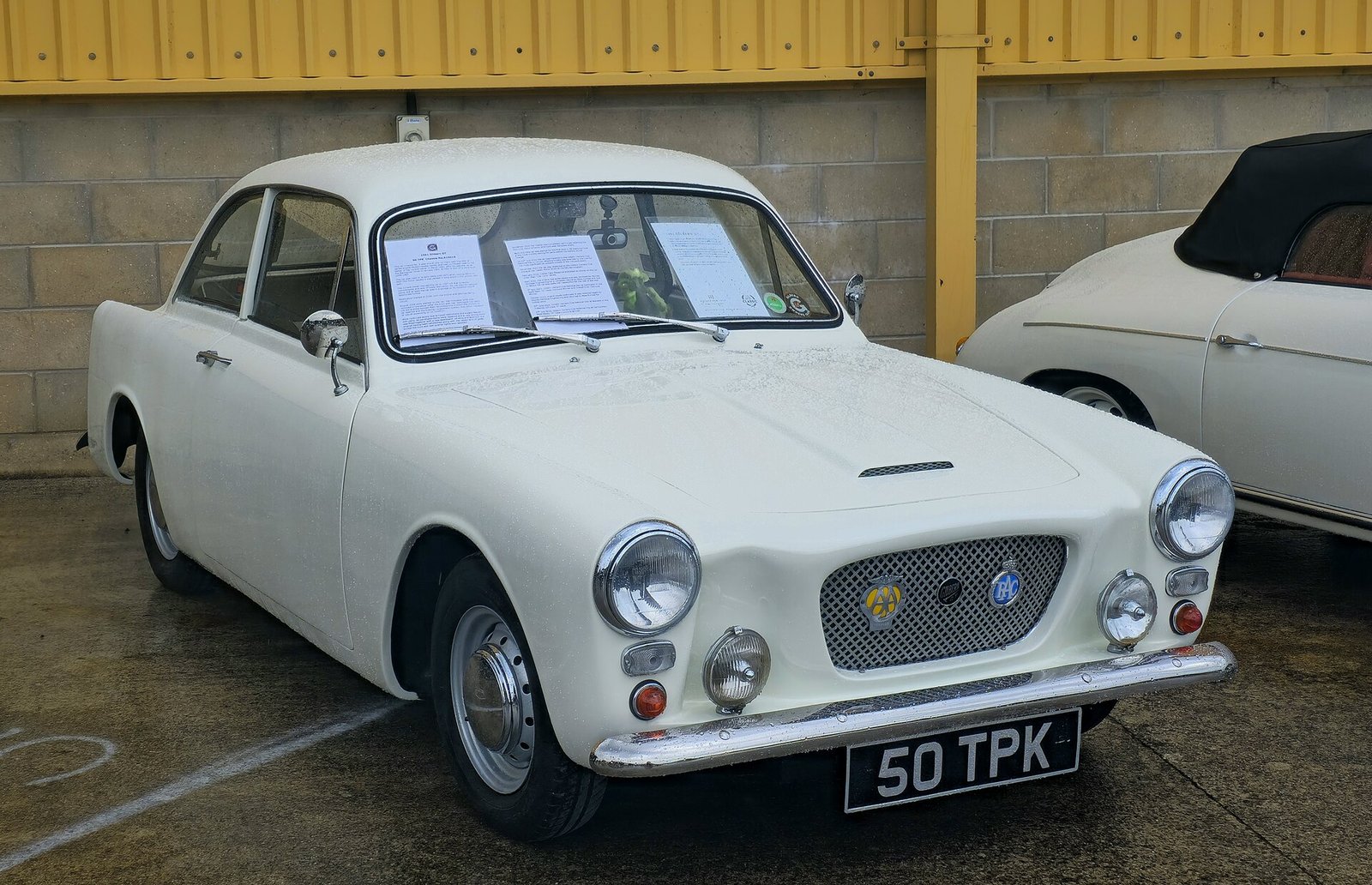
1961 Gilbern GT, chassis A10015, an early car with the original grille. Photo: Calreyn88, Wikimedia Commons, CC0; resized.

Construction

Chassis: multi-tubular frame of square-section steel tube. Body: a one-piece GRP moulding that does not carry chassis loads. The doors, bonnet and boot lid are hinged from the frame. Front suspension: early cars used Austin A35 front suspension. By 1964 the GT used MGB front suspension and MG rack-and-pinion steering. Rear suspension: on 1964 cars, an MGB axle on coil-spring/damper units, located by twin radius arms and a Panhard rod. Early cars are reported to have used leaf springs, but only secondary sources say so. Brakes: by 1964, Lockheed 10¾ in front discs and 10 in rear drums. The 1965 car tested by Motor Sport had dual master cylinders. Dimensions: wheelbase 7 ft 7¾ in, track 4 ft 2 in, length 12 ft 6 in. Weight about 17 cwt (roughly 865 kg) with 2 gallons of fuel, about 2 cwt lighter than an MGB.

Engines and transmission

PeriodEngineNotes Early GT, 1959 onward948 cc BMC A-series (Austin-Healey Sprite specification)Shorrock supercharger optional Early GT1,098 cc Coventry Climax fourAlternative to the A-series. The exact Climax type is not established in the sources consulted. About 1961–62BMC B-series in MGA form (1,588 / 1,622 cc)Road-tested by The Motor in 1961 with the 1600 MGA engine GT1800, from 19621,798 cc MGB B-seriesMounted 11½ in further back than the MGA engine. About 95–96 bhp (net) at 5,400 rpm. An aluminium cross-flow head with twin Webers was offered.

The gearbox is the four-speed MG unit, which has no synchromesh on first. Overdrive was optional. In the 1965 car it worked on third and top, with overall ratios of 14.11, 8.66, 5.37 and 3.91:1. Because the engine and gearbox were mostly fitted by the owner, individual cars vary, and some have later or non-original engines. See MG for the donor models, and SU carburettors for the standard MG fuel system.
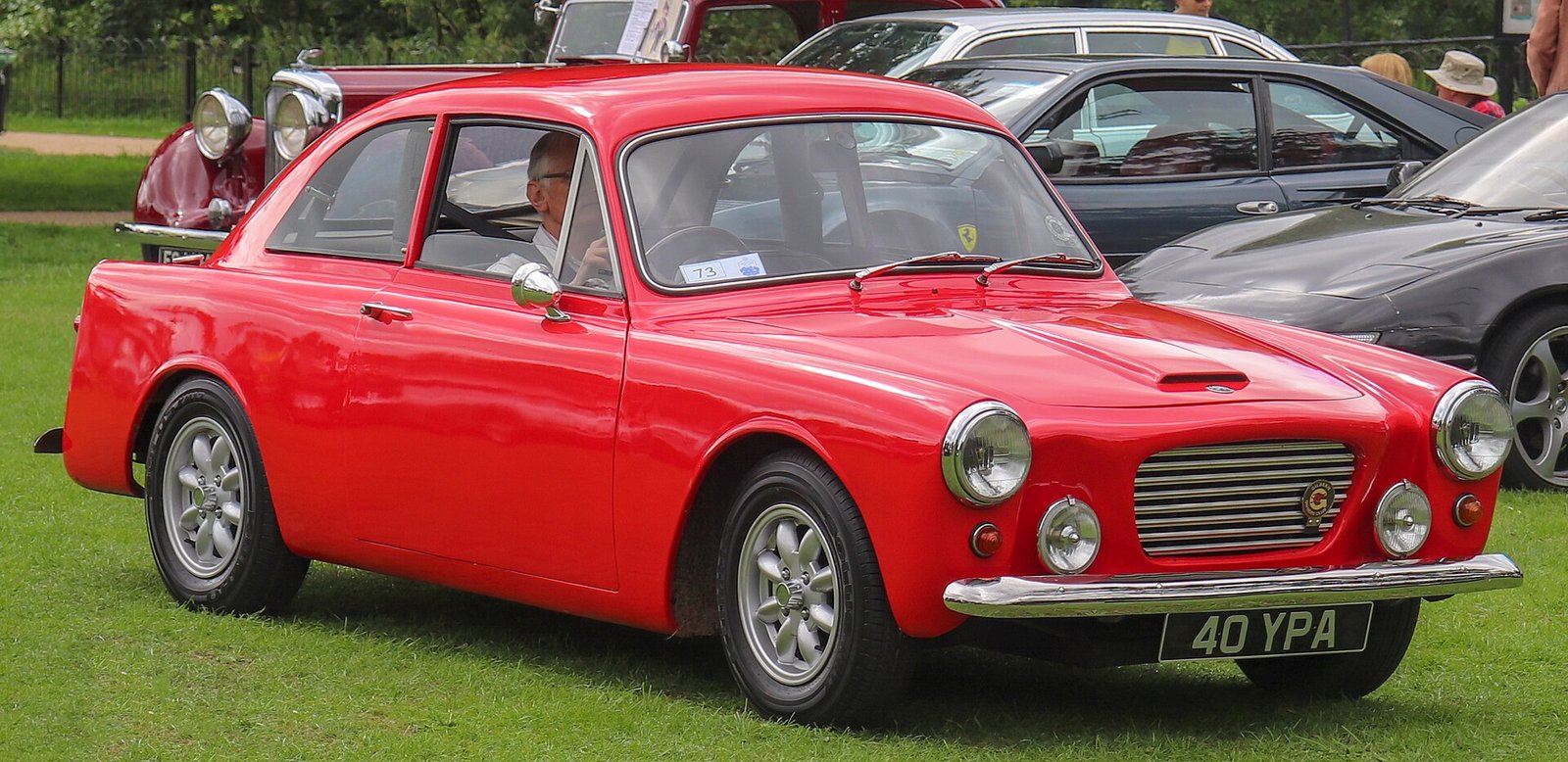
1962 Gilbern GT at Cars at the Spa, Leamington Spa, 2019. Photo: Vauxford, Wikimedia Commons, CC BY-SA 4.0; resized.

Road tests and prices

TestCarPricePerformance The Motor, 15 November 1961GT with 1600 MGA engine£978 including £251 purchase tax94.3 mph maximum; 0–60 mph 13.8 s; 35 mpg Motor Sport, January 1964GT with standard 1,798 cc MGB engineKit £945; assembled £1,184 7s 10d including purchase tax0–60 mph 13.5 s; standing quarter-mile 18.9 s; 104 mph in overdrive top; 22.4 mpg driven hard Motor Sport, January 1965GT with modified (Taurus) cylinder head and camshaftKit £945110 mph in overdrive top; 0–60 mph 11.8 s; standing quarter-mile 18.4 s

The 1965 figures are for a tuned car and are not representative of a standard GT1800.

Production and competition

About 280 GTs were made, according to the standard model-by-model count. Contemporary statements on the build rate disagree. The best-supported picture is about one car a month at first, rising to roughly one a week by the mid-1960s. A 1965 magazine claim of three or four cars a week does not fit the total. The GT was replaced by the Genie from late 1966, although GT production continued into 1967.

Peter Cottrell, the local racing driver who encouraged Gilbern into production, raced several GTs with MGA and MGB engines. Ken Wilson's GT was fitted with a 4.5-litre Chevrolet V8 and a Jaguar independent rear axle. Gilberns have competed at Wiscombe Park hillclimb since 1962. Amgueddfa Cymru – National Museum Wales displays a GT Mk1 at the National Waterfront Museum in Swansea.
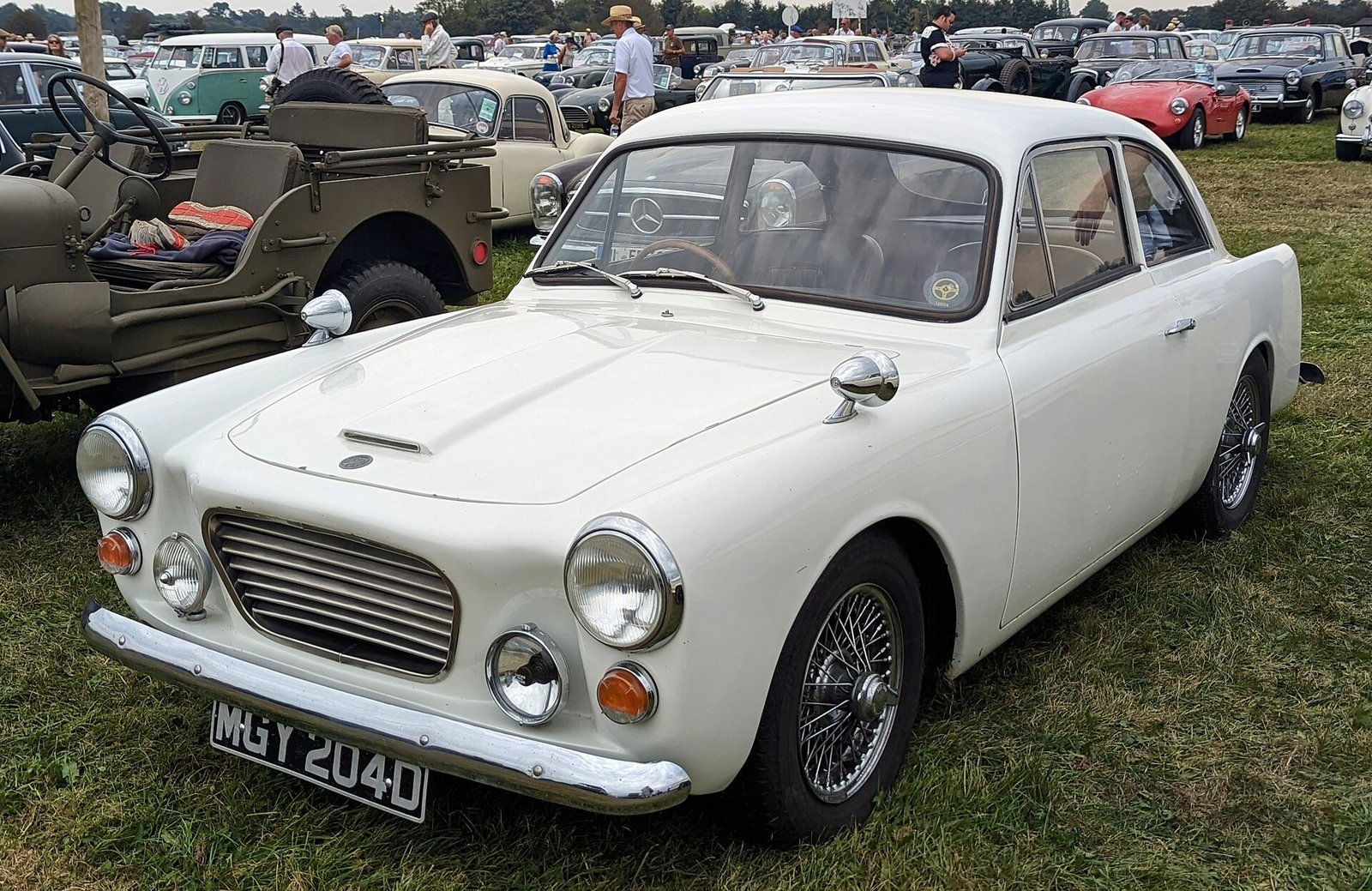
1966 Gilbern GT, a late MGB-engined car on wire wheels. Photo: Calreyn88, Wikimedia Commons, CC BY 4.0; resized.

Restoration, specialists and parts

The engine, gearbox, axle, steering and most suspension parts come from BMC and MG, so mechanical parts are widely available. The body, glazing and much of the trim are specific to Gilbern. The condition of the tubular chassis matters more than the condition of the glass-fibre body.

Gilbern Owners Club (UK, founded 1969). Its spares department sells to members only. For the GT it lists new front and rear screens, rear suspension bushes, dampers, springs, fuel tanks, grilles, bumpers, a wiring harness and some panels. The club owns the original GT body moulds, keeps a register of cars, and offers advice from marque-specialist members. gilbern.co.uk. Philip Ivimey, the club's archivist, is credited in several sale listings with GT and GT1800 chassis rebuilds and mechanical restoration. These credits come from third-party listings only, and no trading website has been found. Uro Glas, Bromsgrove, Worcestershire, supplies classic windscreens and body glass and lists Gilbern among its marques. uroglas.com. Vintage Tyres lists fitments for the Gilbern GT. vintagetyres.com.

The Gilbern make page has the full list of specialists, insurers and books.

Not established

The exact Coventry Climax engine type, and how many GTs had each engine. The date of the change from leaf-spring to coil-spring rear suspension.

Sources

Gilbern, English Wikipedia (source of the production total and the 1961 The Motor road-test figures). Accessed 19 November 2026. What are the small firms doing?, Motor Sport, June 1963. Accessed 19 November 2026. Road test: the Gilbern GT, Motor Sport, January 1964. Accessed 19 November 2026. The Gilbern GT, Motor Sport, January 1965. Accessed 19 November 2026. The Gilbern – too good to be a 'one-off', Ian Smith, Amgueddfa Cymru – National Museum Wales, 30 July 2019. Accessed 19 November 2026. The DIY Gilbern still lives, Institute of Welsh Affairs, 21 November 2010. Accessed 19 November 2026. Gilbern, PistonHeads, 24 May 2001. Accessed 19 November 2026. Spares and Register, Gilbern Owners Club. The site's security certificate could not be verified, so the content was read from search-engine copies. Accessed 19 November 2026. Philip Ivimey's restoration work is credited in Car & Classic listings C1717862 and C1476389. Accessed 19 November 2026. Uro Glas and Vintage Tyres, supplier websites. Accessed 19 November 2026. Photographs from Wikimedia Commons, credited in each caption. Accessed 19 November 2026.

Rendered revisions

Open each version to inspect formatting, tables and photographs.

Revision 2: Gilbern GT: models and engines

The Gilbern GT was the first production car from Gilbern, the sports-car maker from Church Village and later Llantwit Fardre, near Pontypridd. It was built from 1959 to 1967 and about 280 were made. The GT is a 2+2 coupé with a one-piece glass-fibre (GRP) body on a tubular steel chassis, using BMC and MG mechanical parts. Cars fitted with the 1,798 cc MGB engine from 1962 onward are usually called the GT1800. Most were sold as kits, which avoided purchase tax.

A white 1961 Gilbern GT, chassis A10015, front three-quarter view.
1961 Gilbern GT, chassis A10015, an early car with the original grille. Photo: Calreyn88, Wikimedia Commons, CC0; resized.

Construction

  • Chassis: multi-tubular frame of square-section steel tube.
  • Body: a one-piece GRP moulding that does not carry chassis loads. The doors, bonnet and boot lid are hinged from the frame.
  • Front suspension: early cars used Austin A35 front suspension. By 1964 the GT used MGB front suspension and MG rack-and-pinion steering.
  • Rear suspension: on 1964 cars, an MGB axle on coil-spring/damper units, located by twin radius arms and a Panhard rod. Early cars are reported to have used leaf springs, but only secondary sources say so.
  • Brakes: by 1964, Lockheed 10¾ in front discs and 10 in rear drums. The 1965 car tested by Motor Sport had dual master cylinders.
  • Dimensions: wheelbase 7 ft 7¾ in, track 4 ft 2 in, length 12 ft 6 in. Weight about 17 cwt (roughly 865 kg) with 2 gallons of fuel, about 2 cwt lighter than an MGB.

Engines and transmission

PeriodEngineNotes
Early GT, 1959 onward948 cc BMC A-series (Austin-Healey Sprite specification)Shorrock supercharger optional
Early GT1,098 cc Coventry Climax fourAlternative to the A-series. The exact Climax type is not established in the sources consulted.
About 1961–62BMC B-series in MGA form (1,588 / 1,622 cc)Road-tested by The Motor in 1961 with the 1600 MGA engine
GT1800, from 19621,798 cc MGB B-seriesMounted 11½ in further back than the MGA engine. About 95–96 bhp (net) at 5,400 rpm. An aluminium cross-flow head with twin Webers was offered.

The gearbox is the four-speed MG unit, which has no synchromesh on first. Overdrive was optional. In the 1965 car it worked on third and top, with overall ratios of 14.11, 8.66, 5.37 and 3.91:1. Because the engine and gearbox were mostly fitted by the owner, individual cars vary, and some have later or non-original engines. See MG for the donor models, and SU carburettors for the standard MG fuel system.

A red 1962 Gilbern GT at a car show, side and front view.
1962 Gilbern GT at Cars at the Spa, Leamington Spa, 2019. Photo: Vauxford, Wikimedia Commons, CC BY-SA 4.0; resized.

Road tests and prices

TestCarPricePerformance
The Motor, 15 November 1961GT with 1600 MGA engine£978 including £251 purchase tax94.3 mph maximum; 0–60 mph 13.8 s; 35 mpg
Motor Sport, January 1964GT with standard 1,798 cc MGB engineKit £945; assembled £1,184 7s 10d including purchase tax0–60 mph 13.5 s; standing quarter-mile 18.9 s; 104 mph in overdrive top; 22.4 mpg driven hard
Motor Sport, January 1965GT with modified (Taurus) cylinder head and camshaftKit £945110 mph in overdrive top; 0–60 mph 11.8 s; standing quarter-mile 18.4 s

The 1965 figures are for a tuned car and are not representative of a standard GT1800.

Production and competition

About 280 GTs were made, according to the standard model-by-model count. Contemporary statements on the build rate disagree. The best-supported picture is about one car a month at first, rising to roughly one a week by the mid-1960s. A 1965 magazine claim of three or four cars a week does not fit the total. The GT was replaced by the Genie from late 1966, although GT production continued into 1967.

Peter Cottrell, the local racing driver who encouraged Gilbern into production, raced several GTs with MGA and MGB engines. Ken Wilson's GT was fitted with a 4.5-litre Chevrolet V8 and a Jaguar independent rear axle. Gilberns have competed at Wiscombe Park hillclimb since 1962. Amgueddfa Cymru – National Museum Wales displays a GT Mk1 at the National Waterfront Museum in Swansea.

A white 1966 Gilbern GT1800 with wire wheels.
1966 Gilbern GT, a late MGB-engined car on wire wheels. Photo: Calreyn88, Wikimedia Commons, CC BY 4.0; resized.

Restoration, specialists and parts

The engine, gearbox, axle, steering and most suspension parts come from BMC and MG, so mechanical parts are widely available. The body, glazing and much of the trim are specific to Gilbern. The condition of the tubular chassis matters more than the condition of the glass-fibre body.

  • Gilbern Owners Club (UK, founded 1969). Its spares department sells to members only. For the GT it lists new front and rear screens, rear suspension bushes, dampers, springs, fuel tanks, grilles, bumpers, a wiring harness and some panels. The club owns the original GT body moulds, keeps a register of cars, and offers advice from marque-specialist members. gilbern.co.uk.
  • Philip Ivimey, the club's archivist, is credited in several sale listings with GT and GT1800 chassis rebuilds and mechanical restoration. These credits come from third-party listings only, and no trading website has been found.
  • Uro Glas, Bromsgrove, Worcestershire, supplies classic windscreens and body glass and lists Gilbern among its marques. uroglas.com.
  • Vintage Tyres lists fitments for the Gilbern GT. vintagetyres.com.

The Gilbern make page has the full list of specialists, insurers and books.

Not established

  • The exact Coventry Climax engine type, and how many GTs had each engine.
  • The date of the change from leaf-spring to coil-spring rear suspension.

Sources

  • Gilbern, English Wikipedia (source of the production total and the 1961 The Motor road-test figures). Accessed 19 November 2026.
  • What are the small firms doing?, Motor Sport, June 1963. Accessed 19 November 2026.
  • Road test: the Gilbern GT, Motor Sport, January 1964. Accessed 19 November 2026.
  • The Gilbern GT, Motor Sport, January 1965. Accessed 19 November 2026.
  • The Gilbern – too good to be a 'one-off', Ian Smith, Amgueddfa Cymru – National Museum Wales, 30 July 2019. Accessed 19 November 2026.
  • The DIY Gilbern still lives, Institute of Welsh Affairs, 21 November 2010. Accessed 19 November 2026.
  • Gilbern, PistonHeads, 24 May 2001. Accessed 19 November 2026.
  • Spares and Register, Gilbern Owners Club. The site's security certificate could not be verified, so the content was read from search-engine copies. Accessed 19 November 2026.
  • Philip Ivimey's restoration work is credited in Car & Classic listings C1717862 and C1476389. Accessed 19 November 2026.
  • Uro Glas and Vintage Tyres, supplier websites. Accessed 19 November 2026.
  • Photographs from Wikimedia Commons, credited in each caption. Accessed 19 November 2026.