ALPINA is a German maker of high-performance cars built on BMW platforms. From 1965 until the end of 2025 it was an independent family company, Alpina Burkard Bovensiepen GmbH + Co. KG, based in Buchloe in the Allgäu. It was registered with the German Federal Motor Transport Authority (KBA) as a vehicle manufacturer in 1983, so its cars carry their own manufacturer identity rather than being treated as modified BMWs. BMW Group bought the ALPINA brand rights in 2022. Production in Buchloe ended on 31 December 2025, and since 1 January 2026 BMW ALPINA has been a separate luxury marque inside BMW Group, with cars built in BMW plants. Part of BMW tuning houses and BMW: history and cars.
History
Carburettor kits and founding (1962 to 1970)
The Bovensiepen family business originally made typewriters and office machines, and the ALPINA name came from that company. In 1962 Burkard Bovensiepen developed a Weber twin-carburettor conversion for the BMW 1500 (Neue Klasse). In 1964 BMW agreed that cars fitted with the ALPINA carburettor system would keep their full factory warranty. Several later accounts say this depended on ALPINA covering the conversion itself, but no primary text has been found for that condition.
BMW Group's 2022 press release gives the official founding date as 1 January 1965. Secondary sources place the first workshop in Kaufbeuren, with eight employees. One 2026 magazine overview places it in Buchloe instead, but most sources show the move to Buchloe happening only by about 1970, when the company had around 70 staff. German Wikipedia gives 22 March 1971 as the founding date of the GmbH & Co. KG. That is best read as the date of a change in legal form, not the date the business started. The ALPINA logo, showing a carburettor intake and a crankshaft, dates from 1967.
Motorsport (1968 to 1988)
ALPINA ran BMW touring cars from the late 1960s. A BMW 2800 CS driven by Günther Huber and Helmut Kelleners and entered by BMW Alpina won the Spa 24 Hours on 26 July 1970. Some secondary texts date that win to 1969, but the race archive confirms 1970. In 1973 an ALPINA 3.0 CSL driven by Niki Lauda and Hans-Peter Joisten won the Nürburgring 24 Hours. That result comes from secondary motorsport sources. The idea that ALPINA also won Spa in 1973 is not supported: Joisten was killed in the 1973 Spa race. Dieter Quester won the 1977 European Touring Car Championship in a BMW 3.0 CSL entered as BMW/Alpina.
The main touring-car programme ended after 1977. The last works entries came in the DTM in 1987 and 1988, after which the company left racing. A later ALPINA B6 GT3 won the 2011 ADAC GT Masters with Alexandros Margaritis and Dino Lunardi.
From converter to manufacturer (1978 to 2021)
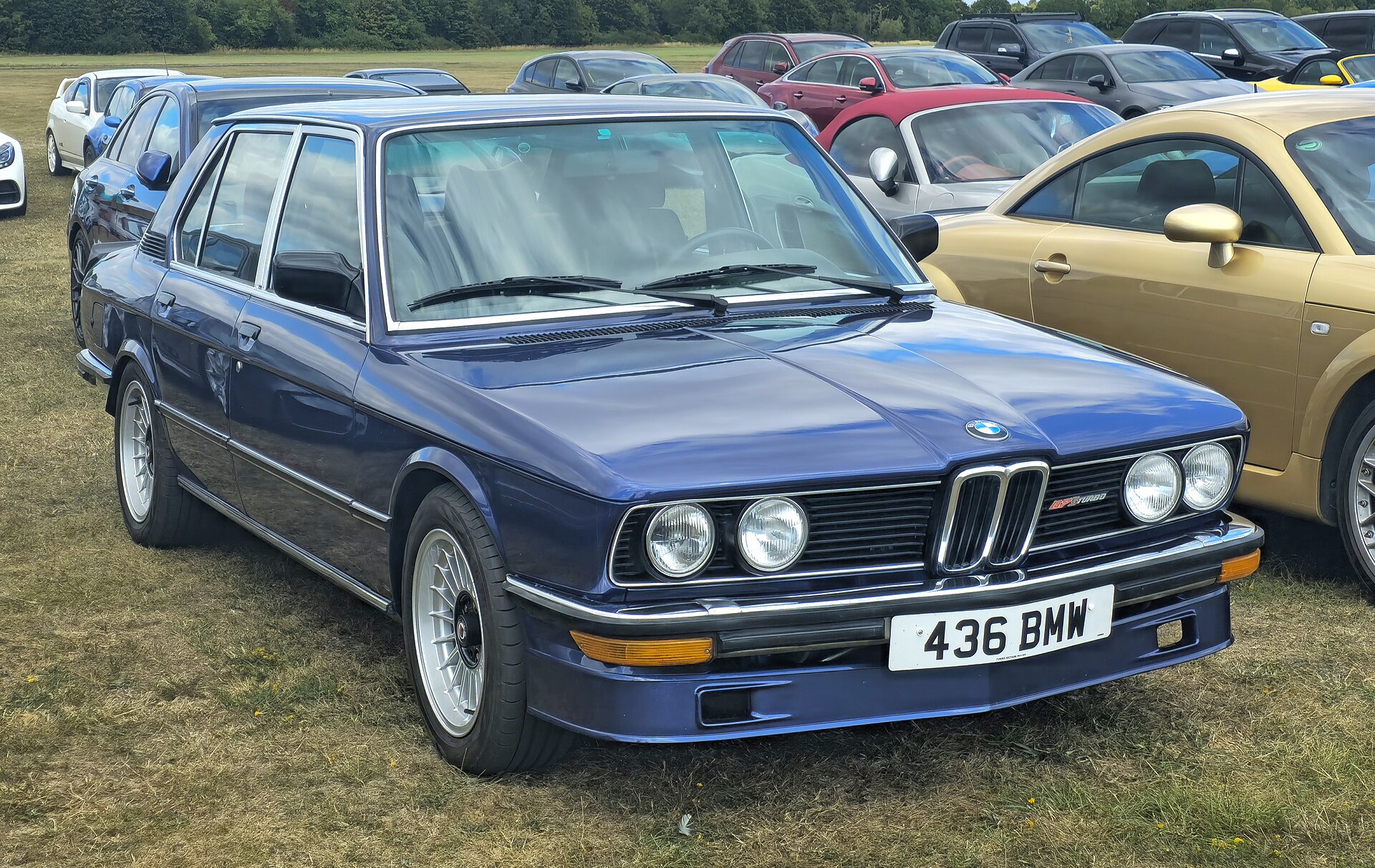

From 1978 ALPINA built complete cars rather than conversion kits: the B6 2.8, the B7 Turbo and the B7 Turbo Coupé shown at the 1978 Frankfurt motor show. KBA registration as a manufacturer followed in 1983. From then on, ALPINA took BMW body-in-white and running gear and fitted its own engines, which used BMW blocks with ALPINA internals, turbocharging or supercharging. It also fitted its own suspension, wheels, interiors and transmission control.
The D10 Biturbo, shown at Geneva in 1999 and based on the E39 530d, was the first ALPINA diesel. Diesel B3, B4, B5 and SUV models then made up a large share of later production. Burkard Bovensiepen also founded a wine-trading business in 1979, which was not part of the later sale to BMW. Volume grew to around 1,700 cars a year in 2014. BMW reported about 2,000 cars built in 2021, the company's best year, by a workforce of roughly 300.
BMW acquisition and end of Buchloe production (2022 to 2025)
On 10 March 2022 BMW Group announced that it was acquiring the ALPINA brand rights. It bought no shares in the company, and the price was not disclosed. Under the existing cooperation, which had been extended in 2020, ALPINA kept building cars until 31 December 2025. Service, parts and accessories for existing cars stay in Buchloe for the long term. The last cars of the independent era included the B8 GT, limited to 99 cars as a tribute to Burkard Bovensiepen, who died in 2023, and the B3 GT and B4 GT.
The family company now trades as Burkard Bovensiepen GmbH & Co. KG, led by Andreas and Florian Bovensiepen. It continues to support existing ALPINAs and has launched a separate brand, Bovensiepen. Its first car is the Bovensiepen Zagato, shown in 2025 and limited to 99 cars. It is based on the G83 BMW M4 Convertible with a fixed carbon roof and body, and its S58 engine is reported at about 449 kW (611 PS) and 700 Nm. Its launch figures are given in press reports, not in a manufacturer document reviewed here.
BMW ALPINA (2026 onwards)
BMW Group relaunched the brand as BMW ALPINA on 1 January 2026. It is a distinct marque positioned between BMW's flagship models and Rolls-Royce, with a new wordmark and an emblem based on throttle bodies and a crankshaft. Its cars are built in specially prepared BMW Group plants. The Vision BMW ALPINA, a four-seat V8 grand-tourer concept with 20-spoke wheels, was shown at the Concorso d'Eleganza Villa d'Este on 15 May 2026.
BMW has said the first production model is a large V8 saloon based on the 7 Series, due in 2027. In November 2026 camouflaged prototypes were in high-speed testing. A figure of 439 kW and 784 Nm briefly seen in a BMW video is not an official specification. The final XB7 is the 2026 XB7 MANUFAKTUR: 120 cars for the United States and Canada, built at Spartanburg with a console plaque reading "1 of 120".
Engineering features
- Engines. ALPINA engines start from BMW engine families and are re-engineered rather than being completely new designs. Examples include the E21 B6 2.8, which used Mahle pistons and Zenith-Pierburg DL injection. The E34 B10 Biturbo used a 3,430 cc M30 six with two Garrett T25 turbochargers, giving 265 kW (360 PS) and a top speed above 290 km/h. The E60, E63 and E65 B5, B6 and B7 used a 4.4-litre V8 with an ALPINA radial supercharger (500 to 530 PS). Later cars used biturbo BMW V8s and straight-sixes. See M30, M70, N54, N55, N63, S68 and B58 and S58.
- Switch-Tronic. ALPINA offered steering-wheel push-button shifting for its automatics from 1993, according to its own owner's handbook. Later versions used five-speed, ZF six-speed and eight-speed automatics. ALPINA has claimed it was first to market with this type of control, but no independent source confirms the claim.
- Wheels and chassis. The multi-spoke "Classic" wheel design (20 spokes on modern cars) is the most recognisable ALPINA part. ALPINA also fitted its own springs, dampers and tyres.
- Calibration. ALPINA cars use their own engine and transmission calibrations, but there is no public technical documentation of how ALPINA software differs from the BMW base calibration. If an ALPINA has to be programmed with the BMW release for its base model, check with a specialist first.
Models
The figures below are the ones most widely quoted, usually DIN PS from ALPINA's own data as reproduced in German and English reference works. Output and production numbers often vary between sources; where sources disagree, both figures are shown. Production numbers are for the model as listed, not for each body style unless stated.
Early models and the turbo era (1962 to 1987)
| Model | BMW base | Years | Engine | Power / torque | Built |
|---|---|---|---|---|---|
| Weber twin-carburettor kit | 1500 (Neue Klasse) | 1962– | M10 1.5 four | — | — |
| A4 / A4S | 2002 (E10) | 1970s | M10 2.0 four, cam and carburation stages | Varies with stage | — |
| A1/3 | E21 320 | 1975–77 | 2.0 | 90 kW (122 PS), 170 Nm | — |
| C1 2.3 | E21 323i | 1980–83 | 2.3 six | 125 kW (170 PS) | Disputed: 35 or about 462 (estimate) |
| B6 2.8 | E21 323i | 1978–81 | 2.8 six, Mahle pistons | 147 kW (200 PS), 248 Nm | 533 (incl. B6 2.8/1) |
| B7 Turbo | E12 528i | 1978–82 | 3.0 six, turbo | 221 kW (300 PS), 462 Nm | 149 |
| B7 S Turbo | E12 | 1981–82 | 3.5 six, turbo | 243 kW (330 PS), 500 Nm | 60 |
| B7 Turbo Coupé | E24 630CSi | 1978–82 | 3.0 six, turbo | 221 kW (300 PS) | About 153 |
| B7 S Turbo Coupé | E24 635CSi | 1982 | 3.5 six, turbo | 243 kW (330 PS) | About 30 |
| B9 3.5 / B9 3.5 Coupé | E28 / E24 | 1981–85 | 3.5 six | 180 kW (245 PS), 320 Nm | About 500 (saloon) |
| B7 Turbo/1 | E28 | 1984–87 | 3.5 six, turbo | 221 kW (300 PS), later 320 PS | Not established |
| B10 3.5 / B10 3.5 Coupé | E28 535i / E24 635CSi | 1985–87 | 3,430 cc six | 192 kW (261 PS), 346 Nm | 77 / 44 |
| C2 2.5 / 2.7 | E30 325i | 1985–87 | 2.5 / 2.7 six | 185–209 PS | 74 (C2 2.5), 108 (C2/1), 309 (C2/2) |
| B6 3.5 | E30 325i | 1986–90 | 3.5 six | 192 kW (261 PS), 346 Nm | 210 |
| B6 3.5 S | E30 M3 | 1987–90 | 3.5 six | 261 PS or 254 PS (sources differ) | 62 |
| B3 2.7 | E30 325i | 1987–92 | 2,693 cc six | 150 kW (204 PS), 265 Nm | About 257 |
| B11 3.5 / 4.0 | E32 735i / 740i | 1987–94 | 3.5 six / 4.0 V8 | 250 PS / 315 PS | — |
V12s, Biturbo and the E36 to E46 era (1988 to 2005)

| Model | BMW base | Years | Engine | Power / torque | Built |
|---|---|---|---|---|---|
| B12 5.0 | E32 750i | 1988–94 | 4,988 cc V12 (M70-based) | 257 kW (350 PS), 470 Nm | 305 |
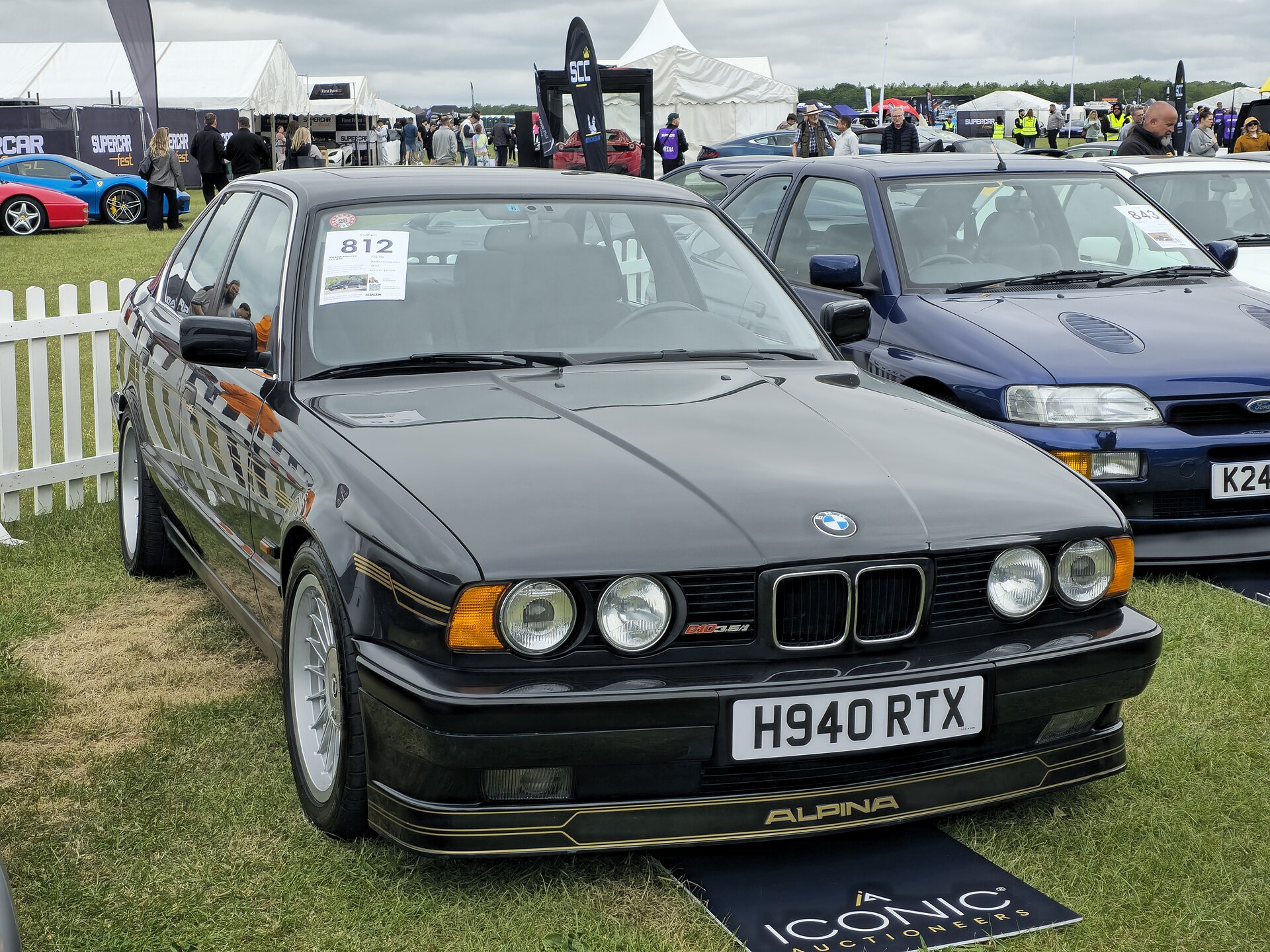
| B10 3.5/1 | E34 535i | 1988–92 | 3,430 cc six | 187 kW (254 PS), 325 Nm | 572 |
| B10 Biturbo | E34 535i | 1989–94 | 3,430 cc M30 six, two Garrett T25 | 265 kW (360 PS), 520 Nm | 507 |
| B12 5.0 Coupé | E31 850i | 1990–94 | 5.0 V12 | 257 kW (350 PS), 470 Nm | 97 |
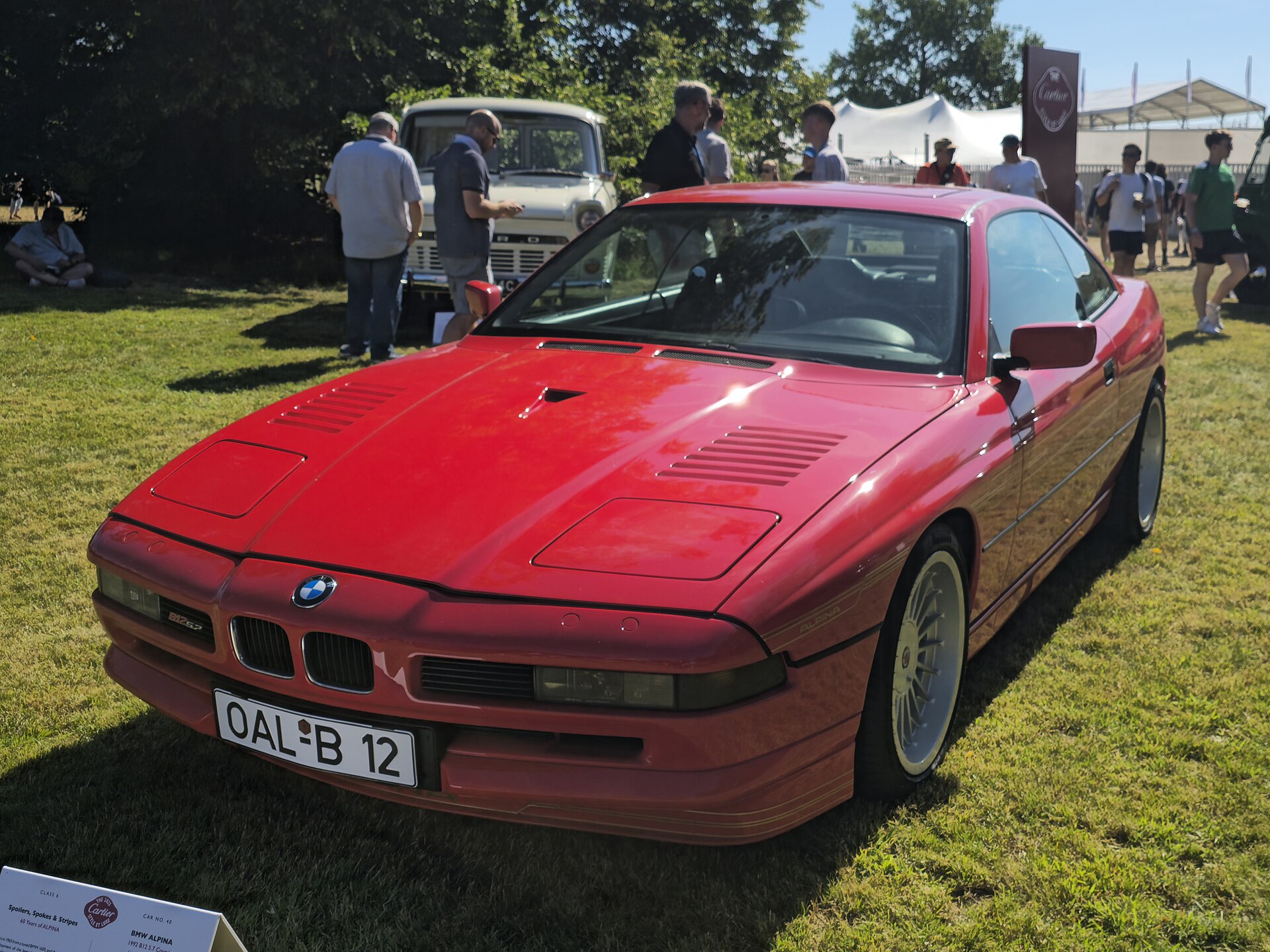
| B12 5.7 Coupé | E31 850CSi | 1992–96 | 5,646 cc V12 | 306 kW (416 PS), 570 Nm | 57 (a figure of 32 probably counts only Switch-Tronic cars) |
| B3 3.0 | E36 325i | 1993–96 | 2,997 cc six | 184 kW (250 PS), 320 Nm | 749 |
| B10 4.0 | E34 540i | 1993–95 | 3,982 cc V8 | 232 kW (315 PS), 410 Nm | 45 or 49 (sources differ) |
| B10 3.0 Allrad | E34 525ix | 1993–96 | 2,997 cc six | 170 kW (231 PS), 312 Nm | 64 saloons, 70 Touring |
| B10 4.6 | E34 540i | 1994–96 | 4,619 cc V8 | 250 kW (340 PS), 480 Nm | 27 saloons, 19 Touring |
| B8 4.6 | E36 328i | 1995–98 | 4.6 V8 | Up to 245 kW (333 PS), 470 Nm | 221 across four bodies |
| B12 5.7 | E38 750i | 1995–98 | 5.7 V12 | 285 kW (387 PS), 560 Nm | 202 |
| B3 3.2 | E36 328i | 1996–99 | 3,152 cc six | 195 kW (265 PS), 330 Nm | 342 |
| B10 V8 / V8 S | E39 540i | 1997–2003 | 4.6 / 4.8 V8 | 340–347 PS / 375 PS | — |
| B10 3.2 / 3.3 | E39 528i / 530i | 1997–2003 | 3.2 / 3.3 six | 260 PS / 280 PS | — |
| B3 3.3 | E46 328i / 330i | 1999–2002 | 3,300 cc six | 206 kW (280 PS), 335 Nm | 1,299 plus 183 Allrad |
| B12 6.0 | E38 750i | 1999–2001 | 5,980 cc V12 | 316 kW (430 PS), 600 Nm | 94 |
| D10 Biturbo | E39 530d | 2000–03 | 3.0 six diesel, biturbo | 180 kW (245 PS), 500 Nm | — |
| B3 S | E46 330i | 2002–06 | 3,346 cc six | 224 kW (305 PS), 362 Nm | 807 |
| Roadster V8 | Z8 (E52) | 2003 | 4.8 V8, five-speed automatic only | 280 kW (381 PS), 520 Nm | 555 (about 450 for the USA) |
| Roadster S | Z4 (E85) | 2003–05 | 3.4 six | 221 kW (300 PS), 362 Nm | — |

Supercharged and biturbo cars (2004 to 2025)
| Model | BMW base | Years | Engine | Power / torque | Notes |
|---|---|---|---|---|---|
| B7 | E65/E66 | 2004–08 | 4.4 V8, radial supercharger | 368 kW (500 PS), 700 Nm | — |
| B5 / B5 S | E60/E61 | 2005–10 | 4.4 V8, supercharged | 500 PS / 700 Nm; S 530 PS / 725 Nm | — |
| B6 / B6 S | E63/E64 | 2006–10 | 4.4 V8, supercharged | 500 PS; S 530 PS / 725 Nm | — |
| D3 / D3 Bi-Turbo | E90/E91/E92 | 2005–13 | 2.0 four diesel | 200 PS / 410 Nm; Bi-Turbo 214 PS / 450 Nm | — |
| B3 Biturbo / B3 S Biturbo | E90/E91/E92/E93 | 2007–13 | 2,979 cc six, biturbo (N54-based) | 360 PS / 500 Nm; S 400 PS / 540 Nm | — |
| B3 GT3 | E92 | 2012–13 | 3.0 six, biturbo | 300 kW (408 PS), 540 Nm | 99 built |
| B7 Biturbo | F01/F02 | 2009–15 | 4.4 V8, biturbo | 507 PS, from 2012 540 PS / 730 Nm | — |
| B5 Biturbo | F10/F11 | 2010–16 | 4.4 V8, biturbo | 507 → 540 PS; Edition 50 600 PS / 800 Nm | — |
| B6 Biturbo (Coupé, Cabrio, Gran Coupé) | F12/F13/F06 | 2011–18 | 4.4 V8, biturbo | 540 PS, later 600 PS / 800 Nm | — |
| B3 / B3 S Biturbo, D3 Biturbo | F30/F31 | 2013–19 | 3.0 six biturbo; 3.0 diesel biturbo | 410–440 PS; D3 350 PS / 700 Nm | — |
| XD3 Biturbo | F25 X3 | 2013–18 | 3.0 six diesel, biturbo | 257 kW (350 PS), 700 Nm | First ALPINA SUV |
| B4 / B4 S, D4 | F32/F33/F36 | 2014–20 | 3.0 six biturbo (N55-based); diesel | 408–440 PS (Edition 99: 452 PS); D4 350 PS | — |
| B7 | G11/G12 | 2016–22 | 4.4 V8, biturbo, xDrive | 447 kW (608 PS), 800 Nm | — |
| B5 / D5 S | G30/G31 | 2017–24 | 4.4 V8 biturbo; 3.0 six diesel | B5 608–621 PS / 800 Nm; D5 S 388 PS / 800 Nm (LHD) | B5 GT: 634 PS / 850 Nm, 250 built |
| XD3 / XD4 | G01 X3 / G02 X4 | 2018–25 | 3.0 six diesel (B57), quad-turbo LHD, biturbo RHD | 388 PS / 770 Nm; RHD 333 PS / 700 Nm | — |
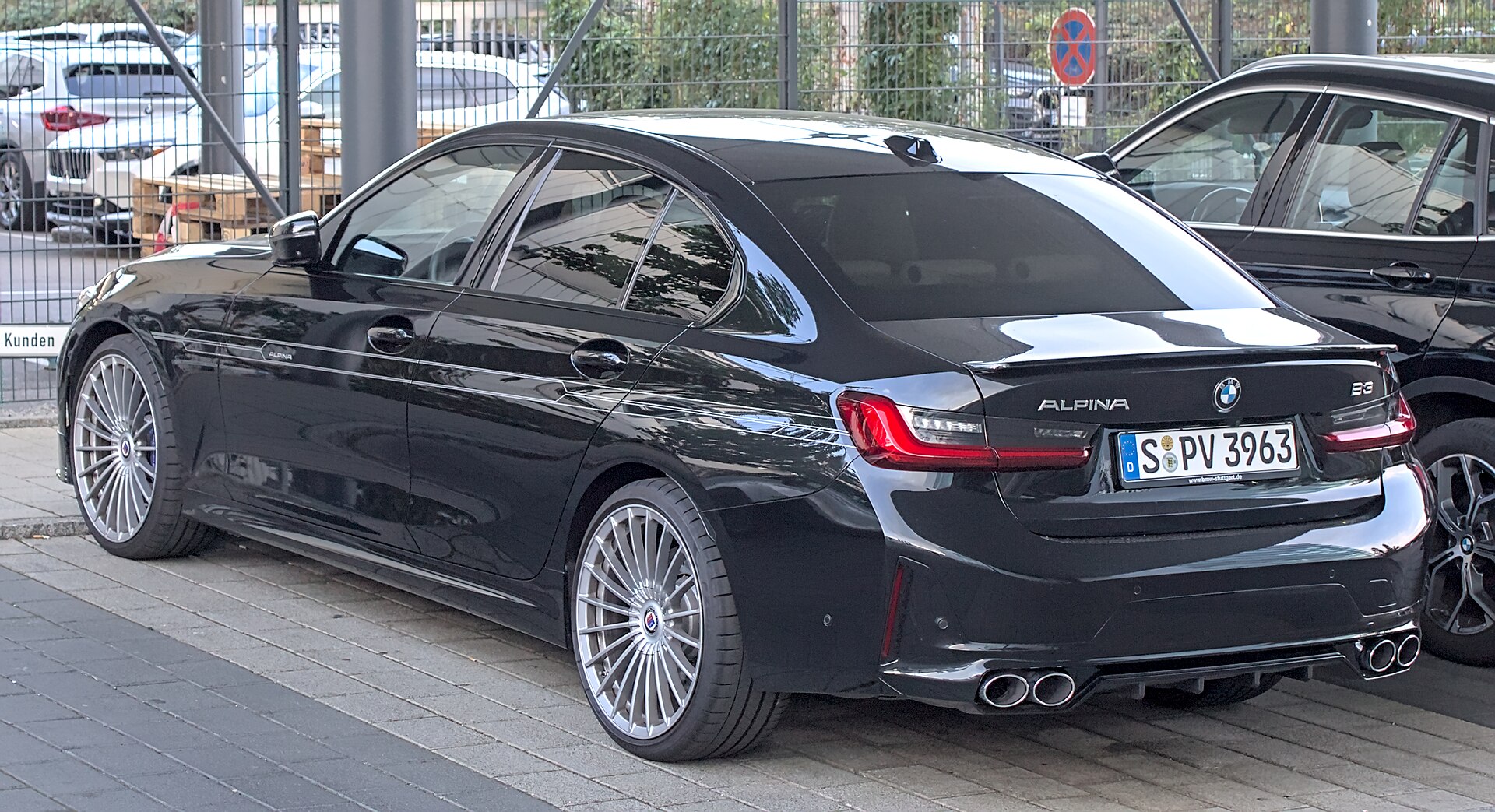
| B3 / D3 S | G20/G21 | 2019–25 | 3.0 six biturbo (S58-based); 3.0 diesel | 462 PS / 700 Nm; 495 PS / 730 Nm from 2022 | B3 GT 529 PS from late 2024 |
| XB7 | G07 X7 | 2020–26 | 4.4 V8 biturbo (N63, S68 from 2022) | 457 kW (621 PS), 800 Nm | First ALPINA built outside Buchloe (Spartanburg); final XB7 MANUFAKTUR, 120 cars |
| B8 Gran Coupé | G16 | 2021–25 | 4.4 V8, biturbo | 463 kW (630 PS), 800 Nm | — |
| B4 Gran Coupé / B4 GT | G26 | 2022–25 | 3.0 six, biturbo | 495 PS / 730 Nm; GT 529 PS | — |
| B8 GT | G16 | 2025 | 4.4 V8, biturbo | 466 kW (634 PS), 850 Nm | 99 built; last ALPINA of the Buchloe era |

Identifying a genuine ALPINA
The following points come from owner registries and BMW enthusiast forums, not from ALPINA documentation, and may not apply to every market or model.
- Cars registered as ALPINA carry a VIN with the world manufacturer identifier WAP rather than BMW's WBA. On E38 B12s the original BMW VIN is reported to be struck through and the car to carry a numbered ALPINA build plaque inside the cabin.
- BMW supplied base cars for conversion under option code S920A ("Alpina, ohne Brief"). The E38 registry counts 290 E38 750i/iL cars with that code.
- Numbered plaques are confirmed by the manufacturer for limited editions, such as the XB7 MANUFAKTUR. The German KBA manufacturer code 7656 for BMW-Alpina is reported only on forums.
- Check build details with ALPINA (Bovensiepen) service in Buchloe, which keeps production records for the earlier cars. A body kit, wheels or badges alone do not prove that a car is an ALPINA.
Not established
- The extent of ALPINA's own Bosch Motronic and DME calibration work, and how its software is versioned against BMW releases.
- Exact production numbers for the C1 2.3 and B10 4.0, and for many post-2005 models.
- Whether all export-market cars, particularly in North America, used WAP VINs.
- The official name and specification of the 2027 BMW ALPINA 7 Series-based model.
Sources
- Expanding the portfolio: BMW Group acquires the ALPINA brand, BMW Group press release, 10 March 2022 (reprint; the original PressClub URL now redirects). Accessed 19 November 2026.
- BMW ALPINA relaunches as exclusive brand, BMW Group, 2026. Accessed 19 November 2026.
- 2026 BMW ALPINA XB7 MANUFAKTUR: limited to 120 units, BMW of North America, 6 March 2026. Accessed 19 November 2026.
- Alpina, English Wikipedia; and the German Wikipedia articles Alpina Burkard Bovensiepen, B3, B5, B6 Biturbo, B7, B10, B12 and XB7. Accessed 19 November 2026.
- Company: Alpina, HandWiki model tables. Accessed 19 November 2026.
- Alpina – an attempt at an overview, radical-mag, 12 March 2026. Accessed 19 November 2026.
- Complete archive of Günther Huber, Racing Sports Cars (1970 Spa 24 Hours result). Accessed 19 November 2026.
- 1977 European Touring Car Championship, English Wikipedia. Accessed 19 November 2026.
- BMW 3.0 CSL, 72stagpower (1973 Nürburgring 24 Hours). Accessed 19 November 2026.
- BMW ALPINA launches as standalone brand, BMWBLOG, 2 January 2026; ALPINA looks back at the final B8 GT, 31 March 2026; Vision BMW ALPINA reveal, 10 May 2026; New BMW ALPINA 7 Series: first official look, 3 November 2026. Accessed 19 November 2026.
- The first BMW Alpina model in the new era will be a large V8 sedan, Motor1, 18 May 2026. Accessed 19 November 2026.
- Meet the BMW M4-based Bovensiepen Zagato, Top Gear, 2025. Accessed 19 November 2026.
- S920A – ALPINA, ohne Brief, BMW E38 7 Series Registry, 16 August 2022. Accessed 19 November 2026.
- VIN decoder for ALPINA vehicles, BMW-Syndikat forum, 2005–2015 (enthusiast evidence). Accessed 19 November 2026.
- Photographs from Wikimedia Commons, credited in each caption: 1982 Alpina B7 Turbo, 1991 Alpina B10 3.5/1, 1992 Alpina B12 5.7 and 2024 Alpina B3 (G20). Accessed 19 November 2026.