Country of origin: Germany. Part of Car makes and the history of the motor car.
History and development
BMW traces its origins to German aircraft-engine businesses in the 1910s. The company entered motorcycle production in the 1920s and car production after acquiring the Eisenach vehicle works in 1928. Wikipedia: BMW history.
Its sporting saloons and coupés helped establish the modern BMW identity. The 02, 3 Series and M cars span several distinct generations; a familiar model number does not guarantee the same engine or turbo arrangement.
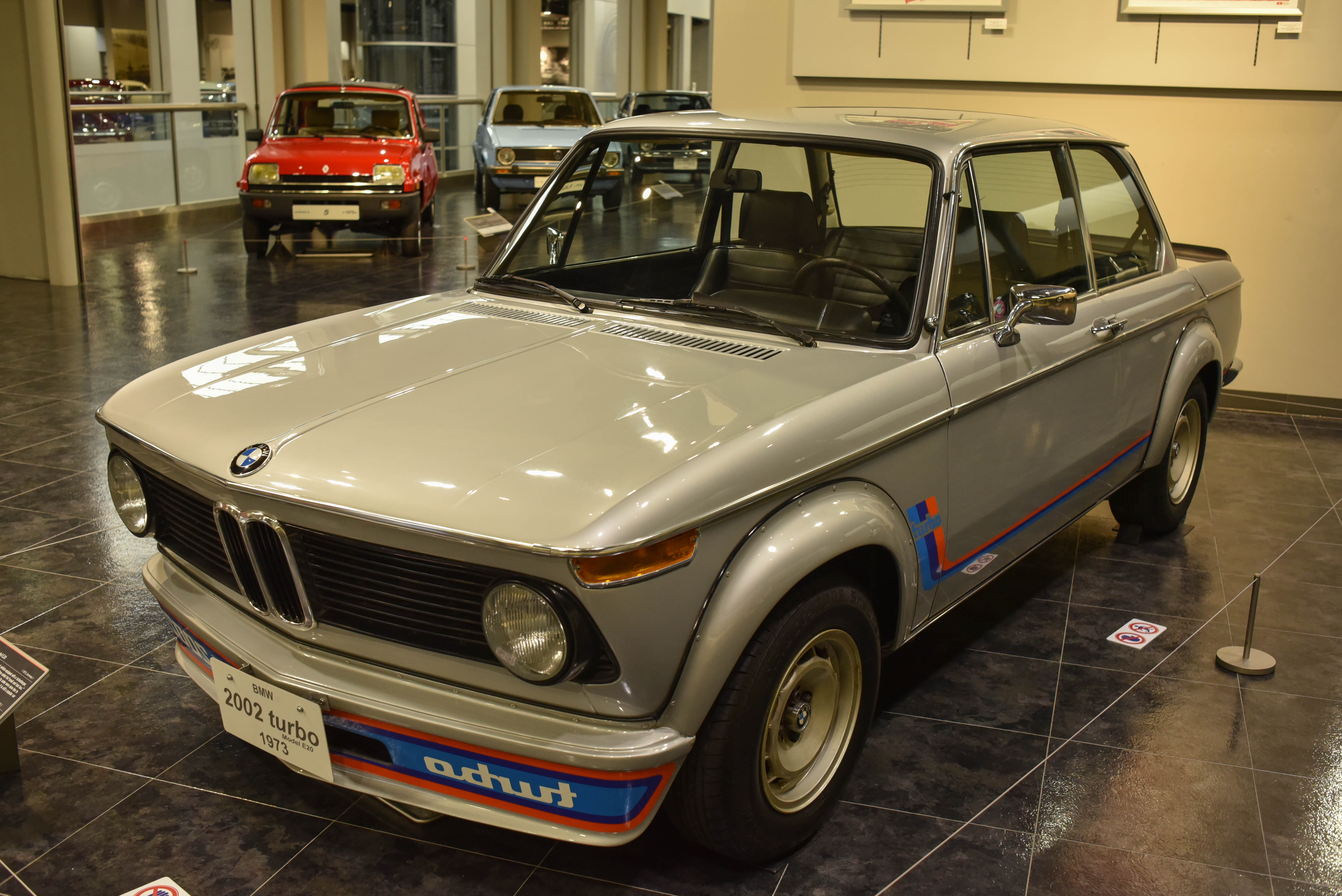

Selected cars and engines
Examples are selected rather than a complete production list. Engine and equipment specifications can vary with year and market.
| Car | Why it matters | Evidence |
|---|---|---|
| 2002 turbo (1973) | The 1,990 cc M10 four used Kugelfischer injection and a single KKK turbo. The turbo was a separate 02 model, not the same car as the 2002 ti or tii. | Illustrated turbo history |
| 335i, first E90/E92 application (2006) | The 2,979 cc N54 straight-six used two parallel turbos, an intercooler and direct injection; later 335i variants differ. | Illustrated turbo history |
| 3 Series | BMW's long-running compact executive range includes saloons, coupés and other bodies across several generations and powertrains. | Model reference |
| M3 | A performance version of the 3 Series; the engine layout and forced-induction system vary substantially by generation. | Model reference |
More models and representative engines
These are specific examples rather than every engine offered. Equipment, output and capacity can change with model year and market; identify the exact vehicle before ordering parts.
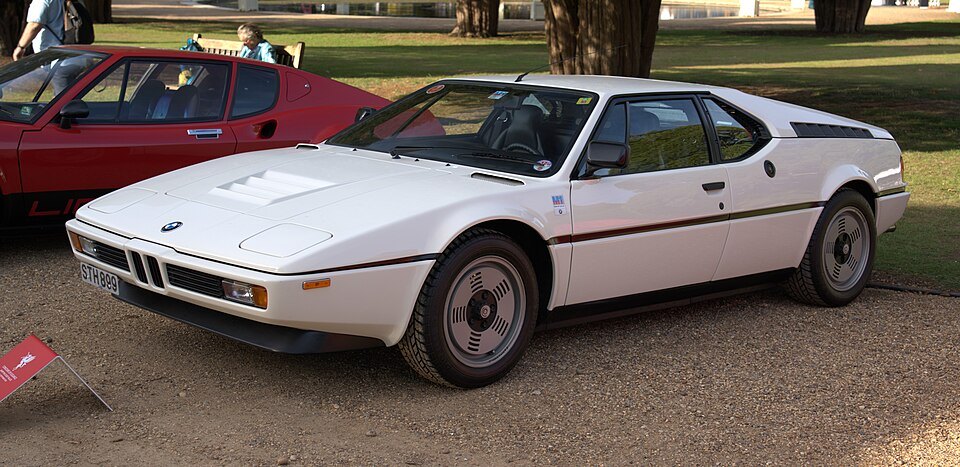

| Model and version | Engine or powertrain | Evidence |
|---|---|---|
| M1 (E26, 1978) | 3.5-litre M88 naturally aspirated inline-six. | Manufacturer source |
| M3 (E30, original 1986) | 2.3-litre S14 naturally aspirated four-cylinder; later versions used different capacities. | Component supplier catalogue |
| M5 (E39, 1998) | 4.9-litre S62 naturally aspirated V8. | Manufacturer source |
| i8 | 1.5-litre turbocharged three-cylinder petrol engine combined with electric drive in a plug-in hybrid. | Manufacturer source |
Tuners and BMW-based manufacturers
Independent companies have modified and built BMW-based cars since the 1960s. ALPINA (from 1983) and Hartge (from 1985) were registered with the German KBA as manufacturers in their own right. Others, such as AC Schnitzer, Hamann, Dinan, G-Power and Manhart, sell parts, software and complete conversions. BMW Group bought the ALPINA brand in 2022 and relaunched it as BMW ALPINA in 2026. See BMW tuning houses for an overview, and the individual pages on ALPINA, Hartge, AC Schnitzer, Hamann, Dinan, G-Power and Manhart.
Identifying a car and engine
Use the VIN, market, model year and engine code when researching servicing, tuning or parts. A model badge may cover naturally aspirated, turbocharged, supercharged, hybrid or electric versions depending on the particular vehicle. Factory fitment and aftermarket conversions are distinguished in the linked guides. An ALPINA carries its own WAP VIN rather than a BMW WBA VIN.
Sources and related reading
- Wikipedia: BMW — marque history and further references.
- Tuning Wiki: illustrated turbocharged-car timeline.
- Tuning Wiki: supercharger types and Eaton guides.
- Tuning Wiki: BMW tuning houses.