AVL List GmbH, headquartered in Graz, Austria, develops powertrain test systems, dynamometers, instrumentation and automation for combustion engines, hybrid drivetrains and electric motors. Its work ranges from individual load machines to integrated research and development test cells. See AVL company history.
Company history
AVL traces its roots to Hans List and colleagues' engine-development work in the 1940s; the company adopted the AVL name in 1951. According to AVL, it began manufacturing engine instrumentation in the 1960s and installed a fully automatic digital testbed in 1969. Its first automated testbeds went on sale in the early 1970s, followed in 1985 by a highly dynamic testbed for running a real engine in a simulated vehicle. AVL company timeline.
How an active testbed works
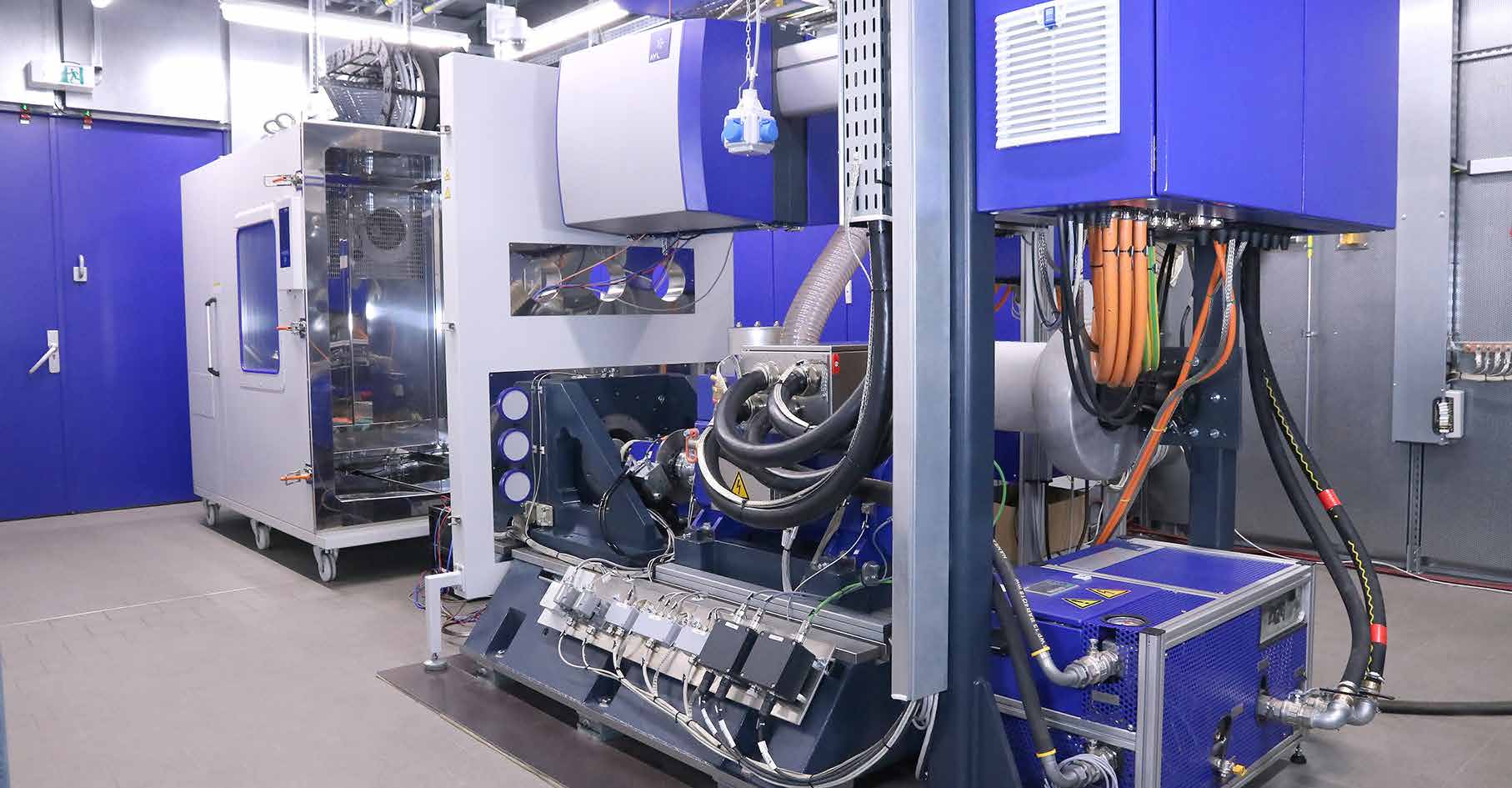
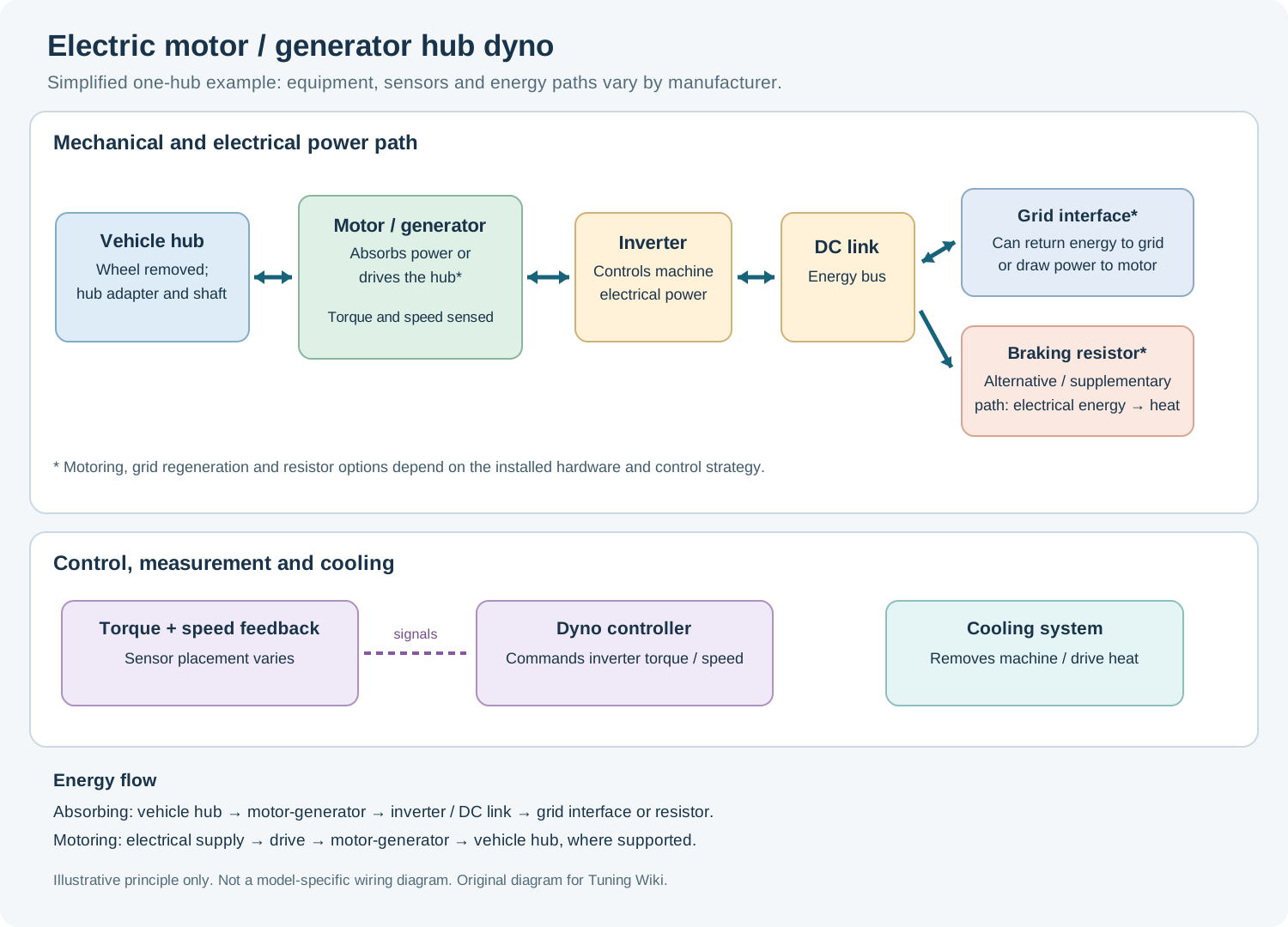
The unit under test is coupled through a guarded shaft and appropriate torque measurement to an electric dynamometer. A four-quadrant converter controls the machine's electrical torque and speed. It can absorb mechanical power from the test unit, or motor the shaft when the equipment and operating point allow. In a regenerative installation the drive can return energy to the supply; this depends on the converter and facility arrangement. Testbed automation coordinates speed or torque setpoints, monitoring and recorded channels. See AVL DynoULTRA PMM solution sheet and electric motor and generator dynamometers.
Examples of equipment
| System | Application and published example |
|---|---|
| DynoULTRA PMM | Active permanent-magnet dynamometer for e-drive testing with a four-quadrant converter. AVL Software and Functions describes one complete high-speed testbed with 400 kW nominal and 500 kW peak, 545 N·m nominal and 800 N·m peak, and up to 20,000 rpm at the dynamometer. Higher unit-under-test speeds can use a transmission. These are figures for that stated installation; the maxima do not all occur simultaneously. Testbed specification. |
| DynoDur 160 | An active AC dynamometer used for engine development. A university research installation reports 160 kW, 400 N·m and 10,000 rpm maximum, with AVL PUMA Open monitoring; confirm the exact installed model and torque/speed envelope. University testbed description. |
| DynoDur 290 | A reported e-machine test facility uses a 290 kW DynoDur with a choice of low- and high-speed configurations and PUMA Open automation. Gearing and installation determine the unit-under-test speed and torque. APRL facility description. |
Unlike a workshop chassis dyno, these are examples of engineered research testbeds. Check continuous versus peak duty, shaft torque-speed curves, inertia, cooling, couplings and supply capacity for the actual configuration.
Automation and control
AVL PUMA 2 is a configurable testbed automation platform for conventional and electrified applications. AVL describes testbed configuration, measurement and integration across applications including engines, electric motors and batteries. Its PUMA 2 R7.2 material lists Python scripting and expanded I/O and synchronisation features. PUMA 2 hardware may include a workstation, I/O cards, modules and cabinets. PUMA Open appears in the documented older DynoDur installations above. Automation software is one part of the system; the machine converter, sensors, interlocks and installed interfaces remain essential. Third-party retrofit compatibility must be assessed for the specific dyno and facility.
See also engine dynamometers, control systems, and manufacturers and suppliers.