Removed text is struck through; added text is highlighted.
Production: 1908–1927 (over 15 million built at Piquette Avenue, Highland Park and global CKD plants). Wikipedia: Ford Model T.Production: 1908–1927. Model and production reference.
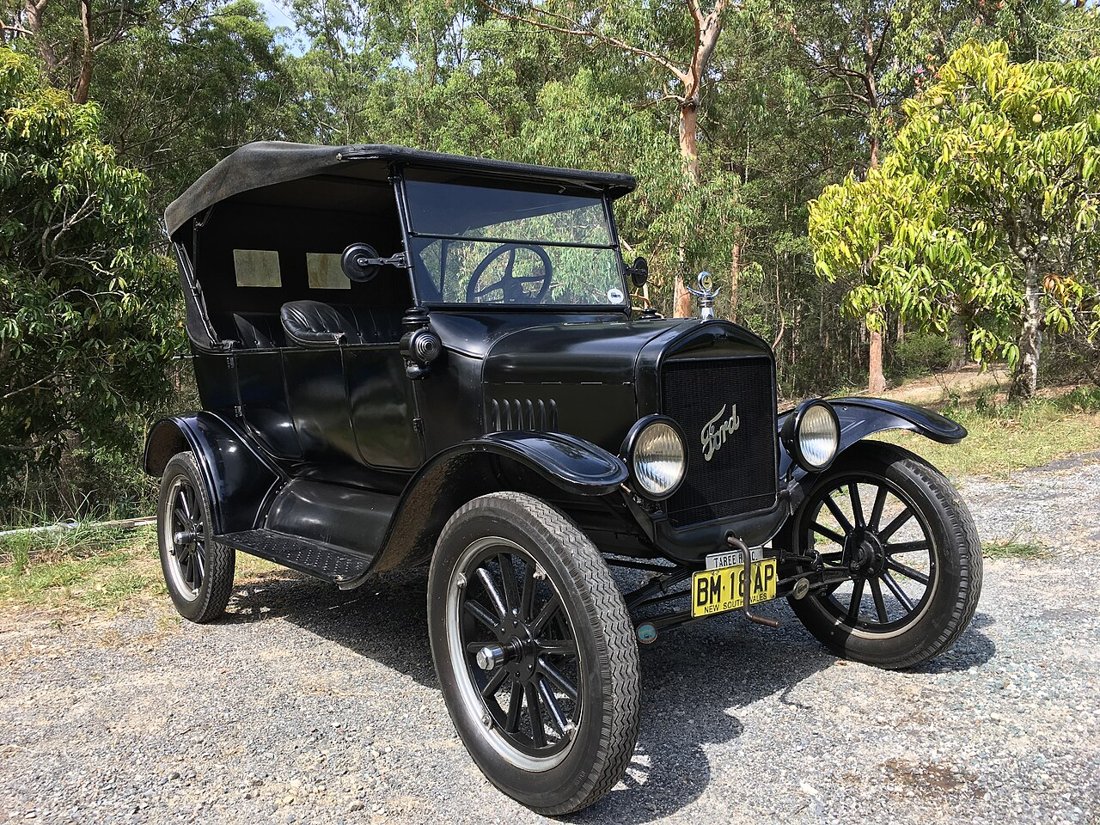
A 1925 Ford Model T touring car. Photo: ModelTMitch, Wikimedia Commons, Public domain; resized and re-encoded.
Designed by Henry Ford, Childe Harold Wills, József Galamb and Eugene Farkas, the Model T pioneered affordable mass motoring and, from 1913 at Highland Park, moving assembly-line production. Body styles ranged from Tourer, Runabout/Roadster, Coupé, Tudor and Fordor sedans to the heavy-duty Model TT one-ton truck chassis (1917–1927).Engine, transmission and chassis specificationsComponentSpecificationTechnical notes
Engine177 cu in (2.9 L) L-head (side-valve) inline-fourMonobloc cast-iron block with detachable cylinder head; splash/thermosyphon cooling (no water pump on standard production); 20 hp (15 kW) at 1,600 rpm; gravity-fed carburettor (Kingston or Holley); dual-fuel / kerosene conversions offered in agricultural markets.
IgnitionLow-tension flywheel magneto & four trembler coilsBattery electric starter and generator became standard on closed cars from 1919 and across the range later in production.
Transmission2-speed epicyclic (planetary) + reverseControlled by three floor pedals (clutch/low-high, reverse, transmission brake) and a handbrake/high-gear lever rather than a conventional H-gate gearbox.
Chassis & suspensionVanadium-steel ladder frame; transverse semi-elliptic leaf springsSolid front and rear axles; mechanical rear-wheel transmission/hub braking; wheelbase 100 in (2,540 mm) on Model T, 125 in (3,175 mm) on Model TT truck.Body styles and equipment changed during the long production run.Engine and powertrain choicesThe table summarises examples from the model's production history; availability and specifications vary with year, generation and market. Check the exact vehicle before choosing parts. Model reference.Model or generationEngine or driveModel TApproximately 2.9-litre naturally aspirated petrol inline-four.
Sources and related pages
Wikipedia: Ford Model T — model history, Highland Park assembly and technical details.
Ford Corporate History: Highland Park Plant.
Ford: history and cars.Wikipedia: Ford Model T — model history and further references.Ford Model T: manufacturer or technical reference.Ford: history and cars.
Rendered revisions
Open each version to inspect formatting, tables and photographs.
Body styles and equipment changed during the long production run.
Engine and powertrain choices
The table summarises examples from the model's production history; availability and specifications vary with year, generation and market. Check the exact vehicle before choosing parts. Model reference.
Model or generation
Engine or drive
Model T
Approximately 2.9-litre naturally aspirated petrol inline-four.
Designed by Henry Ford, Childe Harold Wills, József Galamb and Eugene Farkas, the Model T pioneered affordable mass motoring and, from 1913 at Highland Park, moving assembly-line production. Body styles ranged from Tourer, Runabout/Roadster, Coupé, Tudor and Fordor sedans to the heavy-duty Model TT one-ton truck chassis (1917–1927).
Engine, transmission and chassis specifications
Component
Specification
Technical notes
Engine
177 cu in (2.9 L) L-head (side-valve) inline-four
Monobloc cast-iron block with detachable cylinder head; splash/thermosyphon cooling (no water pump on standard production); 20 hp (15 kW) at 1,600 rpm; gravity-fed carburettor (Kingston or Holley); dual-fuel / kerosene conversions offered in agricultural markets.
Ignition
Low-tension flywheel magneto & four trembler coils
Battery electric starter and generator became standard on closed cars from 1919 and across the range later in production.
Transmission
2-speed epicyclic (planetary) + reverse
Controlled by three floor pedals (clutch/low-high, reverse, transmission brake) and a handbrake/high-gear lever rather than a conventional H-gate gearbox.
Solid front and rear axles; mechanical rear-wheel transmission/hub braking; wheelbase 100 in (2,540 mm) on Model T, 125 in (3,175 mm) on Model TT truck.