Removed text is struck through; added text is highlighted.
Country of origin: United States. Part of Car makes and the history of the motor car.
History and development
General Motors established Saturn in the 1980s as a distinct American car brand. It began selling cars in 1990 and GM ended the marque in 2010. Wikipedia: Saturn history.
Saturn's range grew from small cars to other body styles. The ION Red Line is an example of a factory Eaton-supercharged compact performance car.
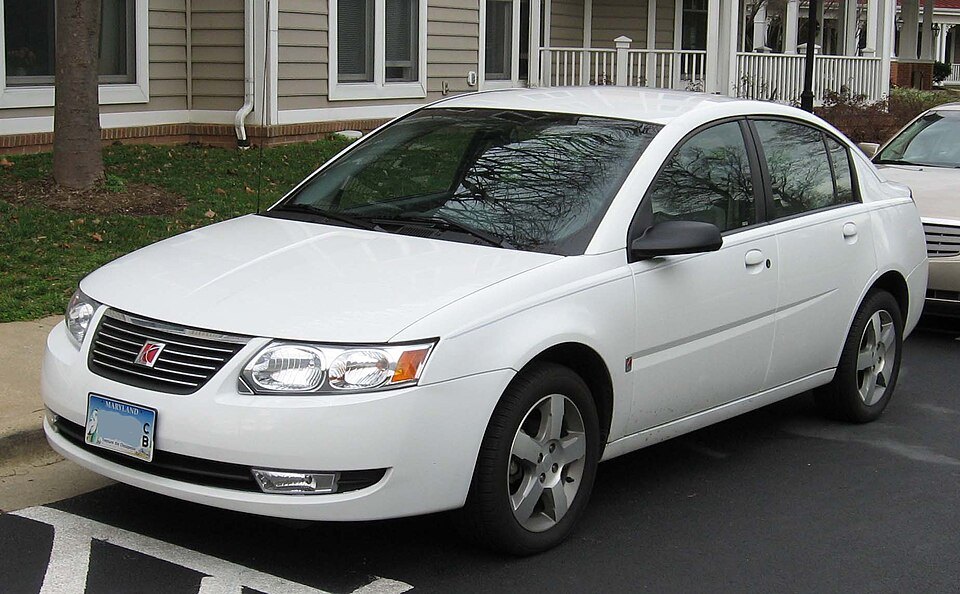
A 2005 Saturn ION; the pictured car is not identified as an ION Red Line. Photo: IFCAR, Wikimedia Commons, Public domain; resized and re-encoded.
Selected cars and engines
Examples are selected rather than a complete production list. Engine and equipment specifications can vary with year and market.
CarWhy it mattersEvidenceION Red Line (2007)Its 2.0-litre Ecotec four used a factory Eaton M62 with an intercooler and bypass.Eaton fitment guideS-SeriesSaturn's original compact-car family included saloon, coupé and estate bodies.Model referenceSkyA two-seat roadster sold with different naturally aspirated and turbocharged engines.Model referenceVueA compact SUV sold with several engine and hybrid options across its generations.Model reference
More models and representative engines
These are specific examples rather than every engine offered. Equipment, output and capacity can change with model year and market; identify the exact vehicle before ordering parts.
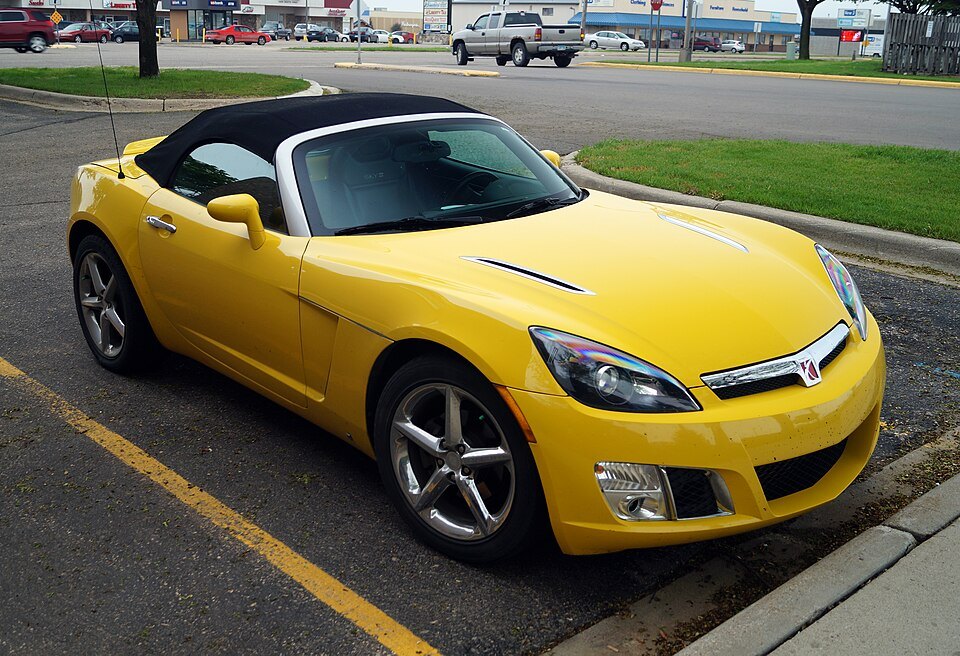
A Saturn Sky Red Line. Photo: Greg Gjerdingen from Willmar, USA, Wikimedia Commons, CC BY 2.0; resized and re-encoded.
Model and versionEngine or powertrainEvidenceS-SeriesA 1.9-litre naturally aspirated inline-four, offered with single- or dual-overhead-cam cylinder heads depending on version.Manufacturer or technical sourceSky Red LineA 2.0-litre turbocharged direct-injection four in the performance roadster.Manufacturer or technical sourceVue Red Line (2004)A 3.5-litre V6 in the specified 2004 Vue Red Line.Manufacturer or technical sourceAura XR (2007)A 3.6-litre V6 in the specified Aura XR; other Aura versions used different engines.Manufacturer or technical source
Identifying a car and engine
Use the VIN, market, model year and engine code when researching servicing, tuning or parts. A model badge may cover naturally aspirated, turbocharged, supercharged, hybrid or electric versions depending on the particular vehicle. Factory fitment and aftermarket conversions are distinguished in the linked guides.
Sources and related reading
Wikipedia: Saturn — marque history and further references.Tuning Wiki: illustrated turbocharged-car timeline.Tuning Wiki: supercharger types and Eaton guides.
Text is unchanged; formatting, links or images changed. Compare the rendered revisions below.
Rendered revisions
Open each version to inspect formatting, tables and photographs.
General Motors established Saturn in the 1980s as a distinct American car brand. It began selling cars in 1990 and GM ended the marque in 2010. Wikipedia: Saturn history.
Saturn's range grew from small cars to other body styles. The ION Red Line is an example of a factory Eaton-supercharged compact performance car.
A 2005 Saturn ION; the pictured car is not identified as an ION Red Line. Photo: IFCAR, Wikimedia Commons, Public domain; resized and re-encoded.
Selected cars and engines
Examples are selected rather than a complete production list. Engine and equipment specifications can vary with year and market.
Car
Why it matters
Evidence
ION Red Line (2007)
Its 2.0-litre Ecotec four used a factory Eaton M62 with an intercooler and bypass.
These are specific examples rather than every engine offered. Equipment, output and capacity can change with model year and market; identify the exact vehicle before ordering parts.
A Saturn Sky Red Line. Photo: Greg Gjerdingen from Willmar, USA, Wikimedia Commons, CC BY 2.0; resized and re-encoded.
Model and version
Engine or powertrain
Evidence
S-Series
A 1.9-litre naturally aspirated inline-four, offered with single- or dual-overhead-cam cylinder heads depending on version.
Use the VIN, market, model year and engine code when researching servicing, tuning or parts. A model badge may cover naturally aspirated, turbocharged, supercharged, hybrid or electric versions depending on the particular vehicle. Factory fitment and aftermarket conversions are distinguished in the linked guides.
General Motors established Saturn in the 1980s as a distinct American car brand. It began selling cars in 1990 and GM ended the marque in 2010. Wikipedia: Saturn history.
Saturn's range grew from small cars to other body styles. The ION Red Line is an example of a factory Eaton-supercharged compact performance car.
A 2005 Saturn ION; the pictured car is not identified as an ION Red Line. Photo: IFCAR, Wikimedia Commons, Public domain; resized and re-encoded.
Selected cars and engines
Examples are selected rather than a complete production list. Engine and equipment specifications can vary with year and market.
These are specific examples rather than every engine offered. Equipment, output and capacity can change with model year and market; identify the exact vehicle before ordering parts.
A Saturn Sky Red Line. Photo: Greg Gjerdingen from Willmar, USA, Wikimedia Commons, CC BY 2.0; resized and re-encoded.
Use the VIN, market, model year and engine code when researching servicing, tuning or parts. A model badge may cover naturally aspirated, turbocharged, supercharged, hybrid or electric versions depending on the particular vehicle. Factory fitment and aftermarket conversions are distinguished in the linked guides.