Removed text is struck through; added text is highlighted.
Country of origin: United Kingdom. Part of Car makes and the history of the motor car.
History and development
The original Mini was introduced by the British Motor Corporation in 1959. Its compact front-wheel-drive layout put the engine transversely to make efficient use of space. Wikipedia: MINI history.
The later MINI marque revived the name with a new generation launched in 2001. The original Mini and the BMW-era MINI are separate designs, and different Cooper S generations use different induction systems.
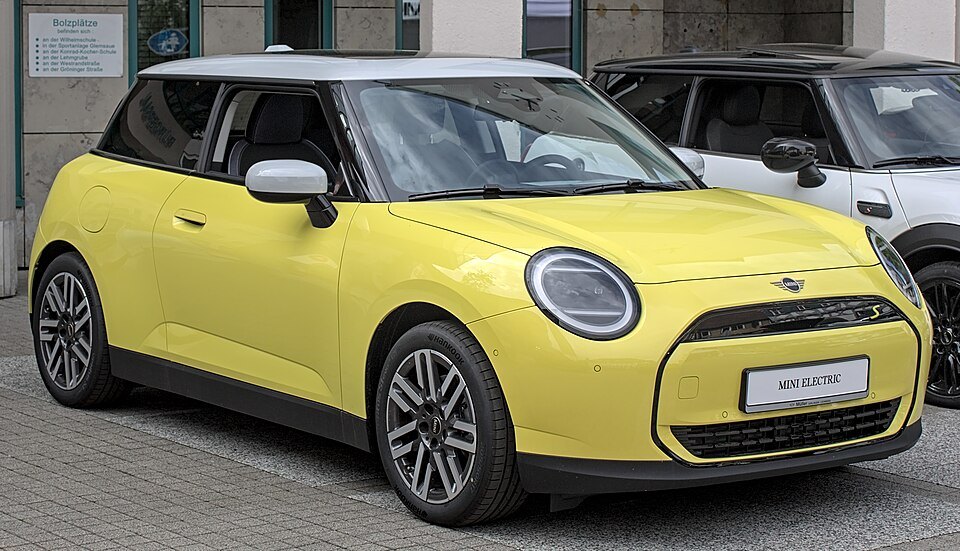
A MINI Hatch J01; this is a different generation from the supercharged R53. Photo: Alexander-93, Wikimedia Commons, CC BY-SA 4.0; resized and re-encoded.
Selected cars and engines
Examples are selected rather than a complete production list. Engine and equipment specifications can vary with year and market.
CarWhy it mattersEvidenceOriginal Mini / CooperThe Issigonis-designed small car and its Cooper performance derivatives became British motoring icons.Model referenceCooper S R53The 1,598 cc W11 four had a factory Eaton M45 belt-driven supercharger.Eaton fitment guideCooper S R53 with Harrop TVS900An aftermarket supercharger conversion documented for an example R53, not its original factory blower.Eaton fitment guideLater Cooper SLater generations use different engines and induction arrangements; confirm the R or F model designation.Model reference
More models and representative engines
These are specific examples rather than every engine offered. Equipment, output and capacity can change with model year and market; identify the exact vehicle before ordering parts.
A 1964 Mini Cooper S rally car. Photo: DeFacto, Wikimedia Commons, CC BY-SA 4.0; resized and re-encoded.
Model and versionEngine or powertrainEvidenceMini Cooper S 1275A 1,275 cc naturally aspirated A-series inline-four in this classic Mini Cooper S version.Manufacturer or technical sourceMINI Cooper S R56Early R56 Cooper S cars used a 1.6-litre turbocharged direct-injection four, unlike the belt-supercharged R53.Manufacturer or technical sourceMINI John Cooper Works F562.0-litre turbocharged inline-four in the specified F56 generation.Manufacturer or technical sourceMINI Countryman Cooper SDA 2.0-litre turbo-diesel four in specified first-generation Countryman Cooper SD cars.Manufacturer or technical source
Identifying a car and engine
Use the VIN, market, model year and engine code when researching servicing, tuning or parts. A model badge may cover naturally aspirated, turbocharged, supercharged, hybrid or electric versions depending on the particular vehicle. Factory fitment and aftermarket conversions are distinguished in the linked guides.
Sources and related reading
Wikipedia: MINI — marque history and further references.Tuning Wiki: illustrated turbocharged-car timeline.Tuning Wiki: supercharger types and Eaton guides.
Text is unchanged; formatting, links or images changed. Compare the rendered revisions below.
Rendered revisions
Open each version to inspect formatting, tables and photographs.
The original Mini was introduced by the British Motor Corporation in 1959. Its compact front-wheel-drive layout put the engine transversely to make efficient use of space. Wikipedia: MINI history.
The later MINI marque revived the name with a new generation launched in 2001. The original Mini and the BMW-era MINI are separate designs, and different Cooper S generations use different induction systems.
A MINI Hatch J01; this is a different generation from the supercharged R53. Photo: Alexander-93, Wikimedia Commons, CC BY-SA 4.0; resized and re-encoded.
Selected cars and engines
Examples are selected rather than a complete production list. Engine and equipment specifications can vary with year and market.
Car
Why it matters
Evidence
Original Mini / Cooper
The Issigonis-designed small car and its Cooper performance derivatives became British motoring icons.
These are specific examples rather than every engine offered. Equipment, output and capacity can change with model year and market; identify the exact vehicle before ordering parts.
Use the VIN, market, model year and engine code when researching servicing, tuning or parts. A model badge may cover naturally aspirated, turbocharged, supercharged, hybrid or electric versions depending on the particular vehicle. Factory fitment and aftermarket conversions are distinguished in the linked guides.
The original Mini was introduced by the British Motor Corporation in 1959. Its compact front-wheel-drive layout put the engine transversely to make efficient use of space. Wikipedia: MINI history.
The later MINI marque revived the name with a new generation launched in 2001. The original Mini and the BMW-era MINI are separate designs, and different Cooper S generations use different induction systems.
A MINI Hatch J01; this is a different generation from the supercharged R53. Photo: Alexander-93, Wikimedia Commons, CC BY-SA 4.0; resized and re-encoded.
Selected cars and engines
Examples are selected rather than a complete production list. Engine and equipment specifications can vary with year and market.
These are specific examples rather than every engine offered. Equipment, output and capacity can change with model year and market; identify the exact vehicle before ordering parts.
Use the VIN, market, model year and engine code when researching servicing, tuning or parts. A model badge may cover naturally aspirated, turbocharged, supercharged, hybrid or electric versions depending on the particular vehicle. Factory fitment and aftermarket conversions are distinguished in the linked guides.