Tuning Wiki

This is a historical revision. Read the current page or return to its history.

Page organisation in this revision
Page type
Technical article
Subject
Vehicles
Parent
Section level
Applies to
No ECU-specific applicability
Tool groups
None
Manufacturers
Ferrari

Changes from revision 3 to revision 3

Removed text is struck through; added text is highlighted.

From the 2014 California T Ferrari returned to turbocharged V8 power for its core range, then added a 120° twin-turbo V6 and plug-in hybrid systems in the 296, SF90, 849 Testarossa and F80. This page lists the engines, outputs and gearboxes of these cars. The naturally aspirated V8 cars they replaced are on Ferrari F355, 360, F430 and 458.

Reliability of the figures: power and torque are manufacturer claims. Several recent cars are still in production, so the production end dates and, for the newest, the engine data should be treated as current at the access date only. Where a source contradicts itself it is noted.

Front-engined V8 cars
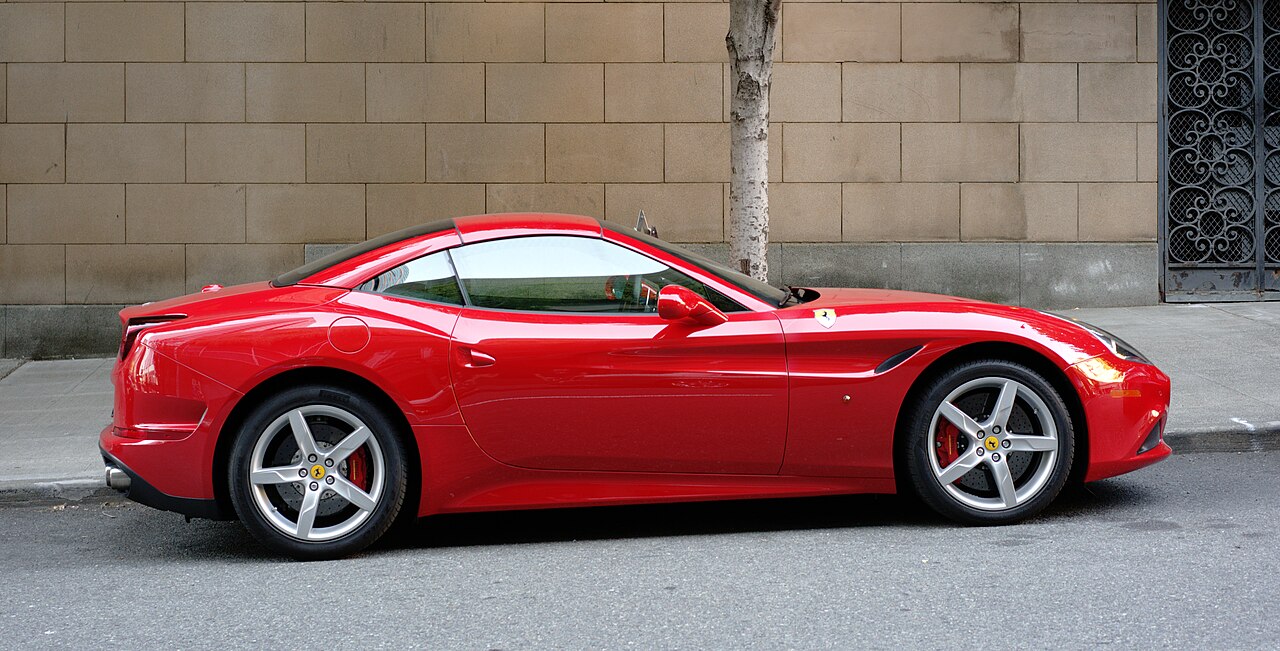
A Ferrari California T. Photo: Dllu, Wikimedia Commons, CC BY-SA 4.0; resized and re-encoded.

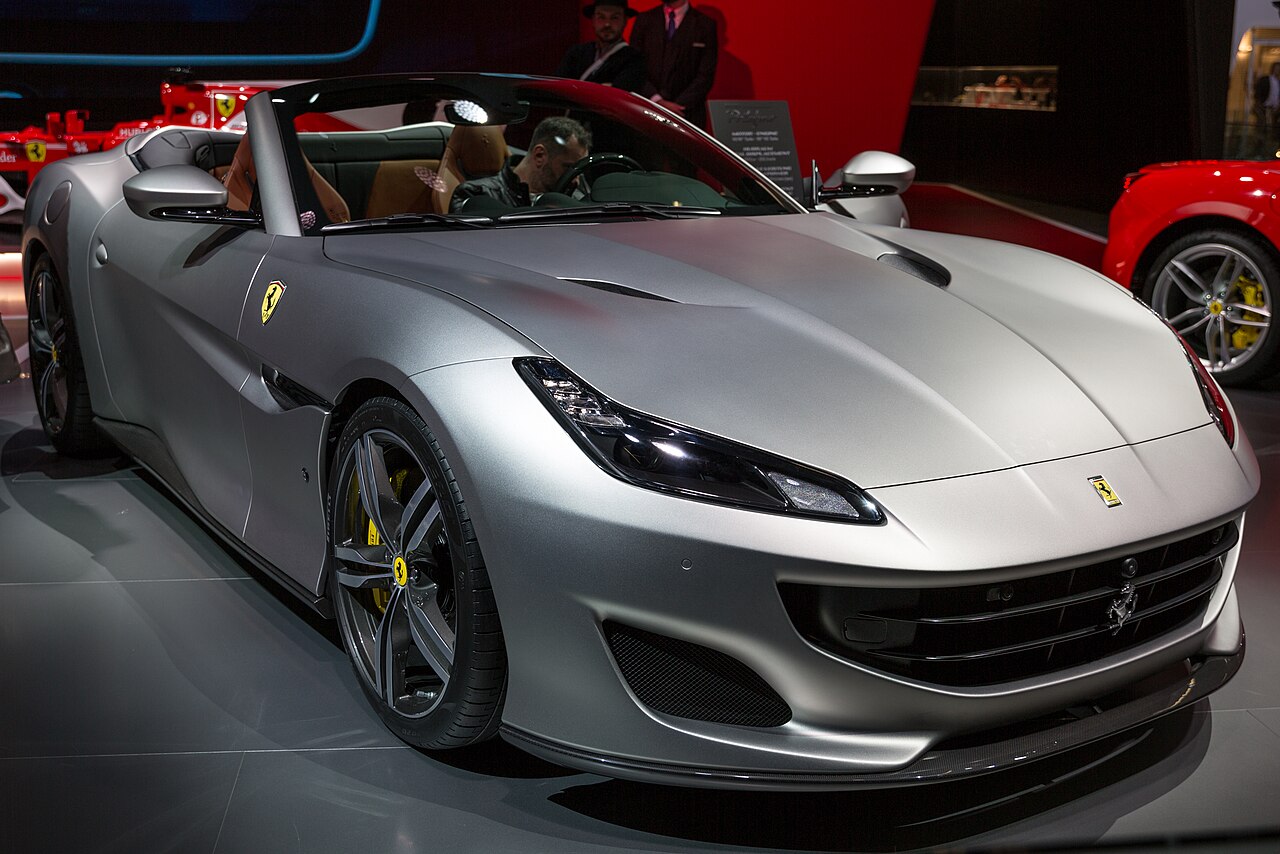
A Ferrari Portofino. Photo: Matti Blume, Wikimedia Commons, CC BY-SA 4.0; resized and re-encoded.

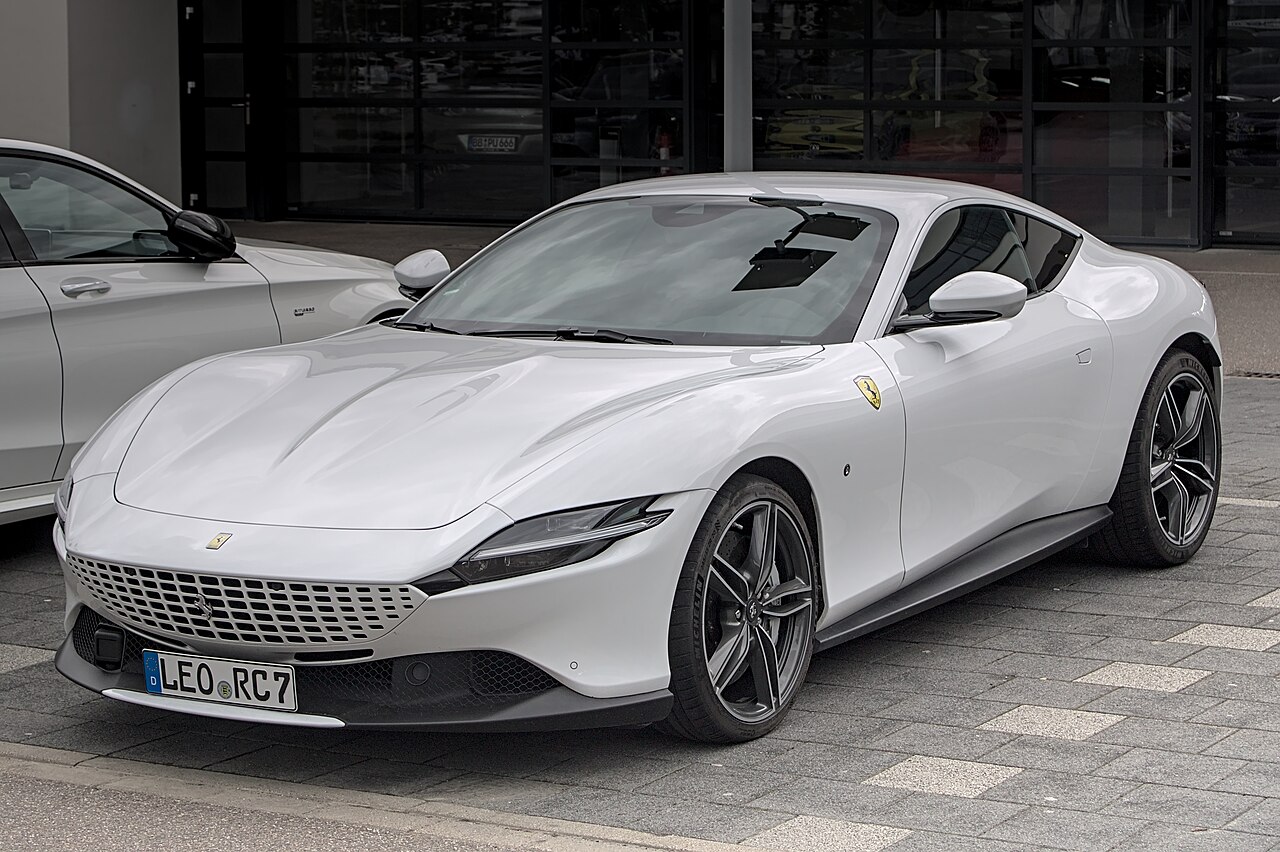
A Ferrari Roma. Photo: Alexander-93, Wikimedia Commons, CC BY-SA 4.0; resized and re-encoded.

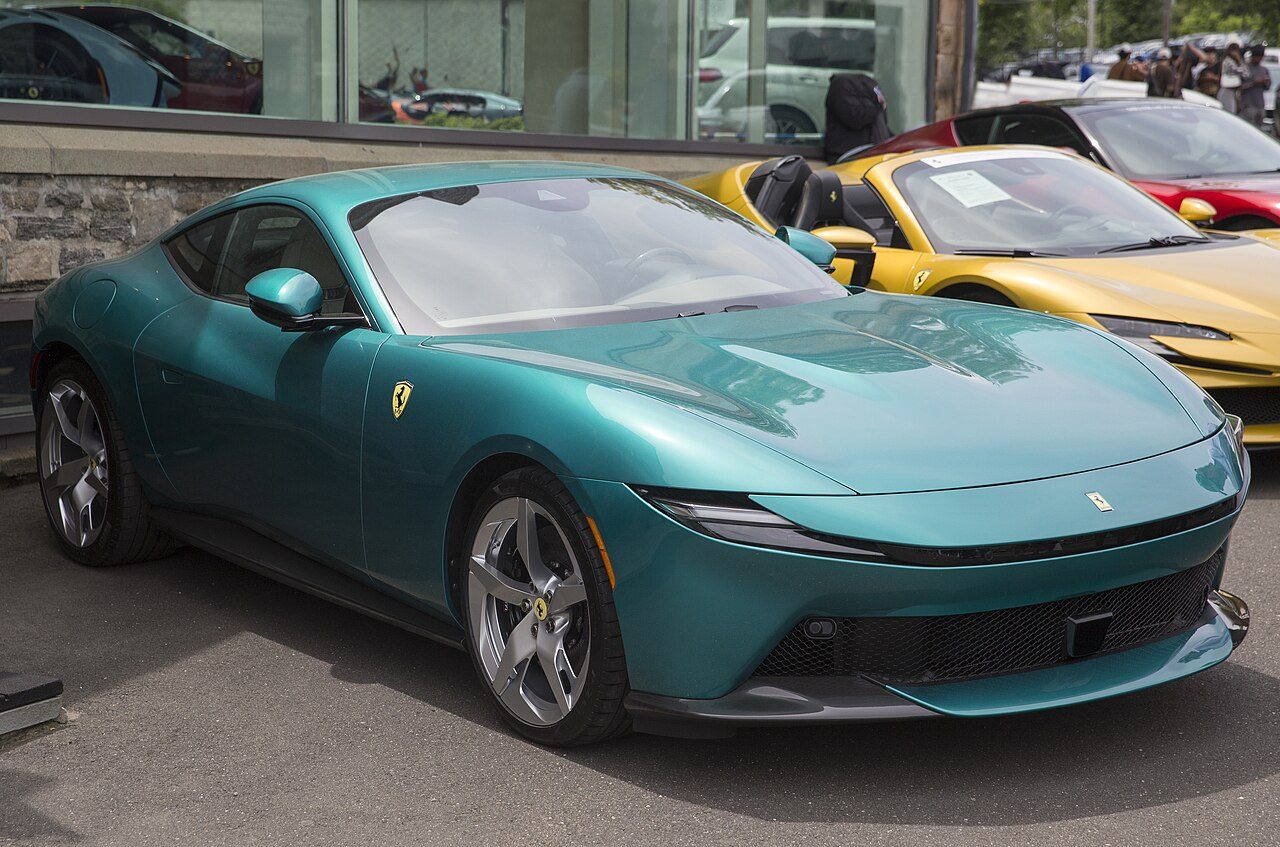
A Ferrari Amalfi. Photo: Mr.choppers, Wikimedia Commons, CC BY-SA 4.0; resized and re-encoded.

ModelYearsEnginePowerTorqueGearbox California (original)2008–144,297 cc naturally aspirated V8 (F136 IB)460 PS at 7,750 rpm485 N·m at 5,000 rpm7-speed dual-clutch; a 6-speed manual was available at first California 302012–144,297 cc V8 (F136 IH)490 PS at 7,750 rpm505 N·m at 5,000 rpm7-speed dual-clutch; manual dropped California T2014–173,855 cc twin-turbo V8 (F154 BB)560 PS at 7,500 rpm755 N·m at 4,750 rpm7-speed dual-clutch GTC4Lusso T2017–203,855 cc twin-turbo V8 (F154 BD)610 PS at 7,500 rpm760 N·m at 3,000–5,250 rpm7-speed dual-clutch, rear-wheel drive, four-wheel steering Portofino2017–213,855 cc twin-turbo V8 (F154 BE)600 PS at 7,500 rpm760 N·m at 3,000–5,250 rpm7-speed dual-clutch Portofino M2021–233,855 cc twin-turbo V8620 PS–8-speed dual-clutch Roma2020–243,855 cc twin-turbo V8 (F154 BH)620 PS at 5,750–7,500 rpm761 N·m at 3,000–5,750 rpm8-speed dual-clutch (Magna 8DCL900) Roma Spider2023–26as Roma, soft topas Romaas Romaas Roma

Only three California cars were built with a manual gearbox between 2008 and 2017. The California total across all variants is quoted as 17,349 cars, but that figure is flagged as unsourced. The Amalfi succeeds the Roma; engine and output data for it were not available in the source used. For the California dual-clutch gearbox see Ferrari California dual clutch gearbox lubrication and diagnosis.

Mid-engine V8 (3.9 and 4.0-litre turbo)

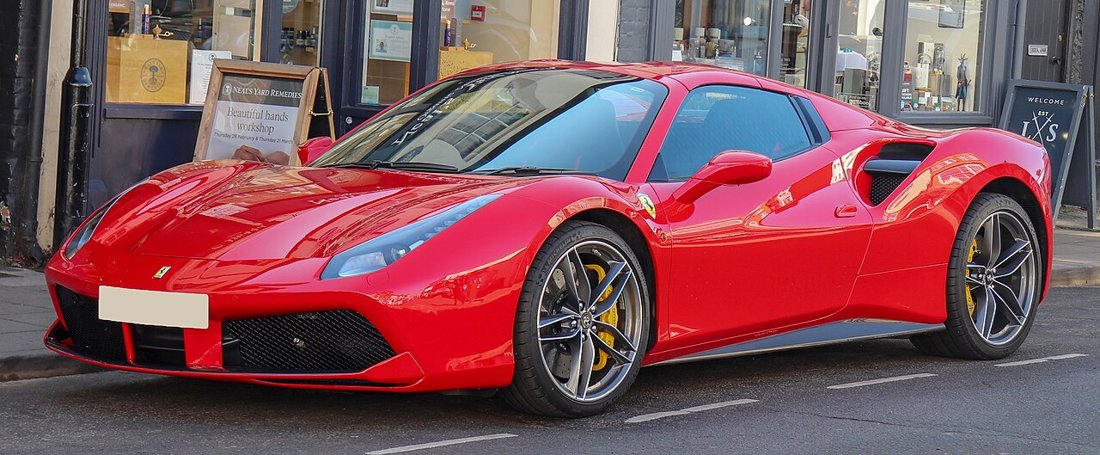
A Ferrari 488 Spider. Photo: Vauxford, Wikimedia Commons, CC BY-SA 4.0; resized and re-encoded.

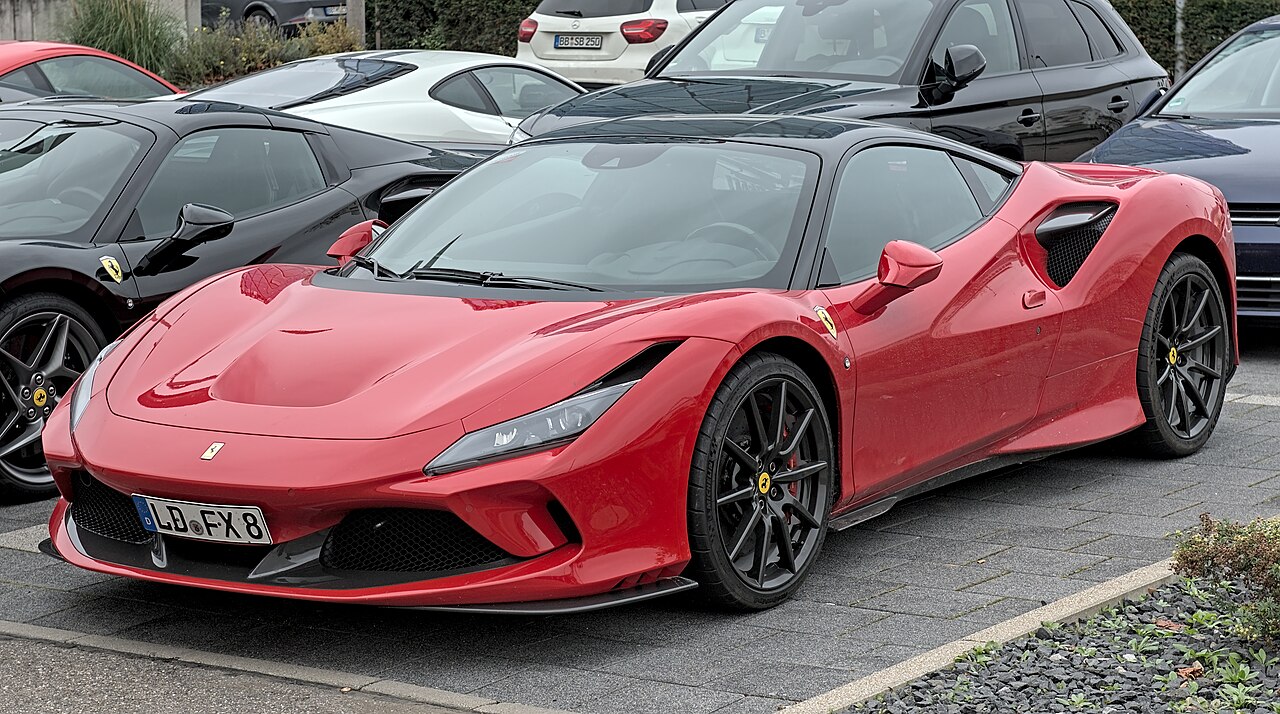
A Ferrari F8 Tributo. Photo: Alexander Migl, Wikimedia Commons, CC BY-SA 4.0; resized and re-encoded.

ModelYearsEnginePowerTorqueGearbox 488 GTB / Spider2015–203,902 cc twin-turbo V8670 PS at 8,000 rpm760 N·m at 3,000 rpm7-speed dual-clutch 488 Pista / Pista Spiderfrom 20183,902 cc, revised internals720 PS at 8,000 rpm770 N·m at 3,000 rpm7-speed dual-clutch, revised for faster shifts (30 ms in race mode) F8 Tributo / F8 Spider2019–233.9 L twin-turbo V8 (F154 CG)720 PS at 8,000 rpm770 N·m at 3,250 rpm7-speed dual-clutch

The 488 gearbox is named as a Magna 7DCL750 in one source and as a Getrag unit in another. Single-model page: Ferrari 488. The 488 Spider is stated as 670 PS in two places, 660 hp in another.

Hybrid and V6 cars

A Ferrari 296 GTB. Photo: Max Baillie, Wikimedia Commons, CC BY-SA 4.0; resized and re-encoded.

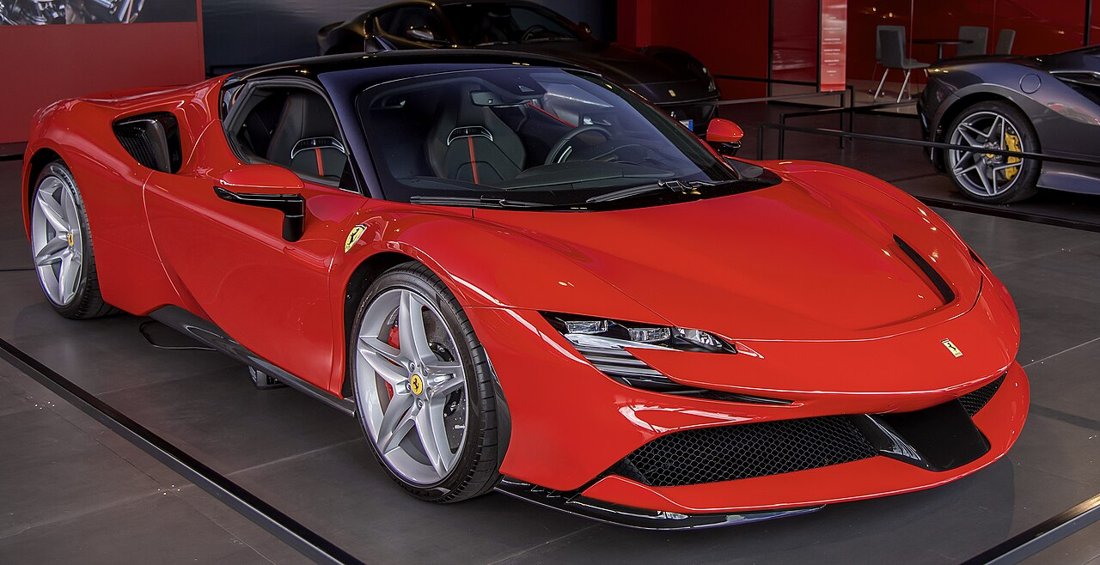
A Ferrari SF90 Stradale. Photo: Alexandre Prevot from Nancy, France, Wikimedia Commons, CC BY-SA 2.0; resized and re-encoded.

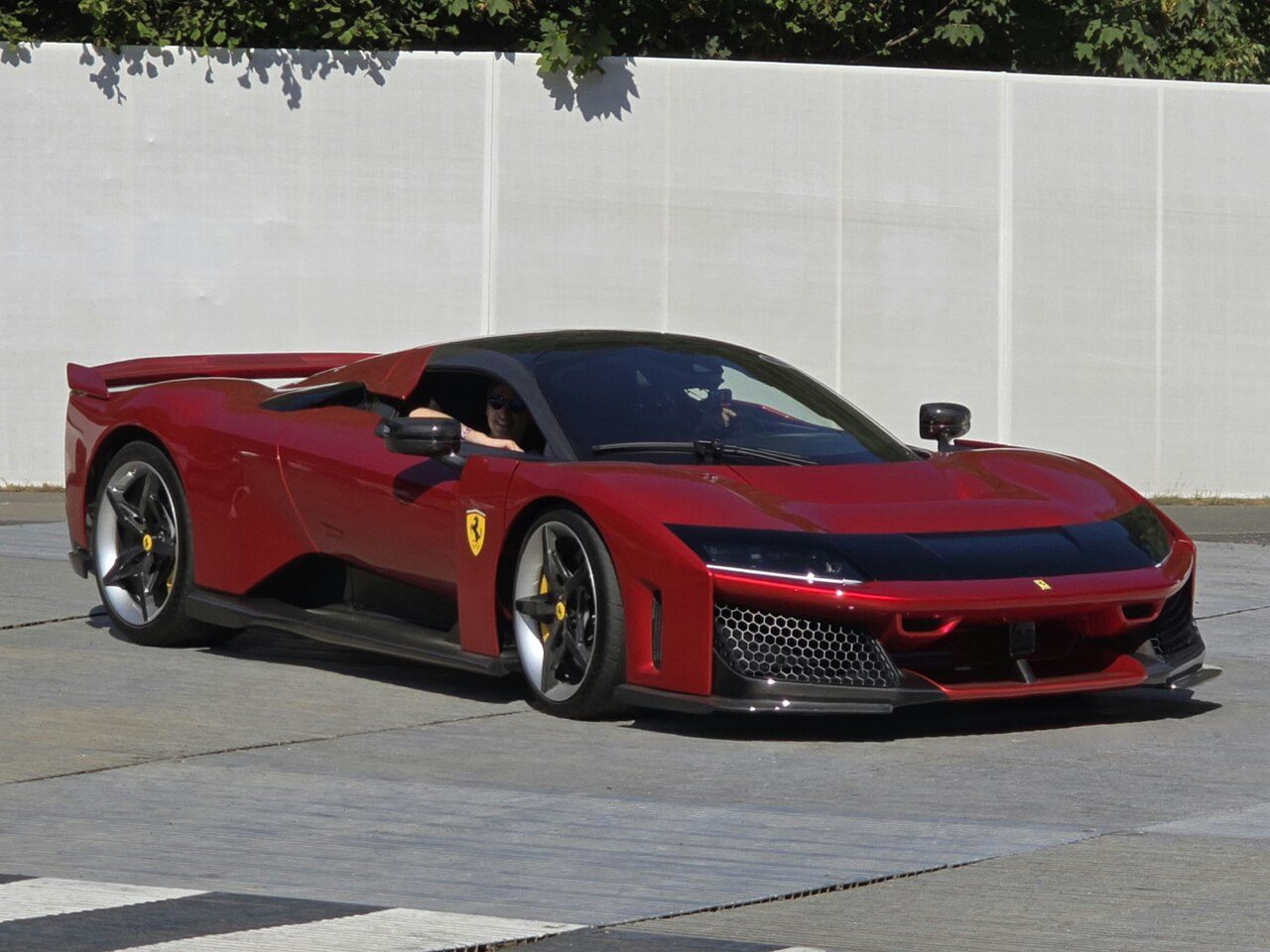
A Ferrari F80. Photo: Calreyn88, Wikimedia Commons, CC BY-SA 4.0; resized and re-encoded.

ModelYearsEngine and electric systemCombined powerTorqueGearbox 296 GTB / GTSGTB 2022–25, GTS 2023–262,992 cc twin-turbo 120° V6 (F163 BC), 663 PS at 8,000 rpm, plus a 167 PS axial-flux electric motor; 7.45 kWh battery, about 25 km electric range830 PS740 N·m at 6,250 rpm8-speed dual-clutch (Magna 8DCL900) 296 Specialeannounced April 2025V6 tuned to 700 PS plus hybrid system880 PS–8-speed dual-clutch SF90 Stradale / Spider2019–243,990 cc twin-turbo V8 (F154 FA), 780 PS, plus three electric motors (one on the transmission, one on each front wheel; 220 PS combined)1,000 PS800 N·m at 6,000 rpm8-speed dual-clutch; no reverse gear, front motors reverse the car SF90 XX Stradale / Spider2023–26; 799 + 599 builtV8 797 PS plus electric motor 233 PS1,030 PSover 804 N·m8-speed dual-clutch 849 Testarossaproduction from mid-20263,990 cc twin-turbo V8 (F154 FC), 830 PS, plus 220 PS of electric motors1,050 PSnot published8-speed dual-clutch F802025–27; 799 planned (uncited)2,992 cc twin-turbo V6 (F163 CF), 900 PS, plus three motors with 300 PS1,200 PSnot published8-speed dual-clutch

The SF90 article quotes the V8 alone as both 780 PS and 1,000 PS; the latter is the combined system output. The 296 Speciale's engine is listed as 2.9 litres in the source against 3.0 litres for the base car, so its displacement is not established. Single-model pages: Ferrari 296 and Ferrari SF90 Stradale.

Daytona SP3 (limited series)

A Ferrari Daytona SP3. Photo: Prova MO, Wikimedia Commons, CC BY-SA 4.0; resized and re-encoded.

The Daytona SP3 (2022–2025, 599 cars, plus a 600th sold at auction) is the only naturally aspirated car in this range: a 6.5-litre V12 (F140 HC, 9,500 rpm redline) producing 840 PS at 9,250 rpm and 697 N·m at 7,250 rpm through a seven-speed dual-clutch gearbox with shifts under 200 ms.

Not established

Amalfi engine data and Roma Spider separate figures. Torque of the 849 Testarossa, F80 and 296 Speciale. Whether the F80 total is 799 cars; the figure is unreferenced.

Sources

Wikipedia: Ferrari California, accessed 19 November 2026. Wikipedia: Ferrari GTC4Lusso, accessed 19 November 2026. Wikipedia: Ferrari Portofino, accessed 19 November 2026. Wikipedia: Ferrari Roma, accessed 19 November 2026. Wikipedia: Ferrari 488, accessed 19 November 2026. Wikipedia: Ferrari F8, accessed 19 November 2026. Wikipedia: Ferrari 296 GTB, accessed 19 November 2026. Wikipedia: Ferrari SF90 Stradale, accessed 19 November 2026. Wikipedia: Ferrari 849 Testarossa, accessed 19 November 2026. Wikipedia: Ferrari F80, accessed 19 November 2026. Wikipedia: Ferrari Daytona SP3, accessed 19 November 2026. Related wiki page: Ferrari: history and cars.

Rendered revisions

Open each version to inspect formatting, tables and photographs.

Revision 3: Ferrari turbocharged V8, V6 and hybrid road cars 2014-2026

From the 2014 California T Ferrari returned to turbocharged V8 power for its core range, then added a 120° twin-turbo V6 and plug-in hybrid systems in the 296, SF90, 849 Testarossa and F80. This page lists the engines, outputs and gearboxes of these cars. The naturally aspirated V8 cars they replaced are on Ferrari F355, 360, F430 and 458.

Reliability of the figures: power and torque are manufacturer claims. Several recent cars are still in production, so the production end dates and, for the newest, the engine data should be treated as current at the access date only. Where a source contradicts itself it is noted.

Front-engined V8 cars

A Ferrari California T.
A Ferrari California T. Photo: Dllu, Wikimedia Commons, CC BY-SA 4.0; resized and re-encoded.
A Ferrari Portofino.
A Ferrari Portofino. Photo: Matti Blume, Wikimedia Commons, CC BY-SA 4.0; resized and re-encoded.
A Ferrari Roma.
A Ferrari Roma. Photo: Alexander-93, Wikimedia Commons, CC BY-SA 4.0; resized and re-encoded.
A Ferrari Amalfi.
A Ferrari Amalfi. Photo: Mr.choppers, Wikimedia Commons, CC BY-SA 4.0; resized and re-encoded.
ModelYearsEnginePowerTorqueGearbox
California (original)2008–144,297 cc naturally aspirated V8 (F136 IB)460 PS at 7,750 rpm485 N·m at 5,000 rpm7-speed dual-clutch; a 6-speed manual was available at first
California 302012–144,297 cc V8 (F136 IH)490 PS at 7,750 rpm505 N·m at 5,000 rpm7-speed dual-clutch; manual dropped
California T2014–173,855 cc twin-turbo V8 (F154 BB)560 PS at 7,500 rpm755 N·m at 4,750 rpm7-speed dual-clutch
GTC4Lusso T2017–203,855 cc twin-turbo V8 (F154 BD)610 PS at 7,500 rpm760 N·m at 3,000–5,250 rpm7-speed dual-clutch, rear-wheel drive, four-wheel steering
Portofino2017–213,855 cc twin-turbo V8 (F154 BE)600 PS at 7,500 rpm760 N·m at 3,000–5,250 rpm7-speed dual-clutch
Portofino M2021–233,855 cc twin-turbo V8620 PS–8-speed dual-clutch
Roma2020–243,855 cc twin-turbo V8 (F154 BH)620 PS at 5,750–7,500 rpm761 N·m at 3,000–5,750 rpm8-speed dual-clutch (Magna 8DCL900)
Roma Spider2023–26as Roma, soft topas Romaas Romaas Roma

Only three California cars were built with a manual gearbox between 2008 and 2017. The California total across all variants is quoted as 17,349 cars, but that figure is flagged as unsourced. The Amalfi succeeds the Roma; engine and output data for it were not available in the source used. For the California dual-clutch gearbox see Ferrari California dual clutch gearbox lubrication and diagnosis.

Mid-engine V8 (3.9 and 4.0-litre turbo)

A Ferrari 488 Spider.
A Ferrari 488 Spider. Photo: Vauxford, Wikimedia Commons, CC BY-SA 4.0; resized and re-encoded.
A Ferrari F8 Tributo.
A Ferrari F8 Tributo. Photo: Alexander Migl, Wikimedia Commons, CC BY-SA 4.0; resized and re-encoded.
ModelYearsEnginePowerTorqueGearbox
488 GTB / Spider2015–203,902 cc twin-turbo V8670 PS at 8,000 rpm760 N·m at 3,000 rpm7-speed dual-clutch
488 Pista / Pista Spiderfrom 20183,902 cc, revised internals720 PS at 8,000 rpm770 N·m at 3,000 rpm7-speed dual-clutch, revised for faster shifts (30 ms in race mode)
F8 Tributo / F8 Spider2019–233.9 L twin-turbo V8 (F154 CG)720 PS at 8,000 rpm770 N·m at 3,250 rpm7-speed dual-clutch

The 488 gearbox is named as a Magna 7DCL750 in one source and as a Getrag unit in another. Single-model page: Ferrari 488. The 488 Spider is stated as 670 PS in two places, 660 hp in another.

Hybrid and V6 cars

A Ferrari 296 GTB.
A Ferrari 296 GTB. Photo: Max Baillie, Wikimedia Commons, CC BY-SA 4.0; resized and re-encoded.
A Ferrari SF90 Stradale.
A Ferrari SF90 Stradale. Photo: Alexandre Prevot from Nancy, France, Wikimedia Commons, CC BY-SA 2.0; resized and re-encoded.
A Ferrari F80.
A Ferrari F80. Photo: Calreyn88, Wikimedia Commons, CC BY-SA 4.0; resized and re-encoded.
ModelYearsEngine and electric systemCombined powerTorqueGearbox
296 GTB / GTSGTB 2022–25, GTS 2023–262,992 cc twin-turbo 120° V6 (F163 BC), 663 PS at 8,000 rpm, plus a 167 PS axial-flux electric motor; 7.45 kWh battery, about 25 km electric range830 PS740 N·m at 6,250 rpm8-speed dual-clutch (Magna 8DCL900)
296 Specialeannounced April 2025V6 tuned to 700 PS plus hybrid system880 PS–8-speed dual-clutch
SF90 Stradale / Spider2019–243,990 cc twin-turbo V8 (F154 FA), 780 PS, plus three electric motors (one on the transmission, one on each front wheel; 220 PS combined)1,000 PS800 N·m at 6,000 rpm8-speed dual-clutch; no reverse gear, front motors reverse the car
SF90 XX Stradale / Spider2023–26; 799 + 599 builtV8 797 PS plus electric motor 233 PS1,030 PSover 804 N·m8-speed dual-clutch
849 Testarossaproduction from mid-20263,990 cc twin-turbo V8 (F154 FC), 830 PS, plus 220 PS of electric motors1,050 PSnot published8-speed dual-clutch
F802025–27; 799 planned (uncited)2,992 cc twin-turbo V6 (F163 CF), 900 PS, plus three motors with 300 PS1,200 PSnot published8-speed dual-clutch

The SF90 article quotes the V8 alone as both 780 PS and 1,000 PS; the latter is the combined system output. The 296 Speciale's engine is listed as 2.9 litres in the source against 3.0 litres for the base car, so its displacement is not established. Single-model pages: Ferrari 296 and Ferrari SF90 Stradale.

Daytona SP3 (limited series)

A Ferrari Daytona SP3.
A Ferrari Daytona SP3. Photo: Prova MO, Wikimedia Commons, CC BY-SA 4.0; resized and re-encoded.

The Daytona SP3 (2022–2025, 599 cars, plus a 600th sold at auction) is the only naturally aspirated car in this range: a 6.5-litre V12 (F140 HC, 9,500 rpm redline) producing 840 PS at 9,250 rpm and 697 N·m at 7,250 rpm through a seven-speed dual-clutch gearbox with shifts under 200 ms.

Not established

  • Amalfi engine data and Roma Spider separate figures.
  • Torque of the 849 Testarossa, F80 and 296 Speciale.
  • Whether the F80 total is 799 cars; the figure is unreferenced.

Sources

Revision 3: Ferrari turbocharged V8, V6 and hybrid road cars 2014-2026

From the 2014 California T Ferrari returned to turbocharged V8 power for its core range, then added a 120° twin-turbo V6 and plug-in hybrid systems in the 296, SF90, 849 Testarossa and F80. This page lists the engines, outputs and gearboxes of these cars. The naturally aspirated V8 cars they replaced are on Ferrari F355, 360, F430 and 458.

Reliability of the figures: power and torque are manufacturer claims. Several recent cars are still in production, so the production end dates and, for the newest, the engine data should be treated as current at the access date only. Where a source contradicts itself it is noted.

Front-engined V8 cars
A Ferrari California T.
A Ferrari California T. Photo: Dllu, Wikimedia Commons, CC BY-SA 4.0; resized and re-encoded.
A Ferrari Portofino.
A Ferrari Portofino. Photo: Matti Blume, Wikimedia Commons, CC BY-SA 4.0; resized and re-encoded.
A Ferrari Roma.
A Ferrari Roma. Photo: Alexander-93, Wikimedia Commons, CC BY-SA 4.0; resized and re-encoded.
A Ferrari Amalfi.
A Ferrari Amalfi. Photo: Mr.choppers, Wikimedia Commons, CC BY-SA 4.0; resized and re-encoded.
ModelYearsEnginePowerTorqueGearbox
California (original)2008–144,297 cc naturally aspirated V8 (F136 IB)460 PS at 7,750 rpm485 N·m at 5,000 rpm7-speed dual-clutch; a 6-speed manual was available at first
California 302012–144,297 cc V8 (F136 IH)490 PS at 7,750 rpm505 N·m at 5,000 rpm7-speed dual-clutch; manual dropped
California T2014–173,855 cc twin-turbo V8 (F154 BB)560 PS at 7,500 rpm755 N·m at 4,750 rpm7-speed dual-clutch
GTC4Lusso T2017–203,855 cc twin-turbo V8 (F154 BD)610 PS at 7,500 rpm760 N·m at 3,000–5,250 rpm7-speed dual-clutch, rear-wheel drive, four-wheel steering
Portofino2017–213,855 cc twin-turbo V8 (F154 BE)600 PS at 7,500 rpm760 N·m at 3,000–5,250 rpm7-speed dual-clutch
Portofino M2021–233,855 cc twin-turbo V8620 PS–8-speed dual-clutch
Roma2020–243,855 cc twin-turbo V8 (F154 BH)620 PS at 5,750–7,500 rpm761 N·m at 3,000–5,750 rpm8-speed dual-clutch (Magna 8DCL900)
Roma Spider2023–26as Roma, soft topas Romaas Romaas Roma

Only three California cars were built with a manual gearbox between 2008 and 2017. The California total across all variants is quoted as 17,349 cars, but that figure is flagged as unsourced. The Amalfi succeeds the Roma; engine and output data for it were not available in the source used. For the California dual-clutch gearbox see Ferrari California dual clutch gearbox lubrication and diagnosis.

Mid-engine V8 (3.9 and 4.0-litre turbo)
A Ferrari 488 Spider.
A Ferrari 488 Spider. Photo: Vauxford, Wikimedia Commons, CC BY-SA 4.0; resized and re-encoded.
A Ferrari F8 Tributo.
A Ferrari F8 Tributo. Photo: Alexander Migl, Wikimedia Commons, CC BY-SA 4.0; resized and re-encoded.
ModelYearsEnginePowerTorqueGearbox
488 GTB / Spider2015–203,902 cc twin-turbo V8670 PS at 8,000 rpm760 N·m at 3,000 rpm7-speed dual-clutch
488 Pista / Pista Spiderfrom 20183,902 cc, revised internals720 PS at 8,000 rpm770 N·m at 3,000 rpm7-speed dual-clutch, revised for faster shifts (30 ms in race mode)
F8 Tributo / F8 Spider2019–233.9 L twin-turbo V8 (F154 CG)720 PS at 8,000 rpm770 N·m at 3,250 rpm7-speed dual-clutch

The 488 gearbox is named as a Magna 7DCL750 in one source and as a Getrag unit in another. Single-model page: Ferrari 488. The 488 Spider is stated as 670 PS in two places, 660 hp in another.

Hybrid and V6 cars
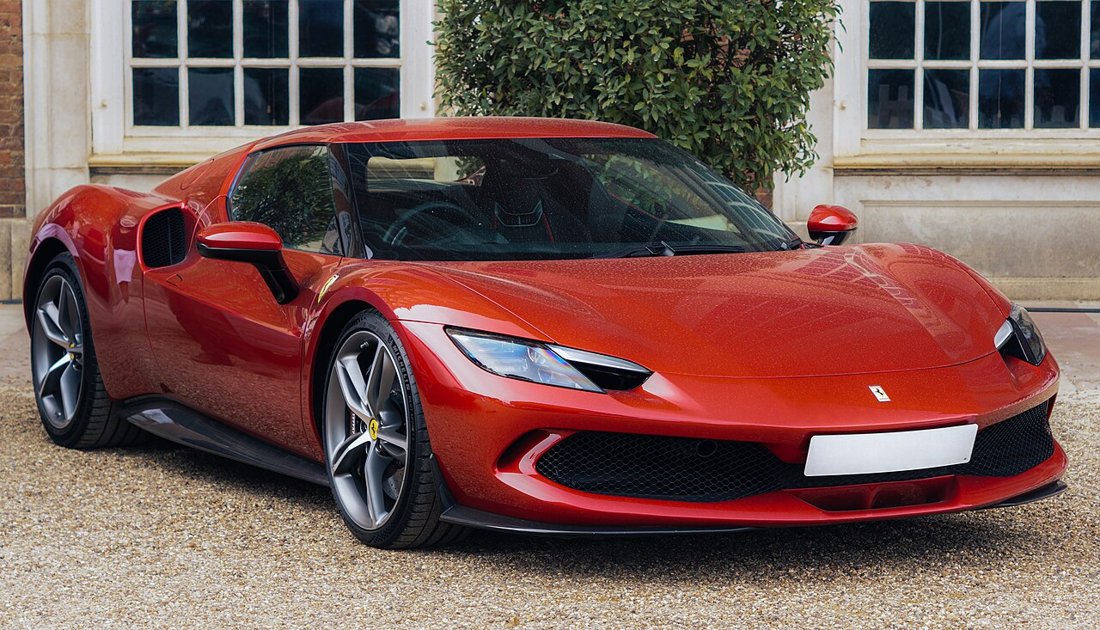
A Ferrari 296 GTB.
A Ferrari 296 GTB. Photo: Max Baillie, Wikimedia Commons, CC BY-SA 4.0; resized and re-encoded.
A Ferrari SF90 Stradale.
A Ferrari SF90 Stradale. Photo: Alexandre Prevot from Nancy, France, Wikimedia Commons, CC BY-SA 2.0; resized and re-encoded.
A Ferrari F80.
A Ferrari F80. Photo: Calreyn88, Wikimedia Commons, CC BY-SA 4.0; resized and re-encoded.
ModelYearsEngine and electric systemCombined powerTorqueGearbox
296 GTB / GTSGTB 2022–25, GTS 2023–262,992 cc twin-turbo 120° V6 (F163 BC), 663 PS at 8,000 rpm, plus a 167 PS axial-flux electric motor; 7.45 kWh battery, about 25 km electric range830 PS740 N·m at 6,250 rpm8-speed dual-clutch (Magna 8DCL900)
296 Specialeannounced April 2025V6 tuned to 700 PS plus hybrid system880 PS–8-speed dual-clutch
SF90 Stradale / Spider2019–243,990 cc twin-turbo V8 (F154 FA), 780 PS, plus three electric motors (one on the transmission, one on each front wheel; 220 PS combined)1,000 PS800 N·m at 6,000 rpm8-speed dual-clutch; no reverse gear, front motors reverse the car
SF90 XX Stradale / Spider2023–26; 799 + 599 builtV8 797 PS plus electric motor 233 PS1,030 PSover 804 N·m8-speed dual-clutch
849 Testarossaproduction from mid-20263,990 cc twin-turbo V8 (F154 FC), 830 PS, plus 220 PS of electric motors1,050 PSnot published8-speed dual-clutch
F802025–27; 799 planned (uncited)2,992 cc twin-turbo V6 (F163 CF), 900 PS, plus three motors with 300 PS1,200 PSnot published8-speed dual-clutch

The SF90 article quotes the V8 alone as both 780 PS and 1,000 PS; the latter is the combined system output. The 296 Speciale's engine is listed as 2.9 litres in the source against 3.0 litres for the base car, so its displacement is not established. Single-model pages: Ferrari 296 and Ferrari SF90 Stradale.

Daytona SP3 (limited series)
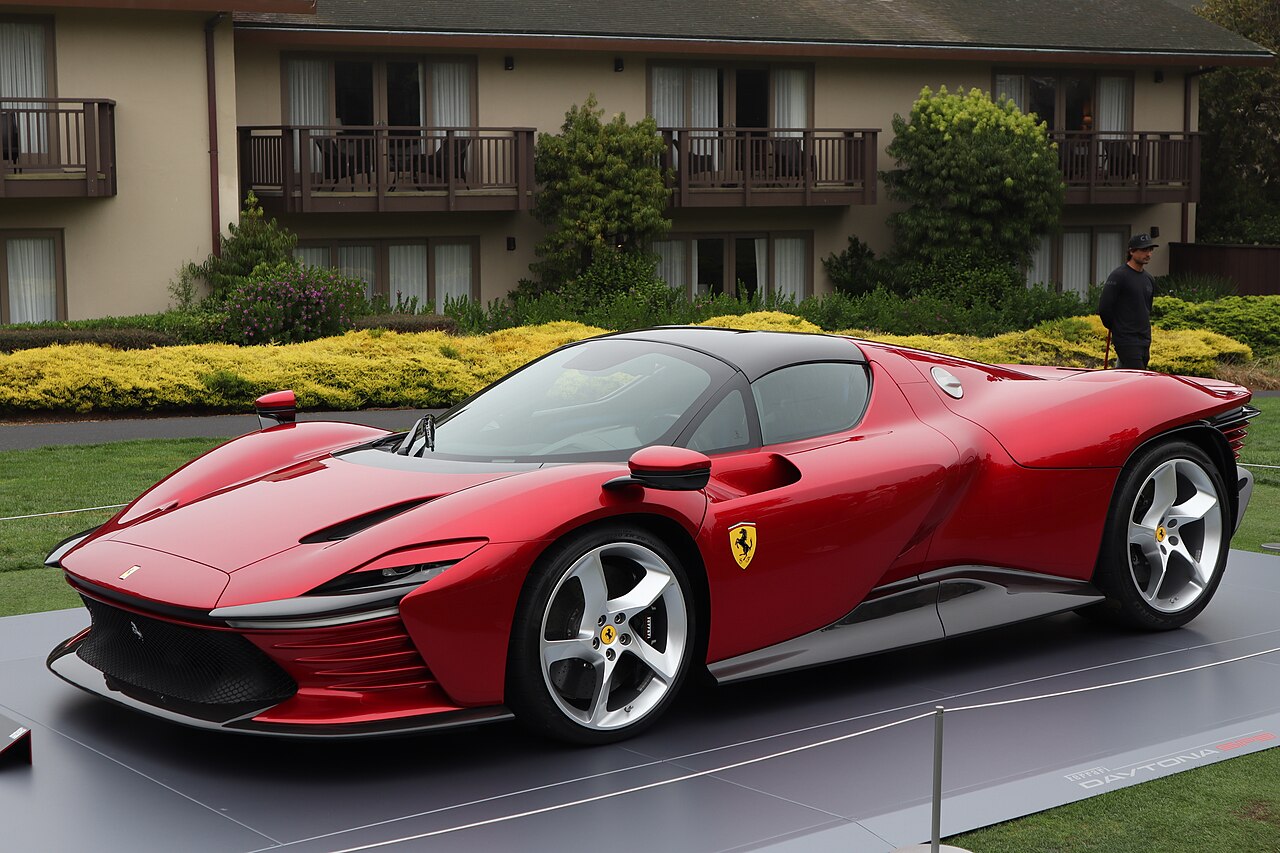
A Ferrari Daytona SP3.
A Ferrari Daytona SP3. Photo: Prova MO, Wikimedia Commons, CC BY-SA 4.0; resized and re-encoded.

The Daytona SP3 (2022–2025, 599 cars, plus a 600th sold at auction) is the only naturally aspirated car in this range: a 6.5-litre V12 (F140 HC, 9,500 rpm redline) producing 840 PS at 9,250 rpm and 697 N·m at 7,250 rpm through a seven-speed dual-clutch gearbox with shifts under 200 ms.

Not established

  • Amalfi engine data and Roma Spider separate figures.
  • Torque of the 849 Testarossa, F80 and 296 Speciale.
  • Whether the F80 total is 799 cars; the figure is unreferenced.

Sources