Tuning Wiki

This is a historical revision. Read the current page or return to its history.

Page organisation in this revision
Page type
Technical article
Subject
Vehicles
Parent
Section level
Applies to
No ECU-specific applicability
Tool groups
None
Manufacturers
Gilbern

Changes from revision 1 to revision 1

Removed text is struck through; added text is highlighted.

The Gilbern Genie was a four-seat GT coupé built by Gilbern at Llantwit Fardre from 1966 to 1969. About 197 were made. It replaced the smaller GT and moved the company into a larger, faster class. Power came from Ford's Essex V6 in 2.5- or 3.0-litre form, mounted in a tubular steel chassis under a glass-fibre (GRP) body. Like earlier Gilberns, it was sold either as a kit or fully built. The Genie was developed into the Invader in 1969.
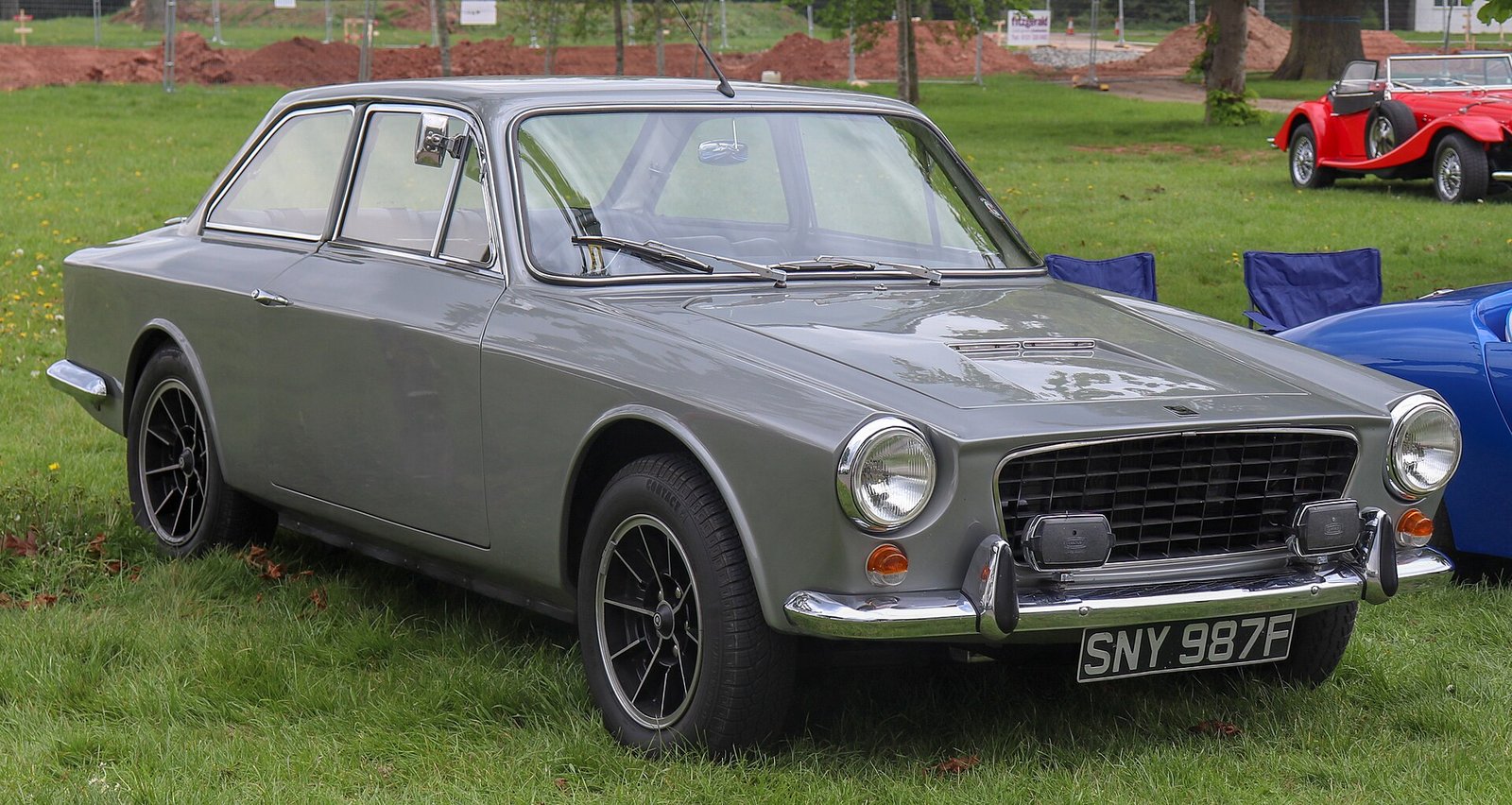
1968 Gilbern Genie 3.0 at the Stoneleigh National Kit Car Motor Show, 2019. Photo: Vauxford, Wikimedia Commons, CC BY-SA 4.0; resized.

Introduction

The Genie was launched at the London Motor Show in October 1966. One secondary source gives 1967, but it is outnumbered by sources that give the 1966 show, including the national museum. By then Gilbern had been a member of the Society of Motor Manufacturers and Traders (SMMT) since 1965, which allowed it a stand at Earls Court. In April 1968 the company was sold to the ACE group, and Genie production continued under the new owners.

Engine and transmission

Engines: Ford Essex V6 of 2.5 litres or 2,994 cc. The 2.5 was dropped in 1968. Fuel system: most cars had a twin-choke Weber carburettor. A few had Tecalemit-Jackson fuel injection. The fuel-injected 3.0 demonstrator tested by Motor Sport in 1968 was quoted at 141 bhp (net) at 4,750 rpm. Gearbox: four-speed manual, with optional overdrive. Final drive: the 1968 test car had a 3.34:1 axle with overdrive and a ZF limited-slip differential, which was an option.

See Ford and Ford Capri for other Essex V6 applications.

Chassis and suspension

The chassis is a rigid multi-tubular ladder frame of square-section tube, built on a master jig. The bare frame weighs about 170 lb, and the GRP body is bonded and riveted to it. The 1968 road-test car had the following:

Front suspension: MGC-derived, with coil springs in place of the MGC torsion bars, a Gilbern-made lower wishbone, an Armstrong upper wishbone and Lockheed disc brakes. Rear axle: MGC, located by a Watts linkage and twin trailing arms. Steering: Cam Gears rack and pinion, 2.87 turns lock to lock.

Secondary sources disagree on which donor parts were used. Some say MGB steering and rear axle, with a Panhard rod on early cars and a Watts linkage on later ones. One says some cars used an Austin-Healey 3000 axle. The contemporary test describes MGC parts on a 1968 car. The most likely explanation is that the specification changed during production, but no production-change record has been found. The Genie's chassis tubes were prone to cracking, and the Invader Mk II received stiffer triangulation at the front of the frame as a result.

Gilbern Genie 3.0, first registered May 1968, at Weston Park, 2016. Photo: Charles01, Wikimedia Commons, CC BY-SA 4.0; resized.

Weight, prices and economy

ItemValueBasis Weight1 ton 1 cwt 1 qtr 14 lb (about 1,086 kg) with about 4 gallons of fuelWeighed by Motor Sport, 1968 Price, 1968Kit £1,447; assembled £1,917, both including purchase tax. Fuel injection and limited-slip differential £200 extraMotor Sport, November 1968 Price, 1969About £2,000 completeSecondary source Fuel consumption13.2 mpg driven hard; 18.7 mpg in general useMotor Sport, November 1968 (injected car)

The 1968 test did not record acceleration figures. One specification aggregator gives 108 mph and a dry weight of 889 kg. That weight conflicts with the measured figure and is not relied on here.

Production

About 197 Genies were built between 1966 and 1969. Together with the Invader, which shared its basic structure, about 800 Essex V6 Gilberns were made.

Specialists and parts

Essex V6 engine parts and MG/BMC suspension and axle parts are generally available. The body, glazing and trim are specific to Gilbern.

Gilbern Owners Club (UK). Its spares department holds an extensive range for the Genie and Invader, sells to members only, keeps the car register and owns surviving body moulds. gilbern.co.uk. Sporting Classic Marques, Bancffosfelen, Llanelli, Carmarthenshire. A classic restoration, servicing and glass-fibre business whose proprietor, Mark Jones, is described in the classic-car press as a Gilbern and glass-fibre specialist. An auction listing names the firm as maintaining a 1969 Genie. The firm's own website does not mention Gilbern. sportingclassicmarques.co.uk. Mev Spares (UK, online). Has a Gilbern Invader and Genie parts category, including a core-plug set for the 2.5 and 3.0 V6. mevspares.co.uk. Vintage Tyres (UK). Lists fitments for the Genie. vintagetyres.com.

The Gilbern make page has the full list of specialists, insurers and books.

Not established

When the specification changed between MGB-type and MGC-type suspension and axle parts, and between Panhard rod and Watts linkage rear location. Period acceleration and maximum-speed figures from a full road test. How many Genies were built with fuel injection.

Sources

The Gilbern, W. Boddy, Motor Sport, November 1968. Accessed 19 November 2026. Gilbern, English Wikipedia. Accessed 19 November 2026. The Gilbern Genie: a rare production car from Wales, Ben Branch, Silodrome, 16 February 2022. Accessed 19 November 2026. The Gilbern – too good to be a 'one-off', Amgueddfa Cymru – National Museum Wales, 30 July 2019. Accessed 19 November 2026. Welsh rarebit: Gilbern Invader Estate hits the market, Hagerty UK, 12 May 2022 (Genie chassis cracking and the Mk II changes). Accessed 19 November 2026. Genie 1966–69, motor-car.net (specification aggregator, low reliability). Accessed 19 November 2026. Gilbern Genie and Invader: Welsh warriors, Classic & Sports Car (Sporting Classic Marques reference; the page could not be loaded and was read from a search-engine copy). Accessed 19 November 2026. Core plug engine set, Gilbern Invader and Genie 2.5 V6 and 3.0 V6, Mev Spares. Accessed 19 November 2026. Photographs from Wikimedia Commons, credited in each caption. Accessed 19 November 2026.

Rendered revisions

Open each version to inspect formatting, tables and photographs.

Revision 1: Gilbern Genie: models and engines

The Gilbern Genie was a four-seat GT coupé built by Gilbern at Llantwit Fardre from 1966 to 1969. About 197 were made. It replaced the smaller GT and moved the company into a larger, faster class. Power came from Ford's Essex V6 in 2.5- or 3.0-litre form, mounted in a tubular steel chassis under a glass-fibre (GRP) body. Like earlier Gilberns, it was sold either as a kit or fully built. The Genie was developed into the Invader in 1969.

A silver-grey 1968 Gilbern Genie 3.0, front three-quarter view.
1968 Gilbern Genie 3.0 at the Stoneleigh National Kit Car Motor Show, 2019. Photo: Vauxford, Wikimedia Commons, CC BY-SA 4.0; resized.

Introduction

The Genie was launched at the London Motor Show in October 1966. One secondary source gives 1967, but it is outnumbered by sources that give the 1966 show, including the national museum. By then Gilbern had been a member of the Society of Motor Manufacturers and Traders (SMMT) since 1965, which allowed it a stand at Earls Court. In April 1968 the company was sold to the ACE group, and Genie production continued under the new owners.

Engine and transmission

  • Engines: Ford Essex V6 of 2.5 litres or 2,994 cc. The 2.5 was dropped in 1968.
  • Fuel system: most cars had a twin-choke Weber carburettor. A few had Tecalemit-Jackson fuel injection. The fuel-injected 3.0 demonstrator tested by Motor Sport in 1968 was quoted at 141 bhp (net) at 4,750 rpm.
  • Gearbox: four-speed manual, with optional overdrive.
  • Final drive: the 1968 test car had a 3.34:1 axle with overdrive and a ZF limited-slip differential, which was an option.

See Ford and Ford Capri for other Essex V6 applications.

Chassis and suspension

The chassis is a rigid multi-tubular ladder frame of square-section tube, built on a master jig. The bare frame weighs about 170 lb, and the GRP body is bonded and riveted to it. The 1968 road-test car had the following:

  • Front suspension: MGC-derived, with coil springs in place of the MGC torsion bars, a Gilbern-made lower wishbone, an Armstrong upper wishbone and Lockheed disc brakes.
  • Rear axle: MGC, located by a Watts linkage and twin trailing arms.
  • Steering: Cam Gears rack and pinion, 2.87 turns lock to lock.

Secondary sources disagree on which donor parts were used. Some say MGB steering and rear axle, with a Panhard rod on early cars and a Watts linkage on later ones. One says some cars used an Austin-Healey 3000 axle. The contemporary test describes MGC parts on a 1968 car. The most likely explanation is that the specification changed during production, but no production-change record has been found. The Genie's chassis tubes were prone to cracking, and the Invader Mk II received stiffer triangulation at the front of the frame as a result.

A red 1968 Gilbern Genie, rear three-quarter view.
Gilbern Genie 3.0, first registered May 1968, at Weston Park, 2016. Photo: Charles01, Wikimedia Commons, CC BY-SA 4.0; resized.

Weight, prices and economy

ItemValueBasis
Weight1 ton 1 cwt 1 qtr 14 lb (about 1,086 kg) with about 4 gallons of fuelWeighed by Motor Sport, 1968
Price, 1968Kit £1,447; assembled £1,917, both including purchase tax. Fuel injection and limited-slip differential £200 extraMotor Sport, November 1968
Price, 1969About £2,000 completeSecondary source
Fuel consumption13.2 mpg driven hard; 18.7 mpg in general useMotor Sport, November 1968 (injected car)

The 1968 test did not record acceleration figures. One specification aggregator gives 108 mph and a dry weight of 889 kg. That weight conflicts with the measured figure and is not relied on here.

Production

About 197 Genies were built between 1966 and 1969. Together with the Invader, which shared its basic structure, about 800 Essex V6 Gilberns were made.

Specialists and parts

Essex V6 engine parts and MG/BMC suspension and axle parts are generally available. The body, glazing and trim are specific to Gilbern.

  • Gilbern Owners Club (UK). Its spares department holds an extensive range for the Genie and Invader, sells to members only, keeps the car register and owns surviving body moulds. gilbern.co.uk.
  • Sporting Classic Marques, Bancffosfelen, Llanelli, Carmarthenshire. A classic restoration, servicing and glass-fibre business whose proprietor, Mark Jones, is described in the classic-car press as a Gilbern and glass-fibre specialist. An auction listing names the firm as maintaining a 1969 Genie. The firm's own website does not mention Gilbern. sportingclassicmarques.co.uk.
  • Mev Spares (UK, online). Has a Gilbern Invader and Genie parts category, including a core-plug set for the 2.5 and 3.0 V6. mevspares.co.uk.
  • Vintage Tyres (UK). Lists fitments for the Genie. vintagetyres.com.

The Gilbern make page has the full list of specialists, insurers and books.

Not established

  • When the specification changed between MGB-type and MGC-type suspension and axle parts, and between Panhard rod and Watts linkage rear location.
  • Period acceleration and maximum-speed figures from a full road test.
  • How many Genies were built with fuel injection.

Sources