Page organisation in this revision
- Page type
- Technical article
- Subject
- Modded Cars
- Parent
- Section level
- Applies to
- No ECU-specific applicability
- Tool groups
- None
- Manufacturers
- Mazda
Changes from revision 1 to revision 2
Removed text is struck through; added text is highlighted.
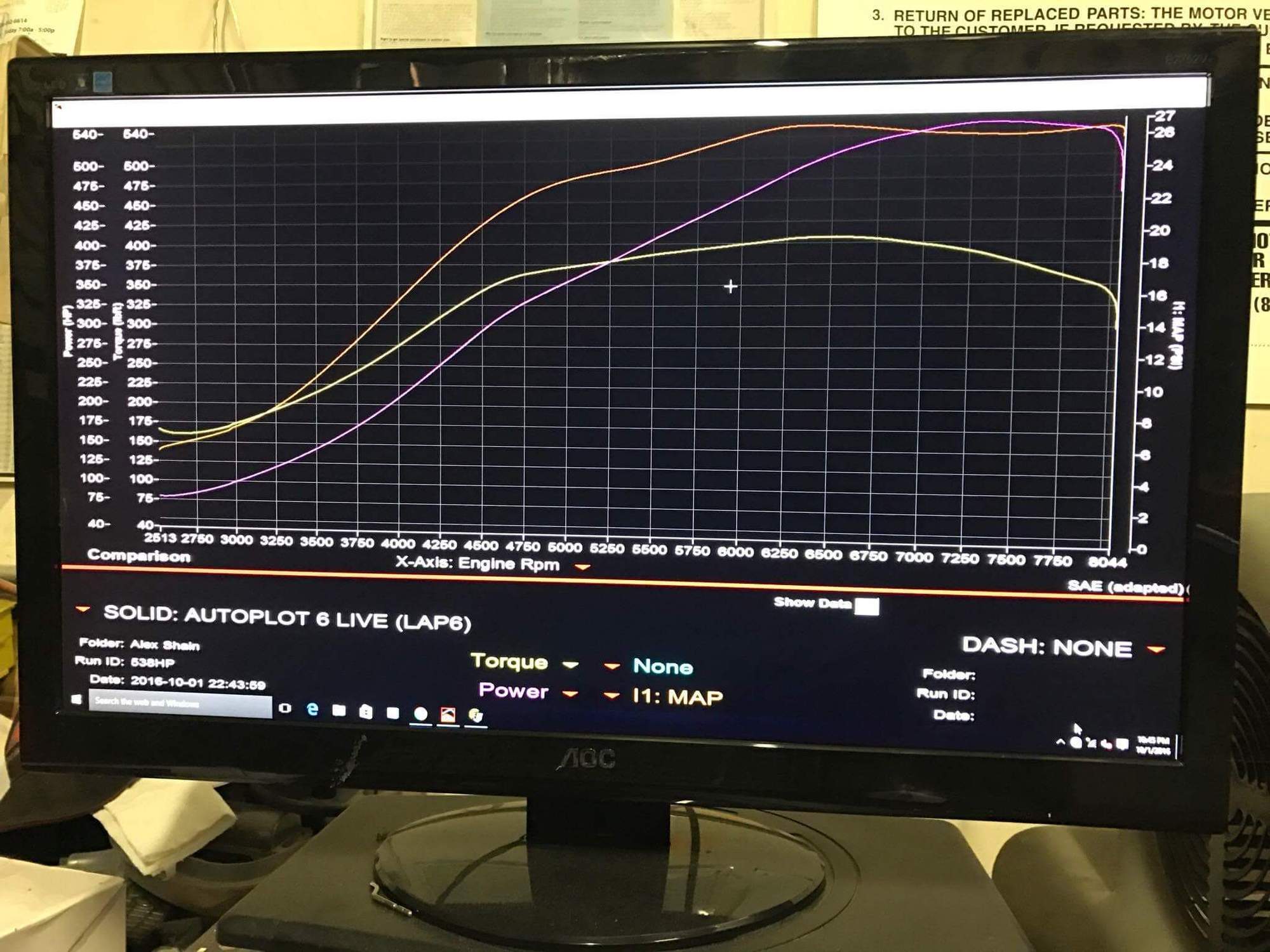
This 1988 Mazda RX-7 Turbo II has had two very different turbocharged engines. It first made an owner-reported 539 wheel horsepower at 25.5 psi from a 13B rotary, then was rebuilt with a twin-turbo 5.3-litre V8, later paired with a BMW M5 dual-clutch gearbox.Shainiac’s 1988 RX-7 Turbo II has had two very different turbocharged engines. The owner first reported 539 wheel horsepower at 25.5 psi from a 13B rotary, then rebuilt the car with a twin-turbo 5.3-litre V8. Owner’s rotary dyno and parts list13B rotary setup
The rotary used late Series 5 Turbo II irons, a large intake street port and a BorgWarner EFR 9180 on a Turblown manifold. Four 2,200 cc injectors and an MS3X ECU supplied and controlled the engine. A water-to-air intercooler and water injection supported the setup. The owner reported 407 lb-ft at the wheels, and clarified that the dyno run used 93-octane petrol and water injection (owner-reported dyno result).The rotary used late Series 5 Turbo II irons, a large intake street port and a BorgWarner EFR 9180 on a Turblown manifold. Four 2,200 cc injectors and an MS3X ECU supplied and controlled the engine. A water-to-air intercooler and water injection supported the setup. The owner reported 407 lb-ft at the wheels and later clarified that the run used 93-octane petrol and water injection. Dyno post and fuel clarificationTwin-turbo V8 and gearbox
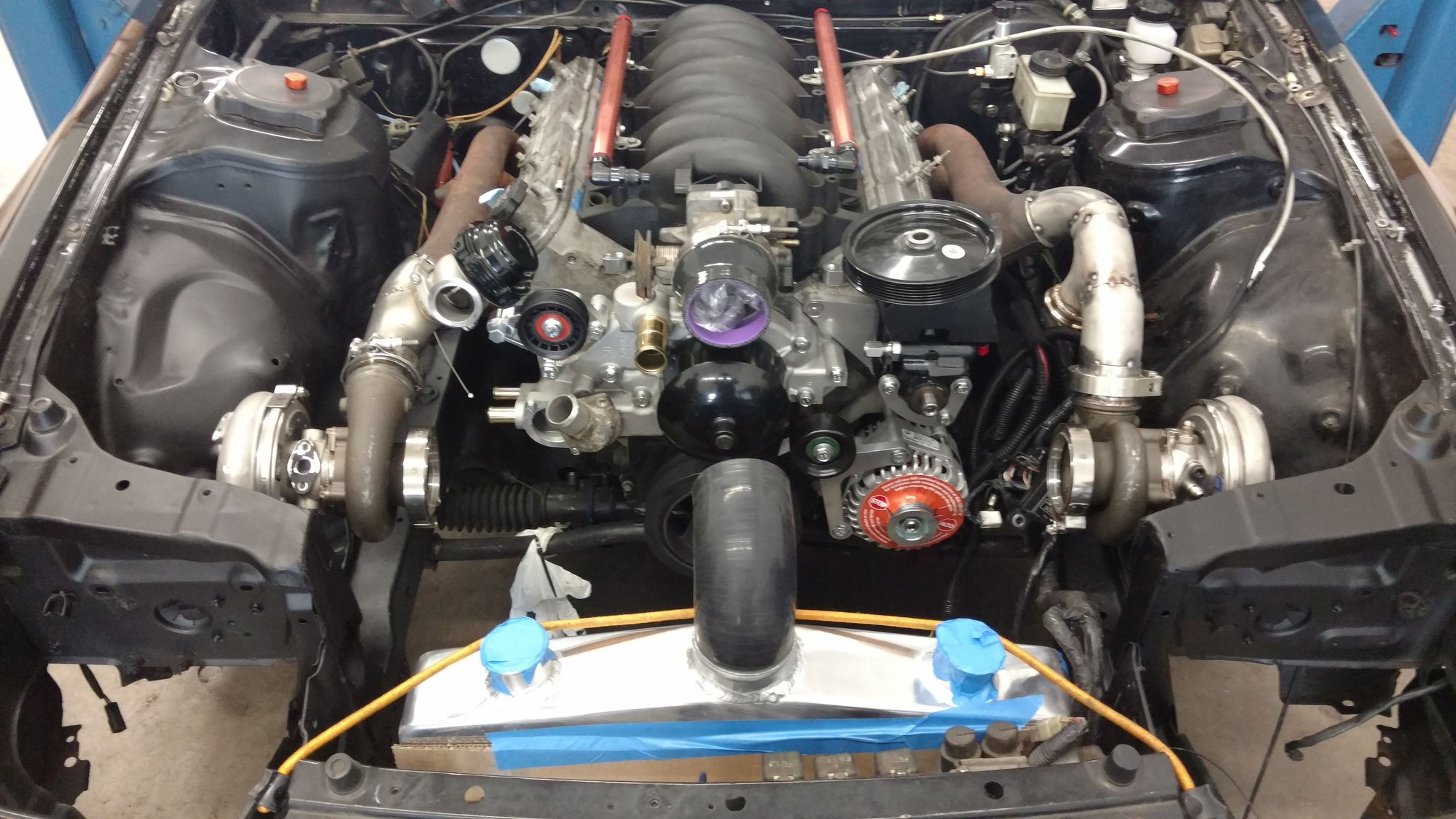
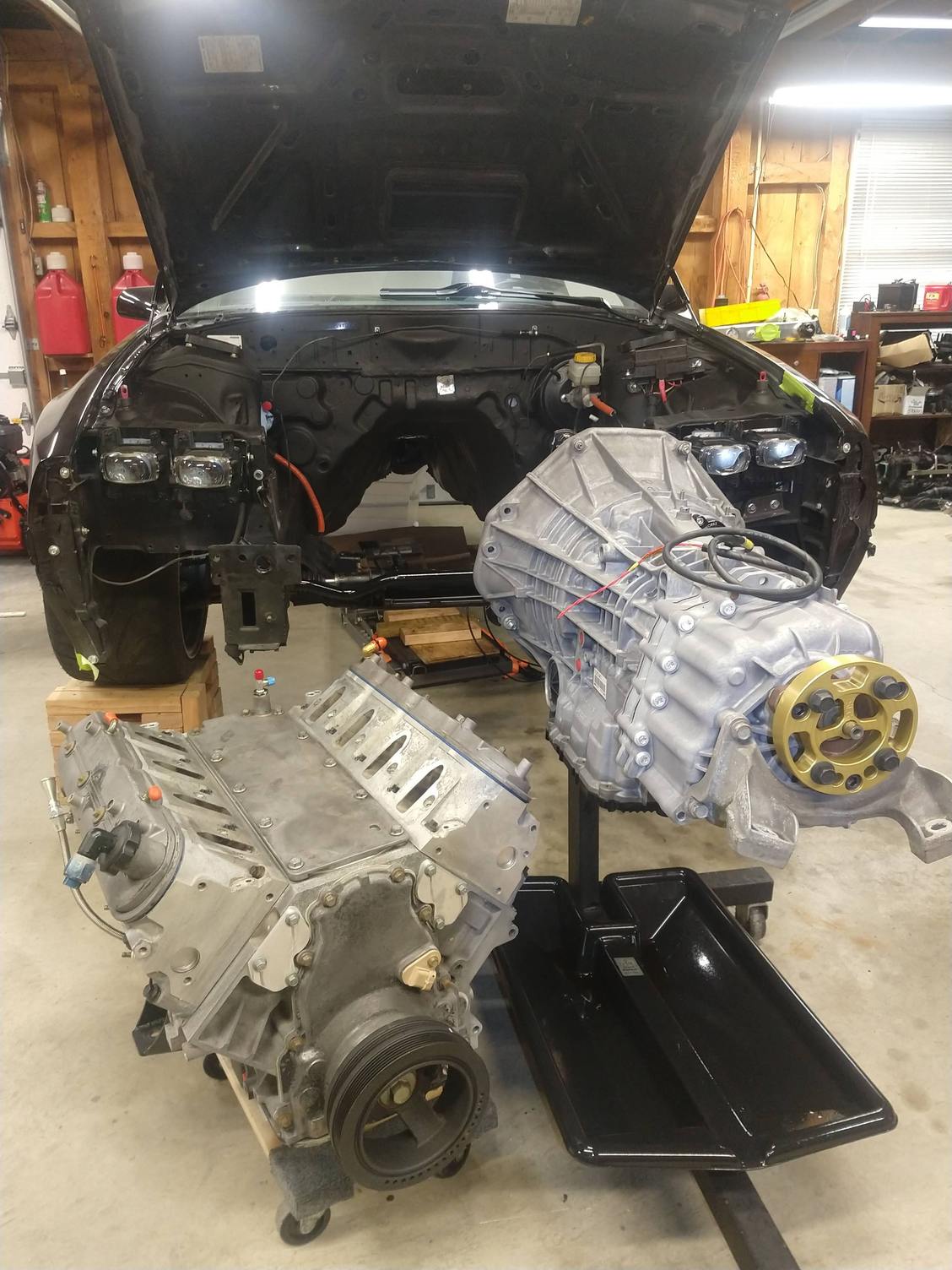
The later aluminium 5.3-litre LC9 uses twin EFR 6758 turbos, a cam and valve springs. The owner reported 716 whp at 18 psi with a T56 manual gearbox (owner-reported). The subsequent BMW F10 M5 dual-clutch conversion used a Domiworks adapter and HTG transmission controller, with MaxxECU engine management. The dual-clutch update describes a lower 8 psi setting, so the 716 whp result belongs to the earlier T56 configuration.The later aluminium 5.3-litre LC9 used twin EFR 6758 turbos, a cam and valve springs. Shainiac reported 716 whp at 18 psi with a T56 manual gearbox. His subsequent BMW F10 M5 dual-clutch conversion used a Domiworks adapter and HTG transmission controller, with MaxxECU engine management. The DCT update describes a lower 8 psi setting, so the 716 whp result belongs to the earlier T56 configuration. Twin-turbo installation photo · Owner’s DCT build and power historyPhotographs posted by Shainiac, reproduced with permission.SourcesRX7Club dyno thread: rotary dyno result, parts list, fuel clarification and dyno photoLS1Tech build thread: twin-turbo installation photoLS1Tech dual-clutch thread: DCT build, power history and transmission photosPhotographs posted by Shainiac, reproduced with permission. Rotary dyno photo · Transmission build photos
Rendered revisions
Open each version to inspect formatting, tables and photographs.
Revision 1: Shainiac’s 1988 Mazda RX-7 Turbo II
Shainiac’s 1988 RX-7 Turbo II has had two very different turbocharged engines. The owner first reported 539 wheel horsepower at 25.5 psi from a 13B rotary, then rebuilt the car with a twin-turbo 5.3-litre V8. Owner’s rotary dyno and parts list
13B rotary setup
The rotary used late Series 5 Turbo II irons, a large intake street port and a BorgWarner EFR 9180 on a Turblown manifold. Four 2,200 cc injectors and an MS3X ECU supplied and controlled the engine. A water-to-air intercooler and water injection supported the setup. The owner reported 407 lb-ft at the wheels and later clarified that the run used 93-octane petrol and water injection. Dyno post and fuel clarification
Twin-turbo V8 and gearbox
The later aluminium 5.3-litre LC9 used twin EFR 6758 turbos, a cam and valve springs. Shainiac reported 716 whp at 18 psi with a T56 manual gearbox. His subsequent BMW F10 M5 dual-clutch conversion used a Domiworks adapter and HTG transmission controller, with MaxxECU engine management. The DCT update describes a lower 8 psi setting, so the 716 whp result belongs to the earlier T56 configuration. Twin-turbo installation photo · Owner’s DCT build and power history
Photographs posted by Shainiac, reproduced with permission. Rotary dyno photo · Transmission build photos
Revision 2: Shainiac’s 1988 Mazda RX-7 Turbo II
This 1988 Mazda RX-7 Turbo II has had two very different turbocharged engines. It first made an owner-reported 539 wheel horsepower at 25.5 psi from a 13B rotary, then was rebuilt with a twin-turbo 5.3-litre V8, later paired with a BMW M5 dual-clutch gearbox.
13B rotary setup
The rotary used late Series 5 Turbo II irons, a large intake street port and a BorgWarner EFR 9180 on a Turblown manifold. Four 2,200 cc injectors and an MS3X ECU supplied and controlled the engine. A water-to-air intercooler and water injection supported the setup. The owner reported 407 lb-ft at the wheels, and clarified that the dyno run used 93-octane petrol and water injection (owner-reported dyno result).
Twin-turbo V8 and gearbox
The later aluminium 5.3-litre LC9 uses twin EFR 6758 turbos, a cam and valve springs. The owner reported 716 whp at 18 psi with a T56 manual gearbox (owner-reported). The subsequent BMW F10 M5 dual-clutch conversion used a Domiworks adapter and HTG transmission controller, with MaxxECU engine management. The dual-clutch update describes a lower 8 psi setting, so the 716 whp result belongs to the earlier T56 configuration.
Photographs posted by Shainiac, reproduced with permission.
Sources