Engine types and cycles · Steam engines
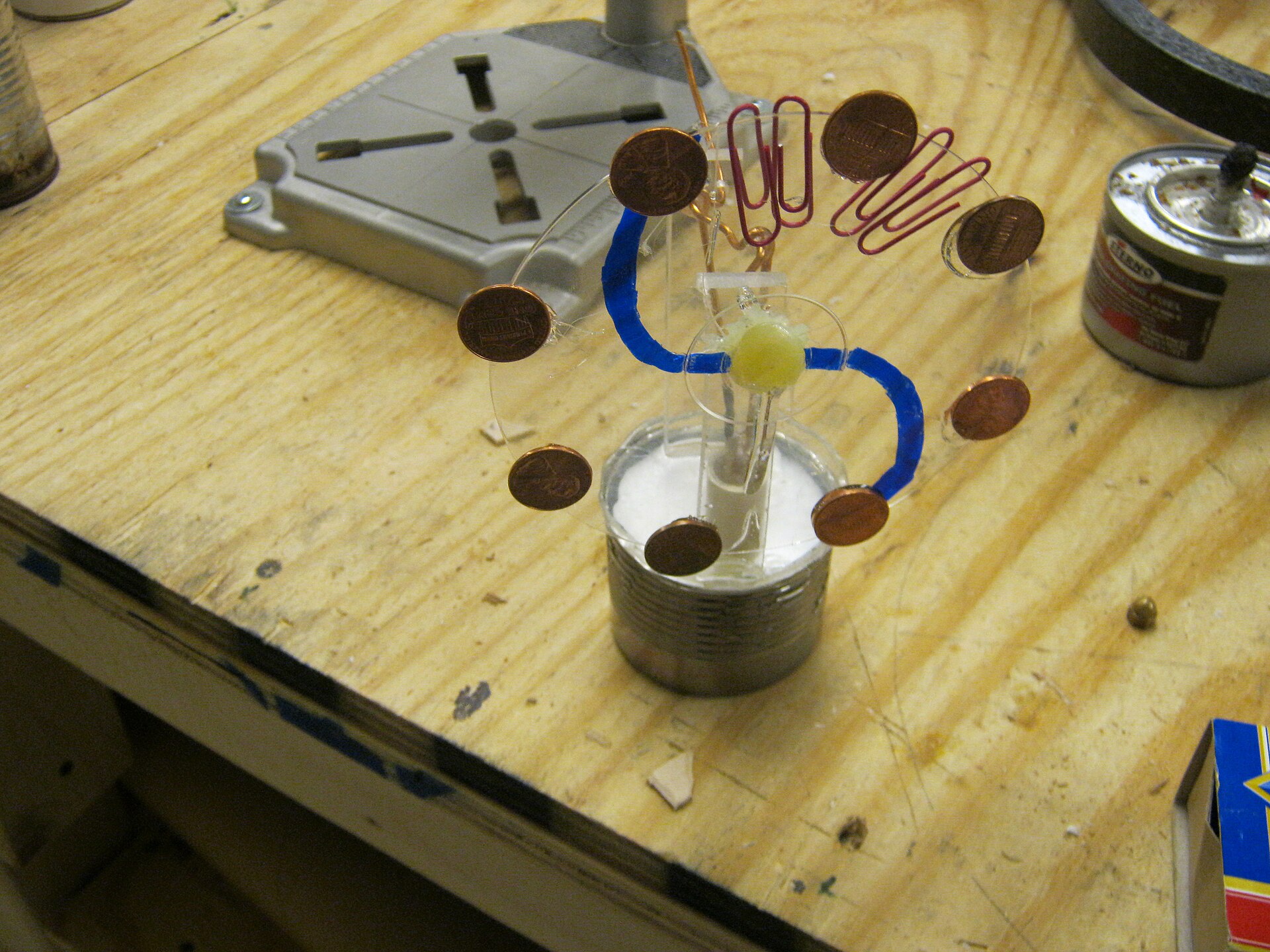

A closed-cycle piston engine. A permanent gas, air in the original engines, stays inside. A displacer shuttles it between a hot space and a cold space, and a regenerator stores the heat on the way. Heat is applied from outside, so the fuel and the working gas never mix. With no intake and no exhaust, a well-made engine is practically silent. Driven backwards, it is a heat pump. DieselNet classes it with the steam engine as external combustion.
| Use | For more than a century, mostly small domestic machines. The photograph is a demonstration engine of that scale. The October 2026 article places later interest in concentrated solar power and in heat pumps. |
|---|---|
| First | Robert Stirling, 1816. |
| Widest use | The low-power domestic role. It never became the dominant engine for transport or for power stations, and the cited article gives no production peak to set beside the four-stroke or the nineteenth-century steam engine. |
| Now | The 24 October 2026 revision records interest in solar heat and heat pumps, and it does not name a high-volume production line. The engine in the photograph is a demonstration machine. |
Sources
Curated reference notes. Hardware testing by this wiki is not implied. Wikipedia text is adapted from the cited revisions under CC BY-SA 4.0.
- Stirling engine, rev. 1381710725, 2026-10-24.
- DieselNet: Engine Fundamentals. Accessed 2026-11-11.