DynoProject is a Polish supplier of modular chassis dynamometers, controllers and accessories. Its published product range covers inertia testing, braked two-wheel-drive and four-wheel-drive systems, and a synchronised four-wheel-drive model. DynoProject gives contact addresses in Warsaw and Olsztyn and describes a modular path for some systems. The exact manufacturing date, configuration and upgrade eligibility should be checked against the unit. DynoProject product range.
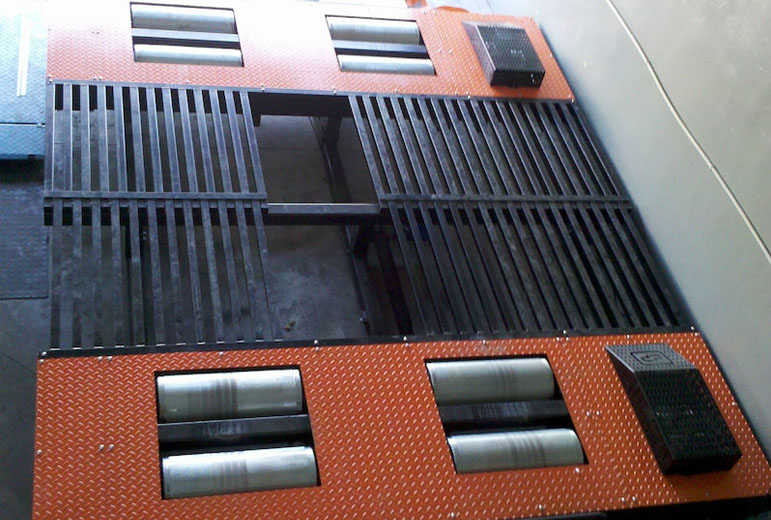
How the systems work
On an inertia chassis dyno, the driven tyres accelerate rollers with known rotational inertia. Speed and acceleration can be used to calculate the net torque needed to accelerate that inertia; losses and other rotating components affect the result. A braked system adds a controllable absorber so the controller can vary load for tests such as holding operating points or controlled accelerations. DynoProject says its brake controller controls speed and acceleration under a set load; the installed equipment and software determine the available modes. Consult inertia dynamometers and rolling roads for the measurement principles.
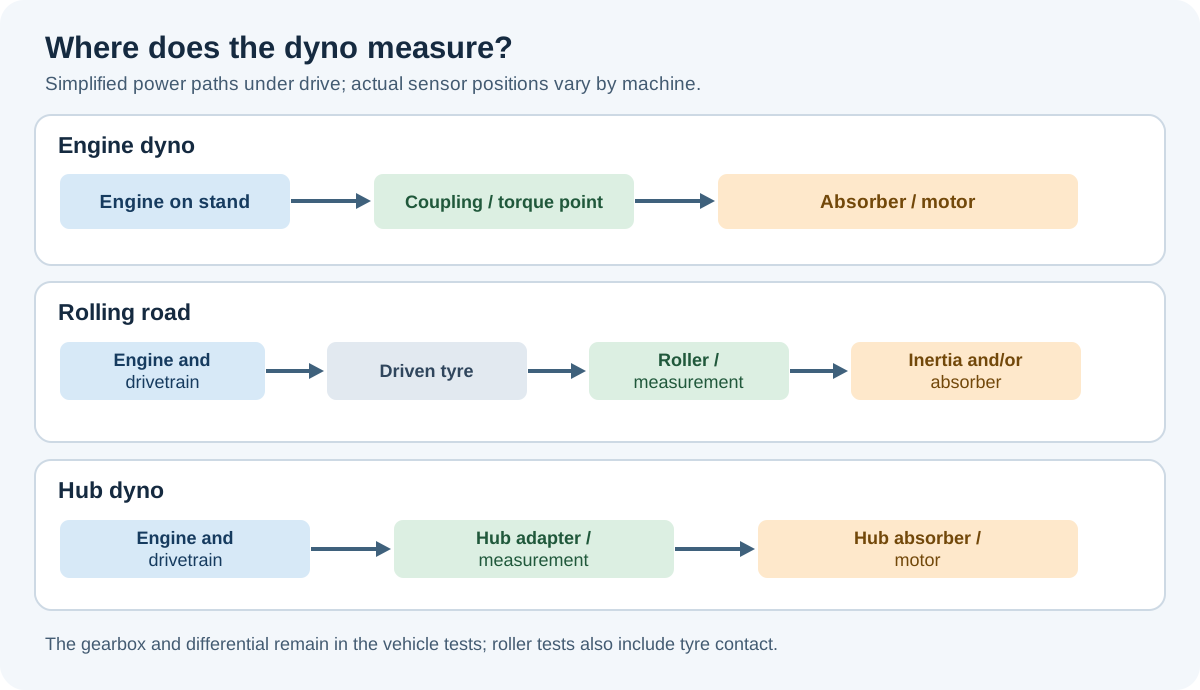
Models
| Model | Manufacturer's description |
|---|---|
| 2WD DP2i | Two-wheel-drive inertia dynamometer. The supplier describes a modular upgrade path toward a four-wheel-drive braked model. Its product page and range page quote different power figures, so confirm the actual unit's limits directly with the supplier. |
| 2WD DP2L | Two-wheel-drive load-measuring model for the front or rear driven axle. The published listing gives maximum 288 km/h and claims over 900 hp; confirm test conditions and brake duty for the supplied specification. |
| 4WD DP4L | Braked model for single- and two-axle-drive vehicles. The manufacturer lists maximum 288 km/h and over 900 hp; detailed axle-load and brake duty limits need confirmation for the particular unit. |
| 4WD DP4L-SYNCHRO | Four-wheel-drive load model described as synchronising front and rear roller speeds. This may help with compatible vehicles but does not establish suitability for every four-wheel-drive system. |
Manufacturer product pages and promotional summaries do not always agree, including DP2i power and some 4WD dimensions. Treat these figures as indicative, not acceptance limits; use the unit's plate, documented build specification and current supplier advice. Peak power does not establish the continuous absorber capability, tyre speed rating or allowable axle load.
Controllers, sensors and upgrades
The manufacturer describes a microprocessor-based DataLogger and brake controller communicating with PC software. Published channels include speed, torque, external temperature and pressure, and optional boost or air–fuel ratio inputs. The software stores and plots measurements; correction and calculated engine power depend on its settings and procedure. Optional sensors, cables and calibration must suit the particular installation. DynoProject technology; controller upgrade information.
DynoProject advertises DP-C/DP-S upgrades and gives an example progression from DP-C2i to DP-C2L and DP-C4L. This is the manufacturer's described upgrade path, not a universal promise that any third-party dyno or brake is compatible. Establish wiring, sensors, brake power stage and safety interlocks with the supplier first.
Testing and practical considerations
For repeatable comparisons document test gear, tyre condition and pressure, restraints, cooling, brake mode, ramp rate and correction. Confirm the vehicle maker's 4WD test procedure and inspect the particular installation rather than relying on a photograph. See calibration and verification, interpreting results and test setup and safety.