Dyno Dynamics is an Australian manufacturer associated with vehicle chassis and engine dynamometers. Its product names include the Dyno Dynamics and Dynotech families; hardware, brake and software generations need to be identified on the individual machine.
History
The manufacturer's history gives 1982 as its founding date and describes chassis-dyno expansion in the 1990s, digital software and modular retarders in the 2010s, and Dynotech Series II in the 2020s. A 2014 Vernier Society report records that Alan Evans and family acquired the business in 2009. An older industry report gives a different earlier origin date, so the manufacturer's 1982 date is presented as its account rather than a resolved chronology.
Dyno families
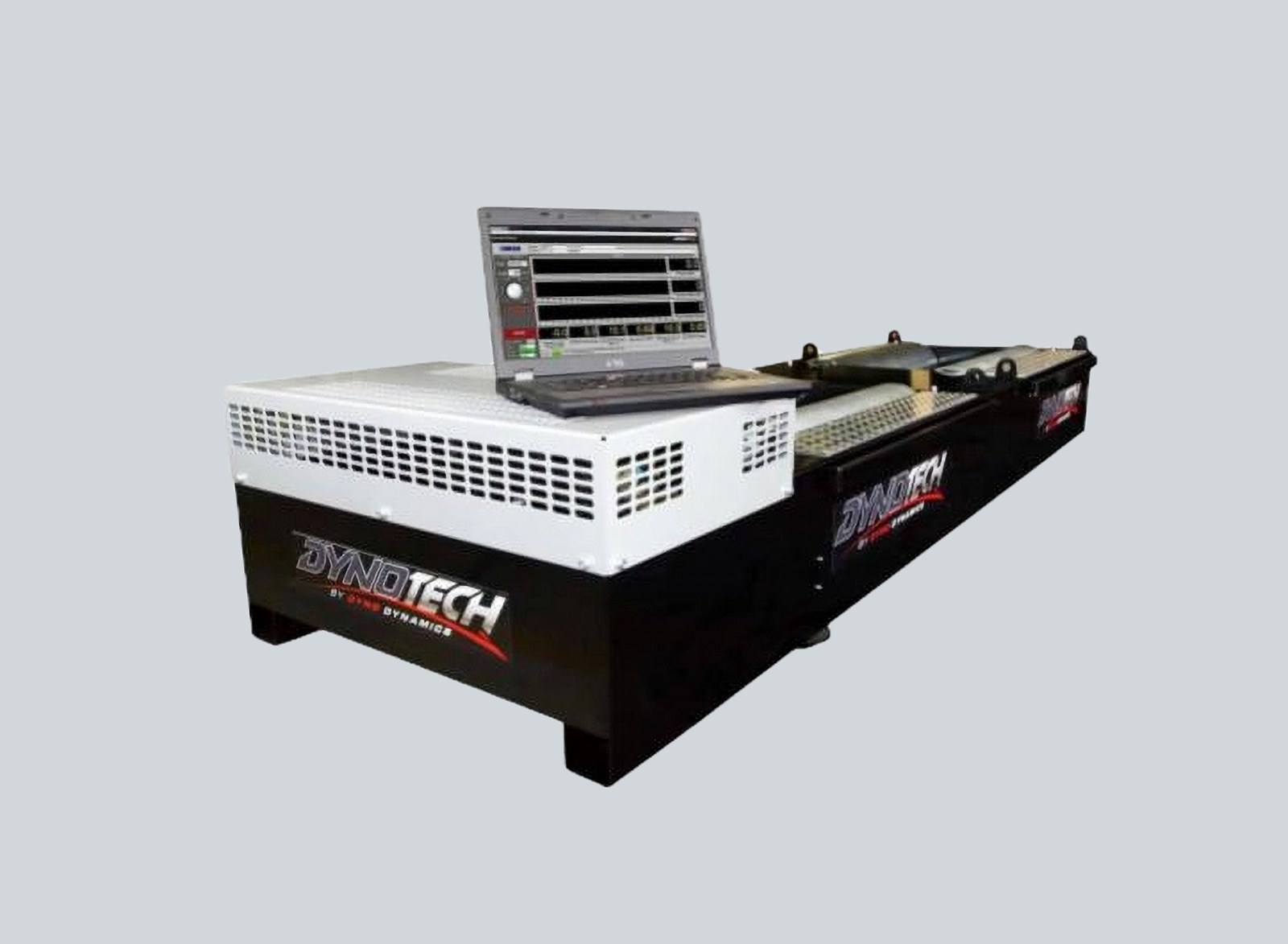
- Dynotech Series II 2WD: roller chassis system with an electromagnetic retarder, CAN-based control and ECU data integration; twin-retarder configuration is listed as an upgrade. Product details.
- Series II 4WD: a two-axle system with synchronised control; the supplier describes brake and axle configurations on its 4WD page.
- Dynotech Daytona 2WD: twin-retarder model; continuous and graphing ratings differ. Daytona information.
- HUB2000 Series II and bogie truck dyno: hub-mounted and heavy-vehicle examples listed separately from the roller range. Dyno Dynamics products.
Controllers and upgrades
The company describes Dynotech Series II as using CAN-based control, logging and ECU integration. It also lists an Analog to Windows (A2W) upgrade and a Series II upgrade for suitable earlier systems. A second-hand machine may have original analogue controls, a retrofit or later hardware: confirm the serial number, retarder interface, software licence and available sensors with the supplier. The maker's 2WD page contains differing software version references, so verify the actual installed version rather than assuming one.
Part of Dynamometers and the manufacturers and suppliers directory. The products below are selected examples, not a complete catalogue; specifications, software and availability vary with generation and configuration.