A retail remapping business can sell a supplier-developed calibration without writing the maps itself. The workshop identifies and reads the ECU, orders a file and installs what comes back. Alongside that file supply sits another product: a vehicle database that gives the website an expected power and torque figure before the customer books. Alientech's Master/Slave explanation and BenSky's gains database document these two parts of the trade.
This is why a remapper can quote a familiar Stage 1 result before testing your car: the advertised package and its expected gains already exist. An off-the-shelf calibration can reuse development carried out previously for a matching application. A website can also display shared gains data independently of whoever supplies its files. Quoting that number does not establish that the customer's engine has produced it.
The sources below show an established market for ready-to-write files, calibration libraries, automated delivery and outsourced file writing. They do not provide a representative industry census. Saying that most remappers simply fit the same off-the-shelf file would go beyond that evidence. The useful question is what each workshop actually supplies, checks and measures.
What is a tuning database?
The term covers several products. Buying one does not necessarily give a remapper the others.
| Product | What it contains | What the remapper gets |
|---|---|---|
| Vehicle gains database | Vehicle and engine records, stock figures, advertised stages and expected gains. | A lookup widget, configurator or API for quotations and enquiries. Remapdb explicitly separates this from ECU file supply. |
| Original-file database | Unmodified ECU files indexed by identifiers such as hardware and software numbers. | A source of original software. Dyno-ChiptuningFiles lists this separately from its modified-file service. |
| Modified-file or project library | Previously developed calibrations, projects or supported solutions. | Work that can be selected, reused or adapted for an appropriate application. BenSky's portal and TunerSuite advertise delivery from existing work. |
| Map definitions and calibration resources | Information identifying calibration maps, including mappacks and A2L/DAMOS resources. | Material for understanding and editing a file. B&C Consulting's product overview offers these alongside its file service; the definitions are a different product from a finished remap. |
A dealer portal is the ordering and support system around these products. Its logo, layout or software vendor does not establish who developed a calibration or how much individual engineering went into the order.
Why the same horsepower figures appear on different websites
A workshop does not have to test every engine in its website selector. It can subscribe to a gains catalogue, display the supplier's figures and receive enquiries against them. Several businesses using that catalogue can therefore show the same numbers. This is an inference from how shared widgets and APIs work, rather than evidence that those businesses install identical binaries.
BenSky says its gains data is curated from tuning companies and file-service providers. It also distinguishes its own role from theirs: it supplies software rather than operating as a tuning company. The screenshots below show its expected-gains description, its statement about that role and its own advertised user count. That count describes use of a plugin; it is not a count of off-the-shelf remaps.



There are two separate routes here. The quotation route runs from a vehicle record to an expected result on a website. The calibration route runs from the identified vehicle and software to a file supplier and then back to the ECU. The workshop must establish that the calibration it orders corresponds to the package it advertised.
Illustrative example: a listing shows 150 hp stock and 185 hp after Stage 1. Those are catalogue values for the listed application. They do not show that this customer's car made 150 hp before the job or 185 hp afterwards. A measured result needs a measurement record; the selector alone supplies neither.
How a remapper can supply files without writing them
Alientech describes the split directly. A Master can read, modify and write files. A Slave operator sends a read to its associated Master and receives the modified file for installation. The manufacturer's description expressly caters for starting without handling map modification. This establishes that the person connecting the tool need not be the person choosing the calibration changes.

A Master tool does not establish that its owner writes every file either. For example, VIEZU offers a file-writing service to workshops using their own tools. Tool configuration describes what can be read, edited or exchanged; the actual job record should identify who supplied the calibration.
The programming and calibration operations are explained separately in How an ECU is remapped. Common sales labels are discussed in Common misconceptions about remapping.
What providers advertise about reuse and automation
The following are the providers' public claims, captured as short webpage excerpts. They describe offered workflows. They are not independent inspections of the delivered files, engineering quality or customer-car power output.
BenSky: automatic return from an existing WinOLS database
BenSky's portal product advertises automatic return of modified files from the portal customer's WinOLS database using its bot. This is evidence that reuse and automated dispatch are supported by the software. It does not mean BenSky wrote or supplied those calibrations.

Quantum Tuning: an autoresponder and ready-to-write files
Quantum advertises an automated response service and files prepared for installation. Its dealer page describes a system that matches, modifies and delivers files, with in-house writers handling work the automated service does not return. The advertised model supports both repeatable processing and human file work.


VIEZU: supplier file writing and an automated selection service
VIEZU's current file-service page assigns modification to its technical team and installation to the workshop.


A separate published buying guide describes an automated dispatch service that checks the submitted file and vehicle details before finding existing modified-file choices. The guide also explains that unavailable files can be requested. This documents a library-selection route alongside its advertised custom service.

TUNING-DATABASE / TunerSuite: matching completed work
TUNING-DATABASE advertises a portal feature that searches completed work and can return a matching file automatically. It says the software and ordered work must match, and describes operator controls over automatic delivery. These are the provider's stated matching rules; a screenshot cannot demonstrate that a particular order passed them correctly.


TuningFileService.com: supported automatic Stage 1 and Stage 2 files
TuningFileService.com advertises automatic staged files where supported and a manual workflow for other cases. Its wording makes eligibility a condition. It should not be read as a promise that every ECU, software version or modification combination can be processed automatically.

Off-the-shelf and custom describe different amounts of work
Outsourcing, reuse and individual calibration are separate questions. A remotely supplied file can be tailored to a vehicle. A file edited locally can reuse earlier work. An automated process can apply previously developed changes. Uploading the customer's own read, by itself, does not establish how those changes were chosen.
| Description | Meaning used in this article | Evidence to ask for |
|---|---|---|
| Off-the-shelf calibration | A prepared package for a defined software, hardware and fuel specification. | Its exact applicability, version, requirements and development evidence. |
| Adapted library calibration | Existing development selected or transferred to a compatible target, with any required adjustments. | How the target was matched, what was changed and what was reviewed. |
| Individual remote calibration | A supplier chooses or revises changes for the particular vehicle using its specification and feedback. | The supplied specification, datalogs, revision history and engineering response. |
| Calibration developed through testing on the vehicle | Measurements from that vehicle inform changes and further validation. | The before/after records, relevant logs and the revisions those measurements prompted. |
These distinctions explain the work more clearly than a stage number or the word custom on an invoice. A standard package can have substantial development behind it. The workshop still needs to confirm that the customer is buying the service it actually performs.
Avon Tuning: a library and a vehicle-specific claim
Avon's agent page describes a growing file library and maps already available for covered applications. It also says maps are built around the vehicle and customer requirements, with bespoke work for uncovered vehicles. Both statements belong in the account: having a library does not establish that every order receives an unchanged generic file.


Dyno-ChiptuningFiles: instant delivery and a custom-file claim
Dyno-ChiptuningFiles advertises instant delivery for 75% of files on its homepage. Its FAQ separately describes its files as custom-made and tested. The percentage is the supplier's claim. These statements show that it markets automation and custom work together; neither establishes exactly what happened to a particular customer's file.


B&C Consulting: human work on its individual file service
B&C states that a real engineer builds and checks every individual file in its file service, without automatic generation. It also sells WinOLS database resources as a separate route. This is a reason to distinguish a company's products and workflows instead of labelling every file supplier an off-the-shelf reseller.

A database figure is an expectation to verify
Remapdb explicitly supplies vehicle data rather than ECU tuning files and describes its stock and stage outputs as reference figures, without guaranteeing an individual vehicle's result. A remapper using such data still has to confirm suitability and deliver the tuning service.

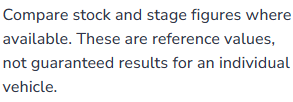
Displayed figures can also be configurable. B&C's API product advertises adjustments to power expectations and prices. These controls can help a business present its own supported offering. They also mean a displayed number is not, by itself, an immutable measurement.

Tuning-Datenbank.de advertises editable performance data; its English homepage specifies the WordPress API for that feature. The German screenshot below is from its public product article.

Identical figures can therefore result from shared data. Different figures can result from different settings or packages. Neither comparison proves whether the underlying calibration files are identical. Establishing that requires authorised file-level evidence and knowledge of what each package contains.
Before presenting an HP claim as a verified result, record what the number means:
- Is it an estimated final output, an estimated increase, or an actual measurement from this vehicle?
- What power unit and measurement basis are used? Are the figures engine output or wheel output, and are before and after figures comparable?
- Which fuel, hardware, transmission, software version and operating conditions does the claim assume?
- Does a plotted curve come from a recorded test or a catalogue illustration? Can the supplier provide the underlying record?
- If the vehicle differs from the assumed specification, who decides whether to revise the calibration or reduce the expectation?
Provider directory
This directory covers ten businesses found during the research. It records their advertised products as checked on 16 November 2026, rather than ranking file quality. Some appear in both tables because they sell both information and calibration services.
Vehicle gains databases, widgets and APIs
| Provider | Advertised product | Distinction for a remapper |
|---|---|---|
| BenSky / Ben Sky Limited | Embedded vehicle-gains lookup and dealer-portal software. | The software provider distinguishes itself from tuning companies and file suppliers. |
| Remapdb | Vehicle catalogue, website widget, WordPress integration and API. | Supplies reference information rather than ECU calibration files. |
| Tuning-Datenbank.de | Website configurator with staged figures and integration options. | Check package limits and the qualification on editable performance data. |
| B&C Consulting / Chiptuning API | Tuning configurator data through an API. | Its advertised display settings include changes to power expectations. |
| TUNING-DATABASE Gains API | Stock and staged performance catalogue with vehicle and ECU detail. | A data product alongside the company's portal and file-service products. |

Calibration file services and libraries
| Provider | Advertised supply model | What to establish for each job |
|---|---|---|
| Quantum Tuning | Dealer file supply, automated response and in-house file writing. | Which package and processing route apply to the vehicle. |
| VIEZU Technologies | Supplier file writing, portal exchange and published automated-dispatch options. | Whether the order uses an existing choice or requires individual work. |
| Avon Tuning | Agent network, file library and bespoke calibration support. | The hardware specification and individual requirements supplied to the engineers. |
| Dyno-ChiptuningFiles.com | Modified files, original-file sourcing and WinOLS resources, with advertised automation. | The requested calibration, compatibility and review provided. |
| B&C Consulting | Engineer-led individual file service and separate WinOLS resources. | Which product was ordered and the feedback required for revisions. |
| TuningFileService.com | Supported automatic files, manual processing and WinOLS database access. | Automatic eligibility and the support route for exceptions. |
| TUNING-DATABASE / TunerSuite | File service and portal software with library-matching features. | Who supplies the calibration and whether matching or individual work is used. |
What a professional remapper should document
Use the database to begin the enquiry, then make the job traceable. A practical record should identify the vehicle and ECU software, the relevant hardware and fuel specification, the advertised package, the file supplier and version, the checks performed and the result actually observed. Keep an estimate labelled as an estimate until a measurement supports a stronger claim.
When buying custom work, agree what feedback the supplier needs and what revisions are included. When fitting a prepared package, obtain its applicability and validation requirements. If the operator cannot inspect an encrypted calibration, establish the supplier's review responsibilities and carry out the vehicle checks available at the workshop. Logging a drivability complaint explains useful observations to record.
The commercial value of a remapping service can include development, correct selection, installation, diagnosis, validation and support. Describing those contributions accurately lets the customer judge what they are buying. A database lookup is useful quotation information; proof of the delivered result comes from the work and evidence attached to that vehicle.
Sources and screenshot credits
Sources are linked beside the relevant claims and in the directory. The 23 screenshots are short, unrewritten crops of public provider webpages captured on 16 November 2026; expandable answers were opened where required. The original pages provide the wider context. Figures, features and marketing statements may change after that date.
Screenshot copyright remains with Alientech, Ben Sky Limited, Remapdb, Tuning-Datenbank.de, B&C Consulting, TUNING DATABASE SRL, Quantum Tuning, VIEZU Technologies, Avon Tuning, Dyno-ChiptuningFiles.com and TuningFileService.com, as credited beside each excerpt. They are included for commentary and review; no open licence or endorsement is asserted.
The research examines public descriptions of products and workflows. It does not audit purchased files, establish an industry-wide market share, or independently verify a provider's dyno, reliability, speed or adoption claims.