Removed text is struck through; added text is highlighted.
Country of origin: United Kingdom. Part of Car makes and the history of the motor car.
History and development
Rover's roots go back to the British cycle industry of the nineteenth century. The company began producing cars in the early 1900s and became an established British marque. Wikipedia: Rover history.
Rover passed through several corporate arrangements; MG Rover car production ended in 2005. The Rover car marque and the related Land Rover vehicle story should be distinguished.
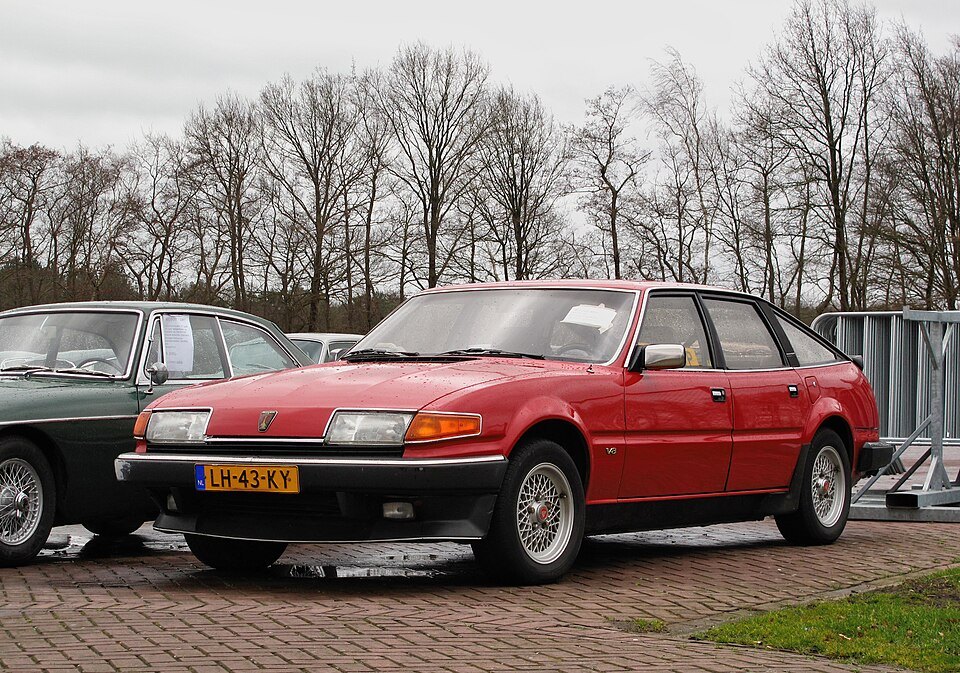
A Rover SD1 3500 Vitesse. Photo: Merijn Buick LeSabre, Wikimedia Commons, CC BY-SA 4.0; resized and re-encoded.
Selected cars and engines
Examples are selected rather than a complete production list. Engine and equipment specifications can vary with year and market.
CarWhy it mattersEvidenceP4 / P5Post-war Rover saloon families produced in several versions.Model referenceP6A distinctive executive saloon offered with four-cylinder and V8 power.Model referenceSD1A large hatchback saloon family including V8 models.Model referenceRover 75A later executive saloon and estate family.Model reference
More models and representative engines
These are specific examples rather than every engine offered. Equipment, output and capacity can change with model year and market; identify the exact vehicle before ordering parts.
A Rover SD1 Vitesse. Photo: Rutger van der Maar, Wikimedia Commons, CC BY 2.0; resized and re-encoded.
Model and versionEngine or powertrainEvidenceSD1 VitesseA 3.5-litre fuel-injected Rover V8 in the Vitesse performance version.Manufacturer or technical source75 2.5 V6A 2.5-litre naturally aspirated KV6 petrol engine in the specified Rover 75.Manufacturer or technical sourceP6 3500A 3.5-litre Rover V8 in the P6 3500.Manufacturer or technical source825i (1986)The first Rover 800 generation included the 825i with a 2.5-litre Honda V6; later six-cylinder models used 2.7 litres.Manufacturer or technical source214Si (1995)A 1.4-litre K-series inline-four in the specified R3 200-series version.Manufacturer or technical source
Identifying a car and engine
Use the VIN, market, model year and engine code when researching servicing, tuning or parts. A model badge may cover naturally aspirated, turbocharged, supercharged, hybrid or electric versions depending on the particular vehicle. Factory fitment and aftermarket conversions are distinguished in the linked guides.
Related marque: Land Rover: history and cars.
Sources and related reading
Wikipedia: Rover — marque history and further references.Tuning Wiki: illustrated turbocharged-car timeline.Tuning Wiki: supercharger types and Eaton guides.
Rendered revisions
Open each version to inspect formatting, tables and photographs.
Rover's roots go back to the British cycle industry of the nineteenth century. The company began producing cars in the early 1900s and became an established British marque. Wikipedia: Rover history.
Rover passed through several corporate arrangements; MG Rover car production ended in 2005. The Rover car marque and the related Land Rover vehicle story should be distinguished.
These are specific examples rather than every engine offered. Equipment, output and capacity can change with model year and market; identify the exact vehicle before ordering parts.
Use the VIN, market, model year and engine code when researching servicing, tuning or parts. A model badge may cover naturally aspirated, turbocharged, supercharged, hybrid or electric versions depending on the particular vehicle. Factory fitment and aftermarket conversions are distinguished in the linked guides.