Removed text is struck through; added text is highlighted.
Country of origin: France. Part of Car makes and the history of the motor car.
History and development
Peugeot's industrial roots predate its automobile business. The French company moved into car production at the end of the nineteenth century and became one of Europe's established manufacturers. Wikipedia: Peugeot history.
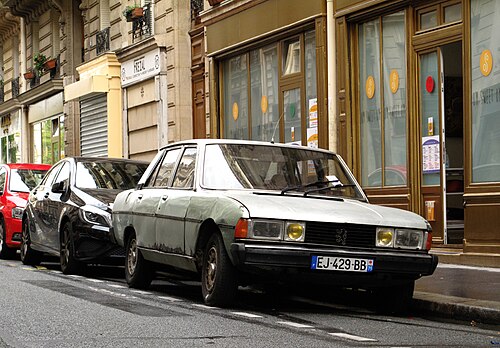
Its model history includes small cars, family saloons, diesels and performance hatchbacks. Peugeot's 604 Turbo D is a useful milestone in the spread of turbocharged passenger-car diesels.
1979 Peugeot 604 D Turbo. Photo: Rutger van der Maar, Wikimedia Commons, CC BY 2.0; resized.
Selected cars and engines
Examples are selected rather than a complete production list. Engine and equipment specifications can vary with year and market.
CarWhy it mattersEvidence604 Turbo D (1979)The European-market 2.3-litre Indenor XD2S inline-four used a Garrett turbo and developed 80 PS in its launch specification.Illustrated turbo history205 GTIA compact performance hatchback with several naturally aspirated petrol engine versions.Model reference405A family car range also associated with performance and motorsport derivatives.Model reference206A small car sold with many petrol and diesel engines in different markets.Model reference
More models and representative engines
These are specific examples rather than every engine offered. Equipment, output and capacity can change with model year and market; identify the exact vehicle before ordering parts.
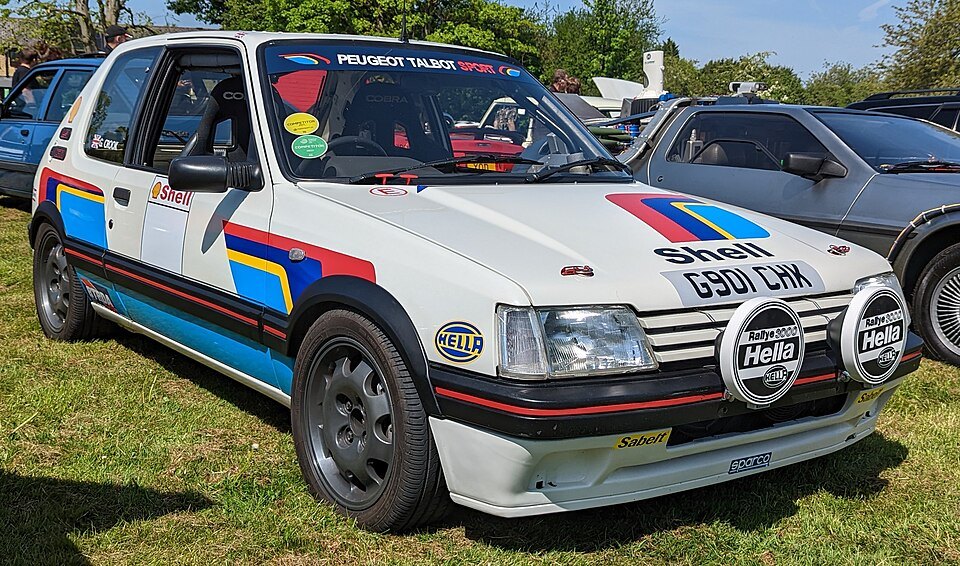
A Peugeot 205 GTI, photographed with rally-style additions; its exact specification is unconfirmed. Photo: Calreyn88, Wikimedia Commons, CC BY-SA 4.0; resized and re-encoded.
Model and versionEngine or powertrainEvidence205 GTI 1.91.9-litre naturally aspirated XU-family petrol four; the 1.6 GTI was a separate engine.Manufacturer source306 GTI-62.0-litre naturally aspirated 16-valve four-cylinder coupled to a six-speed manual.Manufacturer source405 Mi16 Le Mans (1993)2.0-litre 16-valve petrol engine in the special edition; earlier 405 Mi16 versions differed.Manufacturer source106 Rallye (Series 1)1,294 cc naturally aspirated four-cylinder in the early Rallye; later versions had a larger engine.Manufacturer source
Identifying a car and engine
Use the VIN, market, model year and engine code when researching servicing, tuning or parts. A model badge may cover naturally aspirated, turbocharged, supercharged, hybrid or electric versions depending on the particular vehicle. Factory fitment and aftermarket conversions are distinguished in the linked guides.
Sources and related reading
Wikipedia: Peugeot — marque history and further references.Tuning Wiki: illustrated turbocharged-car timeline.Tuning Wiki: supercharger types and Eaton guides.
Rendered revisions
Open each version to inspect formatting, tables and photographs.
Peugeot's industrial roots predate its automobile business. The French company moved into car production at the end of the nineteenth century and became one of Europe's established manufacturers. Wikipedia: Peugeot history.
Its model history includes small cars, family saloons, diesels and performance hatchbacks. Peugeot's 604 Turbo D is a useful milestone in the spread of turbocharged passenger-car diesels.
These are specific examples rather than every engine offered. Equipment, output and capacity can change with model year and market; identify the exact vehicle before ordering parts.
A Peugeot 205 GTI, photographed with rally-style additions; its exact specification is unconfirmed. Photo: Calreyn88, Wikimedia Commons, CC BY-SA 4.0; resized and re-encoded.
Use the VIN, market, model year and engine code when researching servicing, tuning or parts. A model badge may cover naturally aspirated, turbocharged, supercharged, hybrid or electric versions depending on the particular vehicle. Factory fitment and aftermarket conversions are distinguished in the linked guides.