Removed text is struck through; added text is highlighted.
Country of origin: United Kingdom. Part of Car makes and the history of the motor car.
History and development
MG grew out of Morris Garages in the 1920s and became a prominent British sports-car marque. The name has since passed through several companies and eras. Wikipedia: MG history.
Classic MG sports cars, MG Rover-era cars and later SAIC-era models are not a single mechanical family. The same familiar badge appears on very different generations.
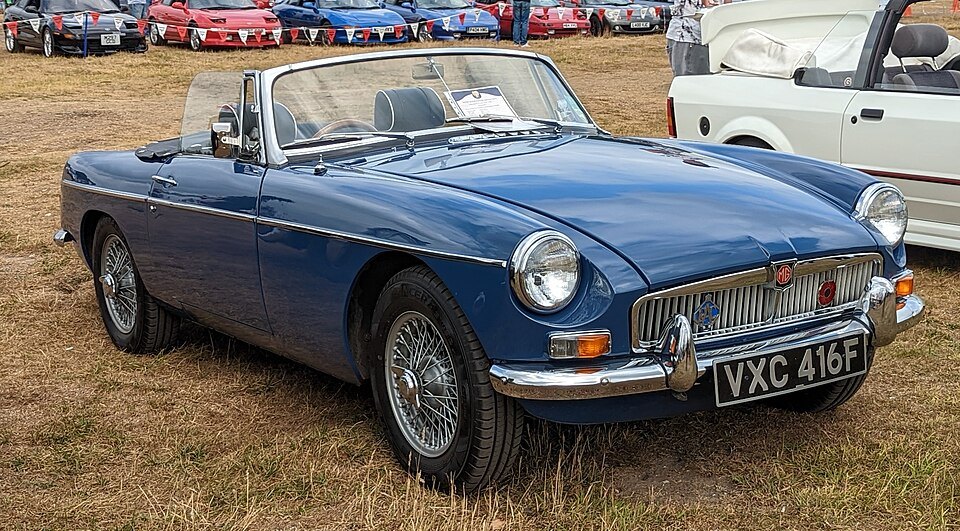
An MGB roadster. Photo: Calreyn88, Wikimedia Commons, CC BY-SA 4.0; resized and re-encoded.
Selected cars and engines
Examples are selected rather than a complete production list. Engine and equipment specifications can vary with year and market.
CarWhy it mattersEvidenceMGBA long-running British two-seat sports car, sold as a roadster and GT.Model referenceMG F / TFMid-engined sports cars from a later MG era.Model referenceMG ZTA performance-oriented saloon and estate range based on the Rover 75.Model referenceMG4A modern battery-electric hatchback sold under the MG marque.Model reference
More models and representative engines
These are specific examples rather than every engine offered. Equipment, output and capacity can change with model year and market; identify the exact vehicle before ordering parts.
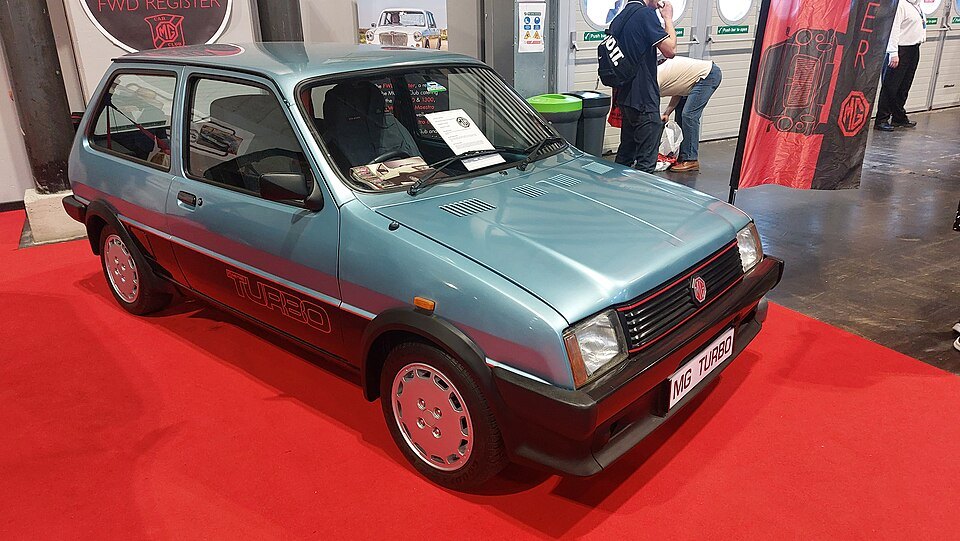
An MG Metro Turbo. Photo: Kieran White from Manchester, England, Wikimedia Commons, CC BY 2.0; resized and re-encoded.
Model and versionEngine or powertrainEvidenceMGBA 1.8-litre B-series naturally aspirated four-cylinder engine in the MGB.Manufacturer or technical sourceMG Metro TurboA 1.3-litre turbocharged A-series four-cylinder in the MG Metro Turbo.Manufacturer or technical sourceMG ZT 260A 4.6-litre Ford-derived V8 driving the rear wheels in the ZT 260.Manufacturer or technical sourceMidget Mk IIIThe Mk III used a 1.3-litre (1,275 cc) A-series four-cylinder; other generations had different engines.Manufacturer or technical source
Identifying a car and engine
Use the VIN, market, model year and engine code when researching servicing, tuning or parts. A model badge may cover naturally aspirated, turbocharged, supercharged, hybrid or electric versions depending on the particular vehicle. Factory fitment and aftermarket conversions are distinguished in the linked guides.
Sources and related reading
Wikipedia: MG — marque history and further references.Tuning Wiki: illustrated turbocharged-car timeline.Tuning Wiki: supercharger types and Eaton guides.
Rendered revisions
Open each version to inspect formatting, tables and photographs.
MG grew out of Morris Garages in the 1920s and became a prominent British sports-car marque. The name has since passed through several companies and eras. Wikipedia: MG history.
Classic MG sports cars, MG Rover-era cars and later SAIC-era models are not a single mechanical family. The same familiar badge appears on very different generations.
These are specific examples rather than every engine offered. Equipment, output and capacity can change with model year and market; identify the exact vehicle before ordering parts.
An MG Metro Turbo. Photo: Kieran White from Manchester, England, Wikimedia Commons, CC BY 2.0; resized and re-encoded.
Use the VIN, market, model year and engine code when researching servicing, tuning or parts. A model badge may cover naturally aspirated, turbocharged, supercharged, hybrid or electric versions depending on the particular vehicle. Factory fitment and aftermarket conversions are distinguished in the linked guides.
Sources and related reading
Wikipedia: MG — marque history and further references.