Removed text is struck through; added text is highlighted.
Country of origin: United States. Part of Car makes and the history of the motor car.
History and development
Oldsmobile began with Ransom E. Olds's automobile business in the 1890s and became a long-running General Motors marque. GM ended Oldsmobile production in 2004. Wikipedia: Oldsmobile history.
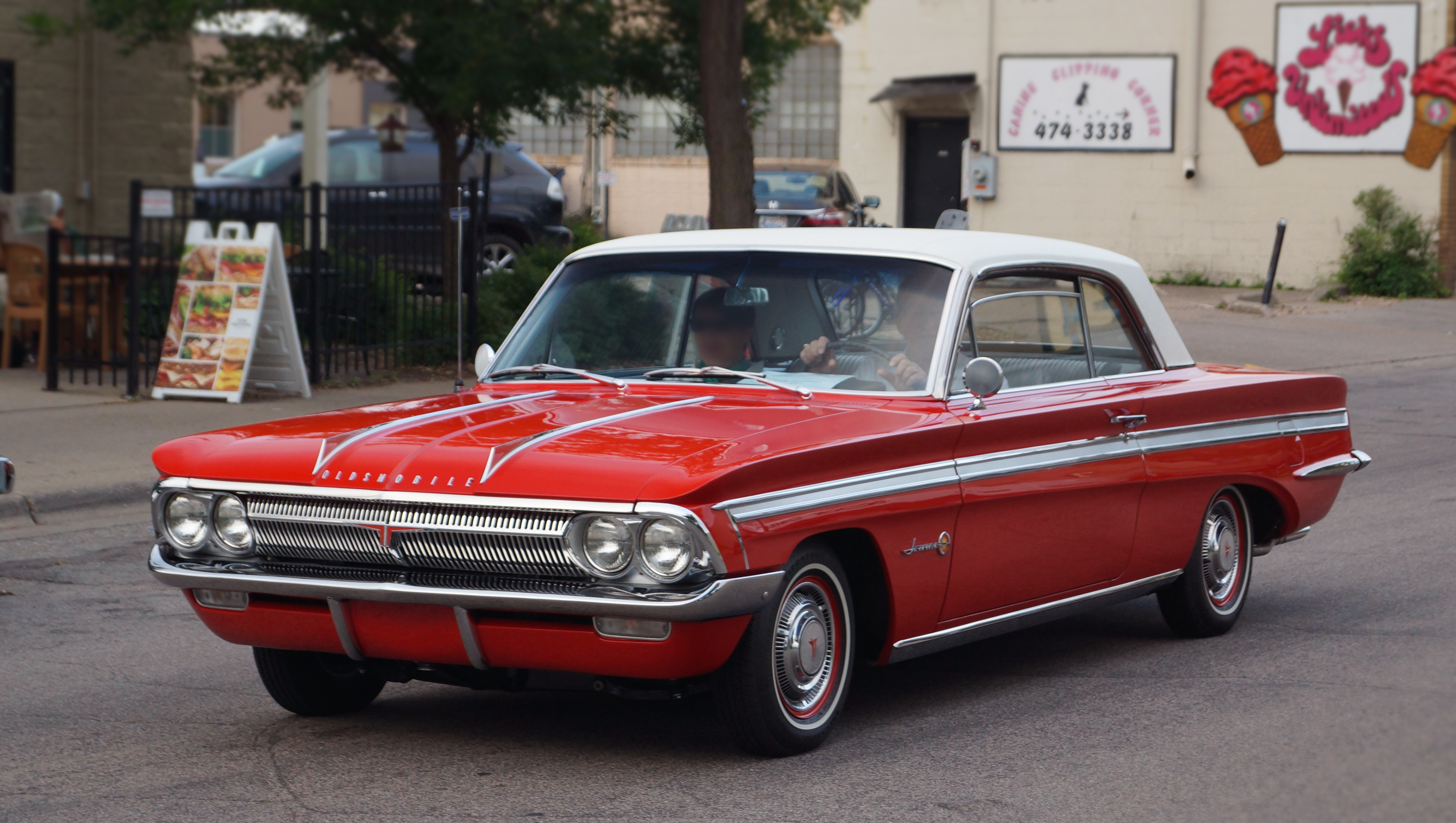
The brand built a wide range of family and luxury cars. Its 1962 Jetfire is notable in performance history for bringing turbocharging to a production V8.
1962 Jetfire. Photo: Greg Gjerdingen, Wikimedia Commons, CC BY 2.0; unchanged from the Commons file.
Selected cars and engines
Examples are selected rather than a complete production list. Engine and equipment specifications can vary with year and market.
CarWhy it mattersEvidenceF-85 Jetfire (1962–1963)The 3.5-litre aluminium Turbo-Rocket V8 used a single Garrett AiResearch T05 and a separate fluid-injection system to help control knock.Illustrated turbo historyCurved Dash OldsmobileAn early Oldsmobile model associated with the beginnings of volume automobile production.Model referenceCutlassA long-running Oldsmobile name used for several different generations and body styles.Model referenceToronadoA large personal luxury car whose first generation used front-wheel drive and a V8.Model reference
More models and representative engines
These are specific examples rather than every engine offered. Equipment, output and capacity can change with model year and market; identify the exact vehicle before ordering parts.
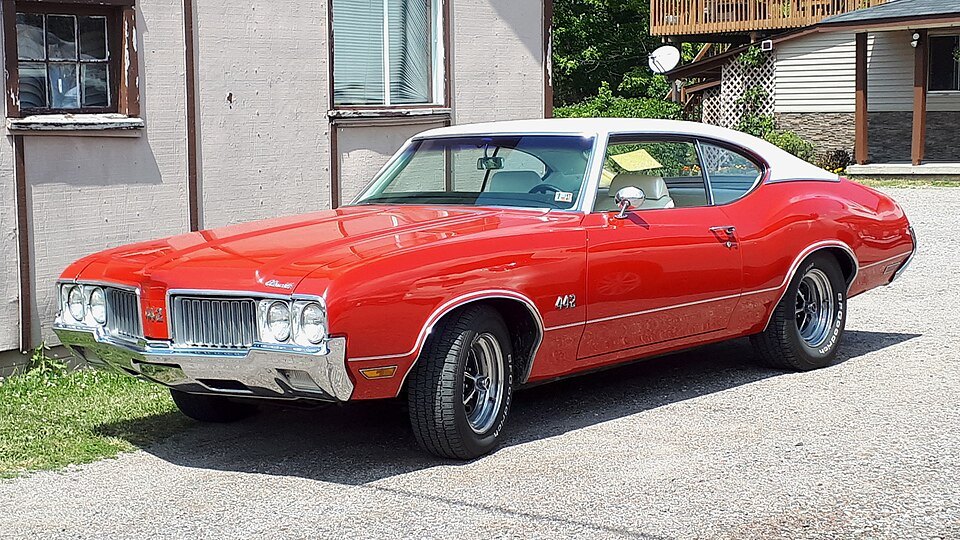
A 1970 Oldsmobile 4-4-2. Photo: SsmIntrigue, Wikimedia Commons, CC BY-SA 4.0; resized and re-encoded.
Model and versionEngine or powertrainEvidence442 (1970)A 455-cubic-inch V8, approximately 7.5 litres, in the 1970 4-4-2.Manufacturer or technical sourceAurora (1995)A 4.0-litre naturally aspirated V8 in the first Aurora.Manufacturer or technical sourceToronado (1966)A 425-cubic-inch, approximately 7.0-litre V8 driving the front wheels in the original Toronado.Manufacturer or technical source
Identifying a car and engine
Use the VIN, market, model year and engine code when researching servicing, tuning or parts. A model badge may cover naturally aspirated, turbocharged, supercharged, hybrid or electric versions depending on the particular vehicle. Factory fitment and aftermarket conversions are distinguished in the linked guides.
Sources and related reading
Wikipedia: Oldsmobile — marque history and further references.Tuning Wiki: illustrated turbocharged-car timeline.Tuning Wiki: supercharger types and Eaton guides.
Text is unchanged; formatting, links or images changed. Compare the rendered revisions below.
Rendered revisions
Open each version to inspect formatting, tables and photographs.
Oldsmobile began with Ransom E. Olds's automobile business in the 1890s and became a long-running General Motors marque. GM ended Oldsmobile production in 2004. Wikipedia: Oldsmobile history.
The brand built a wide range of family and luxury cars. Its 1962 Jetfire is notable in performance history for bringing turbocharging to a production V8.
These are specific examples rather than every engine offered. Equipment, output and capacity can change with model year and market; identify the exact vehicle before ordering parts.
Use the VIN, market, model year and engine code when researching servicing, tuning or parts. A model badge may cover naturally aspirated, turbocharged, supercharged, hybrid or electric versions depending on the particular vehicle. Factory fitment and aftermarket conversions are distinguished in the linked guides.