Removed text is struck through; added text is highlighted.
Country of origin: Japan. Part of Car makes and the history of the motor car.
History and development
Mitsubishi's automotive roots reach back into the wider Japanese Mitsubishi industrial group. Mitsubishi Motors became a separate vehicle company in 1970. Wikipedia: Mitsubishi history.
The brand has built small cars, pickups and four-wheel-drive vehicles as well as rally-inspired performance cars. Lancer Evolution generations share a name but have important differences in engine and drivetrain.
Examples are selected rather than a complete production list. Engine and equipment specifications can vary with year and market.
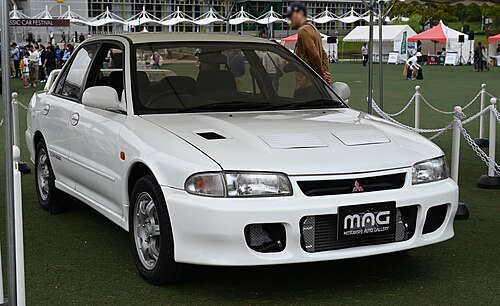
CarWhy it mattersEvidenceLancer Evolution I (1992)The original Japanese model combined a 2.0-litre 4G63 turbo four, intercooler and four-wheel drive; later Evolutions differ.Illustrated turbo historyPajero / ShogunA four-wheel-drive model sold under different names in different markets.Model reference3000GT / GTOA sports coupé offered with different drivetrains; some versions used a twin-turbo V6 and all-wheel drive.Model referenceOutlanderA family SUV offered with petrol and plug-in hybrid powertrains in different generations and markets.Model reference
More models and representative engines
These are specific examples rather than every engine offered. Equipment, output and capacity can change with model year and market; identify the exact vehicle before ordering parts.
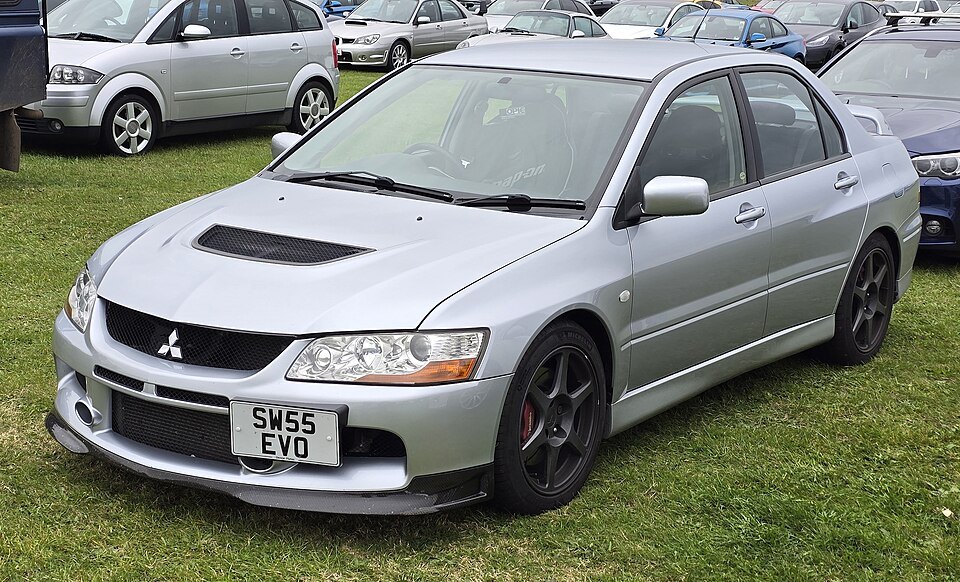
A Mitsubishi Lancer Evolution IX. Photo: MrWalkr, Wikimedia Commons, CC BY-SA 4.0; resized and re-encoded.
Model and versionEngine or powertrainEvidenceLancer Evolution IX2.0-litre 4G63 turbocharged inline-four with MIVEC variable valve timing.Manufacturer or technical sourceLancer Evolution X2.0-litre turbocharged inline-four with an aluminium block, replacing the earlier engine family.Manufacturer or technical sourceGTO / 3000GT Twin Turbo3.0-litre twin-turbo V6 in specified performance versions; naturally aspirated variants were also sold.Manufacturer or technical sourceGalant VR-4A 2.0-litre 4G63 intercooled turbocharged four-cylinder with all-wheel drive.Manufacturer or technical source
Identifying a car and engine
Use the VIN, market, model year and engine code when researching servicing, tuning or parts. A model badge may cover naturally aspirated, turbocharged, supercharged, hybrid or electric versions depending on the particular vehicle. Factory fitment and aftermarket conversions are distinguished in the linked guides.
Sources and related reading
Wikipedia: Mitsubishi — marque history and further references.Tuning Wiki: illustrated turbocharged-car timeline.Tuning Wiki: supercharger types and Eaton guides.
Text is unchanged; formatting, links or images changed. Compare the rendered revisions below.
Rendered revisions
Open each version to inspect formatting, tables and photographs.
Mitsubishi's automotive roots reach back into the wider Japanese Mitsubishi industrial group. Mitsubishi Motors became a separate vehicle company in 1970. Wikipedia: Mitsubishi history.
The brand has built small cars, pickups and four-wheel-drive vehicles as well as rally-inspired performance cars. Lancer Evolution generations share a name but have important differences in engine and drivetrain.
These are specific examples rather than every engine offered. Equipment, output and capacity can change with model year and market; identify the exact vehicle before ordering parts.
Use the VIN, market, model year and engine code when researching servicing, tuning or parts. A model badge may cover naturally aspirated, turbocharged, supercharged, hybrid or electric versions depending on the particular vehicle. Factory fitment and aftermarket conversions are distinguished in the linked guides.