Removed text is struck through; added text is highlighted.
Country of origin: Italy. Part of Car makes and the history of the motor car.
History and development
Vincenzo Lancia founded the Italian manufacturer in 1906. Lancia became known for distinctive road-car engineering and a strong competition history. Wikipedia: Lancia history.
The brand's rally cars include the Stratos and Delta. Different Delta generations are separate cars despite sharing the name.
A Lancia Delta LX; the pictured car is not identified as an Integrale. Photo: Tony Harrison from Farnborough, UK, Wikimedia Commons, CC BY-SA 2.0; resized and re-encoded.
Selected cars and engines
Examples are selected rather than a complete production list. Engine and equipment specifications can vary with year and market.
CarWhy it mattersEvidenceDelta IntegraleA turbocharged, four-wheel-drive performance version of the first-generation Delta, associated with rallying.Model referenceStratosA mid-engined sports car built with rally competition in mind.Model referenceFulviaA compact Lancia family that included a successful rally coupé.Model referenceYpsilonA small-car name used on multiple generations.Model reference
More models and representative engines
These are specific examples rather than every engine offered. Equipment, output and capacity can change with model year and market; identify the exact vehicle before ordering parts.
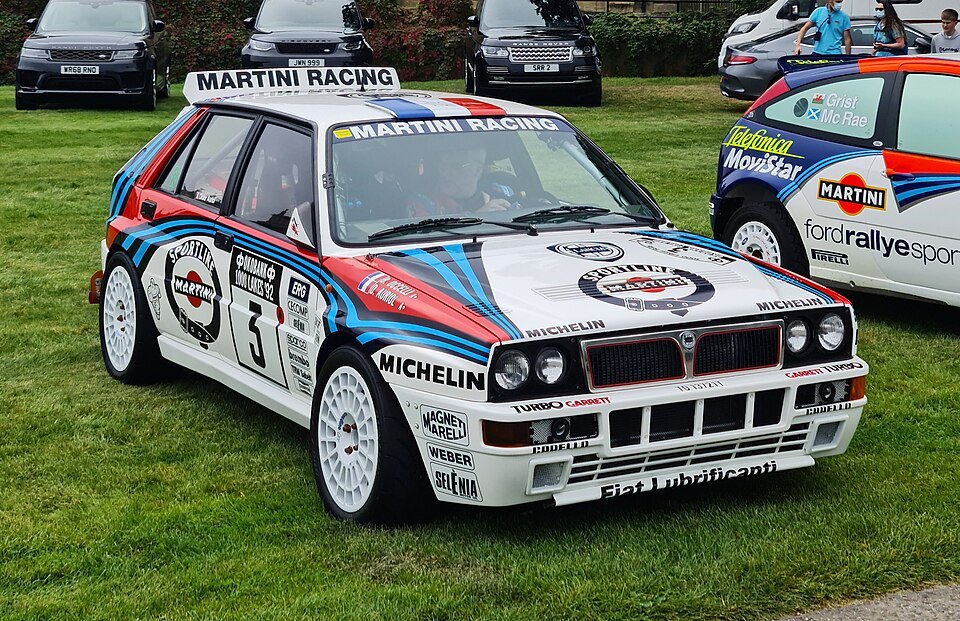
A Lancia Delta HF Integrale in rally specification; competition cars differ from road cars. Photo: MrWalkr, Wikimedia Commons, CC BY-SA 4.0; resized and re-encoded.
Model and versionEngine or powertrainEvidenceDelta HF IntegraleA 2.0-litre turbocharged inline-four and four-wheel drive in the Integrale performance family.Manufacturer or technical sourceStratos HFA mid-mounted 2.4-litre naturally aspirated Dino-derived V6.Manufacturer or technical sourceFulvia CoupéSelected Fulvia Coupé models used a 1.3-litre narrow-angle V4; capacities varied by version.Manufacturer or technical sourceFlaminia (1957)The original Flaminia used a 2.5-litre V6; later versions varied.Manufacturer or technical sourceRally 037 StradaleThe road-going 037 used a 2.0-litre supercharged inline-four.Manufacturer or technical source
Identifying a car and engine
Use the VIN, market, model year and engine code when researching servicing, tuning or parts. A model badge may cover naturally aspirated, turbocharged, supercharged, hybrid or electric versions depending on the particular vehicle. Factory fitment and aftermarket conversions are distinguished in the linked guides.
Sources and related reading
Wikipedia: Lancia — marque history and further references.Tuning Wiki: illustrated turbocharged-car timeline.Tuning Wiki: supercharger types and Eaton guides.
Text is unchanged; formatting, links or images changed. Compare the rendered revisions below.
Rendered revisions
Open each version to inspect formatting, tables and photographs.
Vincenzo Lancia founded the Italian manufacturer in 1906. Lancia became known for distinctive road-car engineering and a strong competition history. Wikipedia: Lancia history.
The brand's rally cars include the Stratos and Delta. Different Delta generations are separate cars despite sharing the name.
A Lancia Delta LX; the pictured car is not identified as an Integrale. Photo: Tony Harrison from Farnborough, UK, Wikimedia Commons, CC BY-SA 2.0; resized and re-encoded.
Selected cars and engines
Examples are selected rather than a complete production list. Engine and equipment specifications can vary with year and market.
These are specific examples rather than every engine offered. Equipment, output and capacity can change with model year and market; identify the exact vehicle before ordering parts.
A Lancia Delta HF Integrale in rally specification; competition cars differ from road cars. Photo: MrWalkr, Wikimedia Commons, CC BY-SA 4.0; resized and re-encoded.
Use the VIN, market, model year and engine code when researching servicing, tuning or parts. A model badge may cover naturally aspirated, turbocharged, supercharged, hybrid or electric versions depending on the particular vehicle. Factory fitment and aftermarket conversions are distinguished in the linked guides.