Removed text is struck through; added text is highlighted.
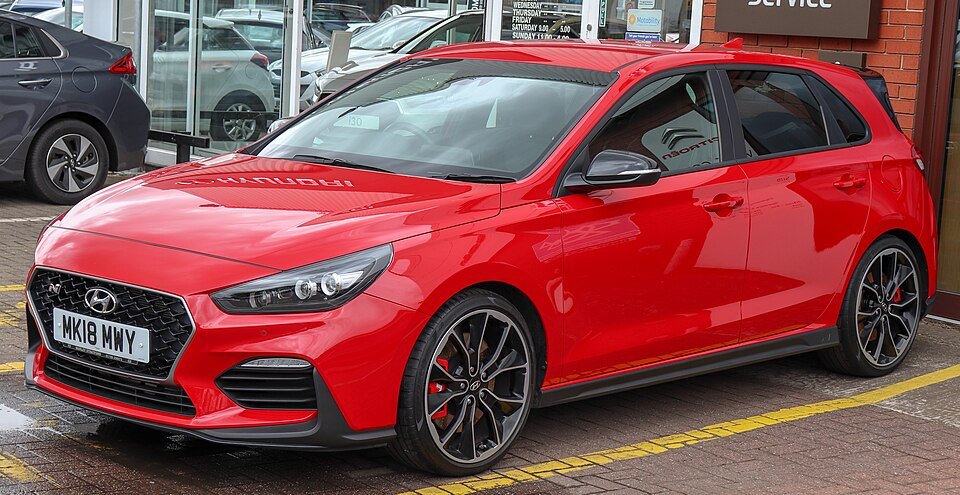
The i30 is Hyundai's compact-car family; the photographed i30 N is a performance version.
Production: 2007–present, with market-specific model changes. Production and model history.
A Hyundai i30 N. Photo: Vauxford, Wikimedia Commons, CC BY-SA 4.0; resized and re-encoded.
Engines and powertrains
The table describes representative factory versions. Availability, output and equipment vary by market, model year and body style; identify the exact vehicle before ordering parts.
Model or versionEngine and inductionEvidenceEarly i30Selected versions used 1.4-, 1.6- or 2.0-litre petrol fours and 1.6- or 2.0-litre diesels.Model history and specificationsLater i30Selected versions include turbocharged three- and four-cylinder petrol engines and 1.6-litre diesels.Model history and specificationsi30 NA 2.0-litre turbocharged inline-four in the specified N performance model.Model history and specifications
Identification and related guides
Engine swaps, aftermarket conversions and competition modifications can differ from the original factory specification.
Hyundai: history and cars
Rendered revisions
Open each version to inspect formatting, tables and photographs.
Revision 1: Hyundai i30: generations and engines
The i30 is Hyundai's compact-car family; the photographed i30 N is a performance version.
The table describes representative factory versions. Availability, output and equipment vary by market, model year and body style; identify the exact vehicle before ordering parts.
Model or version
Engine and induction
Evidence
Early i30
Selected versions used 1.4-, 1.6- or 2.0-litre petrol fours and 1.6- or 2.0-litre diesels.