Removed text is struck through; added text is highlighted.
Country of origin: United Kingdom. Part of Car makes and the history of the motor car.
History and development
The Triumph car business developed from a British cycle and motorcycle company and began building cars in the 1920s. Triumph car production ended in 1984. Wikipedia: Triumph history.
Triumph sports cars and saloons remain popular classics. The later motorcycle business using the Triumph name has a separate corporate history from the car marque.
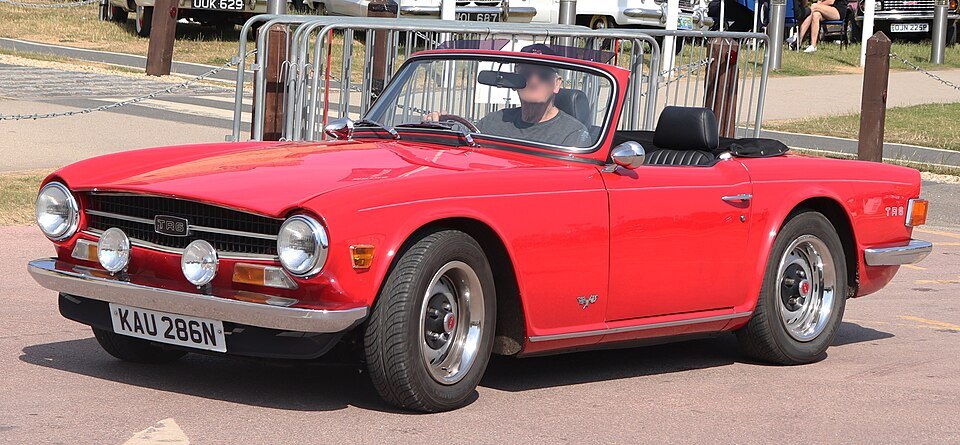
A Triumph TR6. Photo: Vauxford, Wikimedia Commons, CC BY-SA 4.0; resized and re-encoded.
Selected cars and engines
Examples are selected rather than a complete production list. Engine and equipment specifications can vary with year and market.
CarWhy it mattersEvidenceTR6A six-cylinder British sports car in the TR series.Model referenceSpitfireA compact two-seat sports car.Model referenceStagA grand-touring model powered by a V8 in its original form.Model referenceDolomite SprintA sporting version of the Dolomite saloon.Model reference
More models and representative engines
These are specific examples rather than every engine offered. Equipment, output and capacity can change with model year and market; identify the exact vehicle before ordering parts.
A Triumph Dolomite Sprint. Photo: No machine-readable author provided. PACE~commonswiki assumed (based on copyright claims)., Wikimedia Commons, Public domain; resized and re-encoded.
Model and versionEngine or powertrainEvidenceTR6A 2.5-litre naturally aspirated inline-six; injection and carburettor specifications differed by market.Manufacturer or technical sourceStagA 3.0-litre naturally aspirated V8 in the original Stag.Manufacturer or technical sourceDolomite SprintA 2.0-litre 16-valve naturally aspirated inline-four in the Sprint.Manufacturer or technical sourceGT6A 2.0-litre inline-six in the GT6 sports coupé.Manufacturer or technical sourceTR7A 2.0-litre four-cylinder in the standard TR7; the V8-powered TR8 was a separate model.Manufacturer or technical source
Identifying a car and engine
Use the VIN, market, model year and engine code when researching servicing, tuning or parts. A model badge may cover naturally aspirated, turbocharged, supercharged, hybrid or electric versions depending on the particular vehicle. Factory fitment and aftermarket conversions are distinguished in the linked guides.
Sources and related reading
Wikipedia: Triumph — marque history and further references.Tuning Wiki: illustrated turbocharged-car timeline.Tuning Wiki: supercharger types and Eaton guides.
Text is unchanged; formatting, links or images changed. Compare the rendered revisions below.
Rendered revisions
Open each version to inspect formatting, tables and photographs.
The Triumph car business developed from a British cycle and motorcycle company and began building cars in the 1920s. Triumph car production ended in 1984. Wikipedia: Triumph history.
Triumph sports cars and saloons remain popular classics. The later motorcycle business using the Triumph name has a separate corporate history from the car marque.
These are specific examples rather than every engine offered. Equipment, output and capacity can change with model year and market; identify the exact vehicle before ordering parts.
A Triumph Dolomite Sprint. Photo: No machine-readable author provided. PACE~commonswiki assumed (based on copyright claims)., Wikimedia Commons, Public domain; resized and re-encoded.
Model and version
Engine or powertrain
Evidence
TR6
A 2.5-litre naturally aspirated inline-six; injection and carburettor specifications differed by market.
Use the VIN, market, model year and engine code when researching servicing, tuning or parts. A model badge may cover naturally aspirated, turbocharged, supercharged, hybrid or electric versions depending on the particular vehicle. Factory fitment and aftermarket conversions are distinguished in the linked guides.
The Triumph car business developed from a British cycle and motorcycle company and began building cars in the 1920s. Triumph car production ended in 1984. Wikipedia: Triumph history.
Triumph sports cars and saloons remain popular classics. The later motorcycle business using the Triumph name has a separate corporate history from the car marque.
These are specific examples rather than every engine offered. Equipment, output and capacity can change with model year and market; identify the exact vehicle before ordering parts.
A Triumph Dolomite Sprint. Photo: No machine-readable author provided. PACE~commonswiki assumed (based on copyright claims)., Wikimedia Commons, Public domain; resized and re-encoded.
Use the VIN, market, model year and engine code when researching servicing, tuning or parts. A model badge may cover naturally aspirated, turbocharged, supercharged, hybrid or electric versions depending on the particular vehicle. Factory fitment and aftermarket conversions are distinguished in the linked guides.