Removed text is struck through; added text is highlighted.
Country of origin: Japan. Part of Car makes and the history of the motor car.
History and development
Isuzu's vehicle-making roots in Japan stretch back to the early twentieth century. The company became particularly associated with commercial vehicles and diesel engines. Wikipedia: Isuzu history.
Its history also includes passenger cars, pickups and four-wheel-drive vehicles. Different markets used different names and specifications.
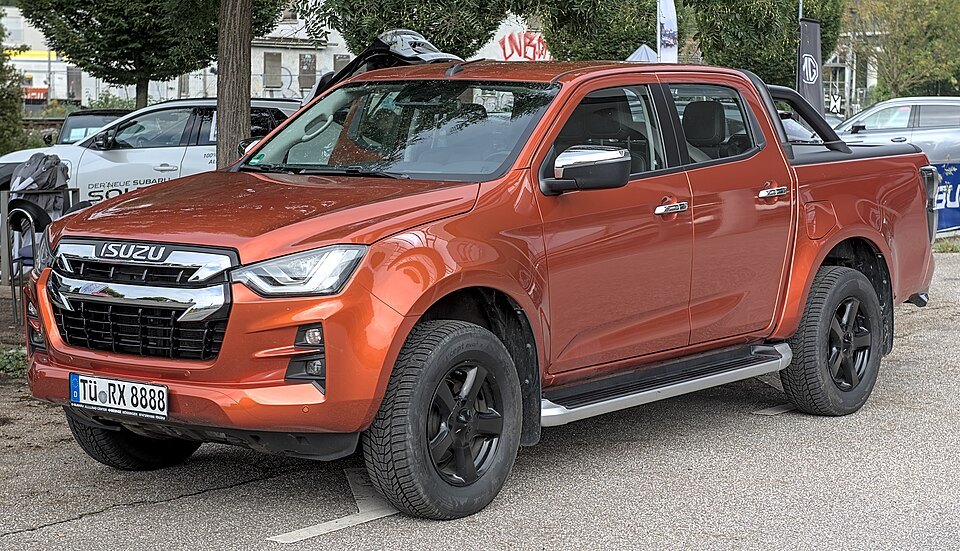
A third-generation Isuzu D-Max. Photo: Alexander Migl, Wikimedia Commons, CC BY-SA 4.0; resized and re-encoded.
Selected cars and engines
Examples are selected rather than a complete production list. Engine and equipment specifications can vary with year and market.
CarWhy it mattersEvidenceD-MaxA pickup family sold with several diesel engines and drivetrain choices.Model referenceTrooperA four-wheel-drive SUV sold in many markets.Model referenceBellettA compact Isuzu passenger-car family.Model referenceGeminiA small-car name used on several Isuzu models and related cars.Model reference
More models and representative engines
These are specific examples rather than every engine offered. Equipment, output and capacity can change with model year and market; identify the exact vehicle before ordering parts. Battery-electric models are described by their motors.
An Isuzu D-Max. Photo: Calreyn88, Wikimedia Commons, CC BY-SA 4.0; resized and re-encoded.
Model and versionEngine or powertrainEvidenceD-Max 1.9A 1.9-litre turbo-diesel four in specified UK D-Max versions.Manufacturer or technical sourceTrooper 3.1 TDA 3.1-litre turbo-diesel four in the specified Trooper version.Manufacturer or technical sourceD-Max 3.0A 3.0-litre turbo-diesel four in specified D-Max markets; engine availability varies.Manufacturer or technical source
Identifying a car and engine
Use the VIN, market, model year and engine code when researching servicing, tuning or parts. A model badge may cover naturally aspirated, turbocharged, supercharged, hybrid or electric versions depending on the particular vehicle. Factory fitment and aftermarket conversions are distinguished in the linked guides.
Sources and related reading
Wikipedia: Isuzu — marque history and further references.Tuning Wiki: illustrated turbocharged-car timeline.Tuning Wiki: supercharger types and Eaton guides.
Text is unchanged; formatting, links or images changed. Compare the rendered revisions below.
Rendered revisions
Open each version to inspect formatting, tables and photographs.
Isuzu's vehicle-making roots in Japan stretch back to the early twentieth century. The company became particularly associated with commercial vehicles and diesel engines. Wikipedia: Isuzu history.
Its history also includes passenger cars, pickups and four-wheel-drive vehicles. Different markets used different names and specifications.
These are specific examples rather than every engine offered. Equipment, output and capacity can change with model year and market; identify the exact vehicle before ordering parts. Battery-electric models are described by their motors.
Use the VIN, market, model year and engine code when researching servicing, tuning or parts. A model badge may cover naturally aspirated, turbocharged, supercharged, hybrid or electric versions depending on the particular vehicle. Factory fitment and aftermarket conversions are distinguished in the linked guides.