Removed text is struck through; added text is highlighted.
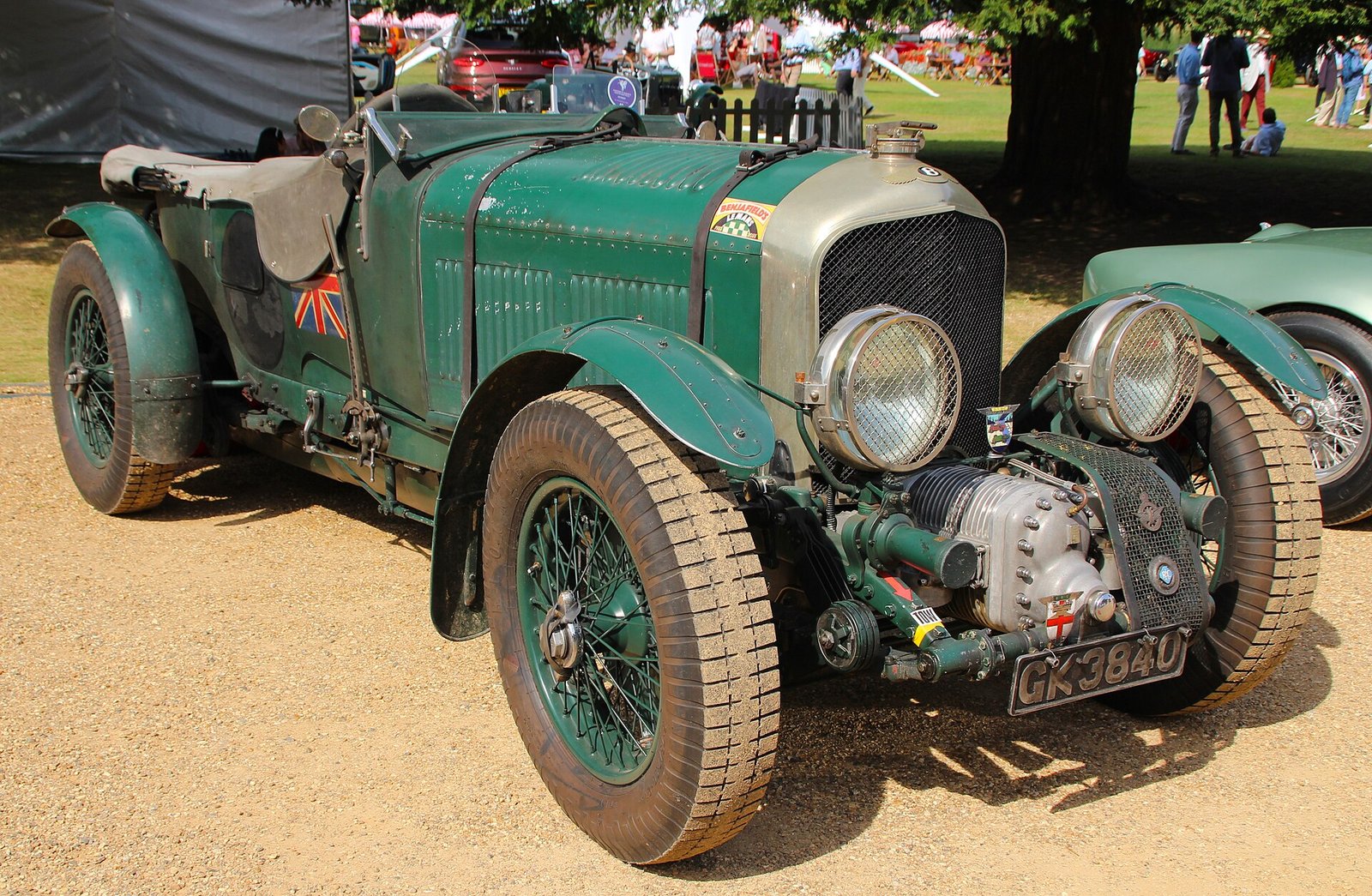
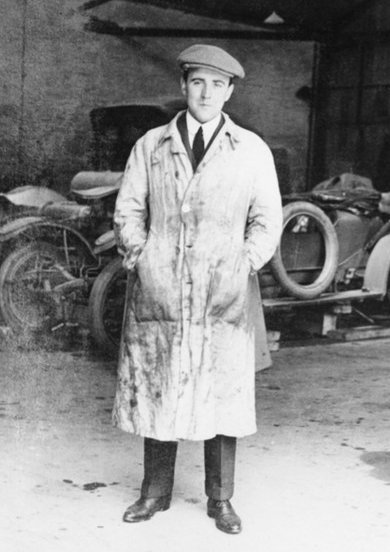
Country of origin: United Kingdom. Part of Car makes and the history of the motor car. Engines and ECUs are covered in detail in Bentley engines and engine management.Bentley Motors Limited is a British maker of luxury grand tourers, saloons and SUVs, based at Pyms Lane, Crewe. W. O. Bentley founded the company in London in 1919. Its overhead-camshaft sports cars won the Le Mans 24 Hours five times between 1924 and 1930. Rolls-Royce bought the company out of receivership in 1931, and for the next 67 years Bentleys were increasingly built as sportier versions of Rolls-Royce cars, first at Derby and from 1946 at Crewe. Volkswagen AG bought the company in 1998. Under Volkswagen, Bentley moved to the twin-turbo W12 and the Continental GT and reached a record 15,174 deliveries in 2022. Audi took over management responsibility in 2021. In 2026 the company revealed its first battery-electric car, the Torcal.A 1931 Bentley 4½ Litre supercharged "Blower", with the Amherst Villiers supercharger ahead of the radiator. Photo: MrWalkr, Wikimedia Commons, CC BY-SA 4.0; resized and re-encoded.W. O. Bentley, about 1921. Photo: Unknown author, Wikimedia Commons, public domain.History and ownership erasEraOwnership and milestonesEngineering and plants
1919–1931W. O. Bentley, CricklewoodThe company was founded in January 1919. Sources give the formal registration as mid-1919 (Audi's fact sheet says 10 July 1919). The 3 Litre was shown at the London Motor Show in November 1919, and the first customer car was delivered in 1921. In 1926 the financier Woolf Barnato bought control and became chairman. The "Bentley Boys" won Le Mans in 1924, 1927, 1928, 1929 and 1930, taking the first four places in 1929. The Depression and the costly 8 Litre left the company in receivership on 10 July 1931.Oxgate Lane works, Cricklewood, from 1920. Overhead-camshaft, four-valve, twin-plug fours and sixes from 3 to 8 litres; Amherst Villiers supercharged "Blower" 4½ Litres built for Birkin's team at Welwyn.
1931–1939Rolls-Royce, DerbyIn November 1931 Rolls-Royce bought the assets for about £125,000 through a sealed bid placed by the British Central Equitable Trust, and formed Bentley Motors (1931) Ltd. W. O. Bentley stayed on until April 1935, then moved to Lagonda.The Derby-built 3½ Litre of 1933 was sold as "The Silent Sports Car". It was followed by the 4¼ Litre and the Mark V. All used Rolls-Royce OHV sixes in a Bentley chassis.
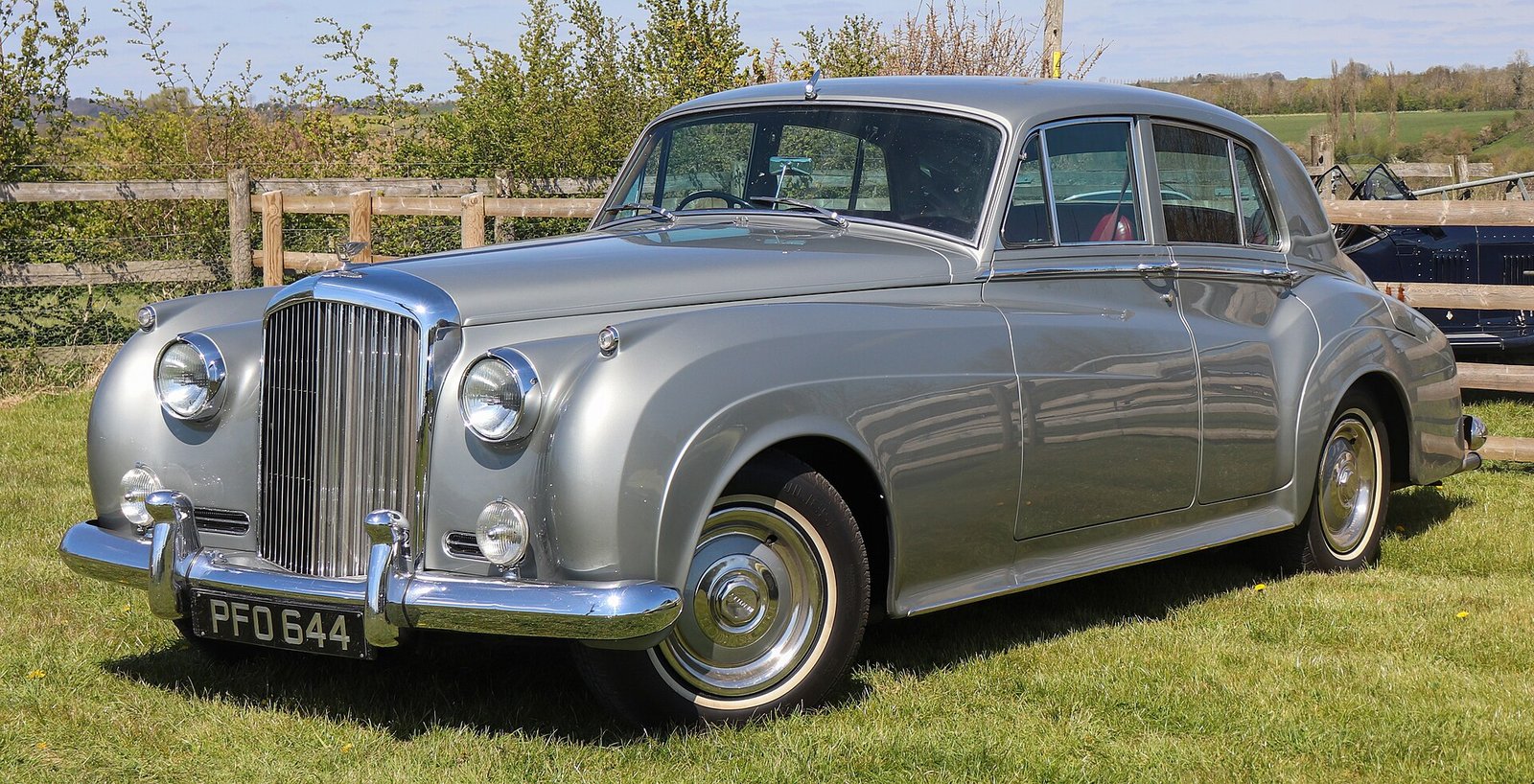
1946–1971Rolls-Royce, CreweAfter the war, car production moved to the Crewe shadow factory, begun in 1938 to build Merlin aero engines. The 1946 Mark VI was the first Bentley with a factory steel body. The R Type Continental (1952) was the fastest four-seater of its day.Inlet-over-exhaust sixes of 4.3–4.9 litres, then the 6.23-litre L-series V8 from the 1959 S2. The T-series of 1965 was Bentley's first monocoque car.
1971–1998Rolls-Royce Motors and VickersRolls-Royce Ltd entered receivership on 4 February 1971 because of the cost of the RB211 jet engine. The car business was separated as Rolls-Royce Motors, floated in 1973 and bought by Vickers in August 1980. The 1982 Mulsanne Turbo and the 1985 Turbo R revived Bentley as the sporting marque. Bentley's share of Crewe output rose from under 5% in 1983 to over 50% by 1989.6.75-litre L410 V8 with Garrett turbocharging, then Bosch MK-Motronic and Zytek EMS3 management. The two-door Continental R (1991) had a body not shared with any Rolls-Royce.
1998–2020Volkswagen AGVolkswagen paid £430 million in 1998, outbidding BMW. Volkswagen got the Crewe factory, the designs and the grille trademarks. BMW separately bought the Rolls-Royce name, and from 1 January 2003 Volkswagen built only Bentleys. The company was renamed Bentley Motors Ltd in 2002. The Speed 8 won Le Mans in 2003. The Continental GT (2003) and Bentayga SUV (2015) transformed volume, with 10,014 deliveries in 2007.More than £1 billion invested at Crewe. The W12 was hand-assembled at Crewe from 2003 to 2024. The L-series V8 ended with the Mulsanne in 2020. The VW D1 and MLB Evo platforms were followed by the Porsche-developed MSB platform.
2021–presentAudi-ledAudi took management responsibility on 1 March 2021, and Bentley joined Audi's Brand Group Progressive in January 2022. In 2020 the Beyond100 plan targeted an electric-only range by 2030. Beyond100+ (2024) moved this to 2035, a target the press has since described as softened. In March 2026 Bentley cancelled four planned EVs and said its second EV will not come before 2030. The Torcal SUV was revealed on 23 September 2026, with deliveries due in 2027.The last W12 was built in 2024. Plug-in hybrid V8 and V6 powertrains replaced it. Building A1 at Crewe was rebuilt for EV assembly. The Torcal uses the 800-volt PPE platform.Le Mans resultsYearCarWinning drivers
19243 LitreJohn Duff, Frank Clement
19273 Litre Super Sports ("Old No. 7")S. C. H. Davis, Dudley Benjafield
19284½ LitreWoolf Barnato, Bernard Rubin
1929Speed Six "Old Number One" (4½ Litres 2nd to 4th)Woolf Barnato, Henry Birkin
1930Speed Six "Old Number Two"Woolf Barnato, Glen Kidston
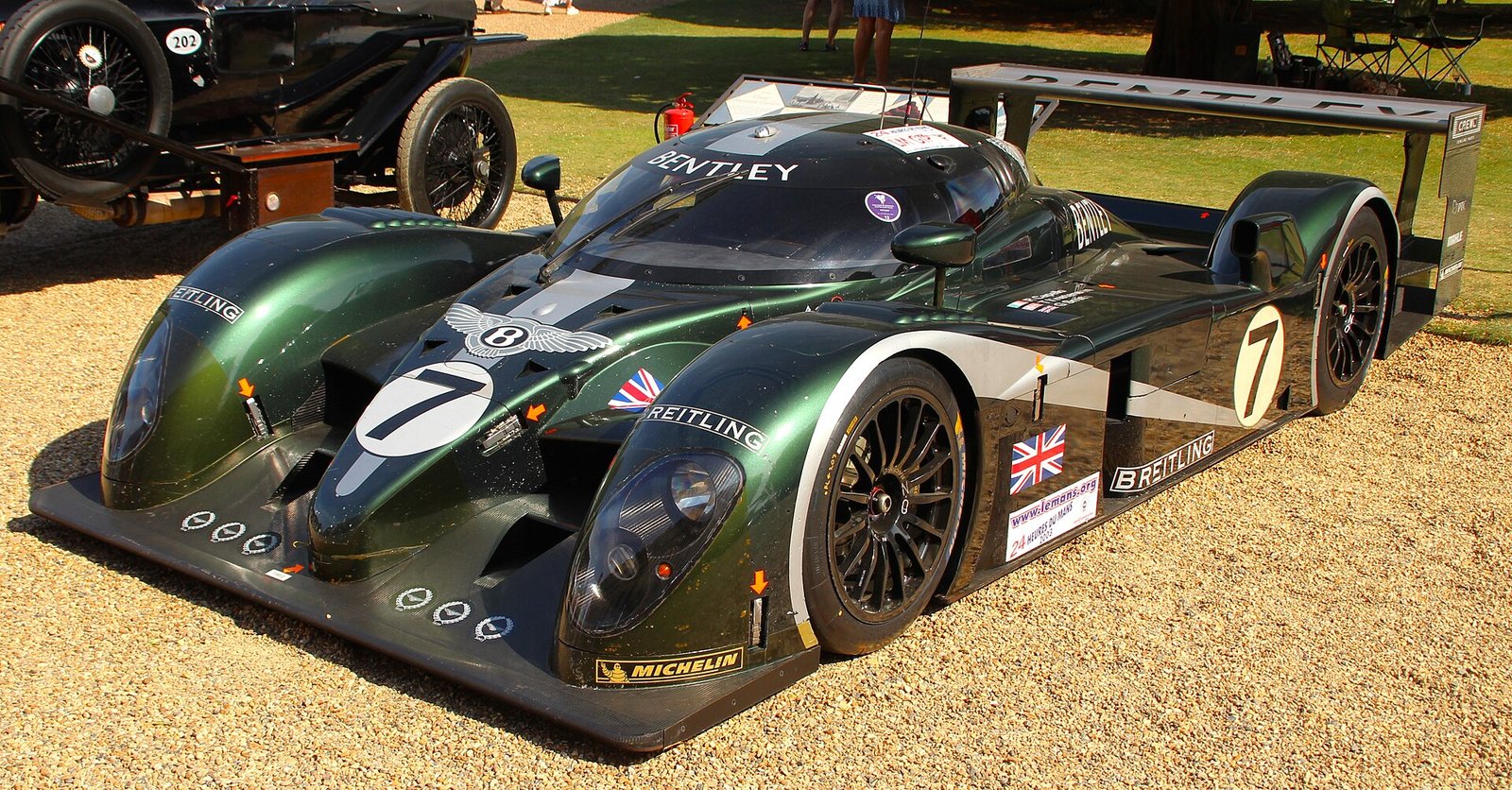
2003Speed 8 (1st and 2nd)Rinaldo Capello, Tom Kristensen, Guy SmithThe EXP Speed 8 finished third in 2001 and fourth in 2002. It was built by Racing Technology Norfolk around an Audi R8-derived twin-turbo V8.DeliveriesAnnual deliveries:2007: 10,014
2009: 4,616
2014: 11,020
2021: 14,659
2022: 15,174 (record)
2023: 13,560
2024: about 10,600In 2025 deliveries fell a further 5%; production was 10,428. Revenue was €2.6 billion and operating profit €216 million. Bentley employs about 4,000 people.Models and enginesThe table lists every production model family with its years, engine and approximate output. Numbers built are given where sources agree. Rolls-Royce published no power figures before about 1990, so earlier outputs are estimates. Engine management for each model is listed in Bentley engines and engine management.Cricklewood: W. O. Bentley's cars (1921–1931)These cars were sold as rolling chassis and bodied by coachbuilders such as Vanden Plas, H. J. Mulliner and Gurney Nutting.ModelYearsEngineOutputBuilt
3 Litre (incl. Speed Model, Super Sports)1921–292,996 cc SOHC 16-valve I4about 70–85 hp1,622
4½ Litre1927–314,398 cc SOHC I4, twin SU110 hp (racing 130 hp)655
4½ Litre supercharged ("Blower")1929–314,398 cc I4, Amherst Villiers Roots supercharger175 hp (racing 240 hp)55 (plus 12 continuation cars, 2019–20)
6½ Litre1926–306,597 cc SOHC I6147 hp363
Speed Six1928–306,597 cc I6, twin carburettors180–200 hp182
8 Litre1930–317,983 cc SOHC I6220 bhp100
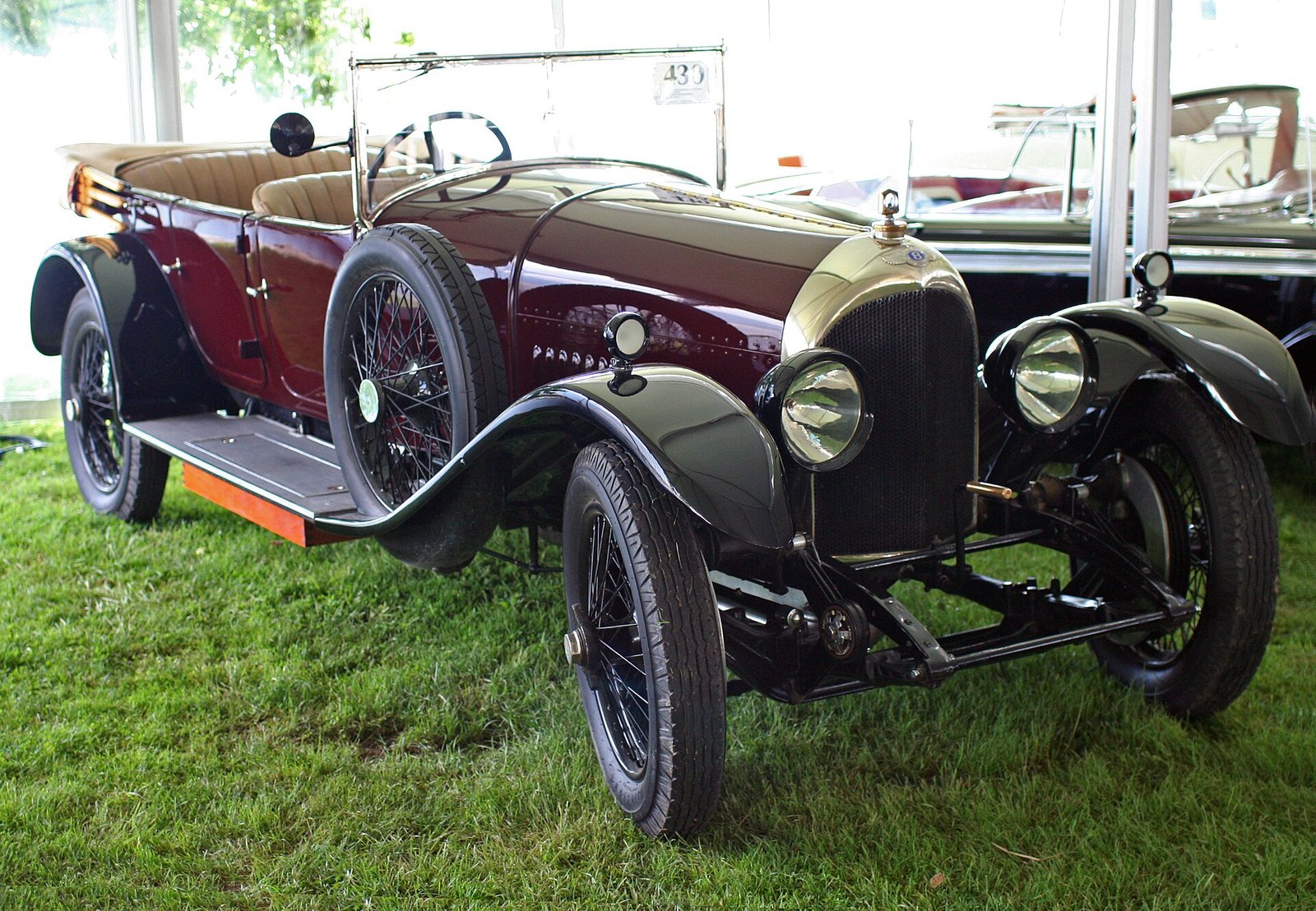
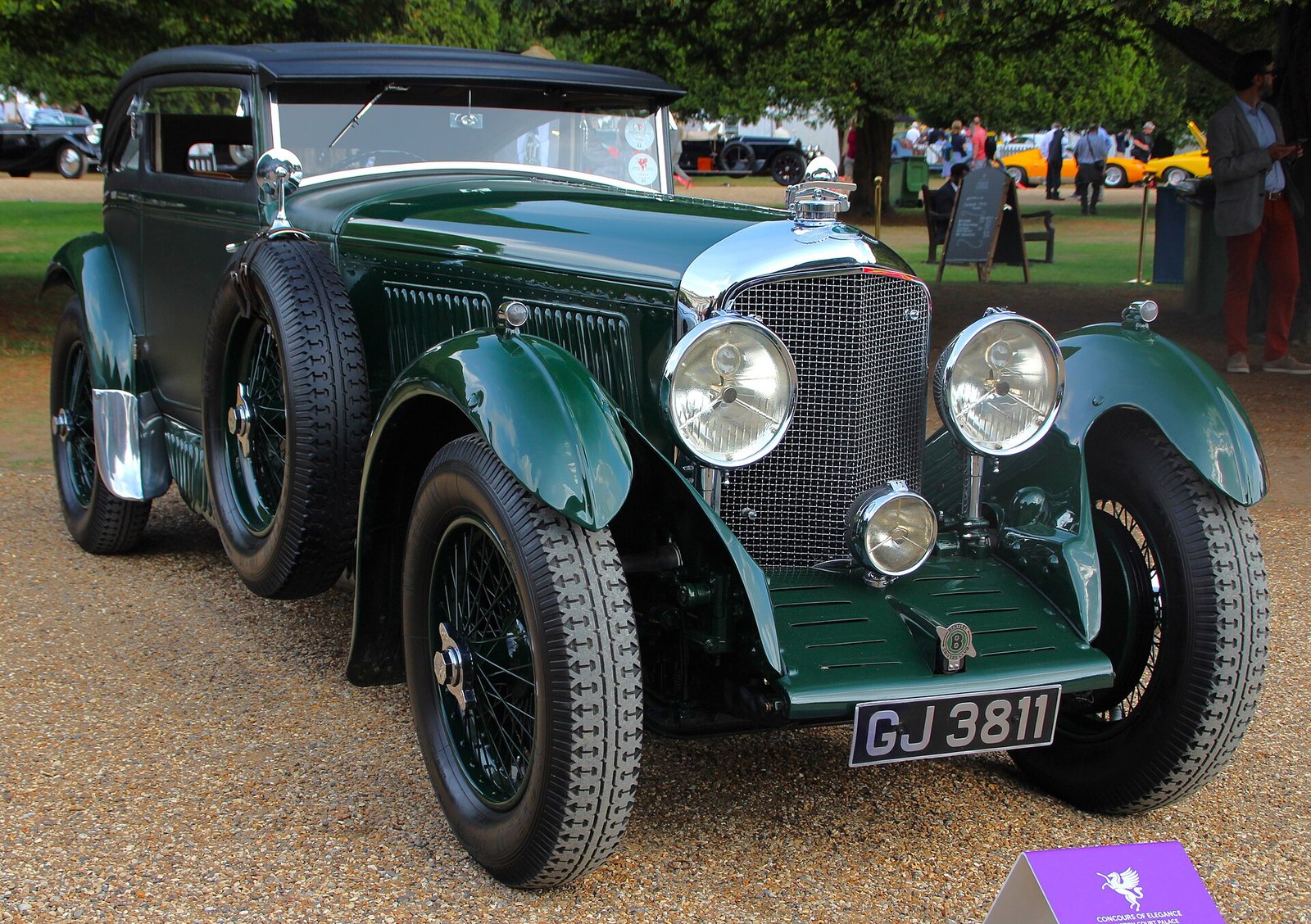
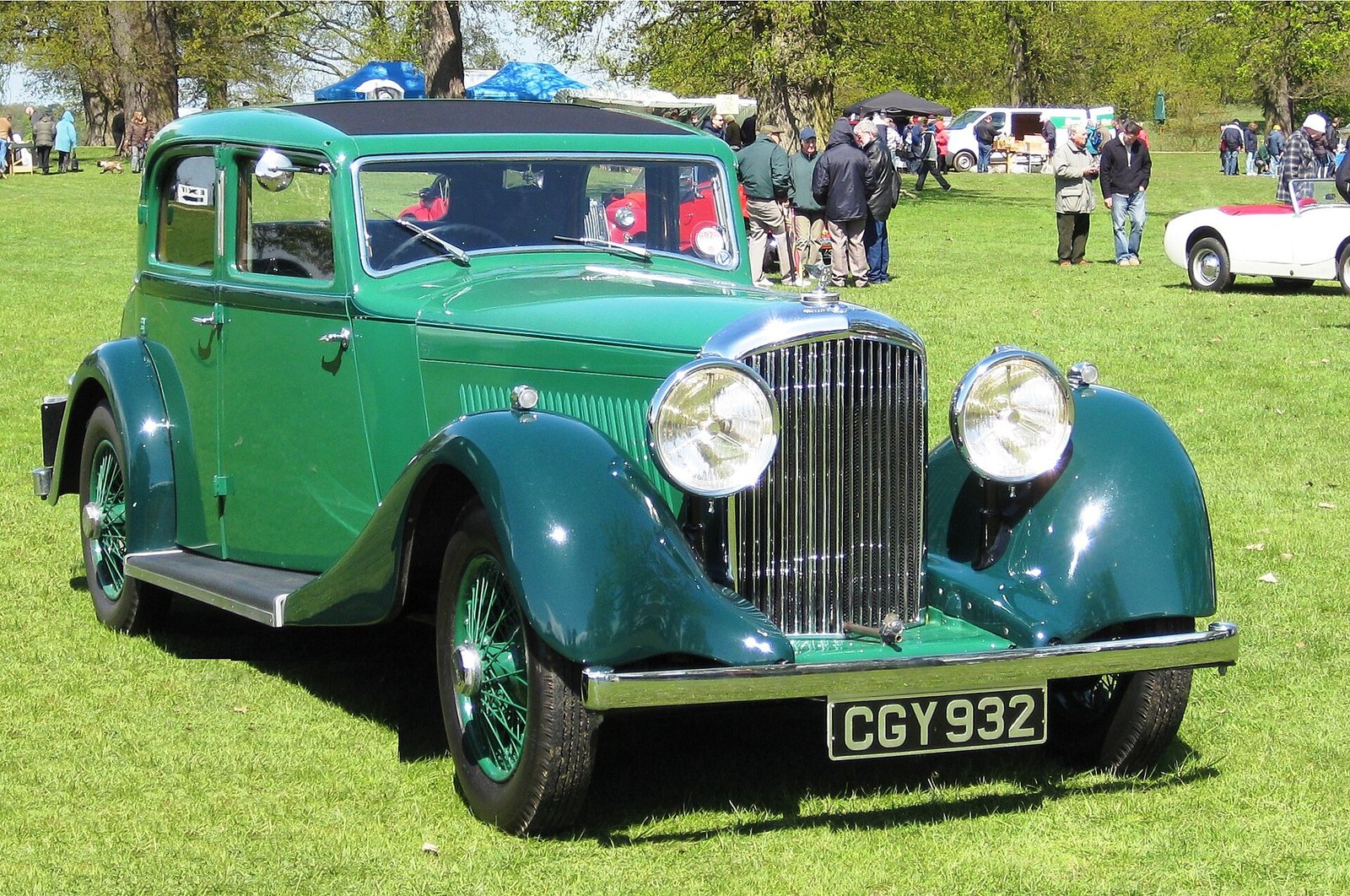
4 Litre19313,915 cc Ricardo-designed IOE I6120 bhpabout 50A 1924 Bentley 3 Litre sports tourer, bodied by Park Ward. Photo: Mr.choppers, Wikimedia Commons, CC BY-SA 3.0; resized and re-encoded.A 1930 Bentley Speed Six, the Gurney Nutting "Blue Train" coupé (GJ 3811). Photo: MrWalkr, Wikimedia Commons, CC BY-SA 4.0; resized and re-encoded.The Bentley 8 Litre Weymann saloon by H. J. Mulliner (GK 706), W. O. Bentley's own car. Photo: Anton van Luijk, Wikimedia Commons, CC BY 2.0; resized and re-encoded.Rolls-Royce era: Derby and Crewe (1933–1980)ModelYearsEngineNotesBuilt
3½ Litre1933–373,669 cc OHV I6 (from the Rolls-Royce 20/25), twin SU"The Silent Sports Car"; about 110 bhp1,177
4¼ Litre1936–394,257 cc OHV I6Overdrive on MR/MX series from 19381,234
Mark V and Corniche1939–414,257 cc OHV I6First Bentley with independent front suspension. The streamlined Corniche prototype was destroyed in 1939 and recreated by Mulliner in 2019.about 11–17 completed (sources conflict)
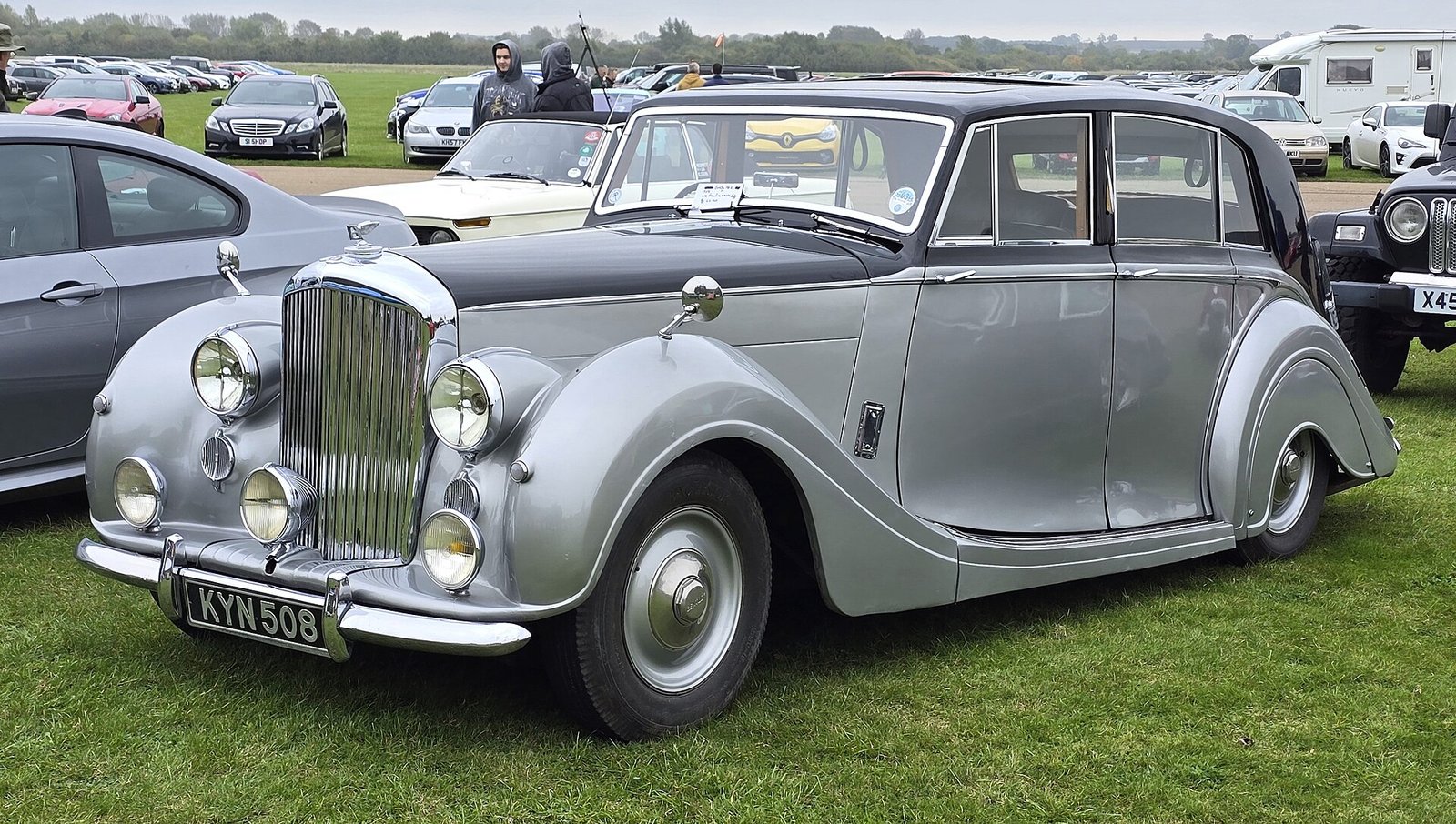
Mark VI1946–524,257 cc, later 4,566 cc, IOE I6First factory steel body (Pressed Steel); many coachbuilt bodies5,208
R Type1952–554,566 cc IOE I6Longer boot; optional GM Hydramatic2,323
R Type Continental1952–554,566 cc, then 4,887 cc, IOE I6H. J. Mulliner fastback built for 120 mph208
S1 and S1 Continental1955–594,887 cc IOE I6Twin of the Silver Cloud; automatic gearbox standard3,538 S1; 431 Continental
S2 and S2 Continental1959–626,230 cc L-series V8First Bentley V81,920 S2; 388 Continental
S3 and S3 Continental1962–666,230 cc V8 (9:1 compression)Four headlamps1,318 S3; 311 Continental
T1 / T21965–806,230 cc, then 6,750 cc, V8Monocoque twin of the Silver Shadowabout 1,860 T1; 568 T2
Corniche, then Continental convertible1971–956,750 cc V8 (K-Jetronic from 1977)Coupé and convertible; Continental Turbo 1992–95 (8 built)about 140 Corniche; 421 ContinentalA 1935 Derby Bentley 3½ Litre with Park Ward saloon body. Photo: Charles01, Wikimedia Commons, CC BY-SA 3.0; resized and re-encoded.A 1950 Bentley Mark VI. Photo: MrWalkr, Wikimedia Commons, CC BY-SA 4.0; resized and re-encoded.A 1953 Bentley R Type Continental. Photo: MrWalkr, Wikimedia Commons, CC BY-SA 4.0; resized and re-encoded.A 1961 Bentley S2, the first Bentley with the 6.23-litre V8. Photo: Vauxford, Wikimedia Commons, CC BY-SA 4.0; resized and re-encoded.A 1970 Bentley T1 (6,230 cc). Photo: Charles01, Wikimedia Commons, CC BY-SA 3.0; resized and re-encoded.Crewe V8 revival (1980–2011)ModelYearsEngineOutputBuilt
Mulsanne / Mulsanne S1980–926.75 V8, SU carburettors, later Bosch injectionabout 172 PS533 Mulsanne; 970 Mulsanne S
Mulsanne Turbo1982–856.75 V8, Garrett turbo, blow-through Solex carburettorabout 300 hp516
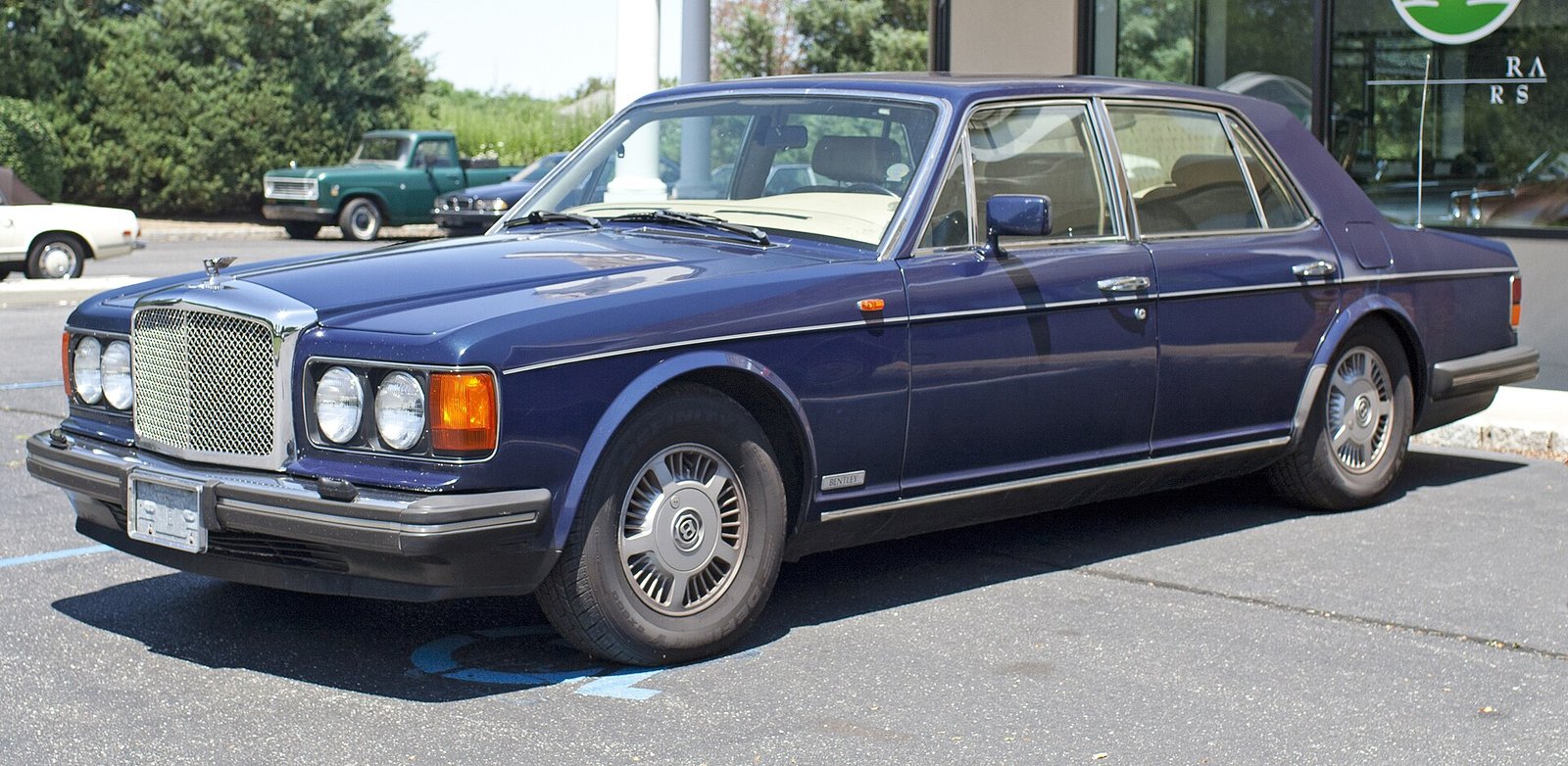
Eight1984–926.75 V8, K-Jetronic—1,736
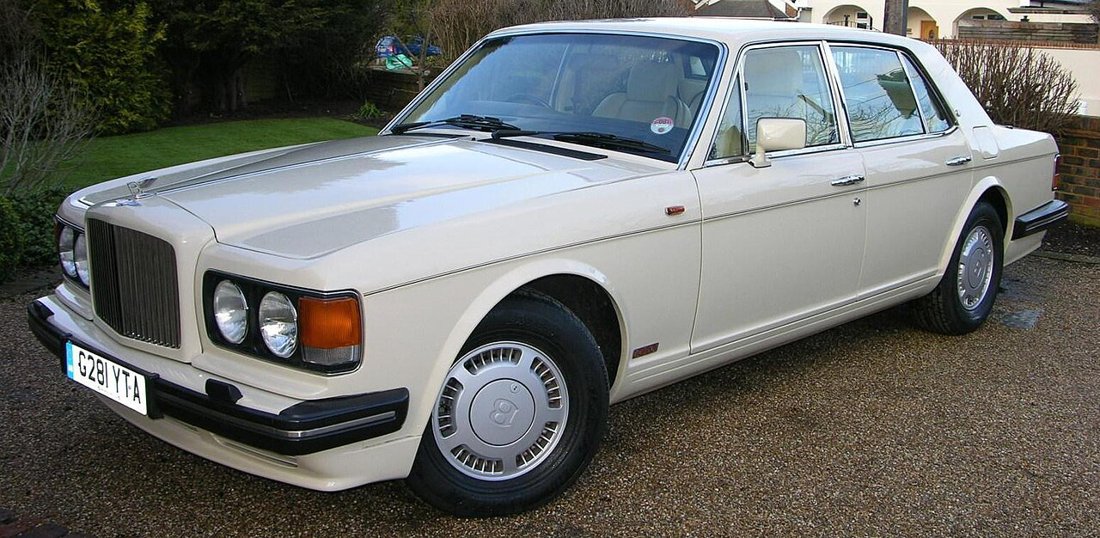
Turbo R / RL1985–976.75 turbo V8, MK-Motronic (MY1987), Zytek (MY1996)about 296–385 hp7,230
Turbo S / RT / RT Mulliner1995–986.75 turbo V8400–420 bhp60 / 252 / 56
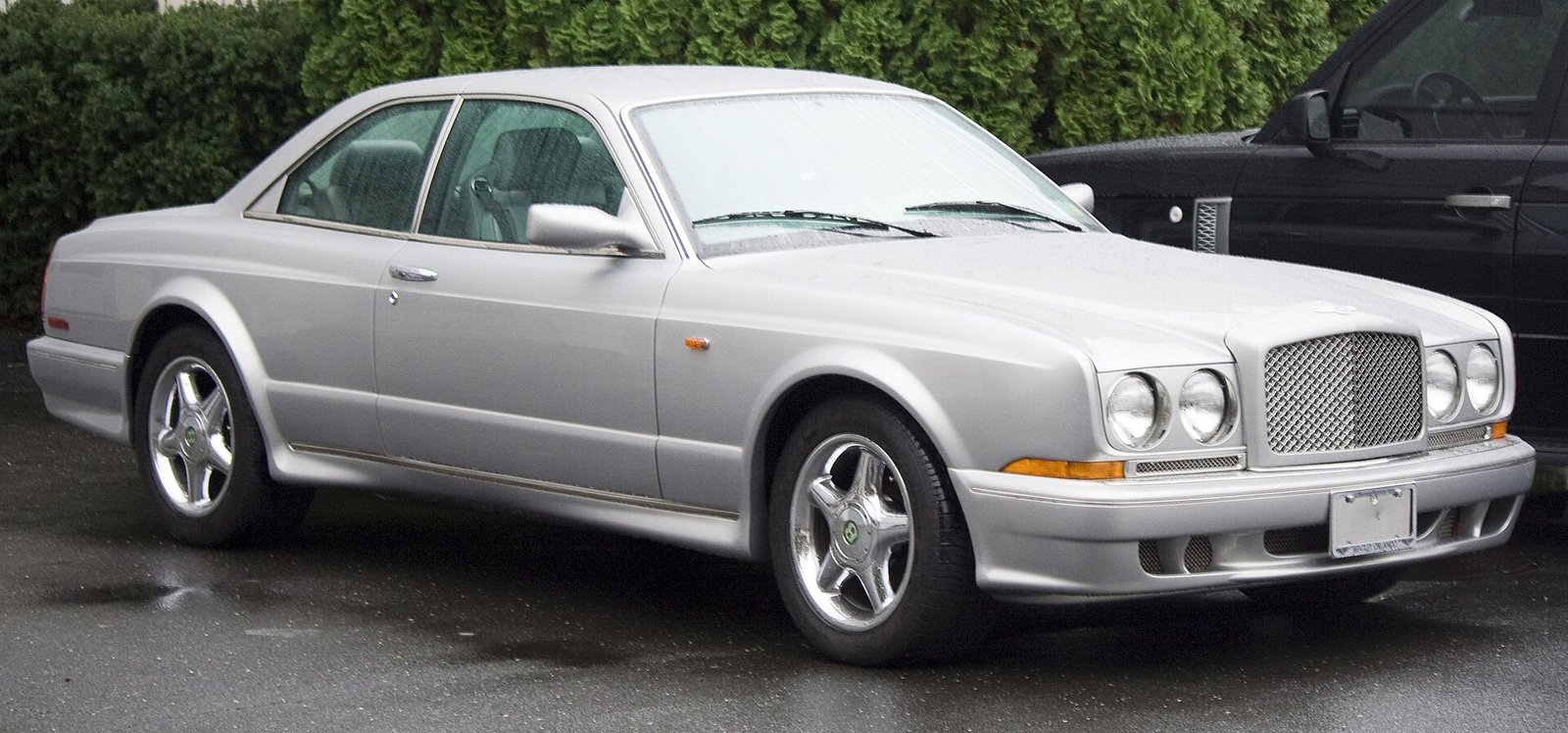
Continental R, S, T, SC, R Mulliner, R Le Mans1991–20036.75 turbo V8325–420 hp1,236 R; 322 T; 73 SC
Brooklands (saloon)1992–986.75 V8; light-pressure turbo from 1996up to 300 bhp—
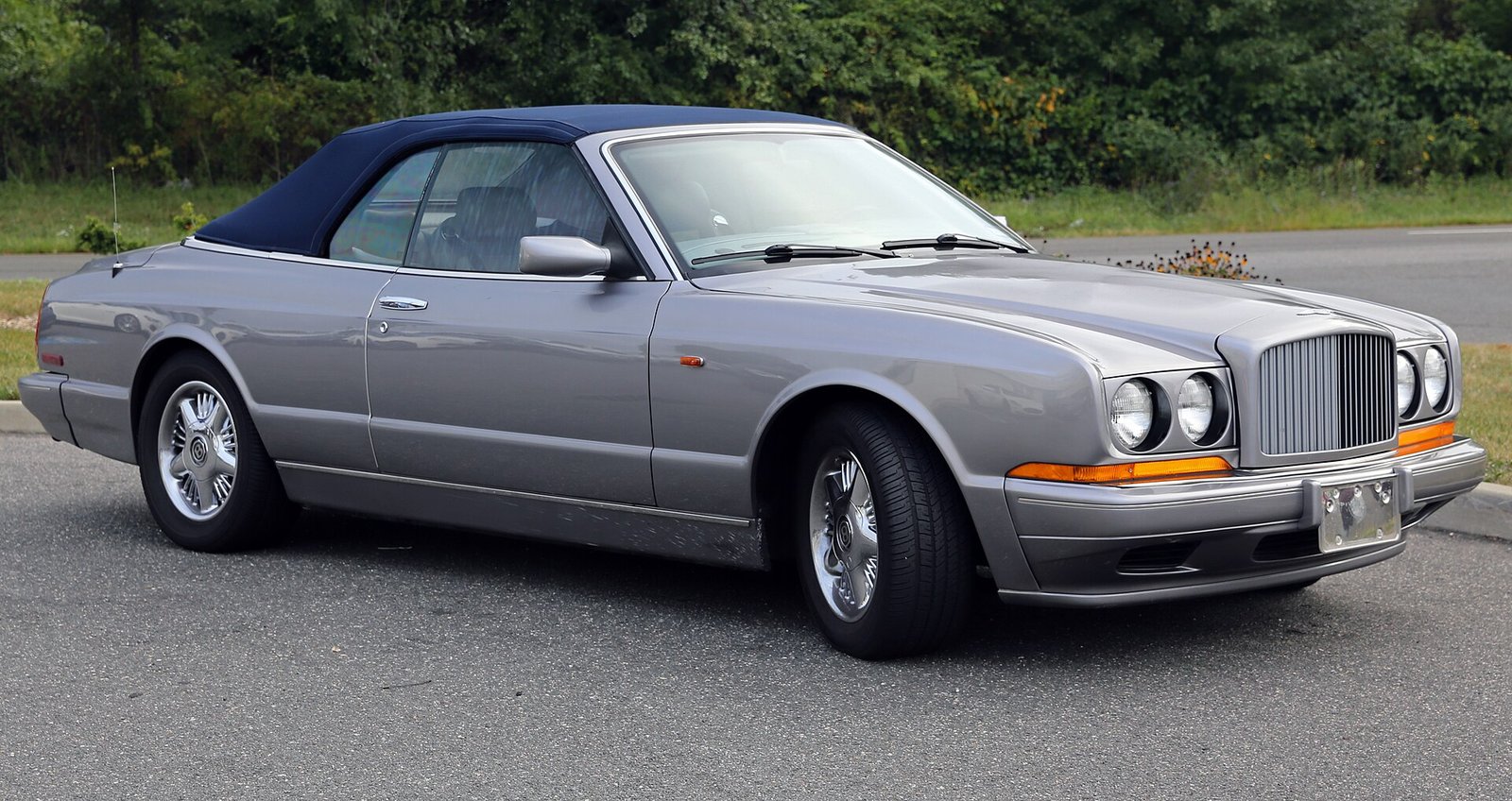
Azure1995–20036.75 turbo V8 (Pininfarina-built convertible body)365–390 PS1,403
Arnage (4.4, retrospectively "Green Label"; Birkin)1998–2000BMW M62 4.4 twin-turbo V8 (Cosworth)354 PSDisputed
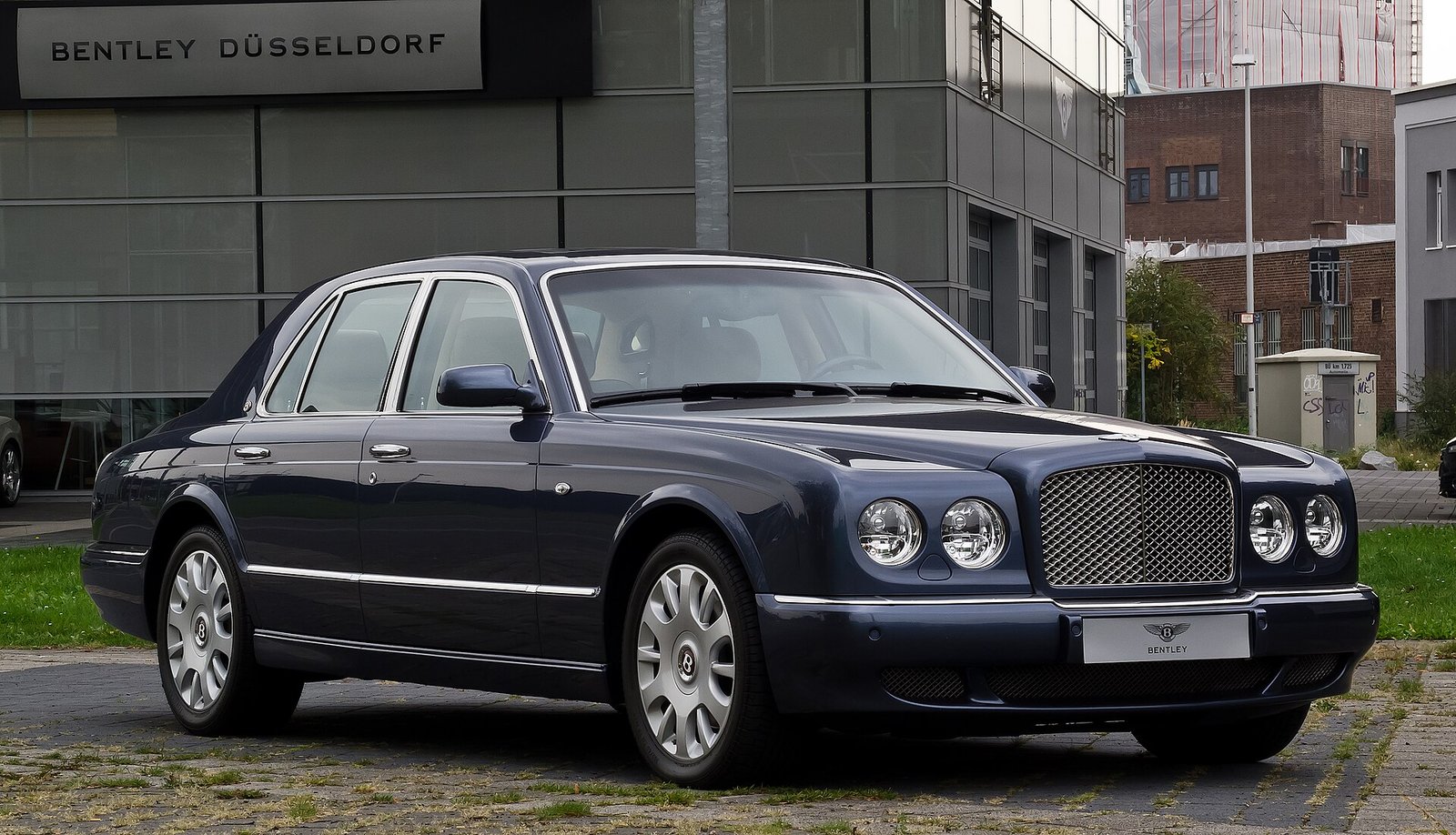
Arnage Red Label, RL, R, T, Final Series1999–20096.75 V8, single then twin turbo405–507 PS—
State Limousine20026.75 twin-turbo V8400 hp2
Azure (second generation), Azure T2006–106.75 twin-turbo V8456–507 PSabout 787
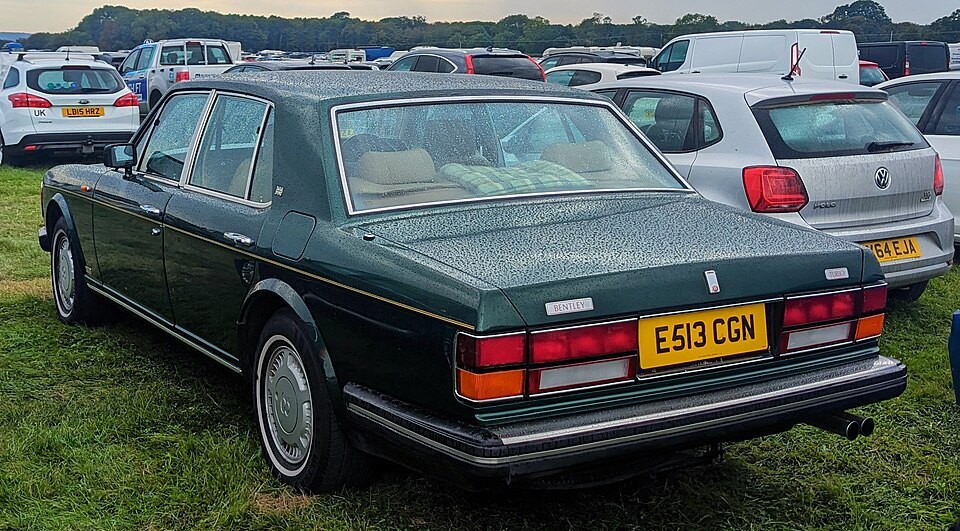
Brooklands coupé2008–116.75 twin-turbo V8530 bhp / 1,050 Nm550 plannedA 1990 Bentley Turbo R. Photo: The Car Spy, Wikimedia Commons, CC BY 2.0; resized and re-encoded.A 1989 Bentley Eight. Photo: Mr.choppers, Wikimedia Commons, CC BY-SA 3.0; resized and re-encoded.A 2000 Bentley Continental R. Photo: Mr.choppers, Wikimedia Commons, CC BY-SA 3.0; resized and re-encoded.A 1996 Bentley Azure. Photo: Mr.choppers, Wikimedia Commons, CC BY-SA 3.0; resized and re-encoded.A facelifted Bentley Arnage R. Photo: M 93, Wikimedia Commons, CC BY-SA 3.0 de; resized and re-encoded.A 2010-generation Bentley Mulsanne, the last car with the L-series V8. Photo: M 93, Wikimedia Commons, CC BY-SA 3.0 de; resized and re-encoded.Volkswagen era (2003–present)ModelYearsEnginesOutput
Continental GT / GTC, first generation2003–116.0 W12 twin-turbo560 PS; Speed 610 PS; Supersports 630 PS
Continental Flying Spur, first generation2005–136.0 W12560 PS; Speed 610 PS
Mulsanne (2010), Speed, EWB, Grand Limousine2010–206.75 twin-turbo L-series V8512–537 PS (7,929 built)
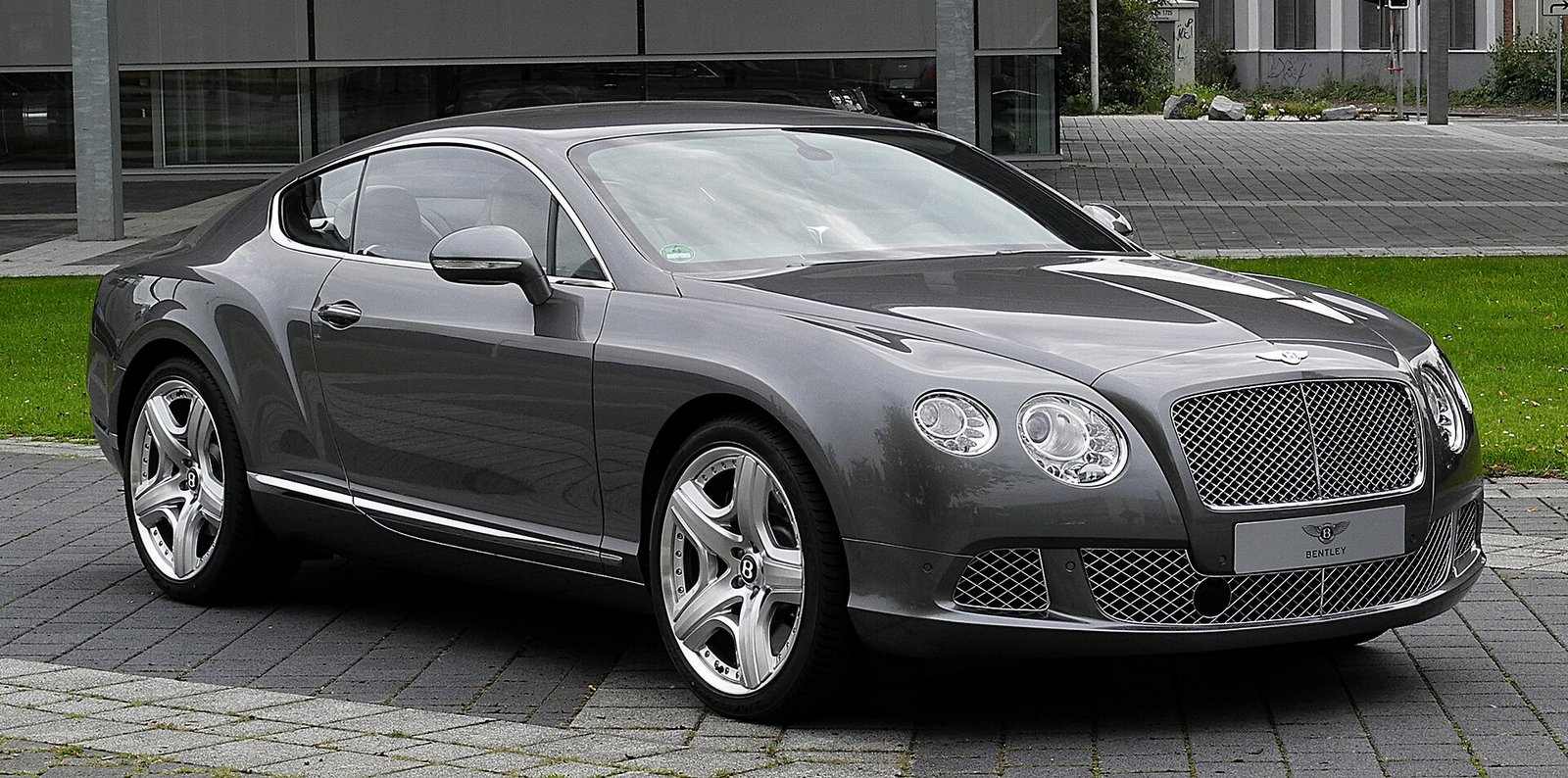
Continental GT / GTC, second generation2011–184.0 V8 twin-turbo; 6.0 W12V8 507–528 PS; W12 575–635 PS; GT3-R 580 PS; Supersports 710 PS
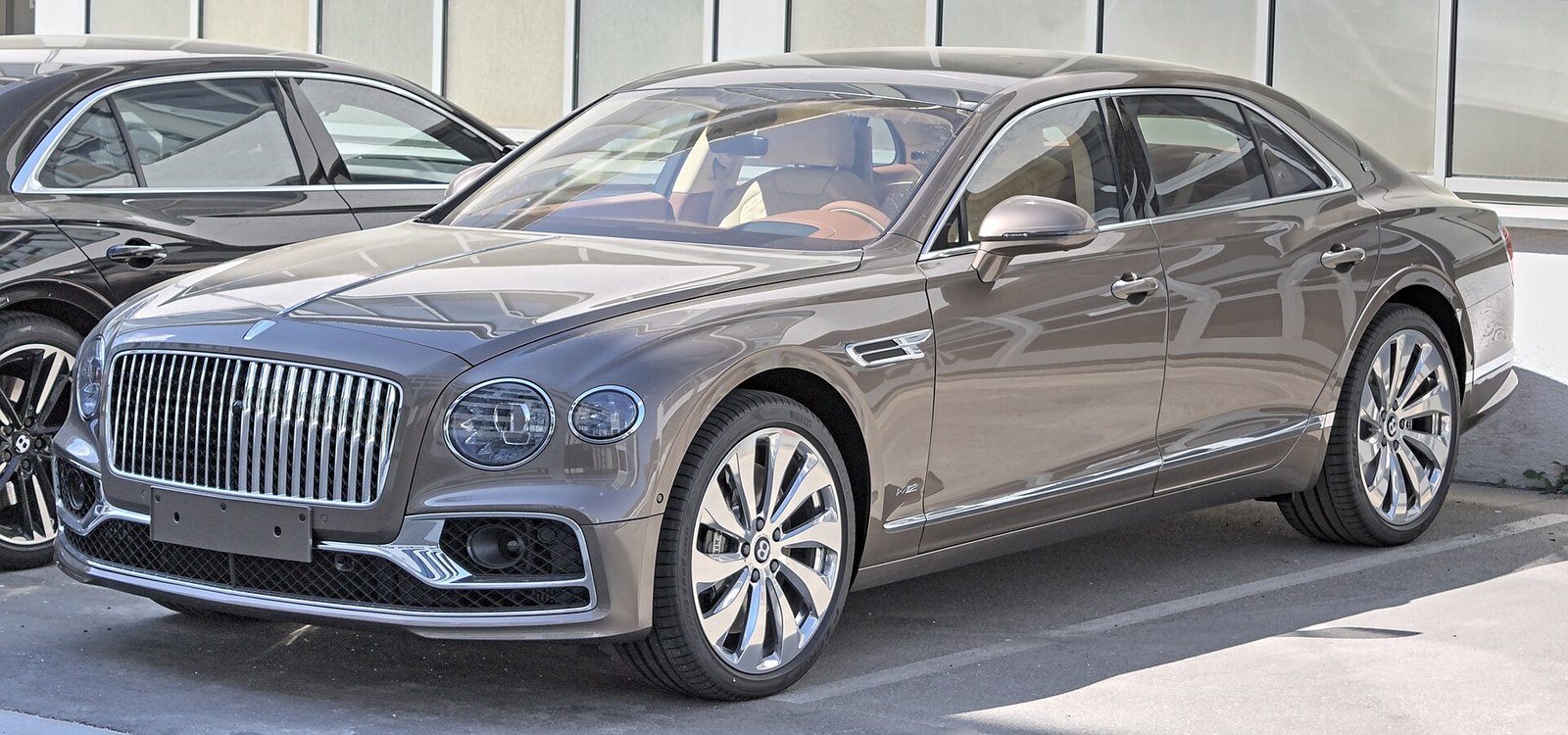
Flying Spur, second generation2013–196.0 W12; 4.0 V8507–635 PS
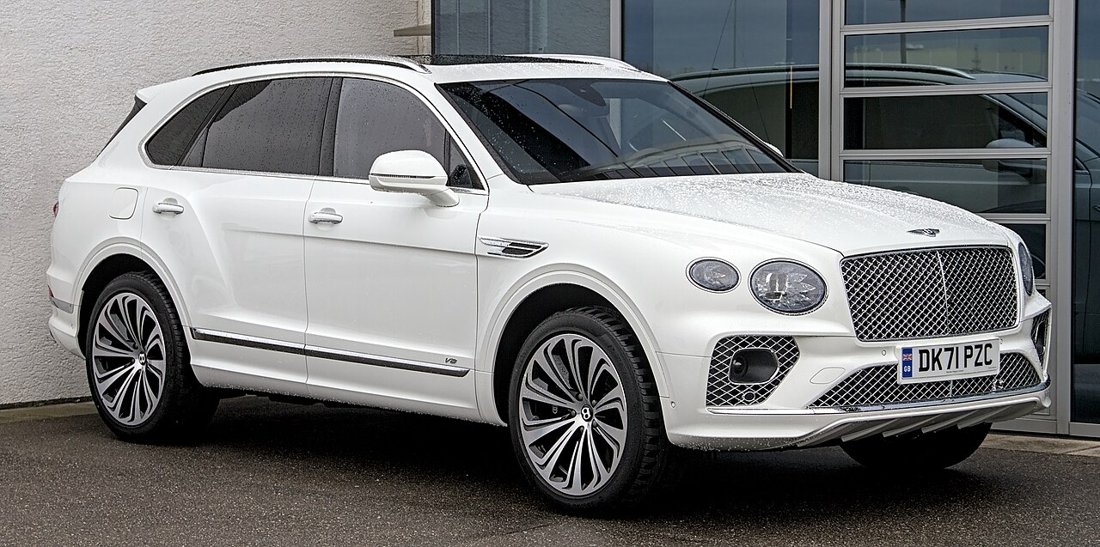
Bentayga, EWB from 20222015–6.0 W12 (to 2024); 4.0 V8; 4.0 V8 TDI diesel (2016–20); 3.0 V6 PHEV (2019–)449–650 PS
Continental GT / GTC, third generation2018–246.0 W12; 4.0 V8V8 550 PS; W12 635–659 PS
Flying Spur, third generation2019–246.0 W12; 4.0 V8; 2.9 V6 PHEV544–635 PS
Mulliner Bacalar / Batur2020 / 20226.0 W12659 PS (12 built) / 740 PS (18 built)
Continental GT / GTC, fourth generation; Flying Spur (2024)2024–4.0 V8 plug-in hybrid680 PS; Speed 782 PS / 1,000 Nm
Continental GT SupersportsRevealed Nov 20254.0 V8, rear-wheel drive, non-hybrid666 PS (500 to be built)
TorcalRevealed Sept 2026Battery-electric, 800 V PPE, 113 kWh604 kW; Torcal S 653 kWConcepts and racing cars of the period include the Hunaudières (1999, 8.0-litre W16), the EXP Speed 8 and Speed 8 (2001–03), and the GT3 Continentals.A second-generation Bentley Continental GT (2011). Photo: M 93, Wikimedia Commons, CC BY-SA 3.0 de; resized and re-encoded.A third-generation Bentley Continental GT First Edition. Photo: Alexandre Prevot from Nancy, France, Wikimedia Commons, CC BY-SA 2.0; resized and re-encoded.A 2019 Bentley Flying Spur. Photo: Alexander Migl, Wikimedia Commons, CC BY-SA 4.0; resized and re-encoded.The 2003 Le Mans-winning Bentley Speed 8 (No. 7). Photo: MrWalkr, Wikimedia Commons, CC BY-SA 4.0; resized and re-encoded.Engine familiesEngine familyConfiguration and yearsFuelling and management
W. O. Bentley fours and sixes3.0 and 4.4 I4; 6.6 and 8.0 I6 SOHC (1919–31)SU carburettors, twin magneto/coil ignition; Roots supercharger on the Blower
Rolls-Royce sixes3.7 and 4.3 OHV; 4.3, 4.6 and 4.9 IOE (1933–59)SU carburettors; Stromberg on some export cars
L-series V86.23 and 6.75 litres (1959–2020)SU carburettors → K-Jetronic → Solex blow-through turbo → MK-Motronic → Zytek EMS3 → ME7.1.1 → ME17/MED17.1.1
BMW M62 twin-turbo4.4 V8 (1998–2000)Bosch Motronic
VW Group W126.0 twin-turbo (2003–24)2 × ME7.1.1 → ME17.1.6 → MED17.1.62 / MG1CS163
VW Group 4.0 V8, 3.0 V6, 4.0 TDI2012 onwardsMED17.1.1, MG1CS008, MG1CS002, MD1CP014A facelifted Bentley Bentayga V8. Photo: Alexander Migl, Wikimedia Commons, CC BY-SA 4.0; resized and re-encoded.Country of origin: United Kingdom. Part of Car makes and the history of the motor car.History and developmentW. O. Bentley founded Bentley Motors in 1919. Early successes at Le Mans helped establish its sporting reputation, followed by a long history of luxury and grand-touring cars. Wikipedia: Bentley history.Bentley has passed through several ownership periods. Its model names cover very different engines, from early supercharged cars to later W12 and V8 grand tourers.A Bentley Continental GT. Photo: Alexandre Prevot from Nancy, France, Wikimedia Commons, CC BY-SA 2.0; resized and re-encoded.Selected cars and enginesExamples are selected rather than a complete production list. Engine and equipment specifications can vary with year and market.CarWhy it mattersEvidence4½ Litre / Blower BentleyThe historic range included supercharged racing-oriented cars as well as naturally aspirated versions.Model referenceContinental GTA modern grand-touring coupé offered in different generations and powertrains.Model referenceBentaygaBentley's SUV range, produced with several engine and hybrid options.Model referenceMulsanneA luxury model name used for distinct Bentley vehicles in different eras.Model referenceMore models and representative enginesThese are specific examples rather than every engine offered. Equipment, output and capacity can change with model year and market; identify the exact vehicle before ordering parts.A Bentley Turbo R. Photo: Calreyn88, Wikimedia Commons, CC BY-SA 4.0; resized and re-encoded.Model and versionEngine or powertrainEvidence4½ Litre BlowerThe historic Blower Bentley used a mechanically supercharged four-cylinder engine of approximately 4.4 litres.Manufacturer or technical sourceContinental GT W12 (first generation)A 6.0-litre twin-turbo W12 engine in the original Continental GT.Manufacturer or technical sourceBentayga V8A 4.0-litre twin-turbocharged V8 in the specified Bentayga version.Manufacturer or technical sourceTurbo RA 6.75-litre turbocharged V8 in the traditional Bentley saloon.Manufacturer or technical source
Identifying a car and engine
Pre-war cars are identified by chassis and engine numbers recorded by the Bentley Drivers Club and the W. O. Bentley Memorial Foundation. Later Crewe-built cars carry a 17-character VIN whose manufacturer prefix is SCB. For Volkswagen-era cars, read the engine code and the ECU identification by diagnostics, because one model year can cover several engine and ECU generations. Some sports Bentleys of the 1920s and 1930s were rebuilt with larger or supercharged engines, and many Derby and Crewe chassis carry later or replacement coachwork. Check provenance before assuming factory specification.Not establishedThe exact registration date of the 1919 company: sources give 18 January, 20 January and 10 July 1919.
Production totals for the Mark V, the BMW-engined Arnage, the Arnage Final Series and the Brooklands saloon. Sources conflict.
Whether Bentley will meet the 2035 electric-only target.SourcesAudi AG, "Bentley Motors Ltd. (United Kingdom)" fact sheet, March 2026; accessed 19 November 2026.
Volkswagen Group, "The history of Bentley", undated; accessed 19 November 2026.
Bentley Drivers Club, Vintage history; accessed 19 November 2026.
Bentley Motors, 2025 results release, 17 March 2026; Heritage Collection: Bacalar; New Bentayga Speed; accessed 19 November 2026.
Audi MediaCenter, "Bentley delivers more cars than ever in 2022", January 2023, and "The new Continental GT Speed", June 2024; accessed 19 November 2026.
WardsAuto, "Bentley's first EV remains on for 2027", 27 March 2026, and 2024 results; accessed 19 November 2026.
Auto Express, "Bentley kills almost all its future EV models", 17 March 2026; The Driven, Beyond100+ delay, 11 November 2024; accessed 19 November 2026.
electrive, "The Torcal: first all-electric Bentley", 24 September 2026; Dezeen, Torcal reveal, 23 September 2026; accessed 19 November 2026.
just-auto, "Bentley makes last W12", July 2024; accessed 19 November 2026.
Autocar NZ, Continental GT Supersports, November 2025; accessed 19 November 2026.
Wikipedia, Bentley, Rolls-Royce Limited, Bentley Speed 8, and the individual model articles; accessed 19 November 2026.
Related: Bentley engines and engine management; Illustrated turbocharged-car timeline; Supercharger types, drives and upgrades.Use the VIN, market, model year and engine code when researching servicing, tuning or parts. A model badge may cover naturally aspirated, turbocharged, supercharged, hybrid or electric versions depending on the particular vehicle. Factory fitment and aftermarket conversions are distinguished in the linked guides.Sources and related readingWikipedia: Bentley — marque history and further references.Tuning Wiki: illustrated turbocharged-car timeline.Tuning Wiki: supercharger types and Eaton guides.
Rendered revisions
Open each version to inspect formatting, tables and photographs.
W. O. Bentley founded Bentley Motors in 1919. Early successes at Le Mans helped establish its sporting reputation, followed by a long history of luxury and grand-touring cars. Wikipedia: Bentley history.
Bentley has passed through several ownership periods. Its model names cover very different engines, from early supercharged cars to later W12 and V8 grand tourers.
A Bentley Continental GT. Photo: Alexandre Prevot from Nancy, France, Wikimedia Commons, CC BY-SA 2.0; resized and re-encoded.
Selected cars and engines
Examples are selected rather than a complete production list. Engine and equipment specifications can vary with year and market.
Car
Why it matters
Evidence
4½ Litre / Blower Bentley
The historic range included supercharged racing-oriented cars as well as naturally aspirated versions.
These are specific examples rather than every engine offered. Equipment, output and capacity can change with model year and market; identify the exact vehicle before ordering parts.
Use the VIN, market, model year and engine code when researching servicing, tuning or parts. A model badge may cover naturally aspirated, turbocharged, supercharged, hybrid or electric versions depending on the particular vehicle. Factory fitment and aftermarket conversions are distinguished in the linked guides.
Bentley Motors Limited is a British maker of luxury grand tourers, saloons and SUVs, based at Pyms Lane, Crewe. W. O. Bentley founded the company in London in 1919. Its overhead-camshaft sports cars won the Le Mans 24 Hours five times between 1924 and 1930. Rolls-Royce bought the company out of receivership in 1931, and for the next 67 years Bentleys were increasingly built as sportier versions of Rolls-Royce cars, first at Derby and from 1946 at Crewe. Volkswagen AG bought the company in 1998. Under Volkswagen, Bentley moved to the twin-turbo W12 and the Continental GT and reached a record 15,174 deliveries in 2022. Audi took over management responsibility in 2021. In 2026 the company revealed its first battery-electric car, the Torcal.
A 1931 Bentley 4½ Litre supercharged "Blower", with the Amherst Villiers supercharger ahead of the radiator. Photo: MrWalkr, Wikimedia Commons, CC BY-SA 4.0; resized and re-encoded.W. O. Bentley, about 1921. Photo: Unknown author, Wikimedia Commons, public domain.
History and ownership eras
Era
Ownership and milestones
Engineering and plants
1919–1931 W. O. Bentley, Cricklewood
The company was founded in January 1919. Sources give the formal registration as mid-1919 (Audi's fact sheet says 10 July 1919). The 3 Litre was shown at the London Motor Show in November 1919, and the first customer car was delivered in 1921. In 1926 the financier Woolf Barnato bought control and became chairman. The "Bentley Boys" won Le Mans in 1924, 1927, 1928, 1929 and 1930, taking the first four places in 1929. The Depression and the costly 8 Litre left the company in receivership on 10 July 1931.
Oxgate Lane works, Cricklewood, from 1920. Overhead-camshaft, four-valve, twin-plug fours and sixes from 3 to 8 litres; Amherst Villiers supercharged "Blower" 4½ Litres built for Birkin's team at Welwyn.
1931–1939 Rolls-Royce, Derby
In November 1931 Rolls-Royce bought the assets for about £125,000 through a sealed bid placed by the British Central Equitable Trust, and formed Bentley Motors (1931) Ltd. W. O. Bentley stayed on until April 1935, then moved to Lagonda.
The Derby-built 3½ Litre of 1933 was sold as "The Silent Sports Car". It was followed by the 4¼ Litre and the Mark V. All used Rolls-Royce OHV sixes in a Bentley chassis.
1946–1971 Rolls-Royce, Crewe
After the war, car production moved to the Crewe shadow factory, begun in 1938 to build Merlin aero engines. The 1946 Mark VI was the first Bentley with a factory steel body. The R Type Continental (1952) was the fastest four-seater of its day.
Inlet-over-exhaust sixes of 4.3–4.9 litres, then the 6.23-litre L-series V8 from the 1959 S2. The T-series of 1965 was Bentley's first monocoque car.
1971–1998 Rolls-Royce Motors and Vickers
Rolls-Royce Ltd entered receivership on 4 February 1971 because of the cost of the RB211 jet engine. The car business was separated as Rolls-Royce Motors, floated in 1973 and bought by Vickers in August 1980. The 1982 Mulsanne Turbo and the 1985 Turbo R revived Bentley as the sporting marque. Bentley's share of Crewe output rose from under 5% in 1983 to over 50% by 1989.
6.75-litre L410 V8 with Garrett turbocharging, then Bosch MK-Motronic and Zytek EMS3 management. The two-door Continental R (1991) had a body not shared with any Rolls-Royce.
1998–2020 Volkswagen AG
Volkswagen paid £430 million in 1998, outbidding BMW. Volkswagen got the Crewe factory, the designs and the grille trademarks. BMW separately bought the Rolls-Royce name, and from 1 January 2003 Volkswagen built only Bentleys. The company was renamed Bentley Motors Ltd in 2002. The Speed 8 won Le Mans in 2003. The Continental GT (2003) and Bentayga SUV (2015) transformed volume, with 10,014 deliveries in 2007.
More than £1 billion invested at Crewe. The W12 was hand-assembled at Crewe from 2003 to 2024. The L-series V8 ended with the Mulsanne in 2020. The VW D1 and MLB Evo platforms were followed by the Porsche-developed MSB platform.
2021–present Audi-led
Audi took management responsibility on 1 March 2021, and Bentley joined Audi's Brand Group Progressive in January 2022. In 2020 the Beyond100 plan targeted an electric-only range by 2030. Beyond100+ (2024) moved this to 2035, a target the press has since described as softened. In March 2026 Bentley cancelled four planned EVs and said its second EV will not come before 2030. The Torcal SUV was revealed on 23 September 2026, with deliveries due in 2027.
The last W12 was built in 2024. Plug-in hybrid V8 and V6 powertrains replaced it. Building A1 at Crewe was rebuilt for EV assembly. The Torcal uses the 800-volt PPE platform.
Le Mans results
Year
Car
Winning drivers
1924
3 Litre
John Duff, Frank Clement
1927
3 Litre Super Sports ("Old No. 7")
S. C. H. Davis, Dudley Benjafield
1928
4½ Litre
Woolf Barnato, Bernard Rubin
1929
Speed Six "Old Number One" (4½ Litres 2nd to 4th)
Woolf Barnato, Henry Birkin
1930
Speed Six "Old Number Two"
Woolf Barnato, Glen Kidston
2003
Speed 8 (1st and 2nd)
Rinaldo Capello, Tom Kristensen, Guy Smith
The EXP Speed 8 finished third in 2001 and fourth in 2002. It was built by Racing Technology Norfolk around an Audi R8-derived twin-turbo V8.
Deliveries
Annual deliveries:
2007: 10,014
2009: 4,616
2014: 11,020
2021: 14,659
2022: 15,174 (record)
2023: 13,560
2024: about 10,600
In 2025 deliveries fell a further 5%; production was 10,428. Revenue was €2.6 billion and operating profit €216 million. Bentley employs about 4,000 people.
Models and engines
The table lists every production model family with its years, engine and approximate output. Numbers built are given where sources agree. Rolls-Royce published no power figures before about 1990, so earlier outputs are estimates. Engine management for each model is listed in Bentley engines and engine management.
Cricklewood: W. O. Bentley's cars (1921–1931)
These cars were sold as rolling chassis and bodied by coachbuilders such as Vanden Plas, H. J. Mulliner and Gurney Nutting.
A 1924 Bentley 3 Litre sports tourer, bodied by Park Ward. Photo: Mr.choppers, Wikimedia Commons, CC BY-SA 3.0; resized and re-encoded.A 1930 Bentley Speed Six, the Gurney Nutting "Blue Train" coupé (GJ 3811). Photo: MrWalkr, Wikimedia Commons, CC BY-SA 4.0; resized and re-encoded.The Bentley 8 Litre Weymann saloon by H. J. Mulliner (GK 706), W. O. Bentley's own car. Photo: Anton van Luijk, Wikimedia Commons, CC BY 2.0; resized and re-encoded.
Rolls-Royce era: Derby and Crewe (1933–1980)
Model
Years
Engine
Notes
Built
3½ Litre
1933–37
3,669 cc OHV I6 (from the Rolls-Royce 20/25), twin SU
"The Silent Sports Car"; about 110 bhp
1,177
4¼ Litre
1936–39
4,257 cc OHV I6
Overdrive on MR/MX series from 1938
1,234
Mark V and Corniche
1939–41
4,257 cc OHV I6
First Bentley with independent front suspension. The streamlined Corniche prototype was destroyed in 1939 and recreated by Mulliner in 2019.
about 11–17 completed (sources conflict)
Mark VI
1946–52
4,257 cc, later 4,566 cc, IOE I6
First factory steel body (Pressed Steel); many coachbuilt bodies
5,208
R Type
1952–55
4,566 cc IOE I6
Longer boot; optional GM Hydramatic
2,323
R Type Continental
1952–55
4,566 cc, then 4,887 cc, IOE I6
H. J. Mulliner fastback built for 120 mph
208
S1 and S1 Continental
1955–59
4,887 cc IOE I6
Twin of the Silver Cloud; automatic gearbox standard
3,538 S1; 431 Continental
S2 and S2 Continental
1959–62
6,230 cc L-series V8
First Bentley V8
1,920 S2; 388 Continental
S3 and S3 Continental
1962–66
6,230 cc V8 (9:1 compression)
Four headlamps
1,318 S3; 311 Continental
T1 / T2
1965–80
6,230 cc, then 6,750 cc, V8
Monocoque twin of the Silver Shadow
about 1,860 T1; 568 T2
Corniche, then Continental convertible
1971–95
6,750 cc V8 (K-Jetronic from 1977)
Coupé and convertible; Continental Turbo 1992–95 (8 built)
Concepts and racing cars of the period include the Hunaudières (1999, 8.0-litre W16), the EXP Speed 8 and Speed 8 (2001–03), and the GT3 Continentals.
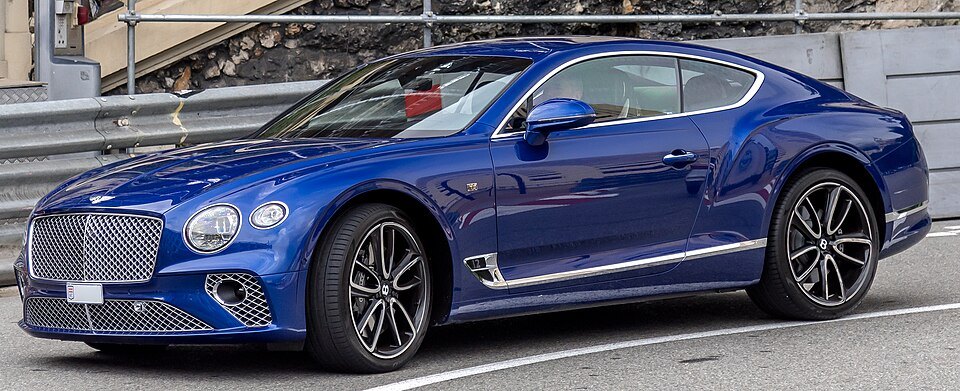
A second-generation Bentley Continental GT (2011). Photo: M 93, Wikimedia Commons, CC BY-SA 3.0 de; resized and re-encoded.A third-generation Bentley Continental GT First Edition. Photo: Alexandre Prevot from Nancy, France, Wikimedia Commons, CC BY-SA 2.0; resized and re-encoded.A 2019 Bentley Flying Spur. Photo: Alexander Migl, Wikimedia Commons, CC BY-SA 4.0; resized and re-encoded.The 2003 Le Mans-winning Bentley Speed 8 (No. 7). Photo: MrWalkr, Wikimedia Commons, CC BY-SA 4.0; resized and re-encoded.
Engine families
Engine family
Configuration and years
Fuelling and management
W. O. Bentley fours and sixes
3.0 and 4.4 I4; 6.6 and 8.0 I6 SOHC (1919–31)
SU carburettors, twin magneto/coil ignition; Roots supercharger on the Blower
Pre-war cars are identified by chassis and engine numbers recorded by the Bentley Drivers Club and the W. O. Bentley Memorial Foundation. Later Crewe-built cars carry a 17-character VIN whose manufacturer prefix is SCB. For Volkswagen-era cars, read the engine code and the ECU identification by diagnostics, because one model year can cover several engine and ECU generations. Some sports Bentleys of the 1920s and 1930s were rebuilt with larger or supercharged engines, and many Derby and Crewe chassis carry later or replacement coachwork. Check provenance before assuming factory specification.
Not established
The exact registration date of the 1919 company: sources give 18 January, 20 January and 10 July 1919.
Production totals for the Mark V, the BMW-engined Arnage, the Arnage Final Series and the Brooklands saloon. Sources conflict.
Whether Bentley will meet the 2035 electric-only target.