Country of origin: Italy. Part of Car makes and the history of the motor car.
History and development
Alfa Romeo began in Milan in 1910 as A.L.F.A.; Nicola Romeo's involvement later gave the marque its familiar name. Racing and sporting road cars became important parts of its identity. Wikipedia: Alfa Romeo history.
Its cars have included rear-wheel-drive classics, front-wheel-drive family models and later performance saloons and SUVs. The 156 illustrates the marque's contribution to modern diesel development.


Selected cars and engines
Examples are selected rather than a complete production list. Engine and equipment specifications can vary with year and market.
| Car | Why it matters | Evidence |
|---|---|---|
| 156 JTD (1997) | Launch engines included a 1.9-litre four and 2.4-litre five-cylinder turbo diesel with common-rail injection and intercooling. | Illustrated turbo history |
| Giulia | The name has been used for distinct generations of Alfa Romeo saloon; do not assume common engines between eras. | Model reference |
| Spider | The long-running open sports car appeared in several series and engine versions. | Model reference |
| Giulietta | A historic model name revived on later Alfa hatchbacks; specifications depend on generation. | Model reference |
More models and representative engines
These are specific examples rather than every engine offered. Equipment, output and capacity can change with model year and market; identify the exact vehicle before ordering parts.

| Model and version | Engine or powertrain | Evidence |
|---|---|---|
| 147 GTA | A 3.2-litre naturally aspirated V6 in the GTA hot hatch. | Manufacturer or technical source |
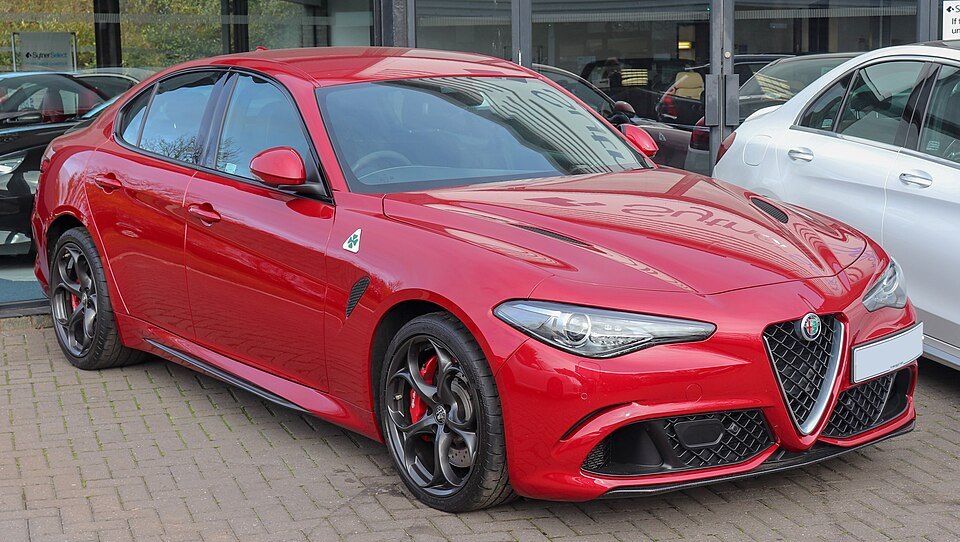
| Giulia Quadrifoglio | A 2.9-litre twin-turbocharged V6 in the performance saloon. | Manufacturer or technical source |
| 4C | A mid-mounted 1.75-litre turbocharged four-cylinder petrol engine. | Manufacturer or technical source |
| 75 3.0 V6 | A 3.0-litre naturally aspirated V6 in the specified rear-wheel-drive 75 version. | Manufacturer or technical source |
Identifying a car and engine
Use the VIN, market, model year and engine code when researching servicing, tuning or parts. A model badge may cover naturally aspirated, turbocharged, supercharged, hybrid or electric versions depending on the particular vehicle. Factory fitment and aftermarket conversions are distinguished in the linked guides.
Sources and related reading
- Wikipedia: Alfa Romeo — marque history and further references.
- Tuning Wiki: illustrated turbocharged-car timeline.
- Tuning Wiki: supercharger types and Eaton guides.