Removed text is struck through; added text is highlighted.
Country of origin: Germany. Part of Car makes and the history of the motor car.
History and development
Ferdinand Porsche established an engineering business in 1931; Porsche-branded sports-car production began with the 356 in 1948. The 911 followed in 1963 and remains central to the marque's identity. Wikipedia: Porsche history.
Porsche's history includes air-cooled and water-cooled flat engines, racing-led turbo development, front-engined models and later SUVs and electric cars.
Examples are selected rather than a complete production list. Engine and equipment specifications can vary with year and market.
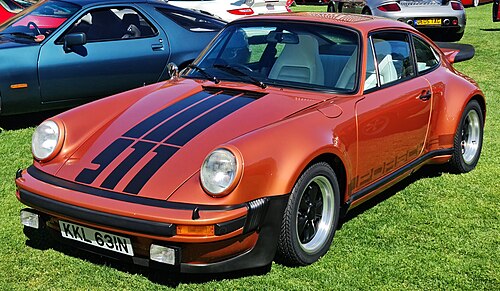
CarWhy it mattersEvidence911 Turbo 930, 3.0 (1974 reveal)A 2,994 cc air-cooled flat-six with one turbo; 1975 deliveries followed the 1974 presentation.Illustrated turbo history911 Turbo 930, 3.3 (1978 model year)The later 3,299 cc version added an intercooler and revised output; it is not identical to the original 3.0.Illustrated turbo history959A 2.85-litre flat-six used sequential twin turbocharging alongside all-wheel drive.Illustrated turbo history911 Turbo 997 (2006)Its 3.6-litre flat-six used twin variable-turbine-geometry turbochargers.Illustrated turbo history356 / 911The early 356 and the long-running 911 illustrate the development of Porsche's rear-engined road cars.Model reference
More models and representative engines
These are specific examples rather than every engine offered. Equipment, output and capacity can change with model year and market; identify the exact vehicle before ordering parts.
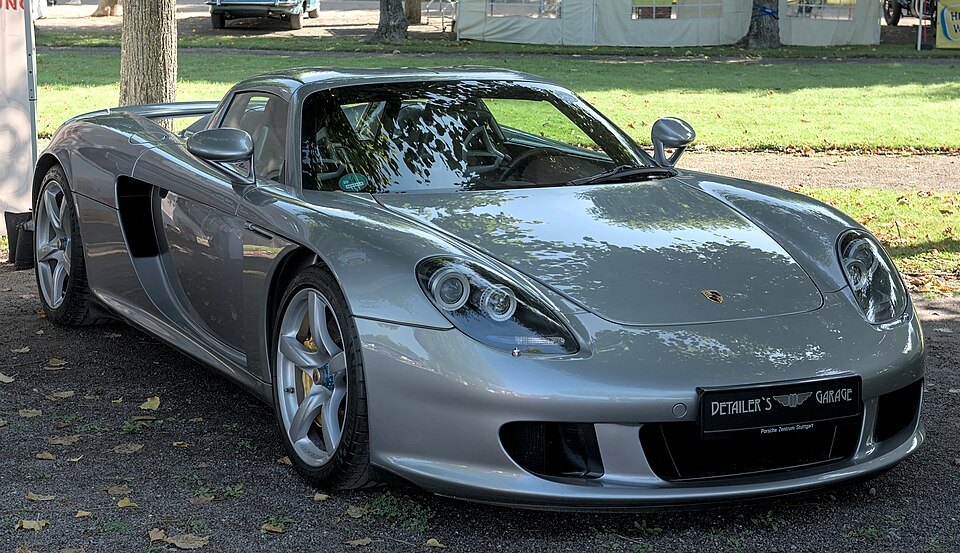
A Porsche Carrera GT. Photo: Alexander Migl, Wikimedia Commons, CC BY-SA 4.0; resized and re-encoded.
Model and versionEngine or powertrainEvidence356 A 1600A representative 356 A used a 1.6-litre air-cooled flat-four mounted at the rear; other 356 engines differed.Manufacturer source944 Turbo2.5-litre turbocharged inline-four; the naturally aspirated 944 was a separate engine configuration.Manufacturer sourceCarrera GT5.7-litre naturally aspirated V10 in a mid-engined road car.Manufacturer source918 Spyder4.6-litre naturally aspirated V8 combined with two electric motors in a plug-in hybrid.Manufacturer source
Identifying a car and engine
Use the VIN, market, model year and engine code when researching servicing, tuning or parts. A model badge may cover naturally aspirated, turbocharged, supercharged, hybrid or electric versions depending on the particular vehicle. Factory fitment and aftermarket conversions are distinguished in the linked guides.
For transmission diagnostics, see Porsche PDK Macan and Panamera fault diagnosis; its examples and bulletins are limited to the models and equipment stated.
Sources and related reading
Wikipedia: Porsche — marque history and further references.Tuning Wiki: illustrated turbocharged-car timeline.Tuning Wiki: supercharger types and Eaton guides.
Rendered revisions
Open each version to inspect formatting, tables and photographs.
Ferdinand Porsche established an engineering business in 1931; Porsche-branded sports-car production began with the 356 in 1948. The 911 followed in 1963 and remains central to the marque's identity. Wikipedia: Porsche history.
Porsche's history includes air-cooled and water-cooled flat engines, racing-led turbo development, front-engined models and later SUVs and electric cars.
These are specific examples rather than every engine offered. Equipment, output and capacity can change with model year and market; identify the exact vehicle before ordering parts.
Use the VIN, market, model year and engine code when researching servicing, tuning or parts. A model badge may cover naturally aspirated, turbocharged, supercharged, hybrid or electric versions depending on the particular vehicle. Factory fitment and aftermarket conversions are distinguished in the linked guides.