Removed text is struck through; added text is highlighted.
Country of origin: Italy. Part of Car makes and the history of the motor car.
History and development
Fiat was founded in Turin in 1899 and became a major Italian manufacturer of small cars and a wide range of other vehicles. Wikipedia: Fiat history.
Fiat's familiar 500 and Panda names have been used for different generations. Related companies and model platforms have changed over time, so the badge and number alone are insufficient for parts identification.
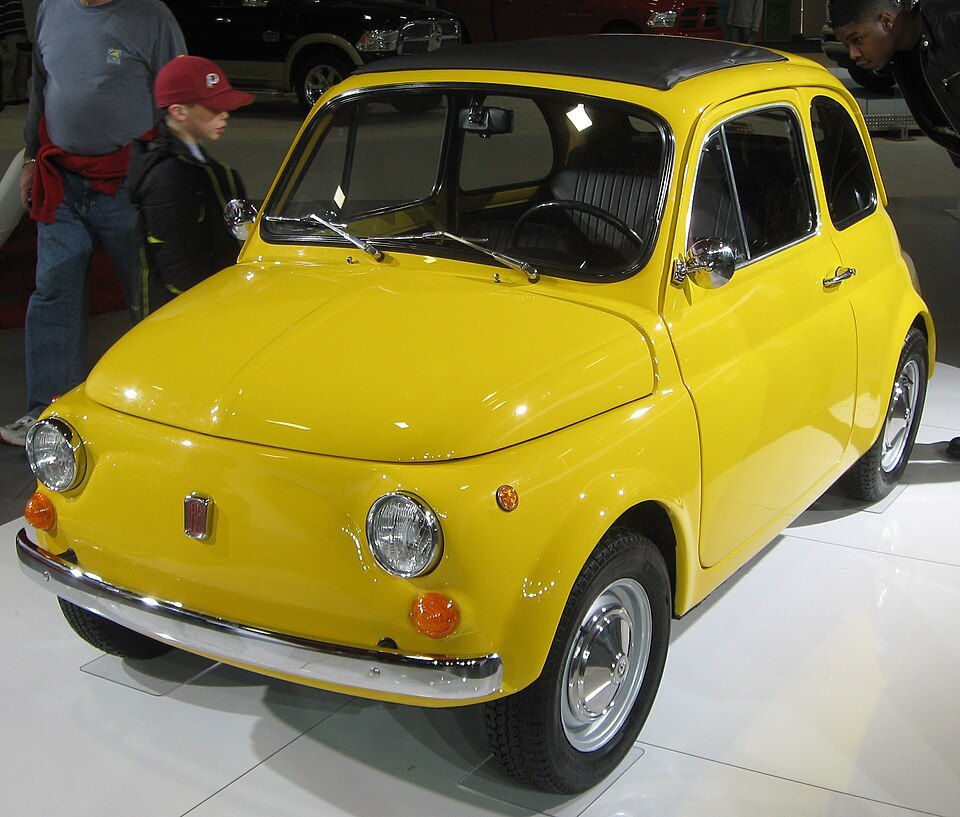
A 1970 Fiat 500 L. Photo: IFCAR, Wikimedia Commons, Public domain; resized and re-encoded.
Selected cars and engines
Examples are selected rather than a complete production list. Engine and equipment specifications can vary with year and market.
CarWhy it mattersEvidence500 / Nuova 500The classic small rear-engined 500 and the later revived 500 are different cars.Model referencePandaA small-car family produced in several generations with varied engines and drivetrains.Model referenceUno Turbo i.e.A performance version of the small Uno using a turbocharged petrol engine.Model referencePuntoA supermini line sold with numerous petrol and diesel engines.Model reference
More models and representative enginesThese are specific examples rather than every engine offered. Equipment, output and capacity can change with model year and market; identify the exact vehicle before ordering parts.A Fiat Coupé 20V Turbo. Photo: Calreyn88, Wikimedia Commons, CC BY-SA 4.0; resized and re-encoded.Model and versionEngine or powertrainEvidence500 Nuova (1957)The original 1957 Nuova 500 used an air-cooled two-cylinder rear engine of approximately 479 cc; later 500s grew.Manufacturer or technical sourceCoupé 20V TurboA 2.0-litre turbocharged inline-five petrol engine in the specified Coupé version.Manufacturer or technical sourcePanda 100HPA 1.4-litre naturally aspirated four-cylinder petrol engine in the 100HP performance version.Manufacturer or technical sourceUno Turbo i.e.A turbocharged petrol four-cylinder hot hatch; the initial 1.3 and later 1.4 used different capacities.Manufacturer or technical source
Identifying a car and engine
Use the VIN, market, model year and engine code when researching servicing, tuning or parts. A model badge may cover naturally aspirated, turbocharged, supercharged, hybrid or electric versions depending on the particular vehicle. Factory fitment and aftermarket conversions are distinguished in the linked guides.
Related marque: Abarth: history and cars.
Sources and related reading
Wikipedia: Fiat — marque history and further references.Tuning Wiki: illustrated turbocharged-car timeline.Tuning Wiki: supercharger types and Eaton guides.
Rendered revisions
Open each version to inspect formatting, tables and photographs.
Fiat was founded in Turin in 1899 and became a major Italian manufacturer of small cars and a wide range of other vehicles. Wikipedia: Fiat history.
Fiat's familiar 500 and Panda names have been used for different generations. Related companies and model platforms have changed over time, so the badge and number alone are insufficient for parts identification.
A 1970 Fiat 500 L. Photo: IFCAR, Wikimedia Commons, Public domain; resized and re-encoded.
Selected cars and engines
Examples are selected rather than a complete production list. Engine and equipment specifications can vary with year and market.
Car
Why it matters
Evidence
500 / Nuova 500
The classic small rear-engined 500 and the later revived 500 are different cars.
Use the VIN, market, model year and engine code when researching servicing, tuning or parts. A model badge may cover naturally aspirated, turbocharged, supercharged, hybrid or electric versions depending on the particular vehicle. Factory fitment and aftermarket conversions are distinguished in the linked guides.
Fiat was founded in Turin in 1899 and became a major Italian manufacturer of small cars and a wide range of other vehicles. Wikipedia: Fiat history.
Fiat's familiar 500 and Panda names have been used for different generations. Related companies and model platforms have changed over time, so the badge and number alone are insufficient for parts identification.
A 1970 Fiat 500 L. Photo: IFCAR, Wikimedia Commons, Public domain; resized and re-encoded.
Selected cars and engines
Examples are selected rather than a complete production list. Engine and equipment specifications can vary with year and market.
These are specific examples rather than every engine offered. Equipment, output and capacity can change with model year and market; identify the exact vehicle before ordering parts.
Use the VIN, market, model year and engine code when researching servicing, tuning or parts. A model badge may cover naturally aspirated, turbocharged, supercharged, hybrid or electric versions depending on the particular vehicle. Factory fitment and aftermarket conversions are distinguished in the linked guides.