Tuning Wiki

This is a historical revision. Read the current page or return to its history.

Page organisation in this revision
Page type
Technical article
Subject
Car makes
Parent
Section level
Applies to
No ECU-specific applicability
Tool groups
None
Manufacturers
Westfield

Changes from revision 1 to revision 1

Removed text is struck through; added text is highlighted.

Westfield Sportscars is a British maker of kit and component sports cars. It is best known for the Westfield SE family of Lotus Seven-style two-seaters, but has also built the XI, a recreation of the Lotus Eleven. Historic racer Chris Smith founded it in 1982. From 1991 it was based in Kingswinford in the West Midlands, and from 2022 in Bicester, Oxfordshire. Westfield cars have glassfibre bodies on steel spaceframes. Most were sold as kits that took Ford running gear, but complete factory-built cars were also available. The company has had several owners. After its owning company went into liquidation in April 2026, the Dutch track-day operator Driving-Fun.com bought the brand in June 2026. It continues current models and plans to move assembly to Meppen in Germany. Engines across the range have included Ford crossflow, Zetec, Duratec and EcoBoost, Rover V8, Vauxhall, GM 1.6 turbo and motorcycle units. Factory engine management ranged from carburettors to retained manufacturer ECUs and Omex systems.

History

Chris Smith built a replica of the 1956 Lotus Eleven for his own use in 1982 and turned it into a kit. Westfield Sports Cars Limited was incorporated on 1 February 1983. A second model, closely modelled on the Lotus Seven, soon followed. Caterham, which had bought the Seven rights from Lotus, threatened legal action over industrial design rights in the late 1980s. The dispute was settled out of court, and Westfield redesigned its car as the SE. The SE then developed into a separate model family that is popular in track days and club racing.

Westfield moved to Kingswinford in 1991. Through the 1990s and 2000s the range widened to independent rear suspension (SEi), a wide-body chassis (SEiW), the Rover V8 SEight, motorcycle-engined models and the mid-engined XTR race cars. In December 2006 Westfield became part of Potenza Sports Cars, which bought GTM Cars in December 2007. In June 2009 the Sport Turbo became the first British car to gain European Small Series Type Approval. Westfield also launched the electric iRacer (about 2010–11) and, at various times, knock-down kits and autonomous electric pods. The autonomous business was later separated. Westfield bought the Chesil Motor Company in 2019.

Westfield went into administration and stopped trading in June 2022. Westfield Chesil Limited (14247102, incorporated as NMNJC Limited on 20 July 2022) bought the business in September 2022 and moved it from Kingswinford to Arkwright Road, Bicester. Westfield Sports Cars Limited (01695933) is in liquidation. Westfield Chesil Limited entered creditors' voluntary liquidation, with a liquidator appointed on 16 April 2026. Several press reports describe this as an administration, but the Gazette notice records a liquidation.

In June 2026 Driving-Fun.com, the Dutch-German track-day organiser led by Peter Tunissen that runs Circuit Meppen in Lower Saxony, announced that it owned the Westfield name, brand, intellectual property, CAD drawings and parts. It said the SE, XI Le Mans and Westfield Cup would continue to be assembled at Bicester for the time being. Production and Europe-wide parts supply are to move to a new facility at Meppen, and new road and track models are planned. Westfield has sold about 16,000 cars in total. The new owner's trading company and the date of the Meppen move are not yet established.

Models

All Westfields have a steel tubular spaceframe and glassfibre body. Most are front-engined with rear-wheel drive. The XTR2 and XTR4 are mid-engined. Many were sold as kits for the builder to fit donor parts, mostly from Ford. In single-donor (SDV) kits most parts come from one Ford Sierra or Mazda MX-5. Westfield also sold factory-built cars. According to figures given to Total Kit Car, it made about 450 SEi and XTR chassis a year at its peak. Power figures are manufacturer or test claims.

ModelYearsLayout and donorEnginesNotes XI1982–86 (kits to about 1988); 2004 onwardFront engine; MG Midget or Austin-Healey Sprite donorBMC A-series 1,275 cc; some factory cars reportedly Ford KentLotus Eleven recreation; sold as the XI Le Mans in 2026 7 / Seven-style car1980sFront engine; Ford Escort partsFord crossflowRedesigned after the Caterham dispute SEAbout 1988–93Narrow body; Escort-type live axleFord crossflow, CVHThe independent-rear version is the SEi SEi, SEiWFrom about 1988Independent rear: Escort differential in a Westfield cast housing, later Sierra differential and driveshaftsFord crossflow, CVH, Zetec; Vauxhall 2.0 16v (owner fitments)SEiW is the wide-body chassis SDVNot establishedSingle donor: Ford Sierra or Mazda MX-5Donor engine (Ford or Mazda)MX-5 version uses the MX-5 gearbox SEight1991–2010Wide-body chassis with bonnet bulgeRover V8 3.5–5.2; factory cars 3.9 fuel-injected; TVR 4.2Rover SD1, Borg-Warner T5 or R380 gearbox; from 657 kg ZEi, ZEi 2201990sFord running gearFord Zetec; ZEi 220 with Cosworth turboZEi 220: 220 bhp, 214 lb ft, MT75 gearbox (1994 test of a pre-production car) FW4001999–2002Composite lightweightRover K-series— Megabusa, Megablade, Mega S2000From 2000Front engineSuzuki Hayabusa 1,299 cc (178 bhp); Honda Fireblade; Honda S2000Motorcycle sequential gearbox on Megabusa; Mega S2000 uses the Honda engine and gearbox XTR2, XTR42001–2010Mid-engine spaceframeXTR2: Suzuki Hayabusa (170 hp); XTR4: reportedly Audi 1.8 turboTrack-focused but road-legal AeroSport, AeroRace2007–09Front engineNot establishedRace-oriented models Sport 2000, Sport 2000SNot establishedFront engineFord Duratec 2.0, about 190–200 bhp; Sport 2000S FW 250 bhp Dunnell-tunedDuratec replaced the out-of-production Zetec Sport Turbo (FW 300 in France)From 2009New chassisGM 1.6 turbo from the Vauxhall Corsa VXR, 192–195 bhpFord five-speed gearbox; first British small-series type approval iRacerAbout 2010–11Front motorElectricRacing and demonstration car Sport 250From 2016Revised Sport chassisFord 2.0 EcoBoost, 250–256 hp, 320 lb ft (claim)Mazda MX-5 gearbox and differential; kit from £24,999, turnkey from £28,745 at launch Westfield CupNot establishedFront engineNot establishedContinued under Driving-Fun.com in 2026

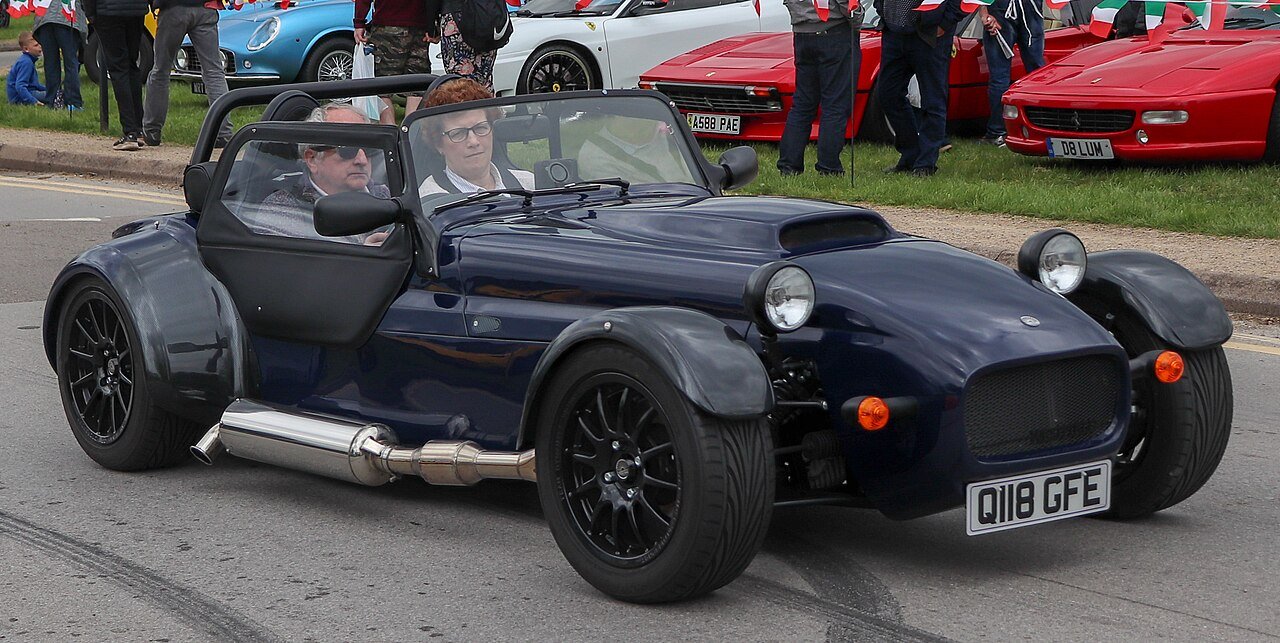
2019 Westfield Mega S2000 at the National Kit Car Motor Show, Stoneleigh, 2019. Photo: Vauxford, Wikimedia Commons, CC BY-SA 4.0; resized.

Model dates are approximate where only one source gives them. One 2016 trade report says the Sport 250 chassis was based on a "Honda K20-powered Sport 2000". The other sources consulted all describe the Sport 2000 as Ford Duratec-powered, so the evidence favours the Duratec. A K20 version is not otherwise documented. The 2026 Driving-Fun.com announcement named only the SE, XI Le Mans and Westfield Cup as continuing models.

Engines

Westfield did not make its own engines. It designed its cars around bought-in production engines and supplied engine packages for factory-built and turnkey cars.

Ford. Older SEs most often have the crossflow or CVH. The Zetec is the most common engine in later cars. The Duratec succeeded it in the Sport 2000. The Sport 250 used the 2.0 EcoBoost. The most common gearboxes are the Ford Type 9 five-speed and the MT75. See Ford and Ford Sierra, the main donor. Rover. The SEight used the Rover V8, with 3.9-litre fuel-injected engines in factory cars and larger TVR and stroked versions as options. The FW400 used the K-series. See Rover. GM. The Sport Turbo used the 1,598 cc turbocharged engine from the Vauxhall Corsa VXR / Opel Corsa OPC. Test figures are 192–195 bhp, and torque is 170 lb ft rising to 190 lb ft on overboost. Vauxhall 2.0 16v (C20XE) engines also appear in owner-built SEiWs. See Vauxhall. Honda and Suzuki. The Megabusa and XTR2 use the Suzuki Hayabusa, the Megablade the Honda Fireblade, and the Mega S2000 the Honda S2000 engine and gearbox. See Honda and Suzuki. Mazda. The MX-5 single-donor kit uses the Mazda engine and gearbox. See Mazda.

Engine management

Carburetted Ford engines. Crossflow-engined SEs and the BMC A-series XI use carburettors. Zetec. Owner reports say Westfield fitted early Zetec cars with the Ford manifold and ECU. Kit-car builders re-wiring Zetecs discuss using either a manual-car EEC-IV or the 104-pin EEC-V. See Ford EEC-IV. Westfield's later parts catalogue listed a throttle-body kit for the 2.0 black-top Zetec for use with a "Westfield Omex 600 ECU", and a Zetec ignition kit built around a mappable ECU (vendor listings, as indexed; the catalogue is no longer online). A supercharged Westfield shown by Omex was photographed at a 2008 kit-car show. See Omex 600 and Omex standalone ECUs. Sport Turbo. A 2009 French road test reports that the car kept the original Opel engine management, with an added control box developed by Westfield's parent company Potenza. Sport 250. Westfield used Ford Racing's Focus ST 2.0 EcoBoost crate package. It was supplied as a plug-and-play kit that included the engine management system and the drive-by-wire throttle (trade report, 2016). Owners describe the ECU as a Ford/Bosch unit adapted to run without the rest of the donor car's systems. They report that it cannot easily be remapped, and that a standard Focus ECU will not run the engine because it expects inputs from other vehicle modules. Aftermarket suppliers offer replacement EcoBoost management kits. One vendor states its kit is pre-mapped for about 250 bhp on the standard engine. Sport 2000 (Duratec). The factory ECU is not established. Owners report running Duratec Westfields on the standard Ford Focus ECU, or replacing it with Omex, Emerald or Webcon Alpha systems. SEight and motorcycle-engined cars. The ECU used on factory 3.9 injected SEights and on the Hayabusa-, Fireblade- and S2000-engined cars is not documented in the sources consulted.
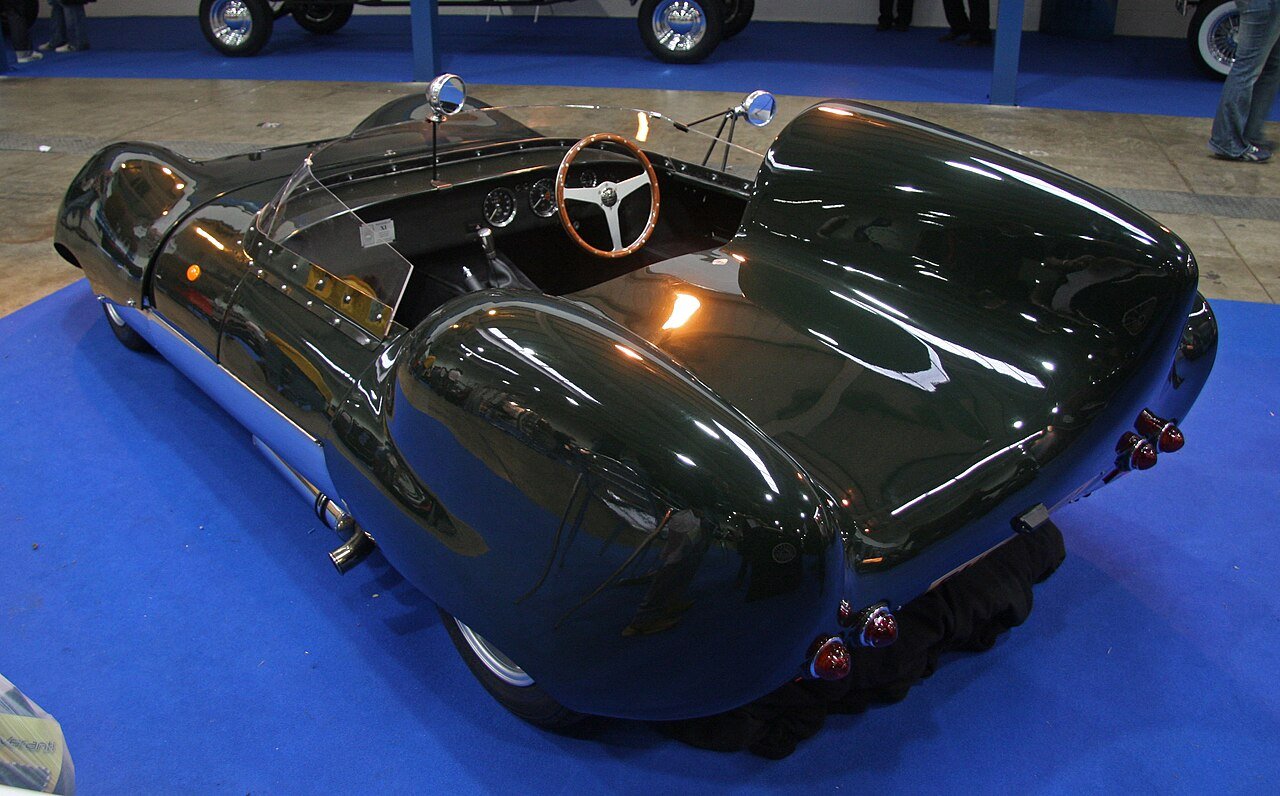
Westfield XI, the Lotus Eleven-style model, at a show in 2008. Photo: Brian Snelson, Wikimedia Commons, CC BY 2.0; resized.

Identification and buying notes

The suffixes describe the chassis. SE is the narrow body with a live axle, SEi the narrow body with independent rear suspension, and SEiW the wide body. Early independent cars use an Escort differential in a Westfield casting. Later and SDV cars use Sierra differentials and driveshafts. Many cars have been re-engined, so the engine should be identified directly rather than taken from the model name. Cars registered from 1992 should have a catalytic converter. Check the glassfibre panels for cracks around edges and bolt holes. Parts supply depends on the new owner. Driving-Fun.com has said it will restart spare-parts supply from Meppen.

Not established

The trading company through which Driving-Fun.com runs Westfield, and when production moves to Meppen. Factory ECU details for the SEight 3.9, Sport 2000 Duratec, Sigma-engined cars and motorcycle-engined cars. Exact start and end dates for many models, and the Westfield Cup's engine. Whether a Honda K20 Sport model was ever offered.

Sources

Westfield Sportscars, English Wikipedia; also the articles Westfield XI, Westfield SEight, Westfield Megabusa and Westfield XTR2. Accessed 19 November 2026. Westfield Chesil Limited (14247102) and Westfield Sports Cars Limited (01695933), Companies House. Accessed 19 November 2026. Westfield Chesil Limited: appointment of liquidators, The Gazette, notice 5116960 (appointment 16 April 2026). Accessed 19 November 2026. Westfield Sportscars acquired by trackday operator, PistonHeads, 1 June 2026. Accessed 19 November 2026. Westfield Sportscars sold, evo, 2 June 2026. Accessed 19 November 2026. Westfield Sportscars is back, Auto Express, 2 June 2026. Accessed 19 November 2026. Westfield kommt zurück: Produktion in Deutschland geplant, auto motor und sport, 4 June 2026. Accessed 19 November 2026. Westfield SE: PH used buying guide, PistonHeads, 20 November 2018. Accessed 19 November 2026. Small, but perfectly formed (Westfield ZEi 220 road test), Motor Sport, August 1994. Accessed 19 November 2026. Westfield 1600 Sport Turbo review, evo, 18 February 2010. Accessed 19 November 2026. Westfield SE Sport Turbo / FW 300, Automobile Sportive (French road test, December 2009). Accessed 19 November 2026. Westfield launch Sport 250, Total Kit Car, 21 January 2016. Accessed 19 November 2026. Westfield Sport 250 driven, PistonHeads; Westfield Sport 250 review, Autocar (search-indexed text). Accessed 19 November 2026. Westfield Sport 2000S FW, evo; Westfield Sport 2000 review, Autocar (search-indexed text). Accessed 19 November 2026. Westfield Sports Car Club forum threads (owner reports, search-indexed text): 2.0 EcoBoost ECU, Westfield Sport 250, Ford ECU, Identifying different types of rear suspension and diffs. Accessed 19 November 2026. 1998 Westfield SEiW C20XE red top 183 bhp, Westfield Sports Car Club forum sale listing (search-indexed text). Accessed 19 November 2026. Omex supercharged Westfield, Brian Snelson, Wikimedia Commons, photographed 5 May 2008. Accessed 19 November 2026. Zetec Omex throttle body upgrade kit, Westfield/Chesil parts catalogue (vendor listing; the page is no longer available, so it is cited from search-indexed text). Accessed 19 November 2026. Ford 2.0 EcoBoost management kit, SCS Delta (vendor claim). Accessed 19 November 2026. Photographs from Wikimedia Commons, credited in each caption: 2019 Westfield Mega S2000 and Westfield XI. Accessed 19 November 2026.

Rendered revisions

Open each version to inspect formatting, tables and photographs.

Revision 1: Westfield Sportscars: history and cars

Westfield Sportscars is a British maker of kit and component sports cars. It is best known for the Westfield SE family of Lotus Seven-style two-seaters, but has also built the XI, a recreation of the Lotus Eleven. Historic racer Chris Smith founded it in 1982. From 1991 it was based in Kingswinford in the West Midlands, and from 2022 in Bicester, Oxfordshire. Westfield cars have glassfibre bodies on steel spaceframes. Most were sold as kits that took Ford running gear, but complete factory-built cars were also available. The company has had several owners. After its owning company went into liquidation in April 2026, the Dutch track-day operator Driving-Fun.com bought the brand in June 2026. It continues current models and plans to move assembly to Meppen in Germany. Engines across the range have included Ford crossflow, Zetec, Duratec and EcoBoost, Rover V8, Vauxhall, GM 1.6 turbo and motorcycle units. Factory engine management ranged from carburettors to retained manufacturer ECUs and Omex systems.

History

Chris Smith built a replica of the 1956 Lotus Eleven for his own use in 1982 and turned it into a kit. Westfield Sports Cars Limited was incorporated on 1 February 1983. A second model, closely modelled on the Lotus Seven, soon followed. Caterham, which had bought the Seven rights from Lotus, threatened legal action over industrial design rights in the late 1980s. The dispute was settled out of court, and Westfield redesigned its car as the SE. The SE then developed into a separate model family that is popular in track days and club racing.

Westfield moved to Kingswinford in 1991. Through the 1990s and 2000s the range widened to independent rear suspension (SEi), a wide-body chassis (SEiW), the Rover V8 SEight, motorcycle-engined models and the mid-engined XTR race cars. In December 2006 Westfield became part of Potenza Sports Cars, which bought GTM Cars in December 2007. In June 2009 the Sport Turbo became the first British car to gain European Small Series Type Approval. Westfield also launched the electric iRacer (about 2010–11) and, at various times, knock-down kits and autonomous electric pods. The autonomous business was later separated. Westfield bought the Chesil Motor Company in 2019.

Westfield went into administration and stopped trading in June 2022. Westfield Chesil Limited (14247102, incorporated as NMNJC Limited on 20 July 2022) bought the business in September 2022 and moved it from Kingswinford to Arkwright Road, Bicester. Westfield Sports Cars Limited (01695933) is in liquidation. Westfield Chesil Limited entered creditors' voluntary liquidation, with a liquidator appointed on 16 April 2026. Several press reports describe this as an administration, but the Gazette notice records a liquidation.

In June 2026 Driving-Fun.com, the Dutch-German track-day organiser led by Peter Tunissen that runs Circuit Meppen in Lower Saxony, announced that it owned the Westfield name, brand, intellectual property, CAD drawings and parts. It said the SE, XI Le Mans and Westfield Cup would continue to be assembled at Bicester for the time being. Production and Europe-wide parts supply are to move to a new facility at Meppen, and new road and track models are planned. Westfield has sold about 16,000 cars in total. The new owner's trading company and the date of the Meppen move are not yet established.

Models

All Westfields have a steel tubular spaceframe and glassfibre body. Most are front-engined with rear-wheel drive. The XTR2 and XTR4 are mid-engined. Many were sold as kits for the builder to fit donor parts, mostly from Ford. In single-donor (SDV) kits most parts come from one Ford Sierra or Mazda MX-5. Westfield also sold factory-built cars. According to figures given to Total Kit Car, it made about 450 SEi and XTR chassis a year at its peak. Power figures are manufacturer or test claims.

ModelYearsLayout and donorEnginesNotes
XI1982–86 (kits to about 1988); 2004 onwardFront engine; MG Midget or Austin-Healey Sprite donorBMC A-series 1,275 cc; some factory cars reportedly Ford KentLotus Eleven recreation; sold as the XI Le Mans in 2026
7 / Seven-style car1980sFront engine; Ford Escort partsFord crossflowRedesigned after the Caterham dispute
SEAbout 1988–93Narrow body; Escort-type live axleFord crossflow, CVHThe independent-rear version is the SEi
SEi, SEiWFrom about 1988Independent rear: Escort differential in a Westfield cast housing, later Sierra differential and driveshaftsFord crossflow, CVH, Zetec; Vauxhall 2.0 16v (owner fitments)SEiW is the wide-body chassis
SDVNot establishedSingle donor: Ford Sierra or Mazda MX-5Donor engine (Ford or Mazda)MX-5 version uses the MX-5 gearbox
SEight1991–2010Wide-body chassis with bonnet bulgeRover V8 3.5–5.2; factory cars 3.9 fuel-injected; TVR 4.2Rover SD1, Borg-Warner T5 or R380 gearbox; from 657 kg
ZEi, ZEi 2201990sFord running gearFord Zetec; ZEi 220 with Cosworth turboZEi 220: 220 bhp, 214 lb ft, MT75 gearbox (1994 test of a pre-production car)
FW4001999–2002Composite lightweightRover K-series—
Megabusa, Megablade, Mega S2000From 2000Front engineSuzuki Hayabusa 1,299 cc (178 bhp); Honda Fireblade; Honda S2000Motorcycle sequential gearbox on Megabusa; Mega S2000 uses the Honda engine and gearbox
XTR2, XTR42001–2010Mid-engine spaceframeXTR2: Suzuki Hayabusa (170 hp); XTR4: reportedly Audi 1.8 turboTrack-focused but road-legal
AeroSport, AeroRace2007–09Front engineNot establishedRace-oriented models
Sport 2000, Sport 2000SNot establishedFront engineFord Duratec 2.0, about 190–200 bhp; Sport 2000S FW 250 bhp Dunnell-tunedDuratec replaced the out-of-production Zetec
Sport Turbo (FW 300 in France)From 2009New chassisGM 1.6 turbo from the Vauxhall Corsa VXR, 192–195 bhpFord five-speed gearbox; first British small-series type approval
iRacerAbout 2010–11Front motorElectricRacing and demonstration car
Sport 250From 2016Revised Sport chassisFord 2.0 EcoBoost, 250–256 hp, 320 lb ft (claim)Mazda MX-5 gearbox and differential; kit from £24,999, turnkey from £28,745 at launch
Westfield CupNot establishedFront engineNot establishedContinued under Driving-Fun.com in 2026
A 2019 Westfield Mega S2000.
2019 Westfield Mega S2000 at the National Kit Car Motor Show, Stoneleigh, 2019. Photo: Vauxford, Wikimedia Commons, CC BY-SA 4.0; resized.

Model dates are approximate where only one source gives them. One 2016 trade report says the Sport 250 chassis was based on a "Honda K20-powered Sport 2000". The other sources consulted all describe the Sport 2000 as Ford Duratec-powered, so the evidence favours the Duratec. A K20 version is not otherwise documented. The 2026 Driving-Fun.com announcement named only the SE, XI Le Mans and Westfield Cup as continuing models.

Engines

Westfield did not make its own engines. It designed its cars around bought-in production engines and supplied engine packages for factory-built and turnkey cars.

  • Ford. Older SEs most often have the crossflow or CVH. The Zetec is the most common engine in later cars. The Duratec succeeded it in the Sport 2000. The Sport 250 used the 2.0 EcoBoost. The most common gearboxes are the Ford Type 9 five-speed and the MT75. See Ford and Ford Sierra, the main donor.
  • Rover. The SEight used the Rover V8, with 3.9-litre fuel-injected engines in factory cars and larger TVR and stroked versions as options. The FW400 used the K-series. See Rover.
  • GM. The Sport Turbo used the 1,598 cc turbocharged engine from the Vauxhall Corsa VXR / Opel Corsa OPC. Test figures are 192–195 bhp, and torque is 170 lb ft rising to 190 lb ft on overboost. Vauxhall 2.0 16v (C20XE) engines also appear in owner-built SEiWs. See Vauxhall.
  • Honda and Suzuki. The Megabusa and XTR2 use the Suzuki Hayabusa, the Megablade the Honda Fireblade, and the Mega S2000 the Honda S2000 engine and gearbox. See Honda and Suzuki.
  • Mazda. The MX-5 single-donor kit uses the Mazda engine and gearbox. See Mazda.

Engine management

  • Carburetted Ford engines. Crossflow-engined SEs and the BMC A-series XI use carburettors.
  • Zetec. Owner reports say Westfield fitted early Zetec cars with the Ford manifold and ECU. Kit-car builders re-wiring Zetecs discuss using either a manual-car EEC-IV or the 104-pin EEC-V. See Ford EEC-IV. Westfield's later parts catalogue listed a throttle-body kit for the 2.0 black-top Zetec for use with a "Westfield Omex 600 ECU", and a Zetec ignition kit built around a mappable ECU (vendor listings, as indexed; the catalogue is no longer online). A supercharged Westfield shown by Omex was photographed at a 2008 kit-car show. See Omex 600 and Omex standalone ECUs.
  • Sport Turbo. A 2009 French road test reports that the car kept the original Opel engine management, with an added control box developed by Westfield's parent company Potenza.
  • Sport 250. Westfield used Ford Racing's Focus ST 2.0 EcoBoost crate package. It was supplied as a plug-and-play kit that included the engine management system and the drive-by-wire throttle (trade report, 2016). Owners describe the ECU as a Ford/Bosch unit adapted to run without the rest of the donor car's systems. They report that it cannot easily be remapped, and that a standard Focus ECU will not run the engine because it expects inputs from other vehicle modules. Aftermarket suppliers offer replacement EcoBoost management kits. One vendor states its kit is pre-mapped for about 250 bhp on the standard engine.
  • Sport 2000 (Duratec). The factory ECU is not established. Owners report running Duratec Westfields on the standard Ford Focus ECU, or replacing it with Omex, Emerald or Webcon Alpha systems.
  • SEight and motorcycle-engined cars. The ECU used on factory 3.9 injected SEights and on the Hayabusa-, Fireblade- and S2000-engined cars is not documented in the sources consulted.
A Westfield XI.
Westfield XI, the Lotus Eleven-style model, at a show in 2008. Photo: Brian Snelson, Wikimedia Commons, CC BY 2.0; resized.

Identification and buying notes

  • The suffixes describe the chassis. SE is the narrow body with a live axle, SEi the narrow body with independent rear suspension, and SEiW the wide body. Early independent cars use an Escort differential in a Westfield casting. Later and SDV cars use Sierra differentials and driveshafts.
  • Many cars have been re-engined, so the engine should be identified directly rather than taken from the model name.
  • Cars registered from 1992 should have a catalytic converter. Check the glassfibre panels for cracks around edges and bolt holes.
  • Parts supply depends on the new owner. Driving-Fun.com has said it will restart spare-parts supply from Meppen.

Not established

  • The trading company through which Driving-Fun.com runs Westfield, and when production moves to Meppen.
  • Factory ECU details for the SEight 3.9, Sport 2000 Duratec, Sigma-engined cars and motorcycle-engined cars.
  • Exact start and end dates for many models, and the Westfield Cup's engine.
  • Whether a Honda K20 Sport model was ever offered.

Sources