Tiger Sportscars is the name used for the cars of Tiger Racing, a British maker of Seven-style and other lightweight kit cars. Jim Dudley founded it in 1989. It was based in London, then near Peterborough, and is now in Wisbech, Cambridgeshire. Its best-known models are the Super Six, Cat, R6 and Avon, which mostly used Ford Sierra running gear and Ford engines, and the twin-motorcycle-engined Z100. It also owns the English Racing Automobiles (ERA) name for heritage-style models. In 2022 Dudley handed Tiger Racing Ltd and the Tiger brand to the Italian group DR Automobiles, which now uses the Tiger name for imported crossovers. The Dudley family continues to build and support Tiger kit cars and ERA models in Wisbech through ERA Sports & Racing Cars Ltd. Factory engine management was simple. Carburettors, donor Ford systems and throttle bodies were the norm, and no Tiger-specific ECU is documented.
History
Jim Dudley built his first kart in south-east London as a child in the late 1950s, began an apprenticeship in 1966 and opened a workshop in Dartford in 1969, where he worked on a Lotus Seven. He founded Tiger Racing Ltd, incorporated on 22 November 1989, with help from his family. The business started in London. Its first production model, the Super Six, was designed in 1989. DR Automobiles' history dates its release to 1990. Tiger's present-day support site says the first cars appeared in 1991. The Storm followed in 1994, and from 1995 Tiger exported cars to Japan. The budget Cub and Cat arrived in 1997.
Tiger moved to Thorney, near Peterborough, in 1998 and traded as Tiger Sportscars. The R6, which became its most popular model, entered production in 1999. The entry-level Avon followed in 2002, along with a self-build book by Dudley. The Avon was developed from the Phoenix Automotive Avon Sprint, which Tiger bought and modified. The twin-engined Z100 brought national television coverage. On Channel 5's Fifth Gear in 2003 it was timed at 2.9 s from 0–60 mph, which Tiger presented as a record. Tiger acquired the ERA name in 2004. The Aviator (designed by Simon Keys) and the ZR6 followed in 2009, and the GTA in 2011. Tiger later combined its workshop at Thorney Toll and its engineering centre at Thorney in a single Wisbech Sportscar Centre at Unit 10, Anglia Way, Wisbech. That site also restores, sells and services classic cars, a business the family began in 2015. By then Tiger had built more than 2,500 cars. DR's history says "several thousand" were sold in Japan alone, which conflicts with that total, and the lower, Dudley-sourced figure is preferred.
In 2022 Dudley handed the company to DR Automobiles Groupe, which planned to relaunch the brand across Europe. Tiger Racing Ltd (02445607) is now registered care of Italian advisers in London. Its last accounts, made up to 30 March 2025, are listed by a company-data aggregator as dormant-company accounts. The tigerracing.com website now presents DR's Tiger Six, Eight and Nine crossovers, which have a 1.5-litre turbocharged direct-injection petrol and LPG engine and are unrelated to the kit cars. Reports in 2024 linked these models to a DR partnership with Dongfeng. Kit-car manufacture and support stayed with the Dudley family. ERA Sports & Racing Cars Limited (14756559) was incorporated on 25 March 2023 at Unit 10 Anglia Way, Wisbech, with James, Lorraine and Paul Dudley as directors. Its tigersportscars.co.uk website (© 2025) describes the company as making Tiger sportscars for 34 years. It offers ERA models and supports earlier Tigers. It also listed the last factory-built Tiger Avon for sale.
Motorsport
Tiger has run its own owner-driver race series at Silverstone, Brands Hatch, Donington Park and other UK circuits. It has also offered hire drives in works cars, and its cars have raced in the BARC South Eastern Centre's Intermarque series against Caterhams and Westfields.
Models
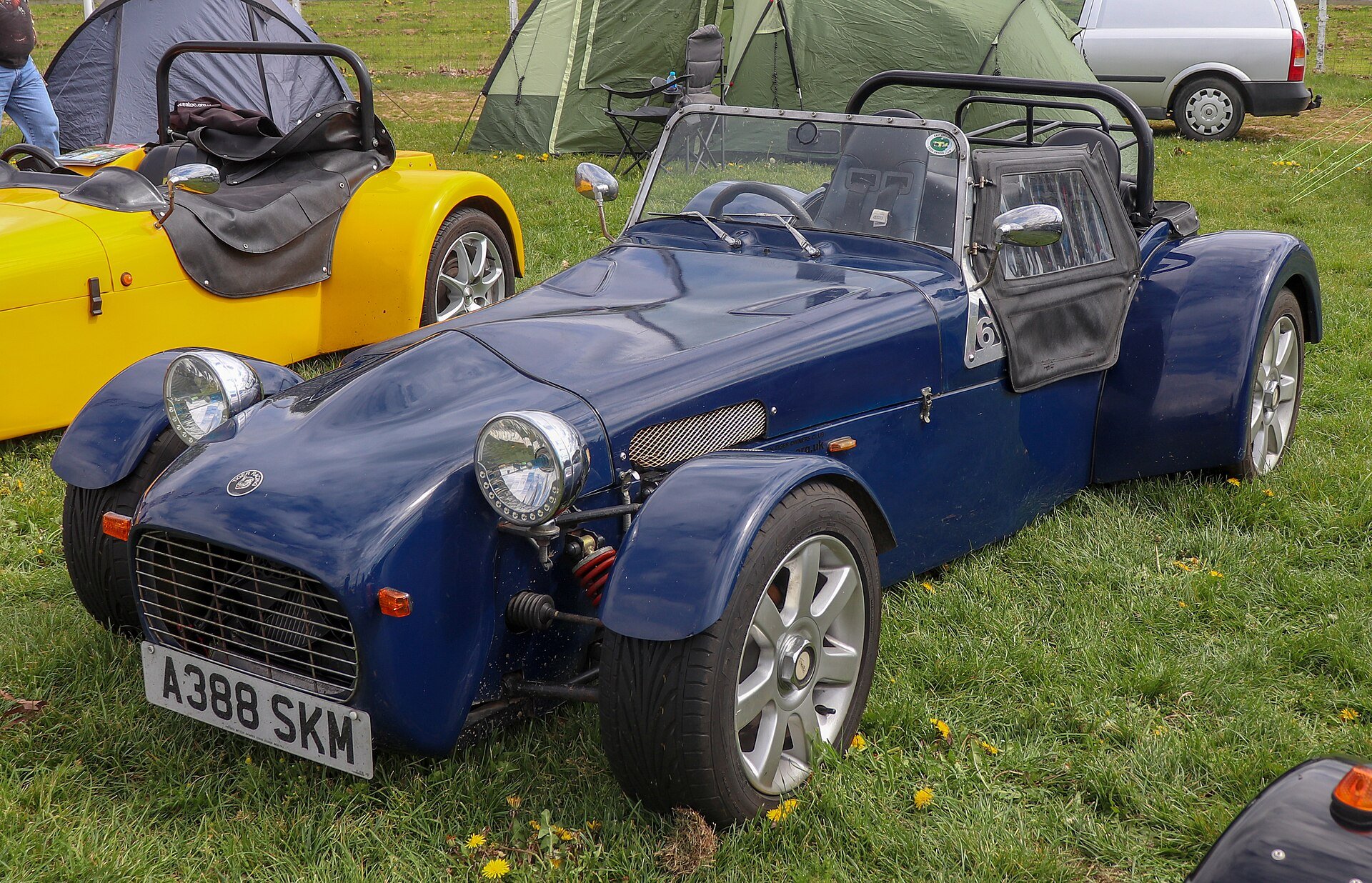

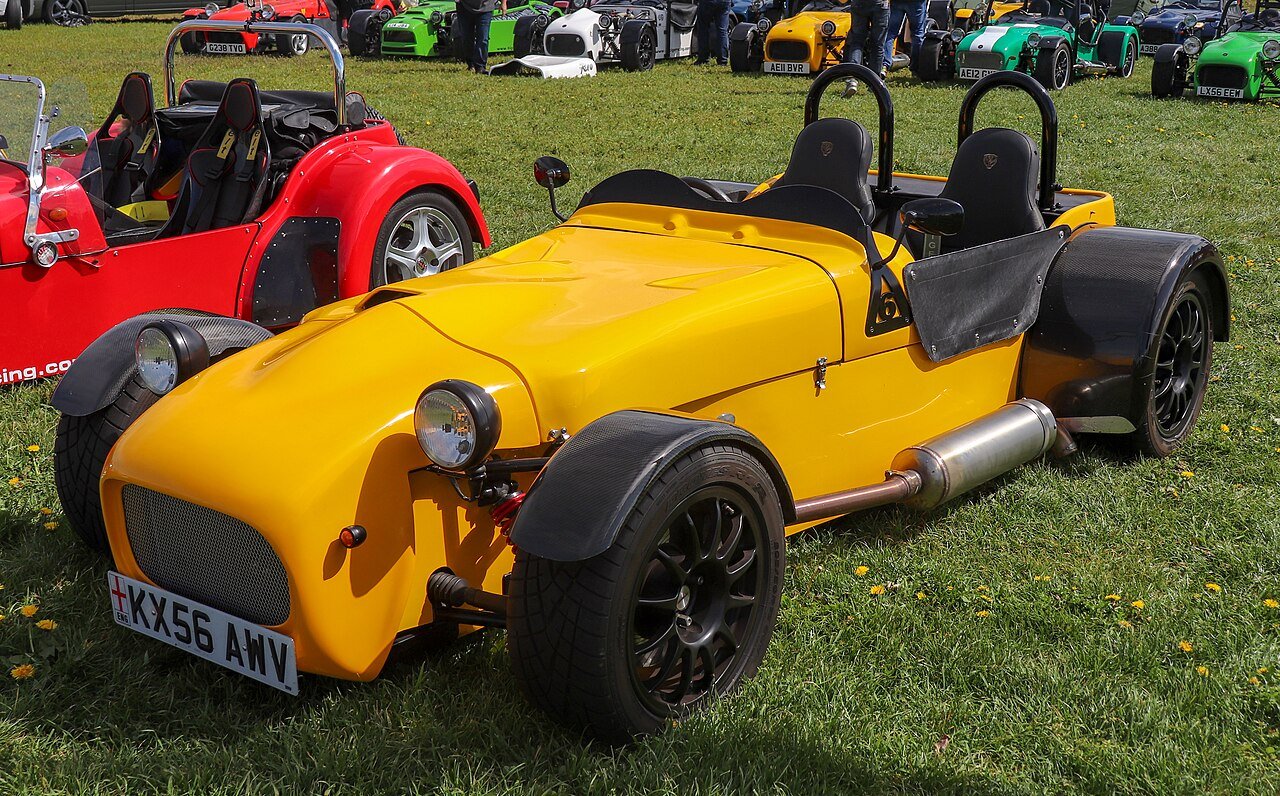
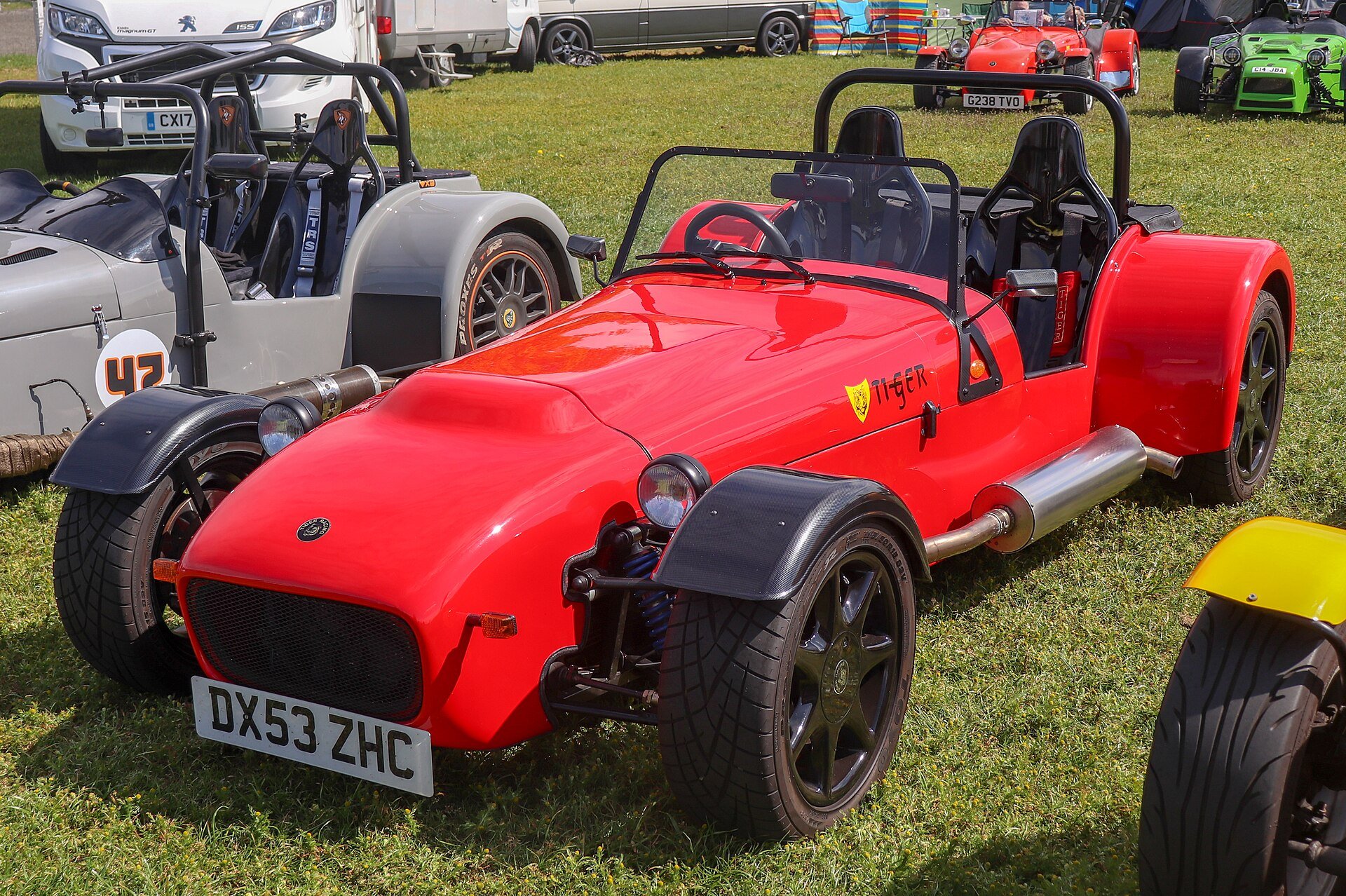
Tigers are front-engined, rear-drive cars on steel spaceframes with glassfibre or aluminium bodies. Most were sold as kits, from chassis-only to complete component packages, and the Ford Sierra was the usual donor. Factory-built cars were also offered. Dates are from DR Automobiles' Tiger history and Tiger's own support pages, which do not always agree.
| Model | Years | Donor and chassis | Engines | Notes |
|---|---|---|---|---|
| Super Six | Designed 1989; first cars 1990–91 | Seven-style spaceframe | First five cars Ford CVH 1.6; then Ford Pinto, Ford crossflow 1700 (Vulcan-built) and, in most later cars, Ford Zetec | Two V8 cars built in 1993, later converted; many exported to Japan |
| Storm | 1994 | — | Not established | Discontinued |
| Cub | 1997 | — | Not established | Budget model |
| Cat (Cat E1, Supercat, XL) | From 1997 | Ford Sierra engine, gearbox and differential | Ford Sierra engines | Budget kit; basic build from about £3,000 |
| R6, RS6 | From 1999; RS6 from 2003 | Seven-style spaceframe | Ford Duratec; other engines not established in the sources used | Most popular Tiger; Duratec R6 0–60 mph in 4.4 s claimed; RS6 has an all-aluminium body |
| Avon | From 2002 | Box-section spaceframe; Ford Sierra Type 9 gearbox and wheels; fully independent suspension | Early cars Ford Pinto; most Ford Zetec; also motorcycle engines | Developed from the Phoenix Avon Sprint; entry-level Tiger |
| Z100 Mk1, Mk2 | About 2001–03 | Round-tube spaceframe; two engines feeding a transfer box to the rear wheels | Two Kawasaki ZX-9R engines (1,798 cc total) | About 304 bhp, 560 kg; each engine has its own six-speed sequential gearbox; Mk2 sold factory-built |
| Z100WR | 2000s | Four-wheel-drive Z100 | Twin motorcycle engines (sources disagree: Suzuki GSX-R or Kawasaki ZX-12R) | About two factory cars built |
| B6 | From 2004 | Developed from the Z100 | Not established | — |
| ZR6, Aviator | 2009 | R6 chassis; Aviator designed by Simon Keys for better aerodynamics | Not established | Few Aviators built |
| GTA | From 2011 | Avon chassis with a GT body | Not established | Grand tourer version of the Avon |
| ERA 30 | After 2004 | Sports-racing body inspired by the Lotus 23 | Not established | Sold under the ERA name |
| ERA HSS, ERA HS6, ERA single-seater | After 2004 | Heritage single-seater and sports models | Not established | Inspired by pre-war ERA racing cars |
| ERA R10 | Current | Spaceframe with De Dion or independent rear, Spax suspension | Ford Duratec 2.0 with twin throttle bodies, 180 bhp | Five-speed gearbox; sold factory-built, as a kit or in stages |
| Hawke, D-type, 250LM | Earlier | — | Not established | Discontinued models |

Sources disagree on the Z100's record time. Fifth Gear's 2003 figure of 2.9 s is the best documented. Figures of 2.8 s (Tiger's own claim) and about 3.1 s (a satellite-timed carburettor car) also appear. Sources also disagree on whether the Z100 was first built in 2001 or 2003.
Engines
Tiger did not make engines. Its cars were designed around Ford Sierra donor parts and Ford engines, with motorcycle engines and occasionally a Rover V8 as alternatives.
- Ford CVH, Pinto, crossflow, Zetec and Duratec. These are the mainstream Tiger engines, in roughly that historical order. Most later Super Sixes and Avons have Zetecs. The current ERA R10 uses a 2.0 Duratec. See Ford Pinto, Ford Sierra and Ford.
- Motorcycle engines. The Z100 used two Kawasaki ZX-9R inline fours, each with its own sequential gearbox, coupled through a Tiger transfer box. The Avon was also offered with motorcycle engines.
- Rover V8. A specification listing for the Avon names engines from Ford four-cylinders to the Rover V8 and bike units. The two V8 Super Sixes of 1993 were converted back after poor circuit handling.
Engine management
No Tiger-specific ECU or factory engine-management package is documented. The evidence points to the engine's own system in each case.
- Pinto and crossflow cars normally used carburettors, or whatever system came with the Sierra donor.
- The original Z100 used carburettor versions of the ZX-9R (owner report).
- The current ERA R10's Duratec has twin throttle bodies. The ECU that controls them is not named.
- The engine management supplied with Zetec- and Duratec-engined Tigers is not documented. Owners who want a mappable system fit an aftermarket unit; see Standalone ECUs.

Identification and buying notes
- The Tiger name now has two unrelated meanings. Since 2022 "Tiger" on tigerracing.com refers to DR Automobiles' crossovers. The Wisbech kit-car business trades as ERA Sports & Racing Cars at tigersportscars.co.uk.
- Wisbech supports earlier models to varying degrees. For the Avon about 90% of parts are supported, and the GTA has chassis, body and mechanical support. For the Cat about half the parts are supported but not the chassis, and for the Super Six and Aviator mechanical parts are supported but not the chassis.
- Most Tigers are Sierra-based, so mechanical parts such as the Type 9 gearbox and Sierra differential are Ford parts. Engines vary widely from car to car and should be identified directly.
Not established
- What DR Automobiles acquired in 2022 beyond the company and brand, and on what terms the Dudley family continues to build Tiger-pattern cars.
- Engines and production years for the Storm, Cub, B6, Aviator and ERA models.
- Any factory ECU used on Zetec, Duratec or motorcycle-engined Tigers.
- Production totals by model.
Sources
- Tiger Racing Ltd: history, DR Automobiles (Tiger brand site). Accessed 19 November 2026.
- Tiger home page, DR Automobiles S.r.l. (Tiger Six, Eight and Nine). Accessed 19 November 2026.
- ERA Sports & Racing Cars and Previously manufactured and still supported cars, ERA Sports & Racing Cars Ltd, Wisbech (© 2025). Accessed 19 November 2026.
- Tiger Racing Ltd (02445607) and ERA Sports & Racing Cars Limited (14756559), Companies House: company details and officers. Accessed 19 November 2026.
- Tiger Racing Ltd 02445607, Corpsignals company-data aggregator (accounts type; search-indexed text). Accessed 19 November 2026.
- Fenland car manufacturer Tiger Racing creates Wisbech Sportscar Centre, Wisbech Standard (undated). Accessed 19 November 2026.
- Tiger Racing and Tiger Avon, English Wikipedia. Accessed 19 November 2026.
- 2001 Tiger Z100 Mk1, supercars.net (specification database). Accessed 19 November 2026.
- Tiger Z100 discussion, Locost Builders forum (owner reports on Z100 drivetrain and carburettor engines; search-indexed text). Accessed 19 November 2026.
- Tiger Sportscars Avon datasheet, Madabout Kitcars. Accessed 19 November 2026.
- Photographs from Wikimedia Commons, credited in each caption: 2001 Tiger Super Six 2.0, 2006 Tiger R6 1.8 and 2004 Tiger Avon 2.0. Accessed 19 November 2026.