Scuderia Ferrari has competed in every Formula One World Championship season. Its cars have used V12, flat-12, V6, V10 and V8 engines, naturally aspirated, turbocharged and hybrid, and the team holds 15 drivers' and 16 constructors' championships. This page summarises the cars that define each era, with their engines, outputs and results. Ferrari's sports and GT racing cars are on Ferrari sports prototypes and GT racing cars; road cars start at Ferrari: history and cars.
Reliability of the figures: Formula One engine outputs are team estimates and rose through each car's life; qualifying and race figures can differ by 5–10%. Several encyclopaedic sources used here contradict one another on details such as which car won which title; where that happens it is noted. Not every Ferrari car is covered: this is a selection of the cars whose specifications and results could be sourced.
Championships
| Title | Years |
|---|---|
| Drivers' (15) | 1952 and 1953 Alberto Ascari; 1956 Juan Manuel Fangio; 1958 Mike Hawthorn; 1961 Phil Hill; 1964 John Surtees; 1975 and 1977 Niki Lauda; 1979 Jody Scheckter; 2000–2004 Michael Schumacher; 2007 Kimi Räikkönen |
| Constructors' (16) | 1961, 1964, 1975, 1976, 1977, 1979, 1982, 1983, 1999, 2000, 2001, 2002, 2003, 2004, 2007, 2008 |
The same source gives Ferrari 249 Grand Prix wins as a team (250 as a constructor, 251 as an engine manufacturer) and 255 pole positions. The 2007 drivers' title was the last of the Ferrari drivers' championships at the time of writing, and the F2007 was the last Ferrari car to win one.
1950s: Lampredi V12 and the Formula Two years
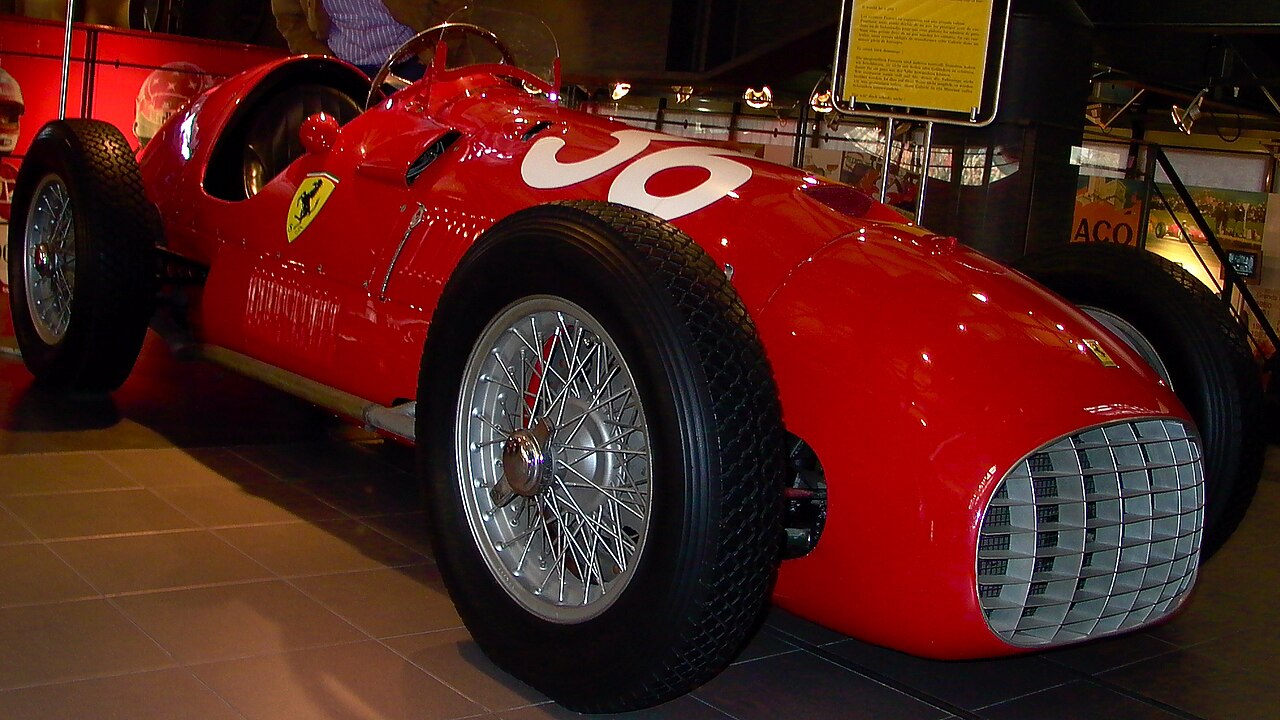

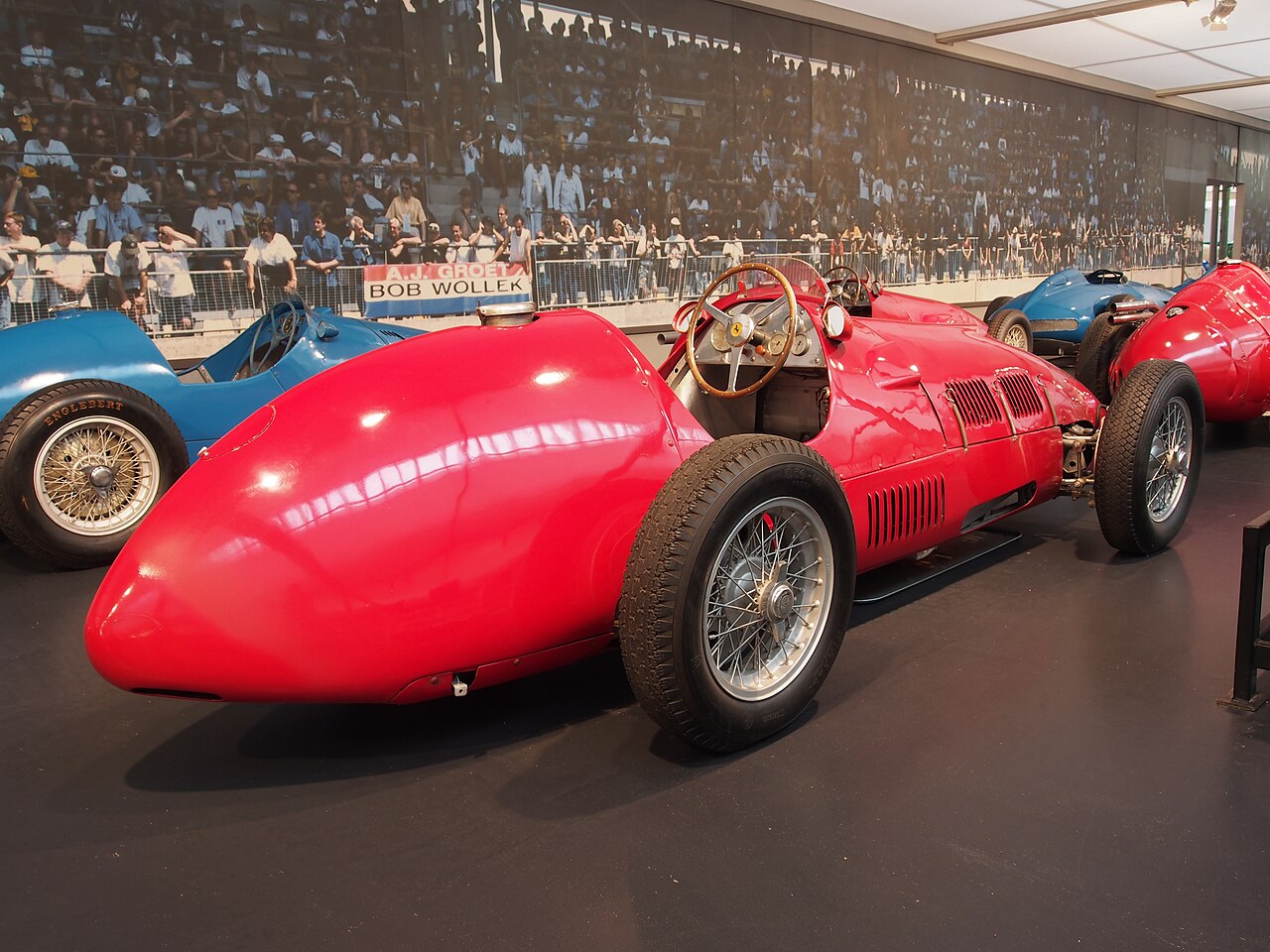

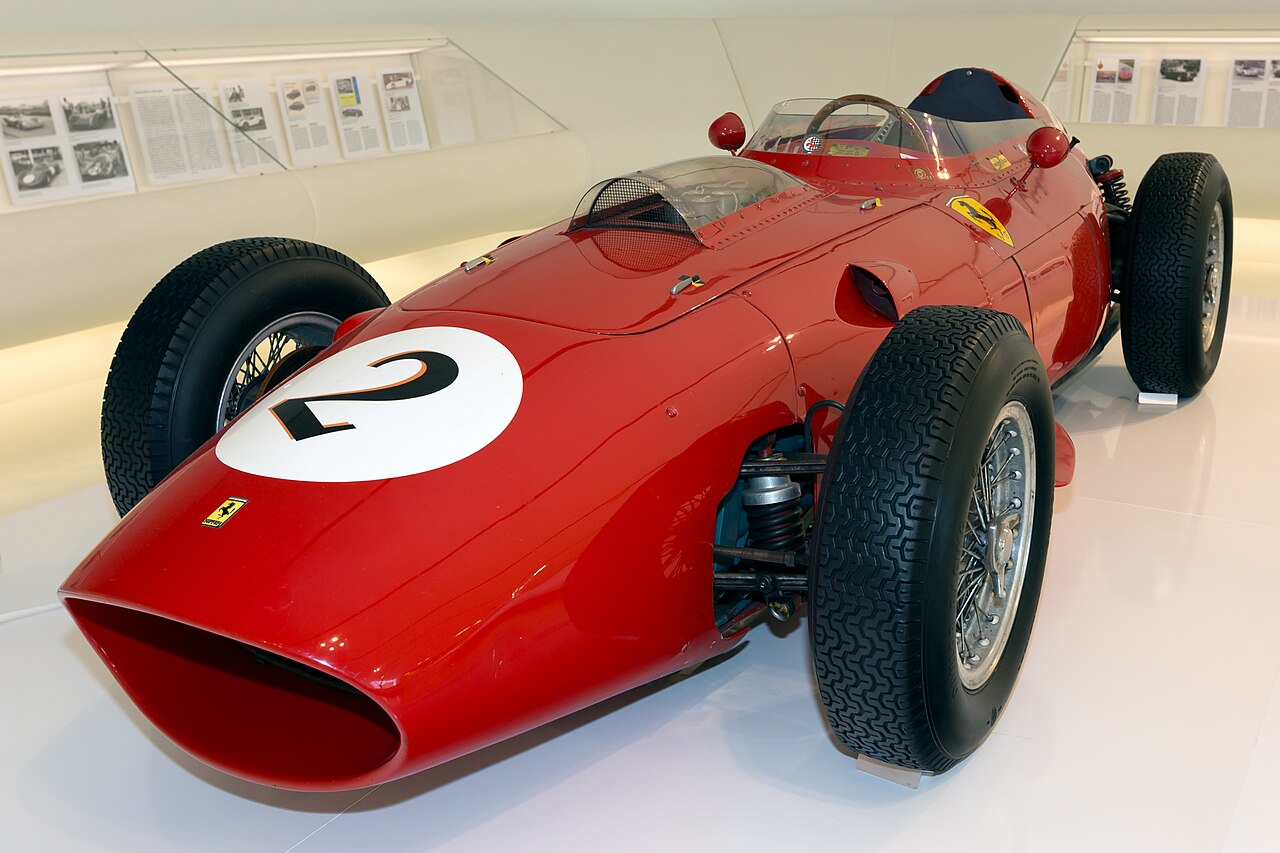

| Car | Years | Engine | Power (stated) | Results |
|---|---|---|---|---|
| 275 F1 / 340 F1 / 375 F1 | 1950–51 | Lampredi naturally aspirated V12: 3.3 L, 4.1 L and 4.5 L | about 300 hp (275); about 335 hp (340); similar to the 340 but more tractable (375) | Debut at the 1950 Belgian Grand Prix; first Ferrari World Championship win by José Froilán González at the 1951 British Grand Prix; Ascari won the German and Italian Grands Prix in 1951 |
| 500 F2 | 1952–53 | 1,985 cc front-mounted inline-four, two Weber carburettors | about 185 hp at 7,500 rpm; four-speed manual | The World Championship ran to Formula Two rules in these years; Ascari won the 1952 and 1953 drivers' titles and seven consecutive championship races in it |
| 625 F1 | 1954–55 | 2.5 L version of the four-cylinder | – | Two wins; not fast enough to beat the Mercedes-Benz W196 and Maserati 250F |
| 246 F1 | 1958 | 2,417 cc 65° V6 (Dino) | 280 PS at 8,500 rpm | The first V6 in Formula One; won the 1958 French Grand Prix at Reims; Hawthorn's 1958 drivers' title (Ferrari second in the constructors' standings). A 1959 revision, the 256 F1 (295 PS), won the French and German Grands Prix for Tony Brooks. It was the last front-engined car to win a Grand Prix (1960 Italian) |
1961-1969: 1.5-litre and 3.0-litre formulas
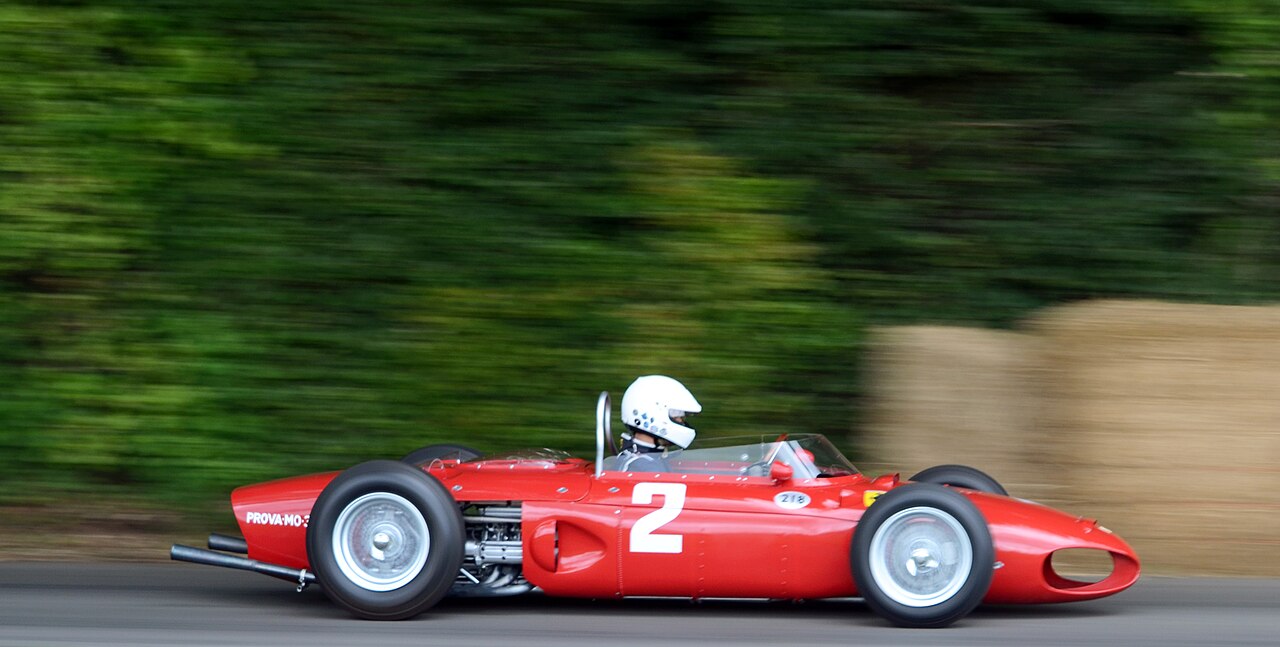

| Car | Years | Engine | Power (stated) | Results |
|---|---|---|---|---|
| 156 F1 ('Sharknose') | 1961–64 | 1,477 cc naturally aspirated 120° V6 | about 190 hp at 9,500 rpm; 205 hp at 10,500 rpm in later versions | Hill's 1961 drivers' title; constructors' titles 1961 and 1964; 29 races and 7 wins, the last by Lorenzo Bandini at the 1964 Austrian Grand Prix. The 1963 'Aero' version dropped the shark nose and moved to Bosch fuel injection. Wolfgang von Trips died at the 1961 Italian Grand Prix when his car left the track, and fifteen spectators were also killed |
Surtees won the 1964 drivers' title for Ferrari; the sources used do not give the car's specification. No sourced details are available for the 158, 1512 and 312 F1 cars (1964–69).
1970-1980: flat-12


| Car | Years | Engine | Power (stated) | Results |
|---|---|---|---|---|
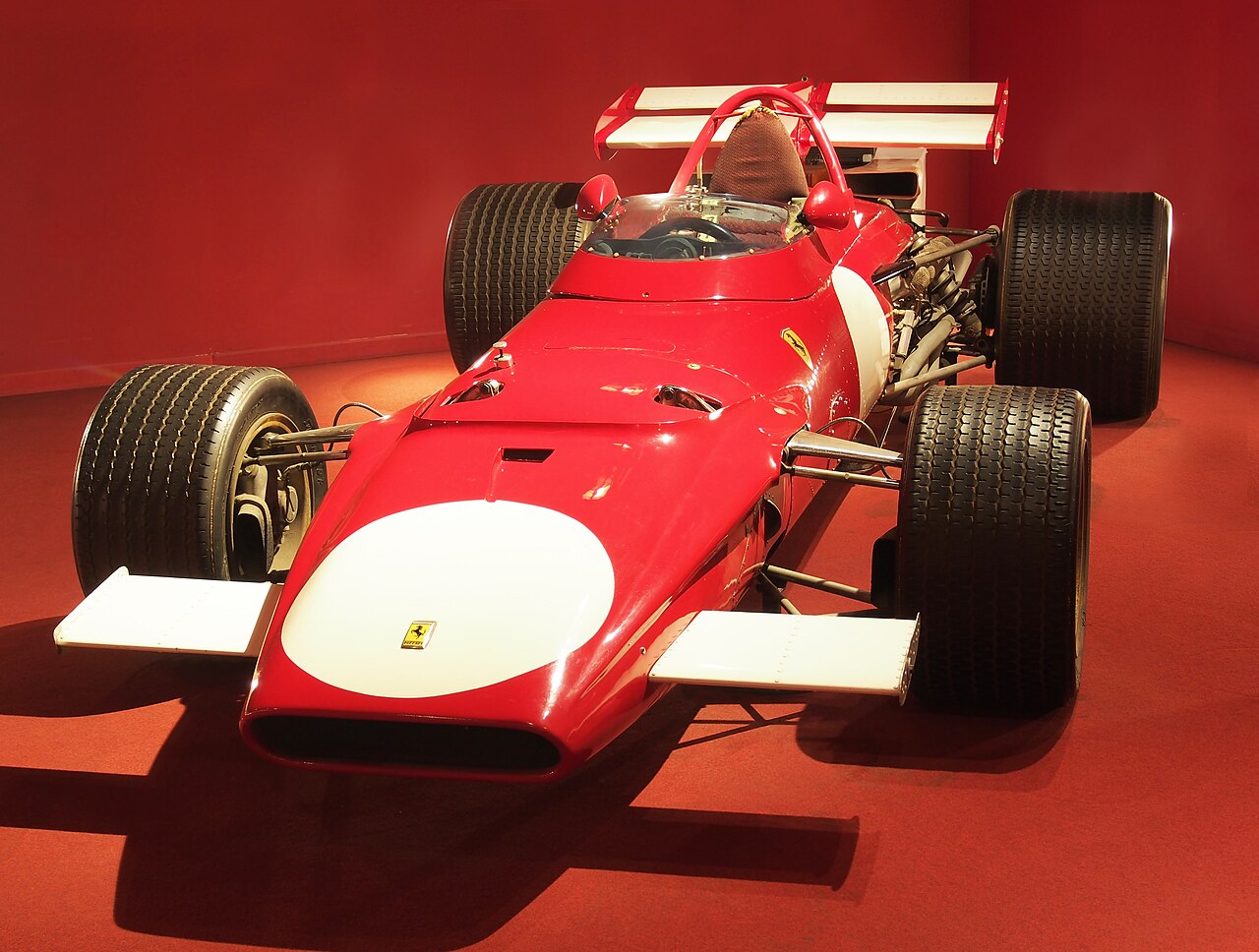
| 312B / B2 / B3 | 1970–74 (to early 1975) | Tipo 001 flat-12, about 3.0 L, mid-mounted longitudinally | 450–490 hp; dry weight 535 kg (312B) to 580 kg (312B3) | 1970: Jacky Ickx won three Grands Prix and Clay Regazzoni the Italian Grand Prix, with Lotus taking the constructors' title; 1972: Ickx's last win at the German Grand Prix; 1974: second in the constructors' standings with Lauda and Regazzoni in the 312B3-74 |
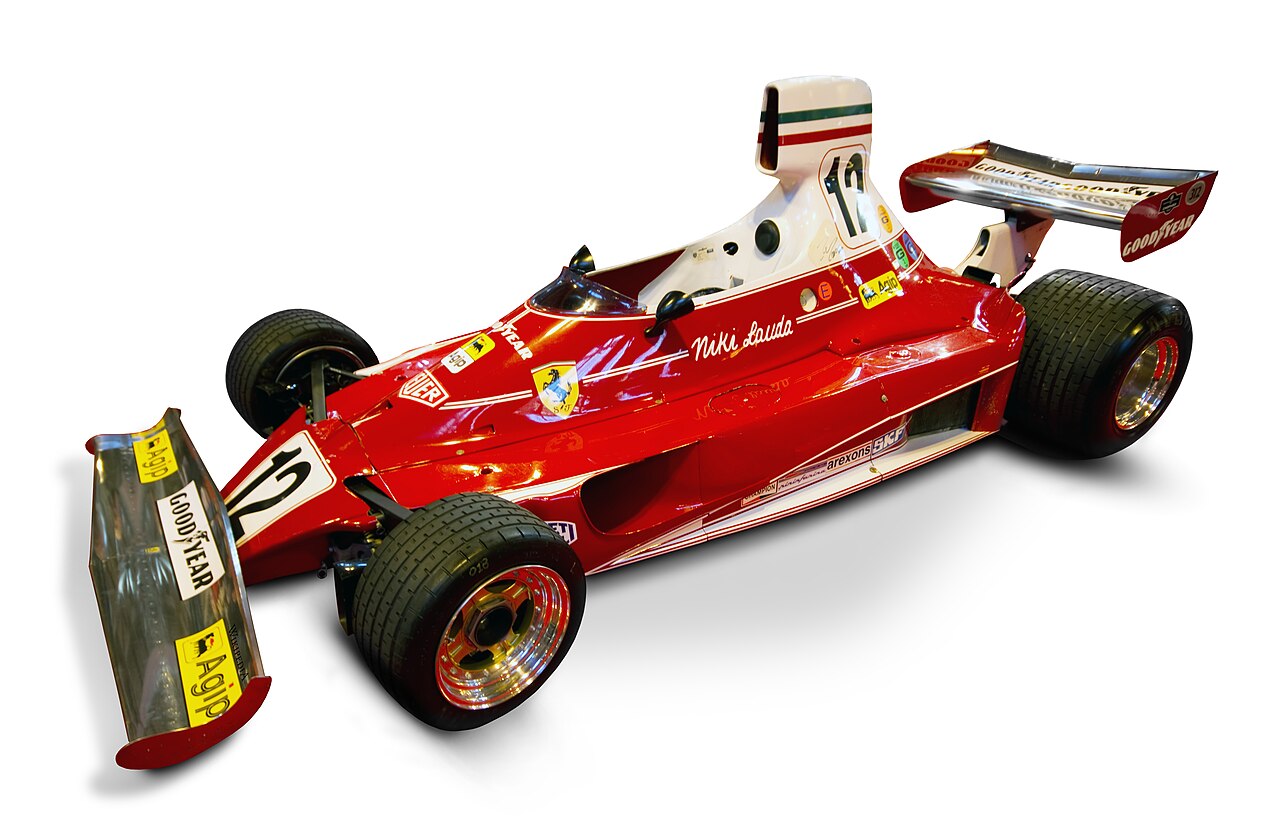
| 312T / T2 / T3 / T4 / T5 | 1975–80 | Tipo 015 flat-12, 3.0 L, with a transverse gearbox ('T' is for trasversale) | about 500–515 hp; spaceframe chassis with riveted aluminium panels | 27 wins; constructors' titles 1975, 1976, 1977, 1979; drivers' titles Lauda 1975 and 1977, Scheckter 1979. The 312T5 of 1980 won no races and finished tenth in the constructors' standings |
The two sources disagree on the 1975 titles: the 312B article credits them to the 312B line, the 312T article to the 312T. The 312T was Ferrari's 1975 car. A six-wheeled 312T6 was tested in 1977 and never raced.
1981-1994: turbo V6 and V12


| Car | Years | Engine | Power (stated) | Results |
|---|---|---|---|---|
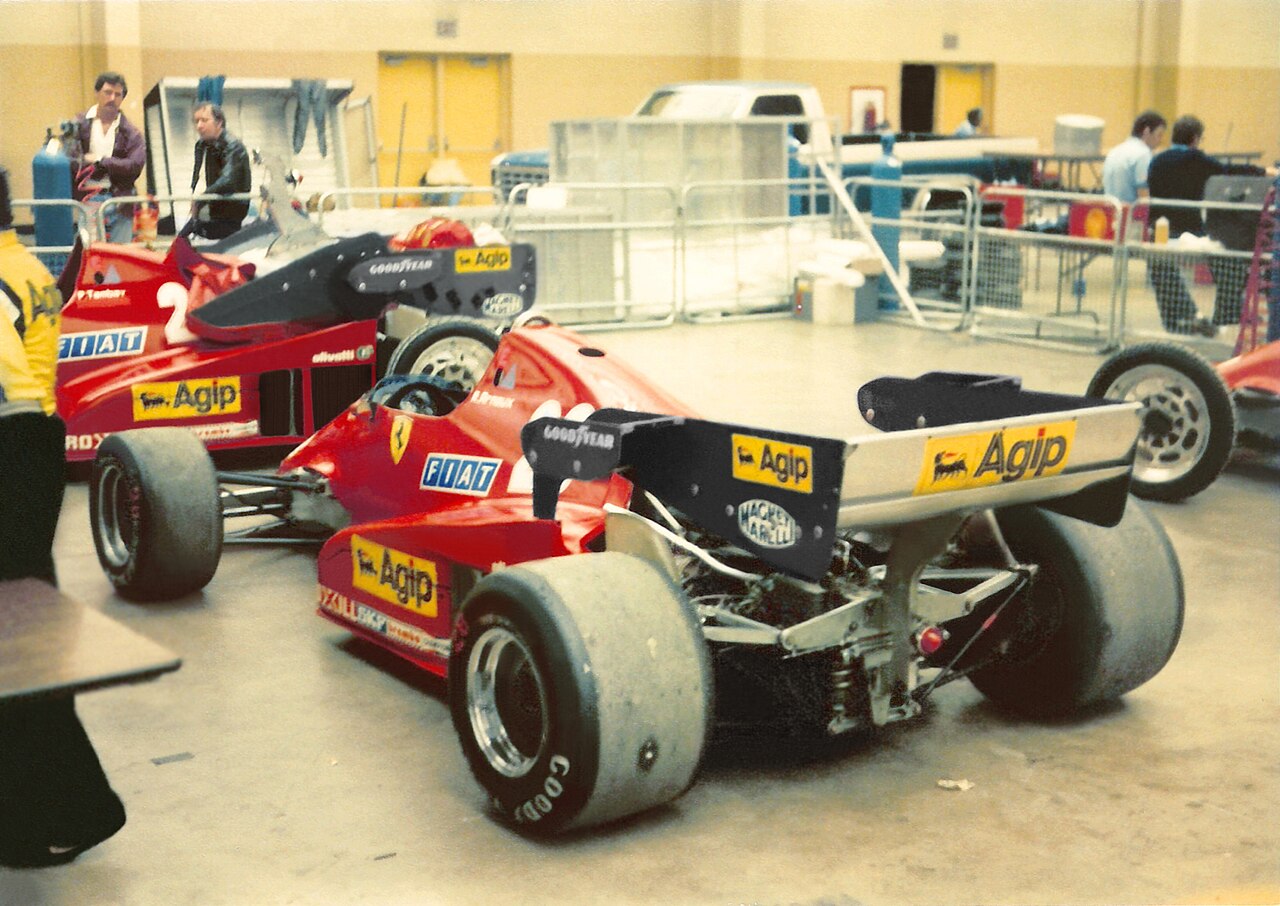
| 126C family (126CK, C2, C2B, C3, C4) | 1981–84 | 1,496 cc 120° turbocharged V6, mid-mounted longitudinally | 560–680 hp at 11,500 rpm in the infobox; about 650 hp (1982 C2) and about 850 hp (C4) in qualifying trim | 10 wins and 10 poles; constructors' titles 1982 and 1983; no drivers' title |
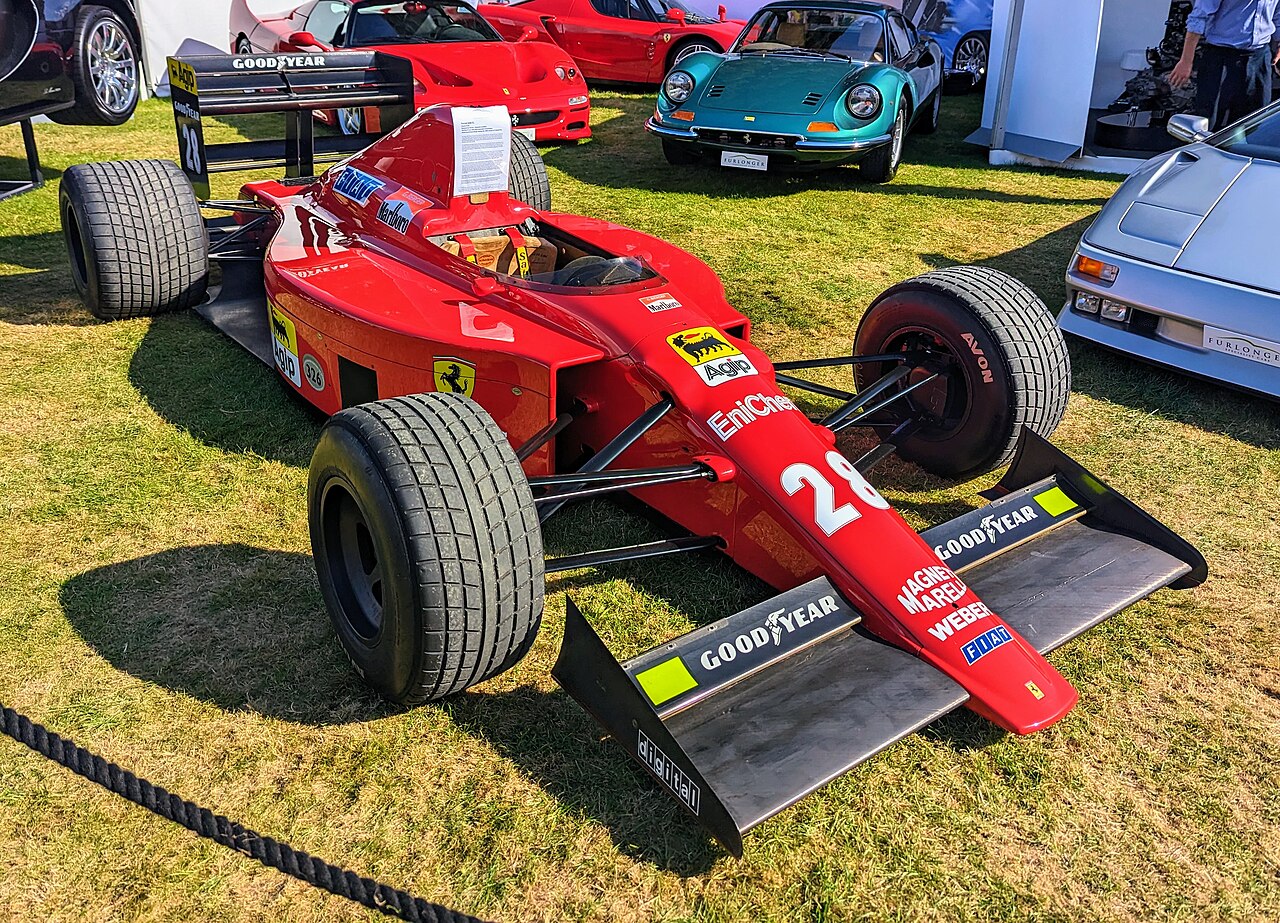
| 640 (F1-89) | 1989 | Tipo 035/5 3.5 L naturally aspirated V12 | about 660 hp by the end of the season | The first Ferrari F1 car with a V12 since the 312 F1-69 and the first with a paddle-shift sequential semi-automatic gearbox, which was unreliable at first. Nigel Mansell won in Brazil and Hungary, Gerhard Berger in Portugal; third in the constructors' standings with 59 points; Mansell fourth in the drivers' with 38 |
The 126C line's 1,496 cc turbo V6 was the first of the turbocharged engines, with the Renault and others; the 126C won the 1982 and 1983 constructors' titles without a drivers' title. The sources used do not give sourced details of the 156/85, F1-86, F1-87, 641, 642, F92A, F93A or 412 T cars.
1995-2008: V10 and V8



| Car | Years | Engine | Power (stated) | Results |
|---|---|---|---|---|
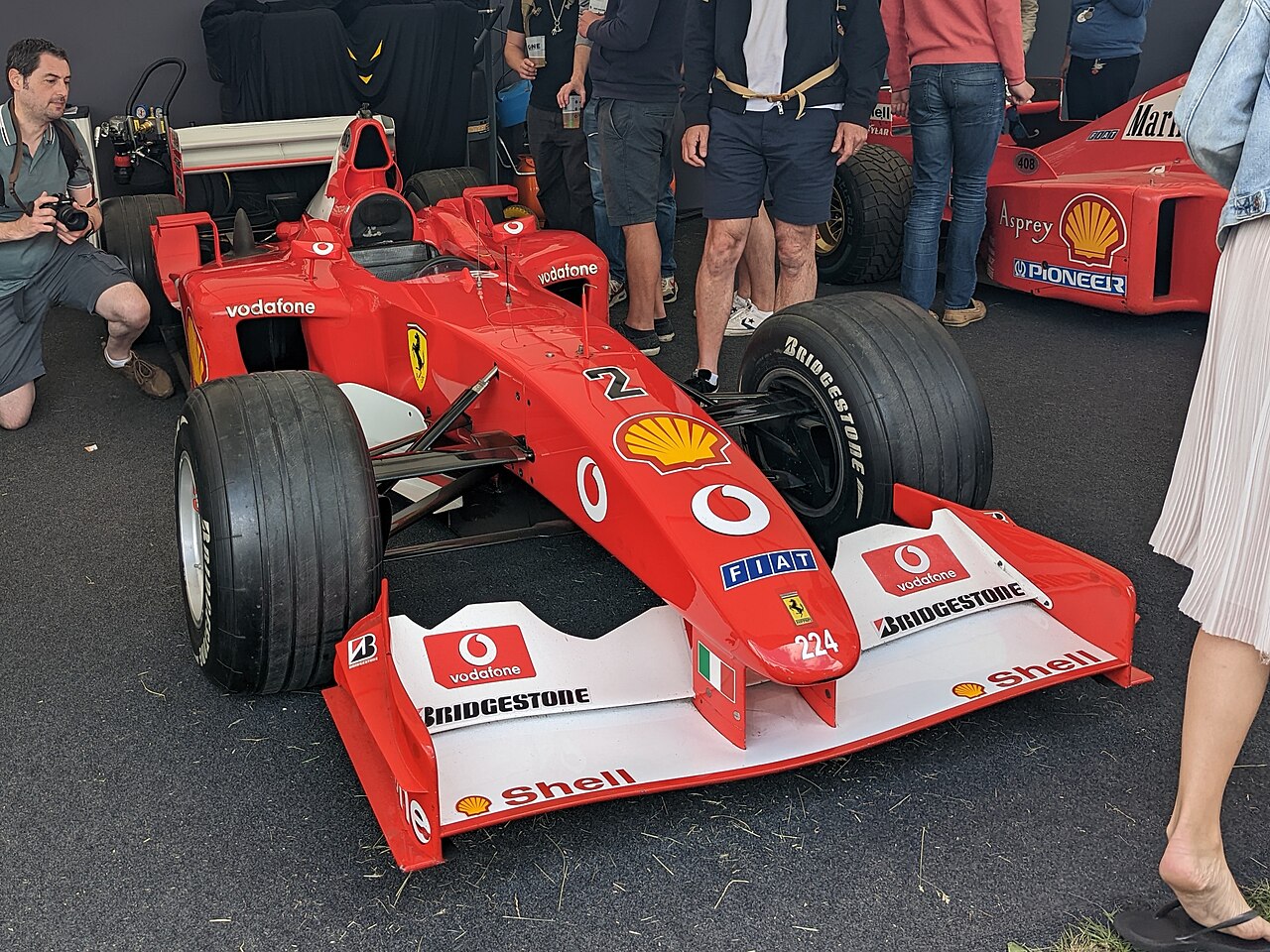
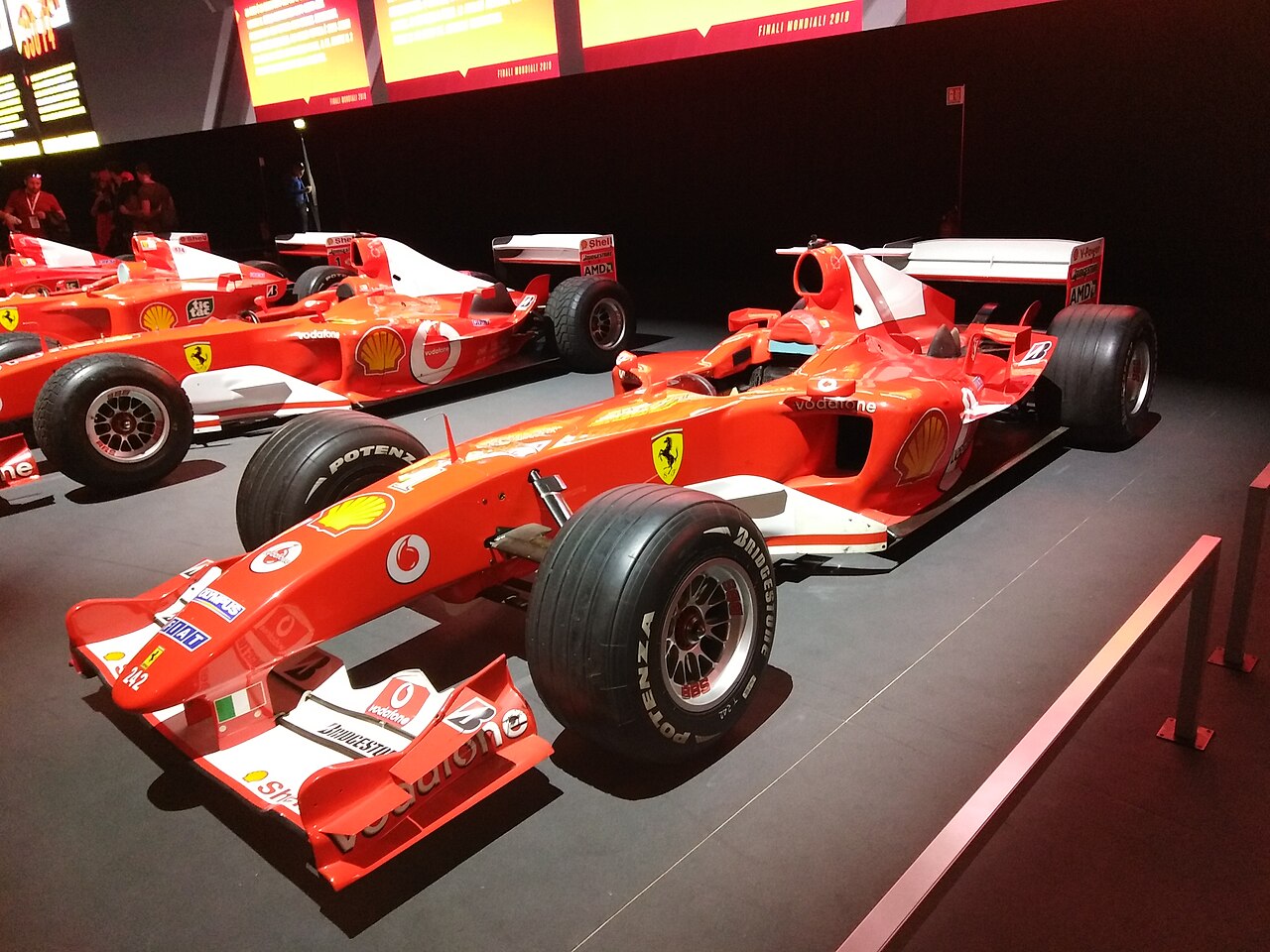
| F2004 | 2004 (F2004M in 2005) | Tipo 053 3.0 L naturally aspirated 90° V10, up to 18,800 rpm | 865 hp at 18,300 rpm in race trim; 900–940 hp at 19,000 rpm in qualifying trim | 15 wins in 18 races, 12 poles; Michael Schumacher won 13 races, including seven in a row, and his seventh and last drivers' title; constructors' title 262 points, Ferrari's sixth in a row. It was a heavily revised F2003-GA with new rear suspension, and applied the principles first used on the F2002 |
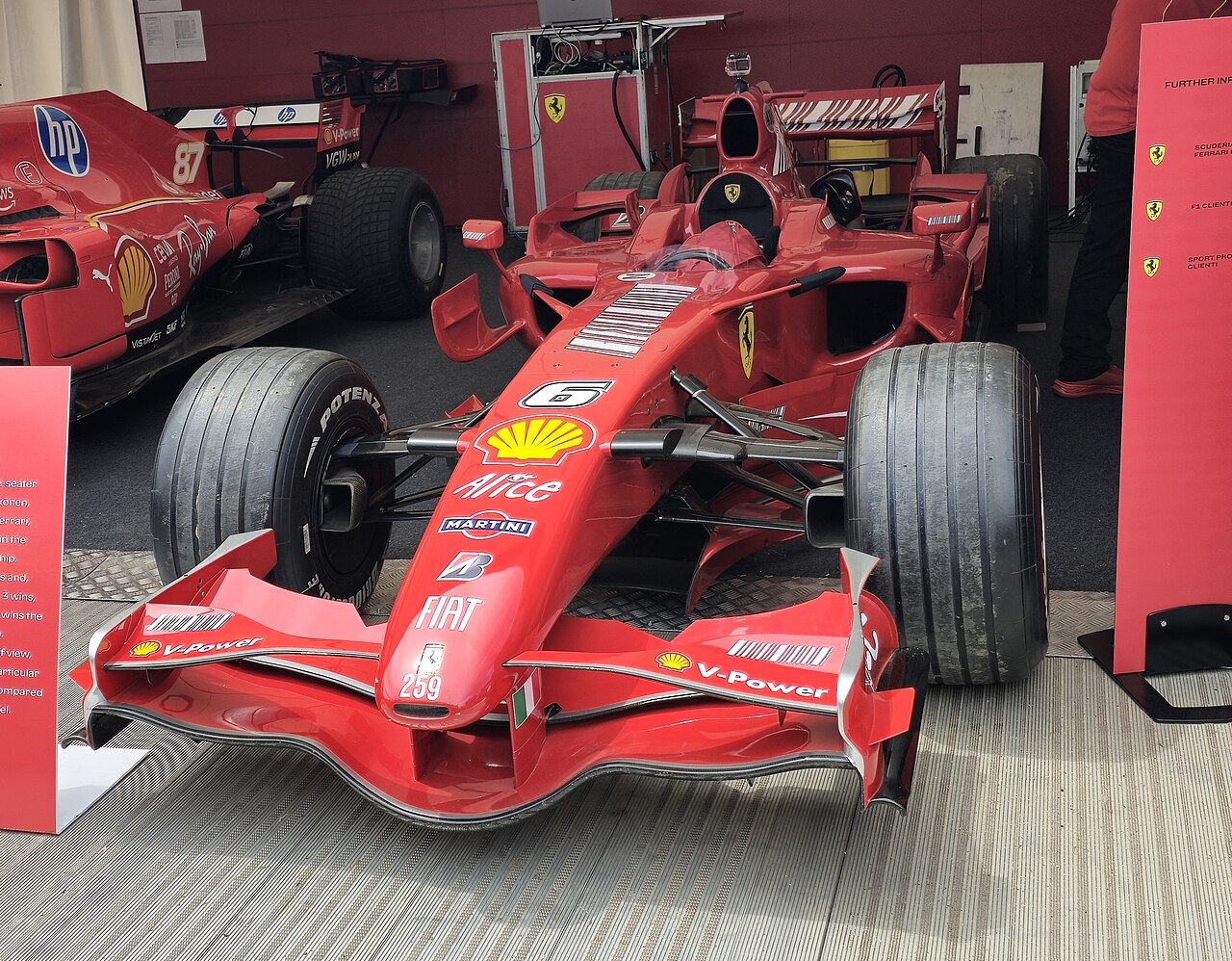
| F2007 | 2007 | Tipo 056-2007 2.4 L naturally aspirated 90° V8 | 800 hp at 19,000 rpm; seven-speed carbon-cased gearbox | 9 wins and 9 poles in 17 races, 204 points; Räikkönen's drivers' title and the constructors' title. First Ferrari with zero-keel front suspension; wheelbase lengthened from 3,050 to 3,135 mm |
Ferrari won the constructors' title every year from 1999 to 2004, again in 2007 and in 2008. Specification details for the F2002, F2003-GA, F2008 and other cars of this period are not given in the sources used.
2014-2025: turbo hybrid V6



| Car | Season | Power unit | Power (stated) | Results |
|---|---|---|---|---|
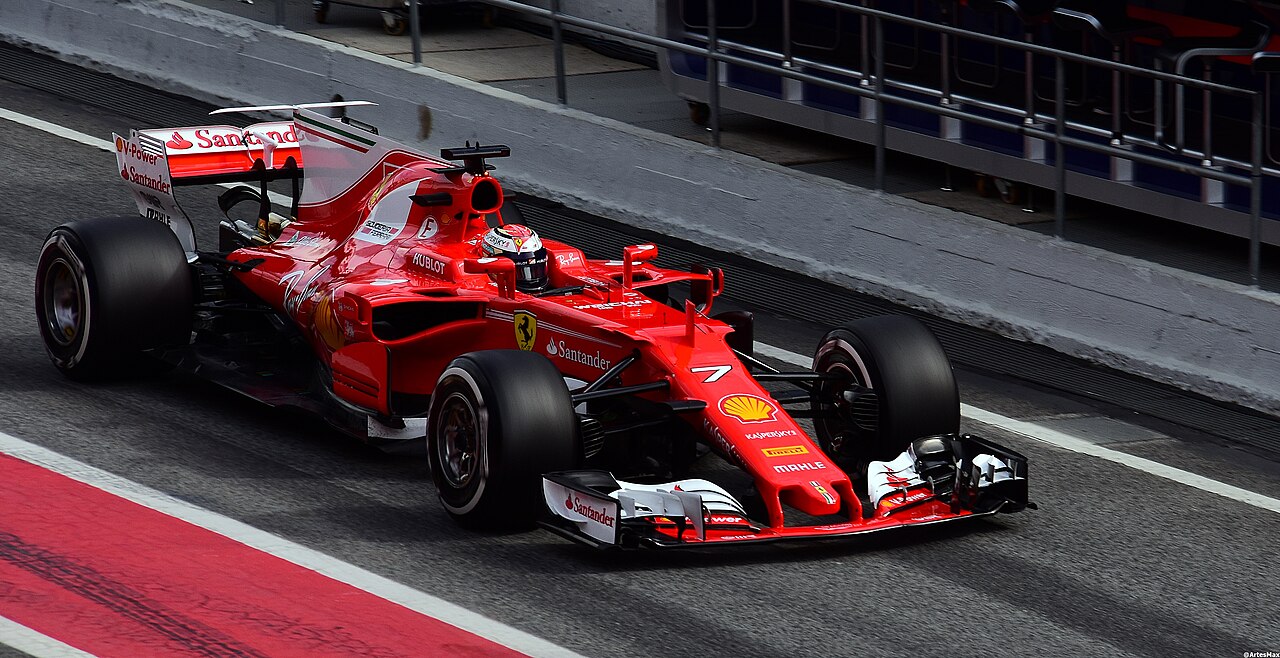
| SF70H | 2017 | Ferrari 062: 1.6 L direct-injection turbo V6 with kinetic and thermal energy recovery, 15,000 rpm limit; eight-speed semi-automatic gearbox | 950–1,000 hp | 5 wins, 20 podiums, 5 poles in 20 Grands Prix; second in the constructors' standings with 522 points; Vettel second and Räikkönen fourth in the drivers' |
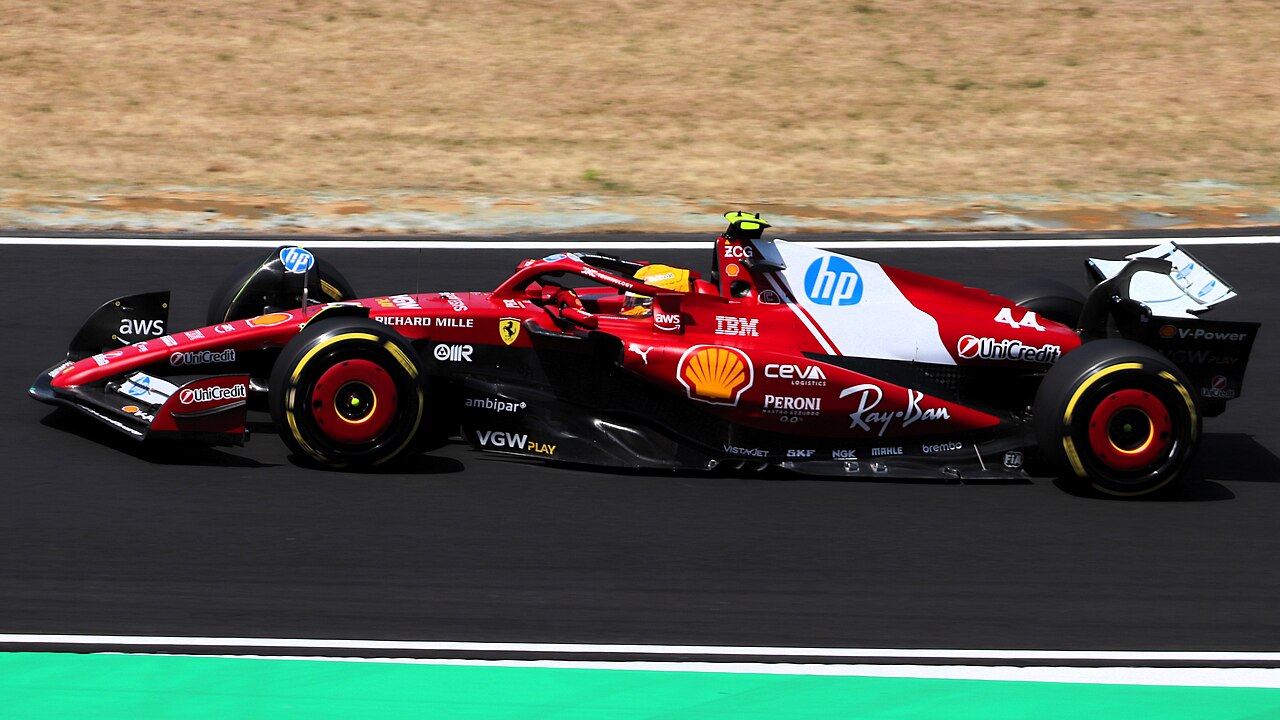
| SF-25 | 2025 | Ferrari 066/15: 1.6 L turbo V6, 15,000 rpm limit | – | Charles Leclerc and Lewis Hamilton (his first Ferrari season); no Grand Prix wins, one sprint win (China), 7 podiums, 1 pole; fourth in the constructors' standings with 398 points |
Ferrari has used a 1.6-litre turbocharged hybrid V6 since 2014. Sourced specifications for the F14 T, SF15-T, SF16-H, SF71H, SF90, SF1000, SF21, F1-75, SF-23 and SF-24 are not given in the sources used.
Not established
- Engine and result details for most cars not listed above: 125 F1, 158, 1512, 312 F1, the turbocharged and V10 cars of the late 1980s and 1990s, F2008, and the 2014–2024 hybrid-era cars.
- Which car won each drivers' title is not given in the source for the championships table; titles are listed by year and driver only.
- The Formula Two cars before 1952 (166 F2, 500 F2 precursors) and the CART and Indianapolis cars (375 Indianapolis, 637 CART) are not covered.
Sources
- Wikipedia: Ferrari in Formula One, accessed 19 November 2026.
- Wikipedia: List of Ferrari competition cars, accessed 19 November 2026.
- Ferrari 375 F1, Ferrari 500, 246 F1, 156 F1, 312B, 312T, 126 C and 640 (Wikipedia), accessed 19 November 2026.
- Ferrari F2004, F2007, SF70H and SF-25 (Wikipedia), accessed 19 November 2026.
- Related wiki pages: Ferrari: history and cars, Ferrari sports prototypes and GT racing cars.