The Ford Pinto engine is Ford's single-overhead-camshaft (SOHC) inline four-cylinder engine, built in Europe from 1970. It was Ford's first engine with a belt-driven overhead camshaft. In Europe it was sold as the OHC or EAO engine and coded TL (Taunus In-Line) in service literature. Its internal project code was T88. "Pinto" is an informal name, taken from the North American Ford Pinto car, which used the 2.0-litre German engine in 1971–74. The European engine powered the Cortina/Taunus, Capri, Escort RS2000, Granada, Sierra, Scorpio and Transit. Its block was also the basis of the Cosworth YB turbo engine. The engine is cheap, tolerant of tuning and widely documented, which has kept it popular in classic Ford, rally and kit-car use. With head and valvetrain work and twin carburettors, a 2.0-litre normally aspirated engine typically makes 130–160 bhp. Specialist builders put the practical limit at about 200 bhp for a full rally or race engine.
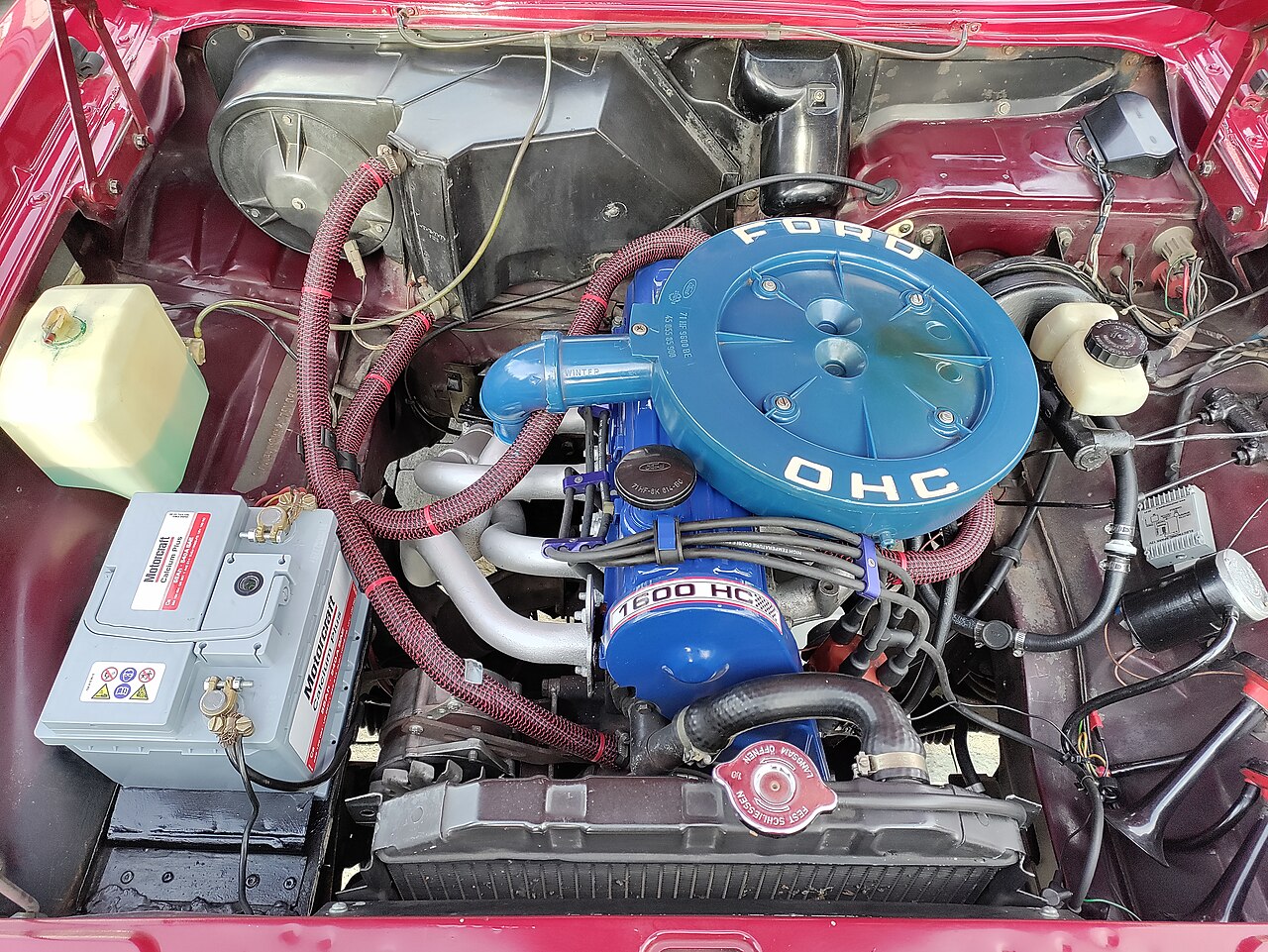

The North American Lima 2.0/2.3/2.5-litre engine shares the architecture but uses imperial dimensions, and few parts interchange. It is covered briefly below. Tuning advice for the European engine does not transfer directly to the Lima.
Design
- Layout: inline four, cast-iron block and cast-iron crossflow cylinder head, two valves per cylinder, wet sump, water-cooled.
- Valvetrain: a toothed-belt-driven overhead camshaft works the valves through finger followers pivoting on adjustable ball studs. Valve clearance is set at the ball stud.
- 2.0-litre dimensions: 90.8 mm bore × 76.95 mm stroke (1,993 cc), an over-square layout. Sources give the stroke as 77 mm or 76.95 mm.
- Standard valves (2.0): 42 mm inlet and 36 mm exhaust. Combustion chambers are about 50 cc on the 2.0-litre head and 38 cc on the 1.6-litre head (tuner's data).
- Fuel systems: Ford Motorcraft single-choke and variable-venturi (VV) carburettors, Weber 32/36 DGV/DGAV progressive twin-choke, and Pierburg 2E3 carburettors. Later Sierra, Granada/Scorpio and Transit 2.0 engines used Ford EEC-IV multipoint injection. A Transit-only single-point (CFI) version also existed. The EEC-IV system is often misidentified as Bosch L-Jetronic.
Known weaknesses
- Camshaft and follower wear. Early engines suffered excessive wear on the cam lobes and followers. Ford responded by nitriding the cam and followers and adding an oil spray bar that feeds oil directly onto the lobes. General rebuild practice is to check that the spray bar is present and its holes are clear, and to replace the cam and followers as a set. High-lift performance camshafts make the wear history worse (tuner's advice).
- Centre cam bearing. The centre cam bearing in the head is the one that wears fastest, and should be checked when assessing a used head (tuner's advice).
- Unleaded fuel. Early heads lack hardened exhaust valve-seat inserts. Injection heads from about 1988 had them as standard. Earlier heads need inserts for sustained unleaded use.
European variants
Outputs are DIN or manufacturer figures as compiled from Ford sales and service data. They vary with carburettor, market and year.
| Code | Capacity | Bore × stroke | Compression | Power | Torque | Fuel system / notes |
|---|---|---|---|---|---|---|
| TL13L / TL13H | 1.3 L (1,294 cc) | 79 × 66 mm | 8.0:1 / 9.0:1 | 40–46 kW (54–62 hp) | 90–98 N·m | Motorcraft single-choke; VV from April 1979 |
| TL16L / TL16H | 1.6 L (1,593 cc) | 87.7 × 66 mm | 8.2:1 / 9.2:1 | 48–53 kW (64–71 hp) | 111–118 N·m | Motorcraft single-choke, later VV |
| TL16G (GT) | 1.6 L (1,593 cc) | 87.7 × 66 mm | – | 66 kW (89 hp) | 125 N·m | Modified head, Weber 32/36 DGAV, tubular exhaust manifold |
| TL16E | 1.6 L (1,598 cc) | 81 × 76.95 mm | 9.5:1 | 56 kW (75 hp) | 123 N·m | From 1984 ("E-Max" economy version) |
| TL18H | 1.8 L (1,796 cc) | 86.2 × 76.95 mm | – | 66 kW (89 hp) | 140 N·m | From 1984; Pierburg 2E3 |
| TL20L | 2.0 L (1,993 cc) | 90.8 × 76.95 mm | 8.2:1 | 43–64 kW (58–86 hp) | 140–156 N·m | Low-compression; Transit and export versions |
| TL20H | 2.0 L (1,993 cc) | 90.8 × 76.95 mm | 9.2:1 | 74 kW (99 hp); 81 kW (109 hp) in Escort RS2000 | 156 N·m | Weber 32/36 DGAV on most cars; "NE" engine codes |
| TL20EFI | 2.0 L (1,993 cc) | 90.8 × 76.95 mm | – | 85 kW (114 hp); 74 kW in some Sierras | 160 N·m | Ford EEC-IV multipoint injection; some closed-loop lambda |
| TL20CFI | 2.0 L (1,993 cc) | 90.8 × 76.95 mm | – | 57 kW (76 hp) | – | Transit only; single-point injection |
The compiled data are inconsistent in places. The 1.8 is given as both 1,796 cc and 1,798 cc, and the 2.0 stroke as both 77 mm and 76.95 mm. Engine code, carburettor and head casting should be confirmed on the engine itself before parts are ordered.
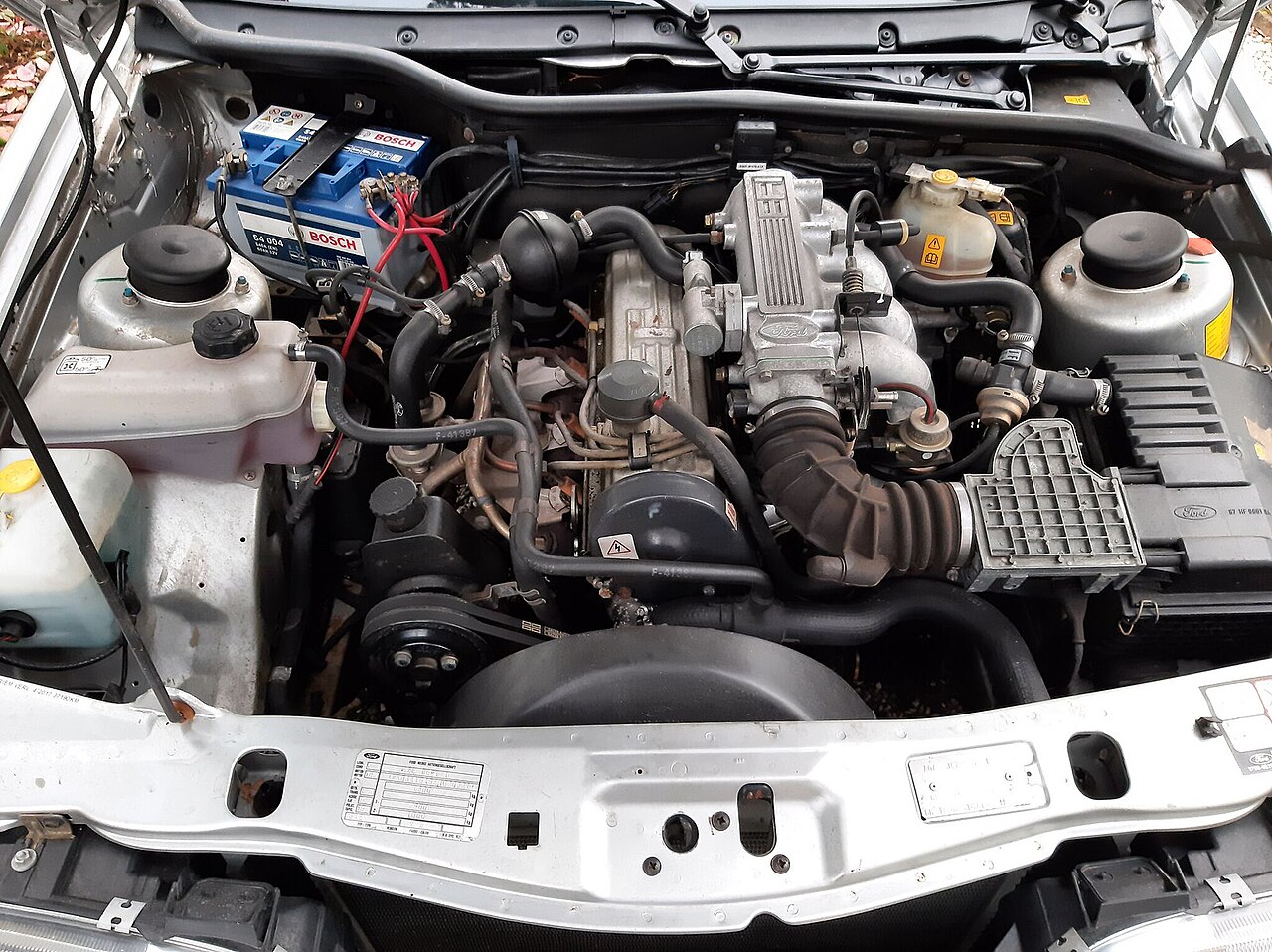

Cars fitted (Europe)
- Ford Cortina Mk3–Mk5 and Taunus TC (1970–1982): 1.3, 1.6, 1.6 GT and 2.0. See Ford Cortina, Corsair, Granada, Scorpio and Mondeo.
- Ford Capri Mk1–Mk3 (1972–1985): 1.3 (to 1974), 1.6, 1.6 GT and 2.0. See Ford Capri classic.
- Ford Escort Mk2 RS2000 (1975–1980) with the 2.0 TL20H at 81 kW (109 hp), and the Escort RS Mexico (1975–1978) with the 1.6 GT. The Mk1 RS2000 (1973) also used the 2.0. See Ford Escort Europe.
- Ford Granada Mk1–Mk2 (1973–1985): 1.6 and 2.0. Granada Mk3 / Scorpio (1985–1992): 1.8 carburettor and 2.0 EFI.
- Ford Sierra (1982–1992): 1.3 (to 1984), 1.6, 1.8 (to 1989), 2.0 carburettor and 2.0 EFI. The Sierra 1.6 was the last European passenger car with the engine. See Ford Sierra and Sierra RS Cosworth.
- Ford Transit and P100: 1.6 and 2.0 in carburettor, CFI and (from 1991) EFI form. The 2.0 Transit, ending in 1994, was the engine's final European application.
- Others: Anadol A8-16 (Turkey); the North American Ford Pinto and Mercury Capri (2.0, imported from Germany).
The Pinto was replaced in Europe by the CVH and the later DOHC "I4" engines. These are new designs and not Pinto derivatives.
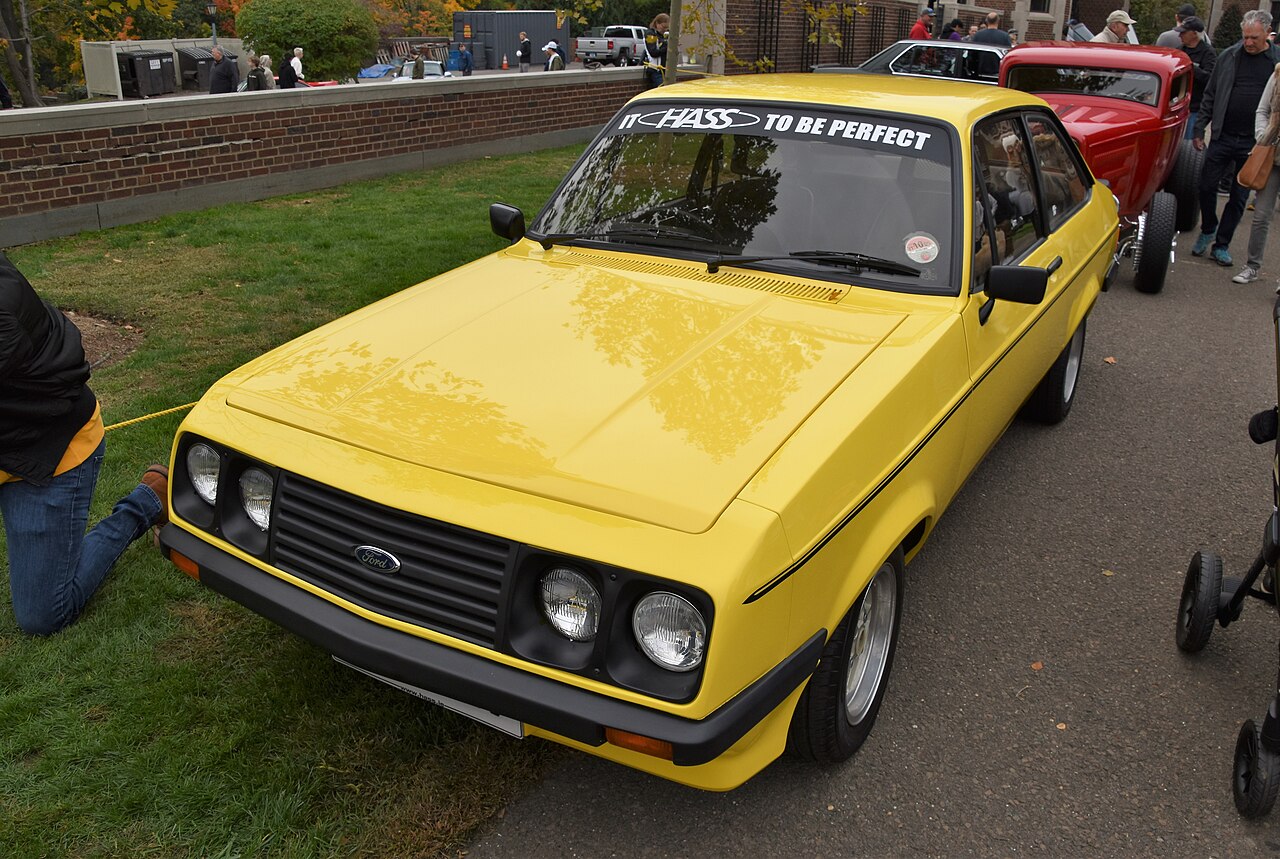

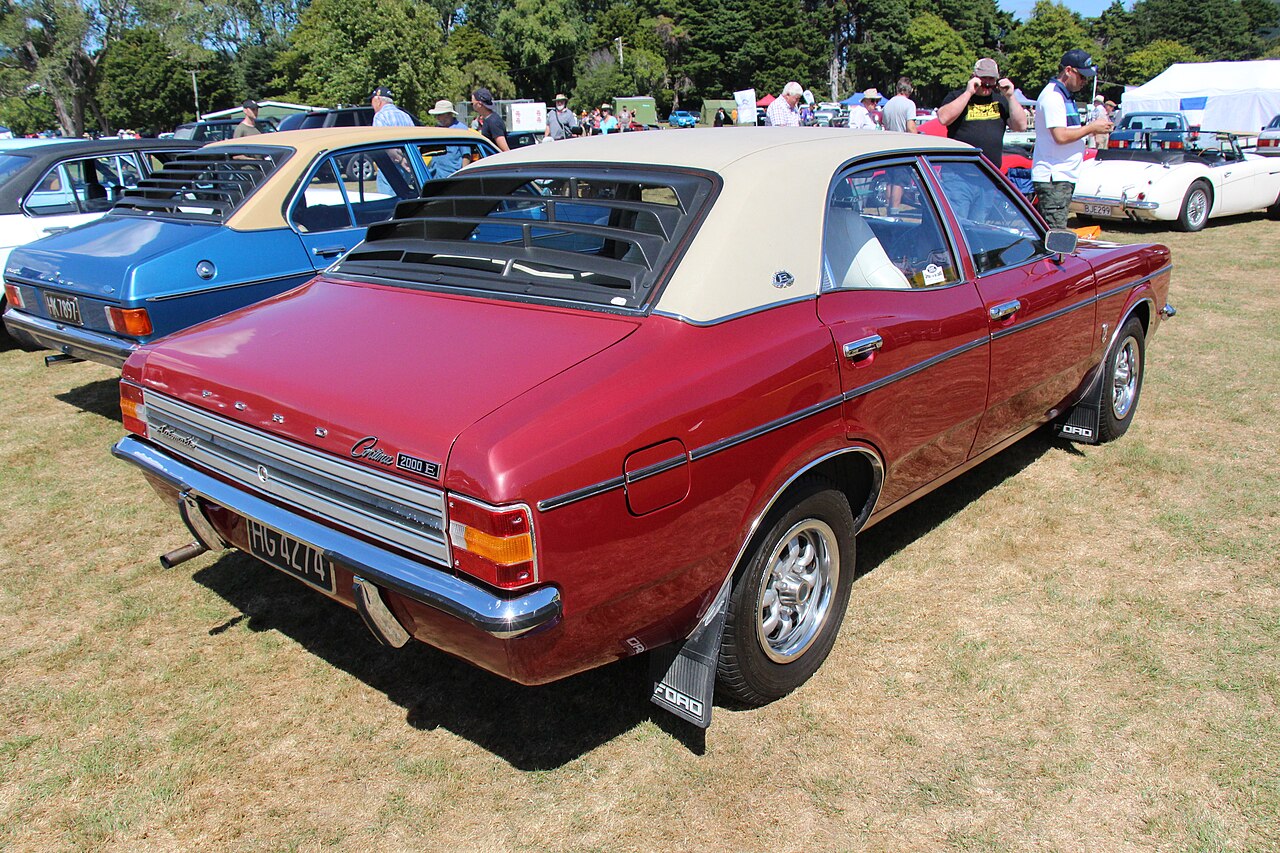

Cosworth YB derivative
The Cosworth YB fitted to the Sierra RS Cosworth and Escort RS Cosworth combines a Cosworth 16-valve DOHC aluminium head with a modified Pinto-type block. It uses a Garrett turbocharger. It is the only twin-cam production derivative. The YB blocks are the strongest donors for a turbocharged Pinto build (see below).
North American Lima engine and the Ford Pinto car
The imperial-dimension Lima engine was built in Lima, Ohio, from 1974, and later in Brazil. It was made in 2.0 L (89.3 × 79.4 mm, 1,990 cc), 2.3 L (96.04 × 79.4 mm, 2,301 cc) and 2.5 L (2,504 cc, 1998–2001) versions. Notable performance applications are the turbocharged 2.3. The 1979–80 Mustang and Capri used a non-intercooled draw-through turbo limited to about 5 psi. The 1983-on Thunderbird Turbo Coupe and Mustang SVO had fuel-injected turbo versions: the SVO made 175 hp, rising to 205 hp in 1985½. The Merkur XR4Ti had 155 hp. From 1989 (Ranger) and 1991 (Mustang) the 2.3 had a twin-plug head and distributorless ignition. Lima parts are not interchangeable with the European engine.
The Ford Pinto car (1971–1980) used several engine families:
| Model years | Engine | Rated output |
|---|---|---|
| 1971–1973 | 1.6 L Kent (overhead valve) | 75 hp gross (1971); 54 hp net (1972–73) |
| 1971–1974 | 2.0 L EAO (European "Pinto" OHC) | 100 hp gross (1971); 86 hp net (1972–74) |
| 1974–1980 | 2.3 L Lima OHC | 83–92 hp net |
| 1975–1979 | 2.8 L Cologne V6 | 90–103 hp net |
The Mercury Bobcat (1974/75–1980) was a rebadged Pinto. See also Ford Mustang.
Tuning the European 2.0 Pinto
The tuning section concentrates on the 2.0-litre engine, which is the usual basis for performance work. The figures below are from a specialist engine builder's published guide (Puma Racing), and are given as approximate flywheel power unless marked otherwise. The same source gives wheel power on a rolling road as roughly 17% below flywheel power.
Typical outputs
| Specification | Approximate output |
|---|---|
| Standard 2.0 carburettor (Weber 32/36 DGAV) | Rated 105 bhp in the tuner's guide (Ford data give 74 kW / 99 hp DIN for most TL20H cars); about 100 bhp in practice (80–85 bhp at the wheels) |
| Standard 2.0 EFI | Rated 115 bhp (90–95 bhp at the wheels) |
| Group 1-type ported head, road camshaft, good 4-2-1 exhaust, standard DGAV | 130–135 bhp |
| As above with twin 40 DCOE carburettors | Up to about 150 bhp; more with a 2.1 and 1.8 in inlet valves |
| Typical rally engines on a rolling-road survey | About 125 bhp at the wheels (150–155 bhp flywheel) |
| Fully developed rally/race engine | Up to about 200 bhp (165–170 bhp at the wheels) |
The same builder reports that few engines exceed 160–170 bhp without serious head and valvetrain development, and that 100 bhp per litre is only just attainable. In one documented 2.1-litre with a Group 1 head, twin 45 DCOEs and a fast-road cam, wheel power rose from 95 bhp to 133 bhp after port work and a change to a high-lift, short-duration camshaft (builder's rolling-road figures).
Cylinder head
- The standard head flows about 140 cfm. Properly ported with larger valves it can exceed 190 cfm.
- The inlet port is already large as standard and needs enlarging only for the biggest valves. The short-side radius is the critical area. Small errors in its shape can cost around 20 bhp of potential, so flow-testing each head is recommended.
- The later Sierra injection head flows better as cast than the Cortina/Capri carburettor head, which is useful where porting is banned. After full porting the two are similar.
- Group 1 valve sizes are 1¾ in (44.4 mm) inlet and 1½ in (38.1 mm) exhaust. Inlets of 46 mm are used on maximum-effort heads. The standard 36 mm exhaust valve is considered adequate.
- Raising compression on the 2.0 head (50 cc chambers) needs heavy skimming, which thins the deck. The 1.6 head (38 cc chambers) is an alternative, but its valves are 113 mm long instead of 111 mm and its spring seats may need machining.
Valvetrain geometry
Valvetrain set-up has as much effect on a Pinto as port work. Because the finger followers pivot on ball studs, valve length directly affects effective lift and timing. Each extra millimetre of valve length can cost up to about 0.5 mm of lift. The builder reports that many aftermarket performance valves are at least 2 mm too long, which forces the ball studs to the bottom of their adjustment. Specific cautions:
- Use correctly sized valve stems. The standard inlet stem is about 0.316 in, in a 0.3175 in guide bore. Some 0.314 in valves intended for bronze guides are too loose in a standard head.
- Do not grind the hardened (Stellite) valve tip, as rapid wear and a follower jumping off the valve can follow.
- Chrome-plated stems are needed in cast-iron guides. Many performance valves are made of 21-4N stainless steel, which cannot be hardened and is non-magnetic. The standard valves are hardenable EN52B.
- Some "long pad" followers sold with camshafts can hammer the valve tips. The standard Ford follower is usually satisfactory with race camshafts, provided the wipe pattern is checked.
- Incorrect valvetrain geometry is estimated to cost 10% or more of potential power, about 20 bhp on a full race engine.
Camshafts
The Pinto responds best to high valve lift with moderate duration. Many off-the-shelf road camshafts are low-lift, long-duration grinds, and over-long valves reduce their real lift further. Camshafts are widely available from Kent, Piper, Newman and Crane. Retailers list Newman's Phase 3 fast-road profile at about 6.98 mm inlet lift with a 3,000–7,000 rpm power band. A camshaft change should include new followers, springs suited to the profile, an oil spray bar inspection and correct cam timing using a vernier pulley where fitted. Because of the engine's lobe-wear history, aggressive high-lift profiles will not last indefinitely.
Carburettors, injection and ignition
- Weber 32/36 DGV/DGAV: adequate for even-tuned road engines up to about 140 bhp. Jetting and set-up are on Weber DGV, DGAV, DGEV and DFV carburettors.
- Twin Weber DCOE sidedraughts: worth 12–15 bhp over the DGAV, depending on specification. 40 mm carburettors suit road engines to about 150 bhp; 45 mm units are needed above that. Specialist experience shows little gain from 48 mm over 45 mm.
- Throttle bodies with programmable management: give the most power while keeping low-speed torque. Builders also use motorcycle carburettor sets on custom manifolds, typically on kit cars.
- Ignition: the standard distributor is often replaced by a mapped distributorless system. Owner builds commonly use Megajolt-type mapped ignition controllers or MegaSquirt-type programmable ECUs. Owners report that the Megajolt offers good value but can need serial-to-USB adaptors on modern laptops. See Ford EEC-IV STAR code reader for fault-code reading on standard EFI engines.
Bottom end and capacity increases
- Blocks: early Cortina/Capri blocks are thin-cast and should not be bored beyond about 92 mm (93 mm is usually acceptable for road use). The later "205" block (Sierra, Transit and Cosworth) is comfortable at 93 mm for normally aspirated use and 94 mm for non-race use. The "200" block from the Sierra Cosworth 4×4 has more material around the bores and a stronger rear flange, and is the preferred block for high-boost turbo engines.
- 2.1-litre conversion: 93 mm 2.8 Cologne V6 pistons on the standard crank give 2,091 cc. At 94 mm oversize the capacity is 2,136 cc. The V6 piston has a lower compression height, so the block deck may need machining to restore compression.
- Long-stroke builds: about 88 mm is the longest stroke that clears the block walls and oil pump. That gives about 2.39 L at 93 mm and 2.44 L at 94 mm bore. Long-stroke cranks are sold as specialist stroker kits.
- Crankshaft: the standard crank is strong enough for race use. On very high-output engines the six flywheel bolts can shear. The cure is extra dowels, or the nine-bolt Cosworth crank.
- Rods and pistons: standard rods are considered good to about 7,500 rpm. Regular use above 8,000 rpm needs stronger rods (Cosworth or aftermarket H-section). The heavy standard pistons and thick rings do not tolerate sustained high rpm, and repeated use at 7,500 rpm damages the ring lands. Forged pistons are recommended for race engines.
Turbocharging
Turbocharged Pinto conversions are commonly based on the 2.0 EFI engine, often with Cosworth injectors, pistons, rods and Group A head gasket. One documented Sierra build first ran about 0.7 bar on the standard EFI engine. Its later specification combined a GT35-class turbocharger, MegaSquirt management with an external 3-bar MAP sensor, Cosworth pistons and rods, a ported injection head and 670 cc injectors. The owner claimed 307 hp at about 1.5 bar, but no dyno record was published. Owner reports of safe boost on standard internals vary and are not supported by measured data. For sustained high boost, the 200-series Cosworth block and forged internals are the established route.
Kit cars and engine swaps
The 2.0 Pinto from a Sierra was the most common engine in Westfield, Robin Hood and similar Seven-style kit cars in the 1980s and 1990s. It has since been largely displaced by Zetec and Duratec engines. The Sierra five-speed Type 9 gearbox bolts directly to the engine. In low cars the standard Sierra sump hangs close to the ground, and builders commonly shorten and widen the sump and shorten the oil pickup. Because the Pinto's inlet and exhaust are on the opposite side to a Kent crossflow, a swap from a crossflow needs the exhaust and wiring loom re-routed.
Not established
- A published, measured boost limit for standard 2.0 EFI pistons and head gasket.
- A manufacturer-documented specification for the Ford revision that introduced nitrided cams and the spray bar, or the date it was introduced.
- Whether the standard 2.0 engine is interference or non-interference if the cam belt fails. Owners should treat a belt failure as potentially damaging and follow Ford's belt replacement interval.
Related pages
- Burton Power: Ford, Cosworth and classic engine parts
- Ford aftermarket tuners and specialists
- Ford MAP and BARO frequency sensors
- Ford: history and cars
Sources
- Wikipedia: Ford Pinto engine, revision oldid 1383320735. Wikipedia contributors; CC BY-SA 4.0. The article is flagged as needing more citations. Accessed 2026-11-19. Variant, application and Lima data adapted from this revision.
- Wikipedia: Ford Pinto, revision oldid 1385568843. Wikipedia contributors; CC BY-SA 4.0. Accessed 2026-11-19. Pinto car engine line-up.
- Puma Racing: Tuning a Ford Pinto engine. Specialist engine builder's guide; published 2019-05-06, updated 2025-06-02; accessed 2026-11-19. Source for head flow, valvetrain, carburation, bottom-end and output figures.
- ShopBHP: Ford Pinto 2.0 SOHC Phase 3 fast-road Newman camshaft kit. Retailer listing; accessed 2026-11-19.
- PassionFord: '86 Sierra 3dr 2.0 turbo Pinto. Owner build thread, May 2011 – May 2014; owner-reported, no dyno; accessed 2026-11-19.
- PassionFord: Tuning the Pinto 2.0 engine. Forum discussion, July 2007; accessed 2026-11-19. Source for the Cologne V6 piston 2.1 practice.
- Old Skool Ford: Fitting Megajolt. Owner forum discussion; accessed 2026-11-19.
- WSCC forum: Pinto in a Westfield. Owners' club discussion; accessed 2026-11-19.
- 2.0 Pinto engine swap (Westfield). Owner's build page, c. 1997; accessed 2026-11-19. Source for the gearbox, sump and exhaust swap details.
- Des Hammill, How to Power Tune Ford SOHC 'Pinto' & Sierra Cosworth DOHC Engines (Veloce SpeedPro series). Standard reference; not consulted directly for this page.