Ferrari's flagship road cars of 1973–2018 used a flat-12 in the Berlinetta Boxer family, then alternated between turbocharged V8 (288 GTO, F40) and naturally aspirated V12 (F50, Enzo, LaFerrari) engines. This page gives the engine, output and production for each. The front-engined V12 grand tourers are on Ferrari front-engined V12 grand tourers.
Reliability of the figures: factory outputs for the flat-12 cars were revised during their lives and the sources give different figures in different places; ranges are shown where they conflict.
Berlinetta Boxer and Testarossa flat-12 (1973-1996)
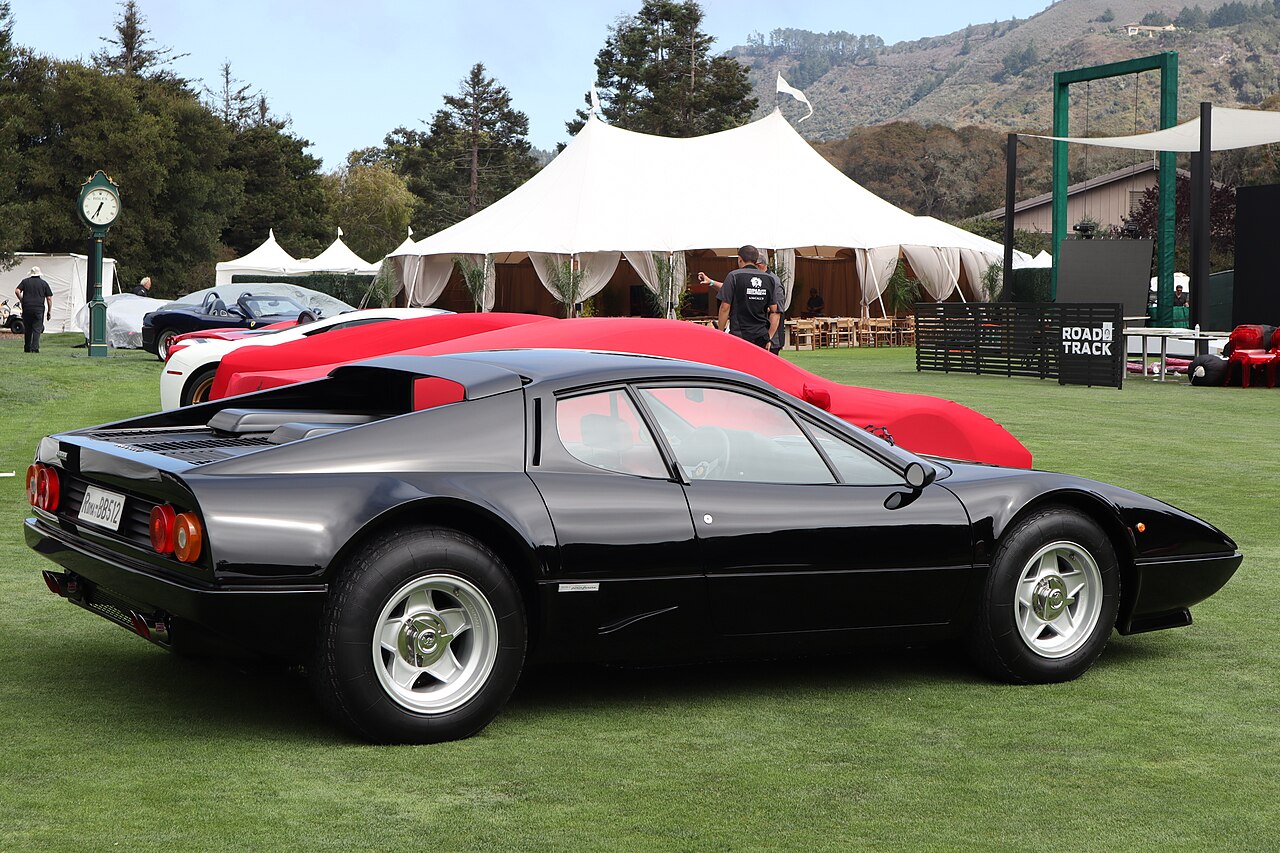


| Model | Years | Engine | Power | Torque | Fuelling | Units |
|---|---|---|---|---|---|---|
| 365 GT4 BB | 1973–76 | 4.4 L flat-12 (F102 A) | 344 PS at 7,200 rpm (owner's manual); 360 bhp at 7,500 in brochures | 302 lb·ft at 3,900 rpm | four triple-choke Weber 40 IF 3C carburettors | 387 |
| 512 BB | 1976–81 | 4.9 L flat-12 (F102 B) | 340 PS at 6,200 rpm (early brochures claimed 360 bhp) | about 333 lb·ft (rpm given as 4,300 and 4,600 in different places) | carburettors | 929 |
| 512 BBi | 1981–84 | 4.9 L flat-12 (F110 A) | 340 bhp at 6,000 rpm | 333 lb·ft at 4,200 rpm | Bosch K-Jetronic | 1,007 |
| Testarossa | 1984–91 | 4,943 cc flat-12 (F113) | 390 PS at 6,300 rpm | 490 N·m at 4,500 rpm | injection | 7,177 |
| 512 TR | 1991–94 | 4,943 cc (F113 D) | 428 PS at 6,750 rpm | 491 N·m at 5,500 rpm | injection | 2,261 |
| F512 M | 1994–96 | 4,943 cc (F113 G) | 441 PS at 6,750 rpm | 500 N·m at 5,500 rpm | injection | 501 |
All use a five-speed manual transaxle. See also Ferrari Testarossa and 512: models and engines. Date overlaps of a year between the Testarossa, 512 TR and F512 M are due to model-year versus calendar-year dating.
288 GTO, F40, F50, Enzo and LaFerrari (1984-2018)


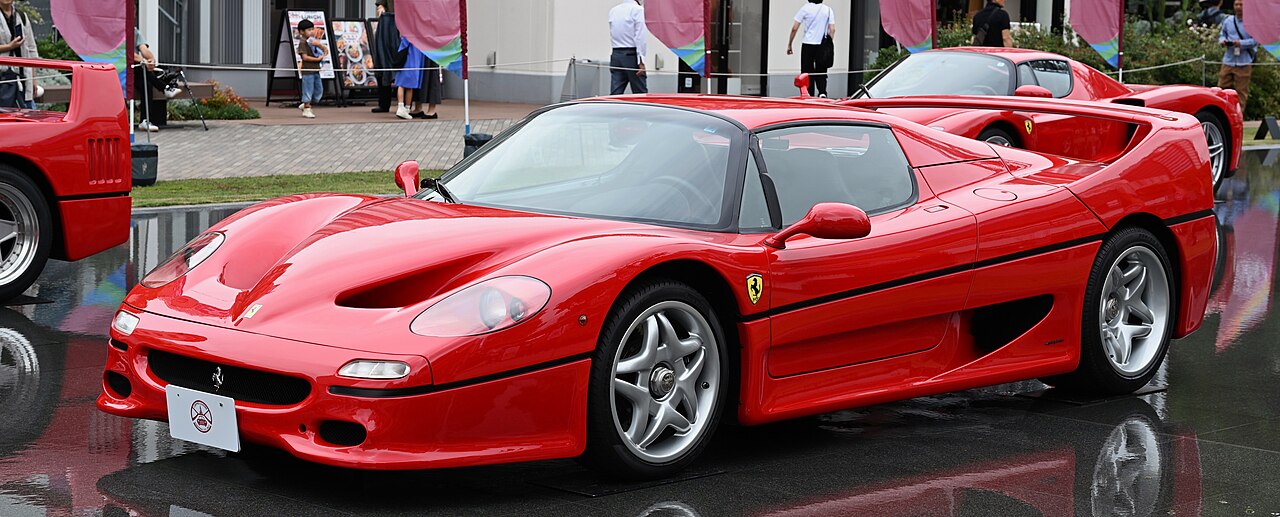

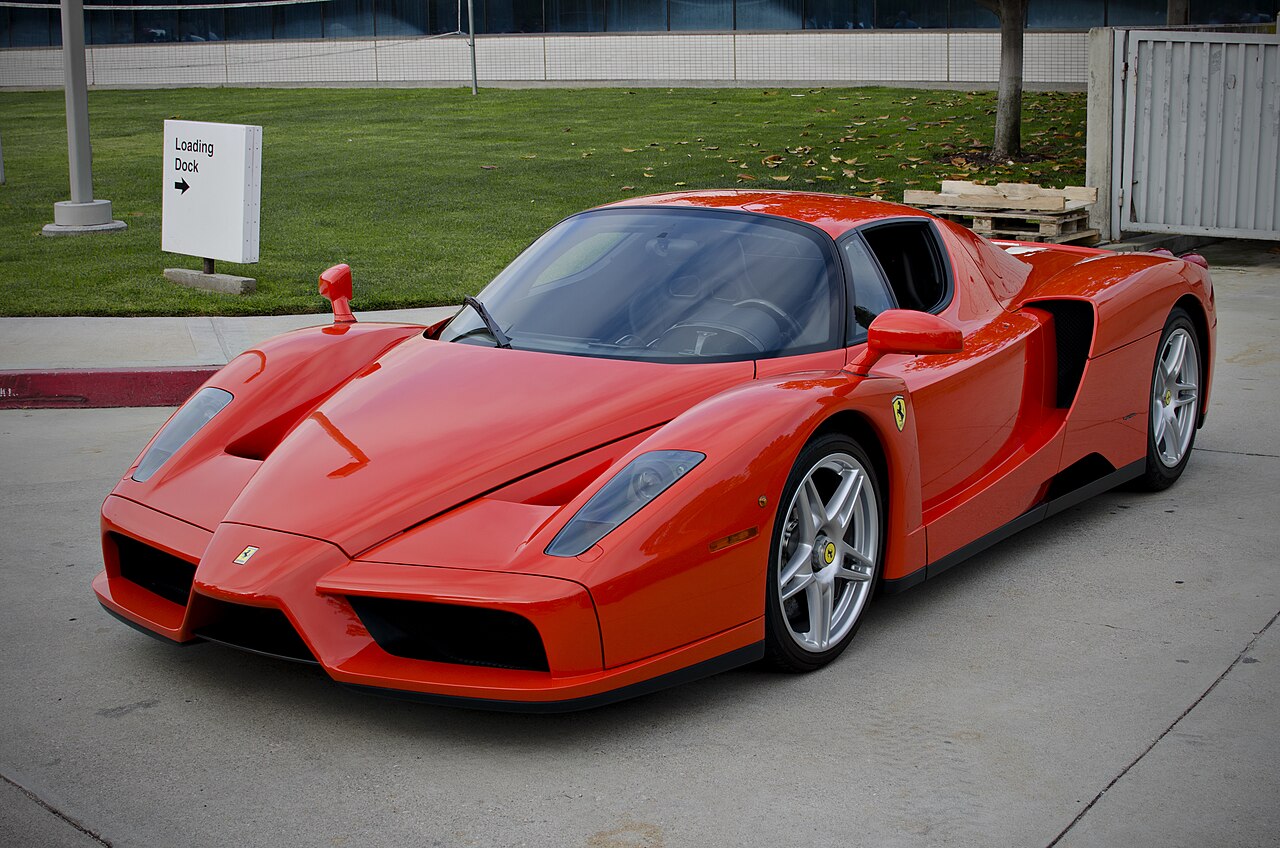

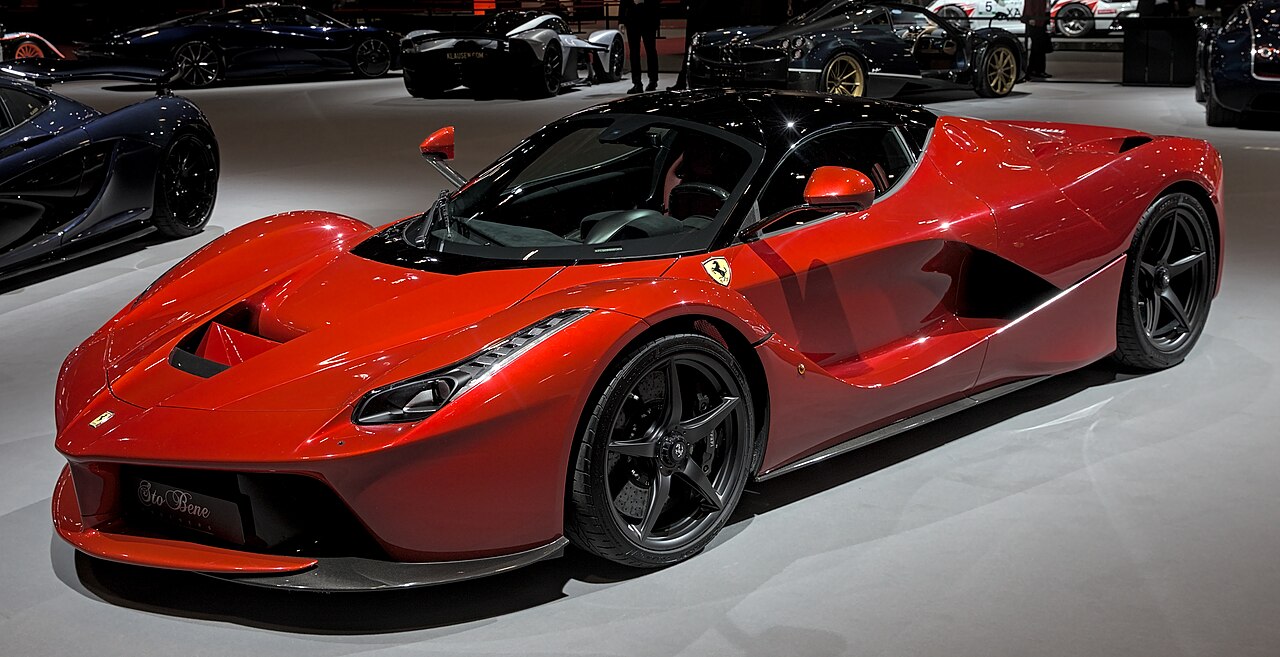

| Model | Years | Engine | Power | Torque | Gearbox | Units |
|---|---|---|---|---|---|---|
| 288 GTO | 1984–87 | twin-turbo V8 (F114 B), 2,855 cc | 400 PS at 7,000 rpm | 496 N·m at 3,800 rpm | 5-speed manual | 272 |
| F40 | 1987–1992 (road car; race versions to 1996) | twin-turbo V8 (F120 A/D), 2,936 cc | 478 PS at 7,000 rpm (484 PS US) | 577 N·m at 4,000 rpm | 5-speed manual | 1,311 including LM, Competizione and GTE |
| F50 | 1995–97 | 4,698 cc 65° V12 (F130 B), 60 valves | 520 PS at 8,500 rpm | 471 N·m at 6,500 rpm | 6-speed manual | 349 |
| Enzo | 2002–04 | 5,999 cc 65° V12 (F140 B) | 660 PS at 7,800 rpm | 657 N·m at 5,500 rpm | 6-speed F1 automated manual (Graziano) | 498 (planned 399) |
| LaFerrari | 2013–16 | 6,262 cc V12 (F140) plus HY-KERS electric motor | 800 PS V12 at 9,000 rpm, 163 PS motor; 963 PS combined | 700 N·m V12 at 6,750 rpm; 900 N·m combined | 7-speed dual-clutch | 499 (plus a 500th auctioned) |
| LaFerrari Aperta | 2016–18 | as LaFerrari | 963 PS combined | 900 N·m | 7-speed dual-clutch | about 200 sold plus nine reserved for the 70th anniversary |
The F40's top speed was 321 km/h in the first independent measurements (Road & Track measured 315 km/h, Car and Driver 317 km/h); the Enzo has been recorded up to 355 km/h; the F50 is claimed at 325 km/h. Single-model page: F40.
Not established
- The gearbox type for the 512 TR and F512 M is not restated in the source for those two models; the Testarossa family as a whole used a five-speed manual.
- Reliable factory torque for the 365 GT4 BB is given as 41.7 kgf·m (302 lb·ft) only; the 512 BB torque is quoted at 4,300 and 4,600 rpm in the same source.
- F40 production years are given as 1987–1992 and 1987–1993 for the road car, and 1987–1996 including the competition variants.
Sources
- Wikipedia: Ferrari Berlinetta Boxer, accessed 19 November 2026.
- Wikipedia: Ferrari Testarossa, accessed 19 November 2026.
- Wikipedia: Ferrari 288 GTO, accessed 19 November 2026.
- Wikipedia: Ferrari F40, accessed 19 November 2026.
- Wikipedia: Ferrari F50, accessed 19 November 2026.
- Wikipedia: Enzo Ferrari (automobile), accessed 19 November 2026.
- Wikipedia: LaFerrari, accessed 19 November 2026.
- Related wiki page: Ferrari: history and cars.