Ferrari's smaller mid-engine road cars began with the 65° V6 Dino of 1967 and moved to a 90° V8 from 1973. That V8 was enlarged, fuel-injected, converted to four valves per cylinder and finally replaced by the longitudinal 3.4-litre unit of the 348. This page lists the engine, output and production figures for each model. Later V8 cars are on Ferrari F355, 360, F430 and 458.
Reliability of the figures: output figures are factory claims and differ between Europe and the United States (catalyst and emissions equipment). Unit counts come from a single encyclopaedic source per model and some conflict internally; where that happens it is stated below. Confirm a particular car from its chassis plate and engine number.
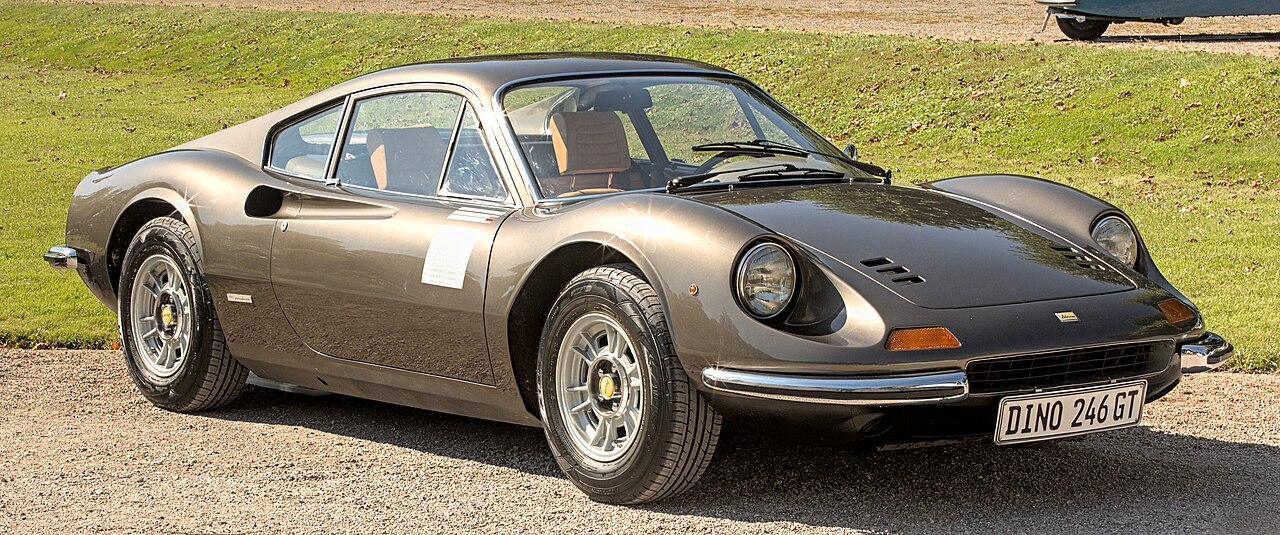
Dino V6 (1967-1974)

| Model | Years | Engine | Power (stated) | Gearbox | Units |
|---|---|---|---|---|---|
| Dino 206 GT | 1967–69 | 1,987 cc 65° V6, mid-mounted | 180 PS at 8,000 rpm | 5-speed manual | 152 |
| Dino 246 GT / GTS | 1969–74 | 2,419 cc 65° V6 | 195 PS at 7,600 rpm (Europe) | 5-speed manual | 2,295 GT, 1,274 GTS (targa, from 1971) |
The 206 had an aluminium body; the 246 moved to steel. The cars were sold as Dinos rather than Ferraris. No torque figures are given in the main source.
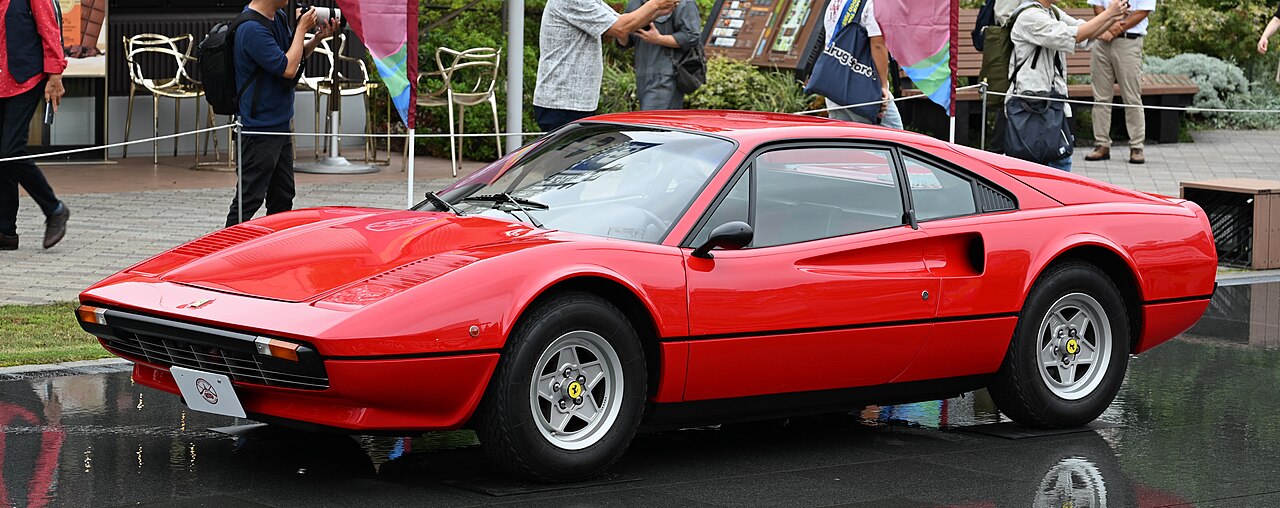
V8 308, 208 and 328 (1973-1989)

| Model | Years | Engine and fuelling | Power (stated) | Torque | Units |
|---|---|---|---|---|---|
| Dino 308 GT4 (2+2) | 1973–80 | 2,927 cc V8, four Weber carburettors | 255 PS Europe, 240 hp US | – | 2,826 |
| 208 GT4 | 1975–80 | 1,991 cc V8 (Italian two-litre model) | 170 hp at 7,700 rpm | – | 840 |
| 308 GTB / GTS | 1975–80 (GTS from 1977) | 2,927 cc V8 (F106 AB), four Weber 40 DCNF | 255 PS Europe, 240 PS US, at 6,600 rpm | – | 2,897 GTB (including 808 fibreglass cars), 3,219 GTS |
| 208 GTB / GTS | 1980–81 | 1,991 cc V8, four Weber 34 DCNF | 155 hp at 6,800 rpm | – | 140 GTB, 160 GTS |
| 308 GTBi / GTSi | 1980–83 | 2,927 cc V8 (F106 BB), Bosch K-Jetronic | 214 PS Europe, 205 PS US | – | 494 GTBi, 1,743 GTSi |
| 208 GTB / GTS Turbo | 1982–85 (GTS from 1983) | 1,991 cc turbo V8 (F106 D), KKK K26 turbocharger, K-Jetronic | 220 hp at 7,000 rpm | 18% above the non-turbo 208 | 437 GTB, 250 GTS |
| 308 Quattrovalvole | 1982–85 | 2,927 cc 32-valve V8 (F105 AB), K-Jetronic | 240 hp at 7,000 rpm Europe; 230 hp at 6,800 US | 260 N·m at 5,000 rpm Europe; 255 N·m at 5,500 US | 748 GTB, 3,042 GTS |
| 328 GTB / GTS | 1985–89 | 3,185 cc 32-valve V8 (F105 CB) | 270 PS | 304 N·m | 1,344 GTB, 6,068 GTS |
| 328 GTB / GTS Turbo | 1986–89 | 1,991 cc intercooled turbo V8 (F106 N), two valves per cylinder | 254 PS at 6,500 rpm | 328 N·m at 4,100 rpm | 308 GTB Turbo, 828 GTS Turbo |
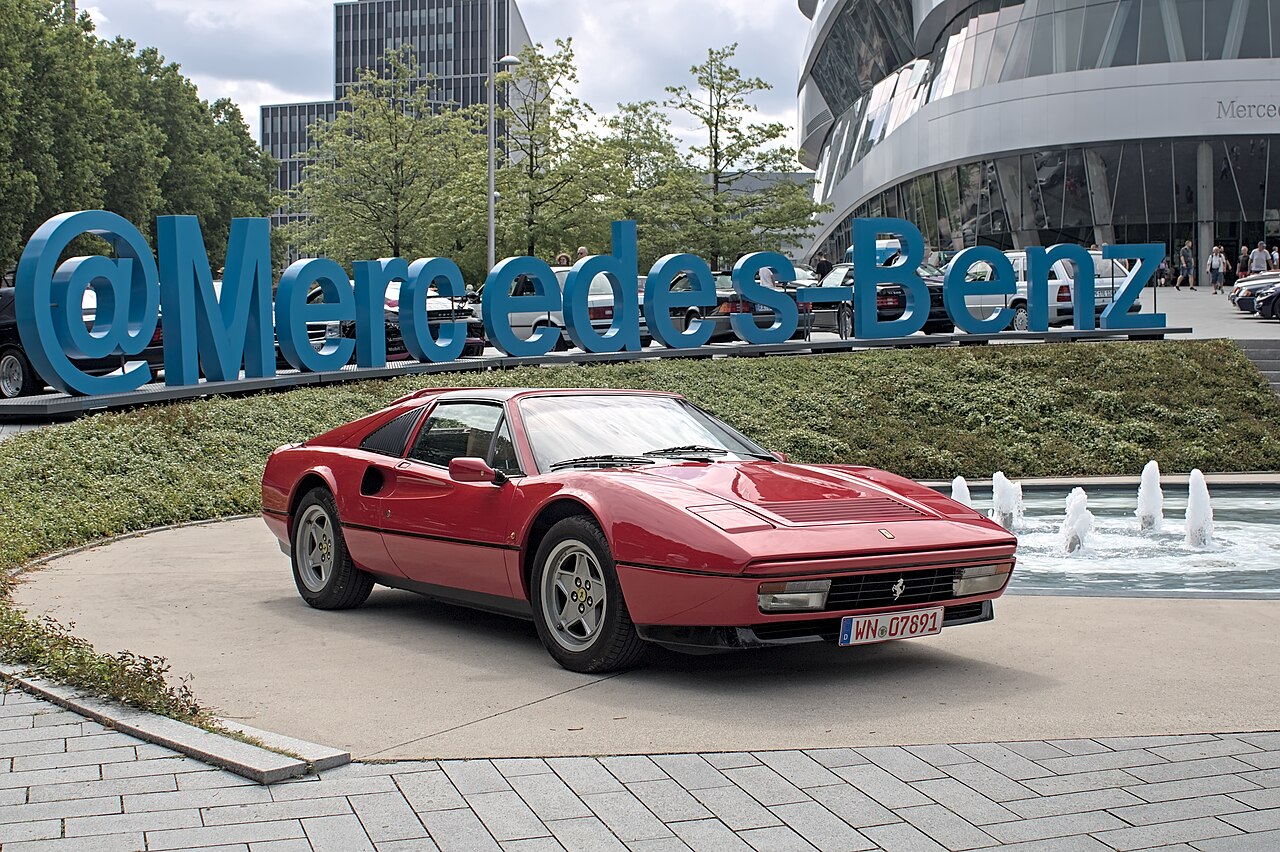

All of the above use a five-speed manual transaxle where a gearbox is stated. The 2.0-litre 208 and 208 Turbo (and the later 328 Turbo, which keeps the two-litre capacity) are the small-displacement cars built for the Italian market; the 2.9 and 3.2-litre cars were the export range.
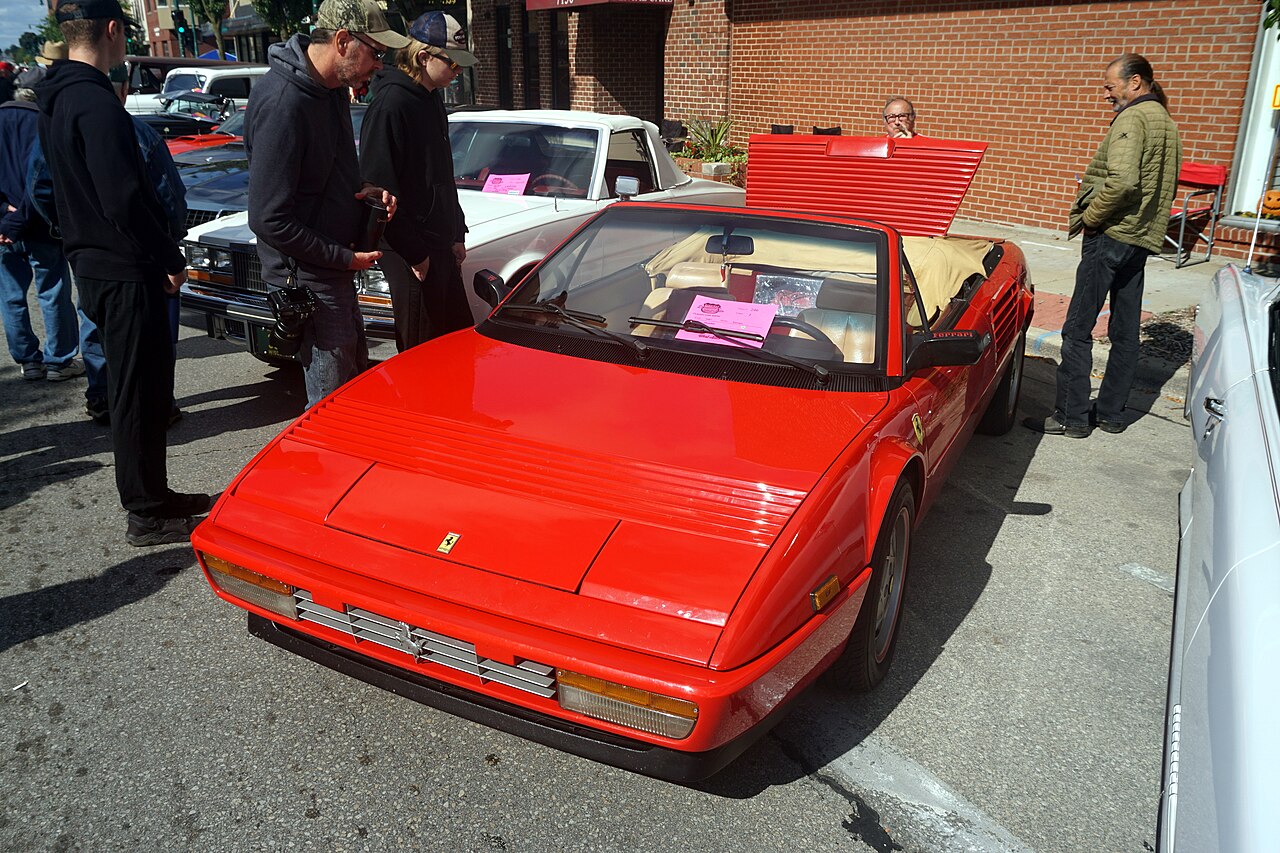
Mondial (1980-1993)
A 2+2 coupé and cabriolet using the 308 and 328 V8, mounted transversely in the first three versions and longitudinally in the Mondial t.

| Model | Years | Engine | Power | Torque | Units |
|---|---|---|---|---|---|
| Mondial 8 | 1980–82 | 2,926 cc, transverse | 214 hp at 6,600 rpm | 243 N·m at 4,600 rpm | 703 |
| Mondial Quattrovalvole | 1982–85 | 2,926 cc 32-valve, transverse | 240 hp at 6,800 rpm | 255 N·m at 5,500 rpm | 1,774 (629 cabriolet) |
| Mondial 3.2 | 1985–88 | 3,185 cc, transverse | 270 hp at 7,000 rpm | 304 N·m at 5,500 rpm | 1,797 (810 cabriolet) |
| Mondial t | 1988–93 | 3,405 cc, longitudinal | 300 hp at 7,200 rpm | 324 N·m at 4,200 rpm | 1,875 (1,017 cabriolet) |
The Mondial t's gearbox was a five-speed manual or a Valeo clutch-automation option. Total Mondial production is about 6,149 cars. Sources differ on the start years of the Quattrovalvole and 3.2 by about a year.
348 (1989-1994)

| Model | Years | Engine | Power | Torque | Units |
|---|---|---|---|---|---|
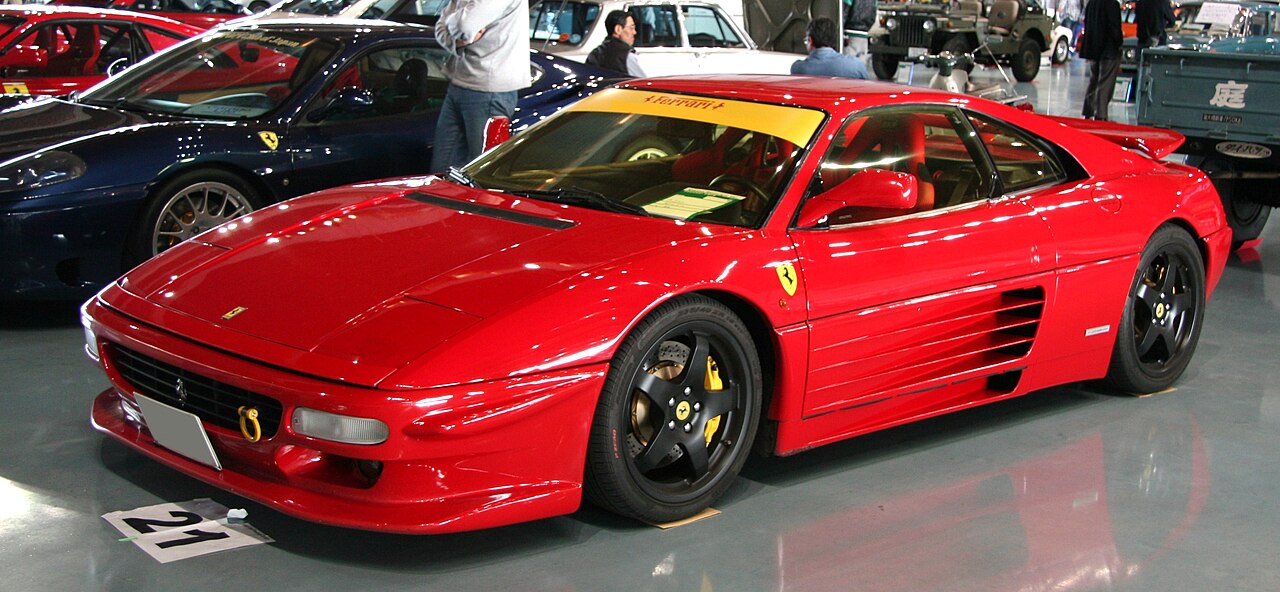
| 348 tb / ts | 1989–94 | 3,405 cc V8 (F119 D/G), longitudinal | 300 PS at 7,200 rpm | 324 N·m at 4,200 rpm | 2,894 tb, 4,228 ts |
| 348 Serie Speciale (US) | 1992–93 | revised V8 | 316 PS at 7,200 rpm | – | 100 |
| 348 GTB / GTS and Spider | 1993–94 | 3,405 cc V8 (F119 H) | 320 PS at 7,200 rpm | 323 N·m at 5,000 rpm | 440 GTB/GTS (222 / 218) |
| 348 GT Competizione | 1993 | 3,405 cc V8 (F119 H) | 320 PS at 7,000 rpm | 324 N·m at 5,000 rpm | 50 (8 right-hand drive) |
All 348s use a five-speed manual. The 348 Challenge was a single-make race car of 1993–95 using a similar engine. Total 348 production is 8,844 cars. The US-market 348 GTB/GTS output is given as 312 hp in one place and 316 hp in another, so the North American output of the late cars is not firmly established. The F355 followed; see Ferrari F355, 360, F430 and 458.
288 GTO (1984-1987)
A homologation special for Group B racing, with a longitudinal twin-turbocharged V8 (F114 B). Production was 272 cars. It is rated at 400 PS at 7,000 rpm and 496 N·m at 3,800 rpm with a five-speed manual. The displacement is quoted as 2,855 cc, giving the 2.8-litre 'two-eight-eight' name. Ferrari claimed 304 km/h (189 mph) and Road & Track measured 288 km/h (179 mph). Its successor is covered at Ferrari F40 and in Ferrari flat-12 and mid-engine flagship cars.
Not established
- Torque for most carburettor-era cars (308 GTB/GTS, GTBi/GTSi, 208, GT4) is not given in the sources used.
- Gearbox for the 208 GTB/GTS is not stated; the 308 family used a five-speed manual.
- Production years of the 348 Spider and 348 Challenge are not firm.
Sources
- Wikipedia: Dino (automobile), accessed 19 November 2026.
- Wikipedia: Ferrari 308 GT4, accessed 19 November 2026.
- Wikipedia: Ferrari 308 GTB/GTS, accessed 19 November 2026.
- Wikipedia: Ferrari 328, accessed 19 November 2026.
- Wikipedia: Ferrari Mondial, accessed 19 November 2026.
- Wikipedia: Ferrari 348, accessed 19 November 2026.
- Wikipedia: Ferrari 288 GTO, accessed 19 November 2026.
- Related wiki page: Ferrari: history and cars.