Great British Sports Cars (GBS; Great British Sports Cars Ltd) is a Nottinghamshire maker of Lotus Seven-type sports cars, based at Maun Way, Boughton, near Ollerton. It was formed in 2006 to take over the assets of Robin Hood Sports Cars, the business founded as Robin Hood Engineering, and since 2007 it has built one model line, the Zero. The Zero is a front-engined, rear-wheel-drive two-seater on a steel spaceframe chassis with double-wishbone suspension. It is sold as a kit that uses parts from a donor car, as a complete component kit with no donor parts, or factory-built. Current factory-built cars use a naturally aspirated Ford Duratec engine of 2.3 or 2.5 litres on GBS's own ATR throttle bodies, managed by a Life Racing F88 ECU. The Mazda MX-5 single-donor kit is supplied with an Emerald K6+ ECU. There is also an electric Zero built around a Tesla drive unit. The company was trading in 2026.
History
Great British Sports Cars Ltd (company number 05807139) was incorporated on 5 May 2006 as Rolco 255 Limited and took its present name on 26 September 2006. That was when it bought the assets of Robin Hood Sports Cars from Richard Stewart (see below). The company is run by its director, Richard Hall, who was about 21 when it was set up. Before founding GBS, Hall had built a Robin Hood kit and a 1300 Crossflow Locost for 750 Motor Club rules. Family members work in the business. The Robin Hood purchase brought an established customer base and parts trade. GBS has said, however, that the Robin Hood cars were not of the standard it wanted to build, so it developed its own car rather than continue the Robin Hood range.
GBS gives 2007 as the Zero's launch year and is treating 2027 as the model's 20th anniversary. The earliest cars carried "GBS Robin Hood Zero" branding, as photographs from April 2008 show. The first Zero ever built, a Ford Pinto-engined car, returned to the factory in 2026 and was resold. The original Zero was a single-donor kit based on the Ford Sierra. A single-donor kit based on the Mazda MX-5 followed, and later a complete component package with no donor parts. GBS launched a second-generation Zero chassis in 2019, after a year of development. A Duratec-engined second-generation demonstrator followed in August 2019.
By 2026 GBS had sold more than 1,000 Zeros, according to the company's figure as reported by evo. About 85 per cent were self-build kits. Cars have been exported to Australia, New Zealand, Chile and Malta. The company has dealers in the United States, Germany, Sweden and Norway, and a United States self-build programme. GBS makes most components in-house, including chassis and composites. Its ATR Products brand makes throttle bodies and dampers, and parts and spares are sold through its Kit Spares shop at the factory and online. GBS Engineering carries out outside work, including a Lola T70 converted for road use, homologation of Polaris RZR buggies, and work for Vertical Aerospace. In 2025 PistonHeads reported the company's concern that supplies of new Duratec engines would last only a few more years.
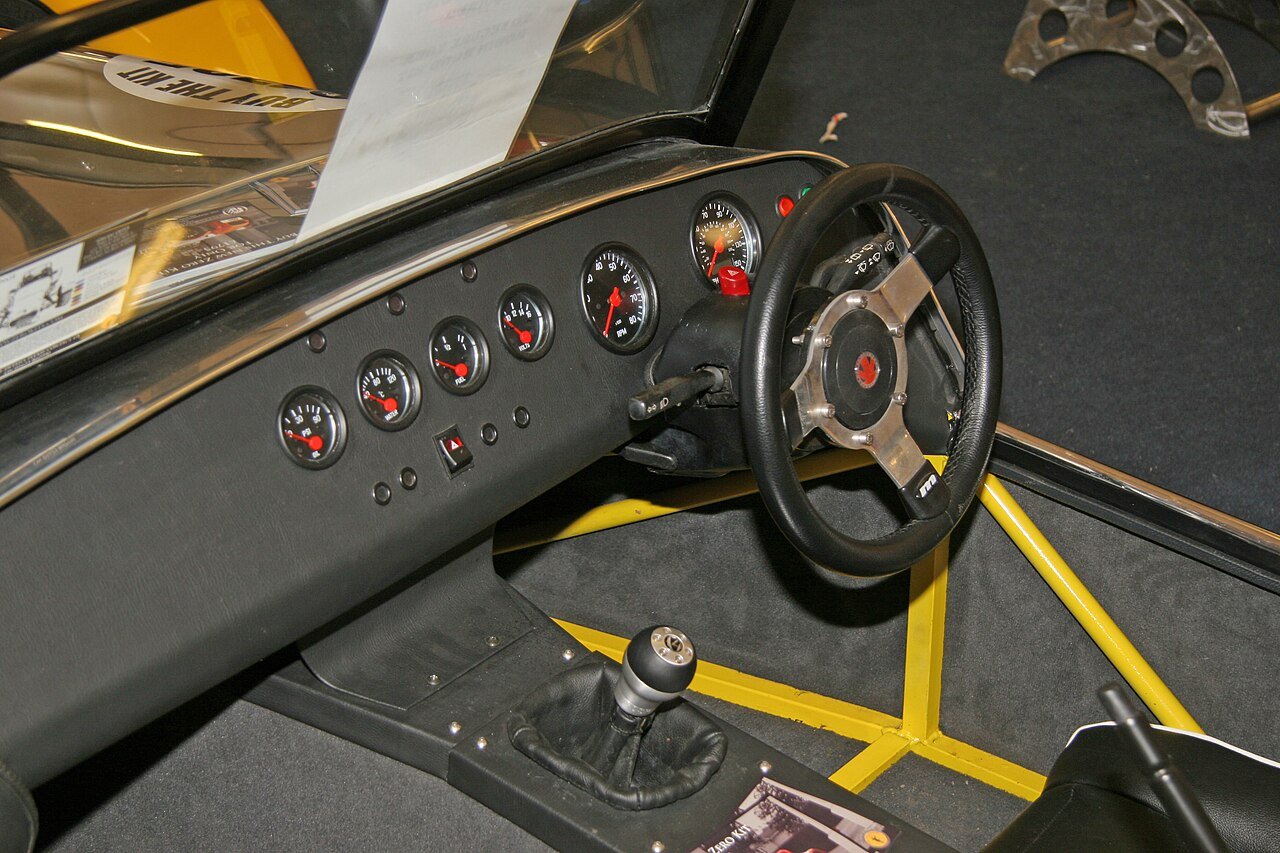

Robin Hood Engineering background
Richard Stewart founded Robin Hood Engineering in 1980 in Sherwood, Nottinghamshire. It later moved to a site of about 30,000 sq ft at Mansfield Woodhouse. The firm began with Ferrari Daytona replicas based on the Rover SD1 and later the Jaguar XJ12. It then turned to Lotus Seven-type cars, which owners' club records divide into these families:
- Stainless monocoque S7 series: Triumph Dolomite-based (1989–91), Ford Cortina-based (1991–94) and Ford Sierra-based Mk1/Mk2 (1994–98), plus the Exmo (1996–98), Series 3/3A (1997–99), the Series 6 Barrelback (1991) and the Lightweight (2003–06). There was also an earlier spaceframe S7 based on the Triumph TR7 (1988–91).
- Tubular-chassis Project 2B (1999–2003), followed by the 2B wishbone, SubK/2B04 (2001–06), 2B Plus (2002–06) and Superspec (2003–06). The Superspec used all-new parts and needed no donor car.
Sales peaked at more than 500 kits a year in 1996 and 1997 and fell after Single Vehicle Approval was introduced in 1998. Engines were mostly those of the donor cars: Triumph fours from 1,100 to 2,000 cc, Ford Pinto (the 2B Plus was commonly built with the 1,993 cc Pinto) and Sierra DOHC. Owners also fitted other engines, including the Jaguar V12 and Rover units in mid-engined layouts. The Robin Hood range is not the GBS Zero, and Robin Hood cars should be identified by their own chassis family. See Ford Pinto and Ford Sierra for the most common donor running gear.
Models
All GBS cars are variants of the Zero. The chassis comes in Standard width or the wider GT (grand tourer) width for taller drivers, in right- or left-hand drive. GBS moved the engine rearward from the front axle and claims 50/50 weight distribution. Prices are the manufacturer's list prices at the dates shown in the sources.
| Model / package | Years | Layout and chassis | Donor | Supply form | Notes |
|---|---|---|---|---|---|
| Zero (Sierra single-donor) | From 2007 | Front engine, RWD; steel spaceframe, double wishbones | Ford Sierra (engine, Type 9 gearbox and differential commonly reused) | Kit | Original Zero; the first car was Pinto-engined. "Super Spec" kit about £10,900 in 2009 (owner build record) |
| Zero single-donor Mazda kit | Introduced "over a decade" before 2026 (GBS); current | As above | Mazda MX-5 Mk1, Mk2 or Mk2.5 (1989–2005); Mk3 parts also usable | Kit in six modules | From £18,621 including VAT for all six modules; donor supplies the 1.6 or 1.8 engine, gearbox, differential, hubs, calipers, propshaft and driveshafts |
| Custom Kit | Current | As above | Buyer's choice | Kit | Chassis and suspension for an engine of the buyer's choice |
| Ultimate Self Assembly | Current | As above | None (all-new parts) | Complete component kit in phases | Duratec 2.5 package; Phase Four (engine and drivetrain) £11,974 |
| Zero factory build | Current | As above | None | Factory-built | From £41,860.77 on the road including VAT |
| Zero.230 Calibre | Current | As above | None | Factory-built | 2.5 Duratec with a remap to 230 bhp; price on application |
| Zero Race | Current | As above, with roll cage | None | Self-build or built | Track and race car. GBS states MSA and FIA compliance and claims full FIA homologation for the chassis |
| Zero second generation | From 2019 | Revised chassis | As for each package | All forms | Changes from the first generation are not itemised by GBS |
| Zero EV | 2025 onward | Front battery packs, rear drive unit | Tesla Model S small rear drive unit | Kit (starter package from £4,600) or built | 220 kW (300 hp) at 400 V; battery chosen by the buyer (a 58 kWh pack was reported in 2025) |
| Educational builds | Current | Zero chassis | — | Kit | Builds with education partners |

Engines
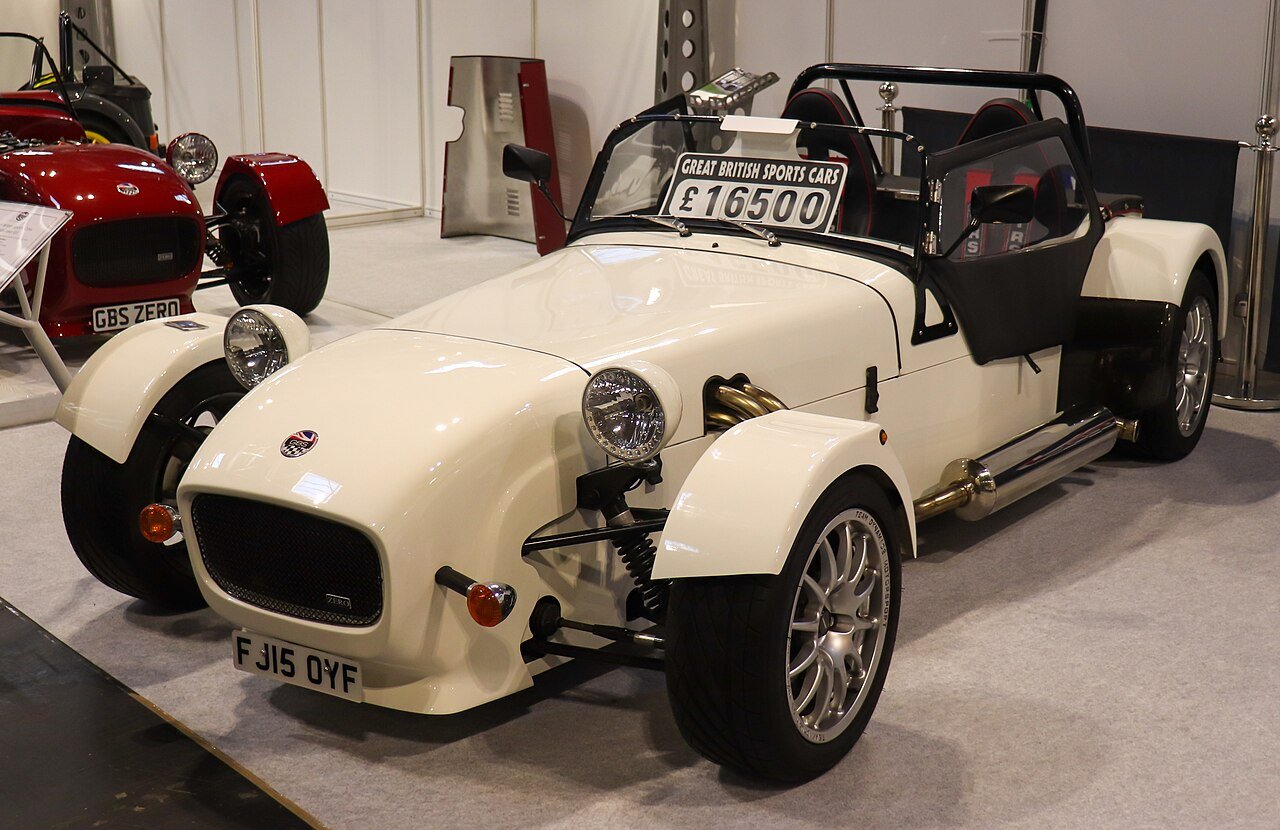
GBS does not make its own engines. It sells Ford Duratec installations with its own ATR intake and exhaust parts and has offered specially developed versions, such as a 2025 car built with Motul and Neil Brown Engineering. Other engines come from the donor car or from the buyer.
| Package | Engine | Claimed output | Gearbox | Source type |
|---|---|---|---|---|
| Factory build (standard) | Ford Duratec 2.3 or 2.5, naturally aspirated, ATR 45 mm billet throttle bodies, 3.7 kg lightened flywheel, 42 mm 4-2-1 stainless manifold | 210 bhp | Mazda five-speed with billet remote short shift (component package) | Manufacturer specification |
| Ultimate Self Assembly Phase Four | Ford Duratec 2.5 | 200 bhp / 196 lb-ft | Mazda five-speed | Manufacturer specification |
| Zero.230 Calibre | Ford Duratec 2.5, remapped | 230 bhp | Not stated | Manufacturer specification |
| Motul / Neil Brown special (2025) | Ford Duratec 2,521 cc, carbon airbox | About 240 hp at 6,500 rpm | Mazda six-speed manual | Road test (PistonHeads) |
| Mazda single-donor kit | Mazda MX-5 1.6 or 1.8 from the donor | Donor-dependent | MX-5 donor gearbox and differential | Manufacturer specification |
| Sierra single-donor kits (from 2007) | Ford Pinto from the donor; Ford Zetec 2.0 was a popular upgrade (GBS publishes a Zetec engine-mounting kit guide) | Zetec builds about 170 bhp (owner report) | Ford Type 9 five-speed; Sierra 7-inch differential | Owner build records |
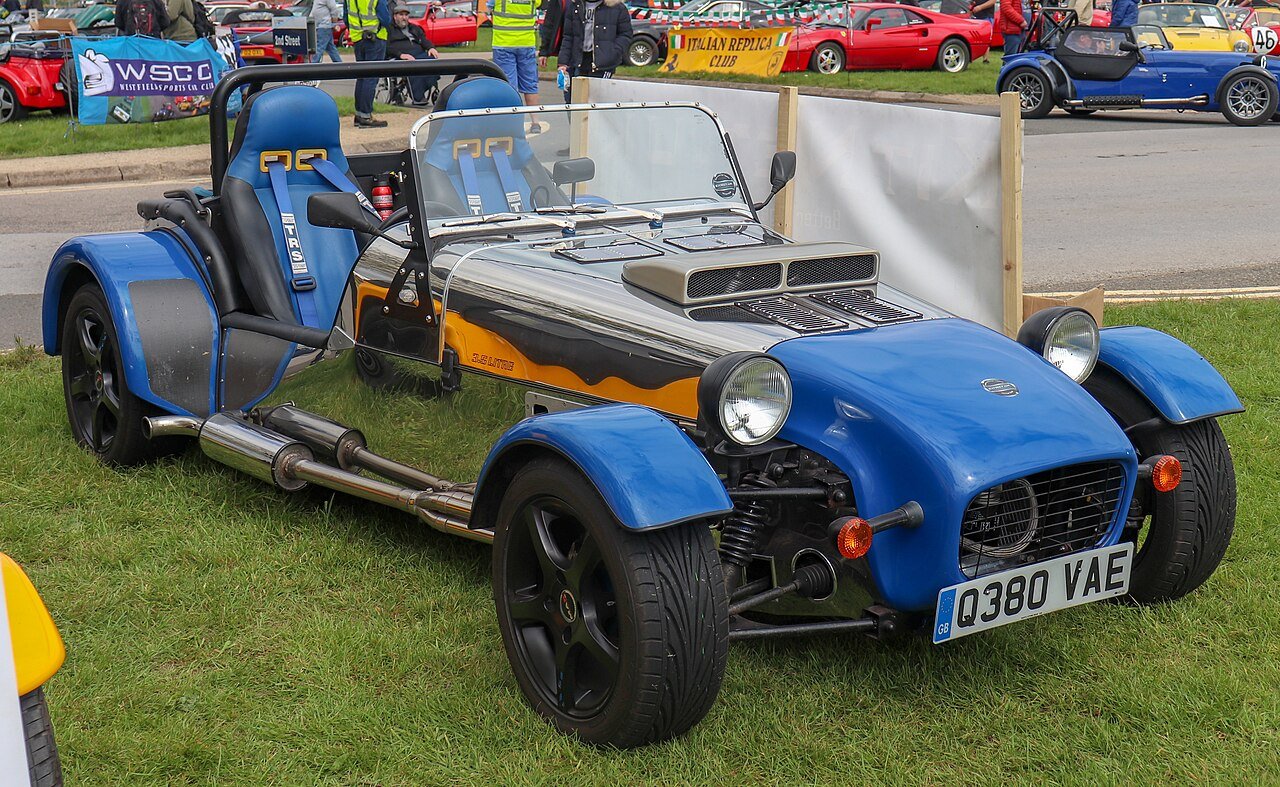
| Other owner fitments | Including a 3.5-litre V8 (2012 car shown below) | — | — | Photographic record only |
GBS gives two figures for the standard Duratec car: 210 bhp in its headline specification and 200 bhp with 196 lb-ft in the description of the 2.5 installation. Both are manufacturer claims. The sources do not say whether the difference reflects the 2.3 and 2.5 versions or a change in specification over time. GBS says the Zero reaches 0–60 mph in 3.5 seconds. PistonHeads quoted under four seconds to 62 mph and a weight of about 600 kg for the 2025 special.

Engine management
- Duratec cars (factory and Ultimate Self Assembly): a Life Racing F88 is standard, mapped by GBS for the ATR individual throttle bodies. According to GBS, it handles warm-up, closed-loop wideband lambda control and safety modes, and can later be given traction control and multiple maps. GBS publishes a wiring sheet for an NTK wideband sensor on the Life ECU. The Zero.230 Calibre reaches its 230 bhp with a remap of the same Life ECU.
- Mazda single-donor kit: the final module includes an Emerald ECU, listed as "Emerald ECU K6+Mazda", with the donor engine. See Emerald K6+ and the K6/K6+ 36-way connector pinout. The kit documentation does not say whether the original Mazda ECU can be kept instead.
- Zetec and earlier throttle-body packages: GBS's technical downloads include Emerald ECU pin-outs and an Emerald K6 set-up sheet for a narrowband oxygen sensor, together with TPS and lambda wiring for its factory loom. This indicates that Emerald was the usual supplied ECU for Zetec throttle-body builds. Owner reports describe Emerald, Omex and similar stand-alone ECUs on Zeros with Jenvey, motorcycle or modified Ford throttle bodies. A 2009 owner build bought GBS's throttle-body and ECU option for a 2.0 Zetec but did not record the ECU make.
- Pinto-engined Sierra-donor cars: fuelling on early cars is not documented by GBS. See Ford Pinto for carburettor and injection options common on the engine.
- Zero EV: the Tesla drive unit has its own inverter and controller, and the engine management above does not apply.
Identification and buying notes
- A Zero's donor route defines its running gear. Sierra-donor cars normally have Ford engines, a Type 9 gearbox and a Sierra differential. Mazda-donor cars have the MX-5 engine, gearbox and differential. Duratec component and factory cars use all-new parts with a Mazda gearbox.
- The second-generation chassis dates from 2019. GBS does not publish a list of differences, so the build guide and the factory are the best references for parts compatibility.
- Standard and GT (wide) chassis share the model name. GBS publishes dimensions for both.
- Robin Hood-built cars (S7, 2B, SubK, Superspec and others) are a separate design family. The GBS connection is the 2006 asset purchase, not shared chassis design.
- The GBS Zero Build Guide is available from the factory on request. Wiring diagrams, ECU pin-outs and engine-fitting guides are published on the GBS website.
Not established
- The exact launch date of the Mazda single-donor kit and the full list of changes in the 2019 second-generation chassis.
- The ECU or carburettor set-up of the earliest Pinto-engined Zeros, and whether Emerald was the only ECU GBS supplied for Zetec builds.
- Which Life Racing F88 variant (F88, F88R, F88RS and so on) is fitted, and whether the drive-by-wire Duratec throttle is retained or replaced by cable-operated ATR throttle bodies.
- Annual production figures; only the cumulative figure of more than 1,000 cars has been published.
Sources
- Great British Sports Cars, manufacturer website, including About us, The Zero, Zero Self Builds, Zero Factory Builds, Zero.230 Calibre, Zero EV, Ultimate Self Assembly Phase Four, Single Donor Zero Mazda Kit, Mazda kit Module Six and Technical downloads. Accessed 19 November 2026.
- GBS Zero factory-build brochure, Great British Sports Cars (PDF, modified January 2024). Accessed 19 November 2026.
- New second generation Zero and new GBS demonstrator, GBS blog, 16 August 2019; The first ever Zero is back with us at GBS, GBS blog, 18 August 2026; Busy start to 2025 for the GBS team, GBS blog. Accessed 19 November 2026.
- Great British Sports Cars Limited, company 05807139, Companies House (active; formerly Rolco 255 Limited). Accessed 19 November 2026.
- The engineer so good he got banned, and designed a £30k sports car you can buy, Stephen Dobie, evo, 27 September 2026. Accessed 19 November 2026.
- 2025 GBS Zero, PH review, Matt Bird, PistonHeads, 4 September 2025. Accessed 19 November 2026.
- Robin Hood Engineering, English Wikipedia. Accessed 19 November 2026.
- Robin Hood kit cars identification, Robin Hood Owners Club (North West). Accessed 19 November 2026.
- GBS Zero build blog, owner build record, 2009 (Zetec, Type 9 and Sierra differential specification). Accessed 19 November 2026.
- Kit Spares, GBS parts shop. Accessed 19 November 2026.
- Photographs from Wikimedia Commons, credited in each caption: GBS Robin Hood Zero (2008), 2015 GBS Zero GT 2.0 and 2012 GBS Zero V8 3.5. Accessed 19 November 2026.