Part of the supercharger types and Eaton model guide.
What it is
The R2300 is a nominal 2.3-litre-per-rotation TVS rotor family. Ford and GM used 2.3-litre TVS or sixth-generation Eaton applications on different V8s; their complete assemblies are application-specific.

| Specification | Detail |
|---|---|
| Rotor family | TVS R-series Roots-type; four-lobe, high-twist rotors |
| Nominal supercharger displacement | 2,300 cm³ = 2.300 L / rotor revolution |
Displacement: the blower volume is nominal air volume moved per rotor revolution. The engine figures below are cylinder capacity. Actual delivered air depends on speed, pressure, leakage and temperature.
Cars, engines and examples
These are documented examples, not a complete fitment catalogue. Factory equipment and aftermarket conversions are identified separately. Confirm market, vehicle, engine code and complete part number.
| Vehicle and period | Engine displacement and type | Installation and identification | Evidence |
|---|---|---|---|
| Ford Shelby GT500, 2013 model year | 5.8 L (5,810 cm³) Modular V8 | Factory Eaton TVS 2300, explicitly identified in Ford's owner supplement. | Ford GT500 supplement |
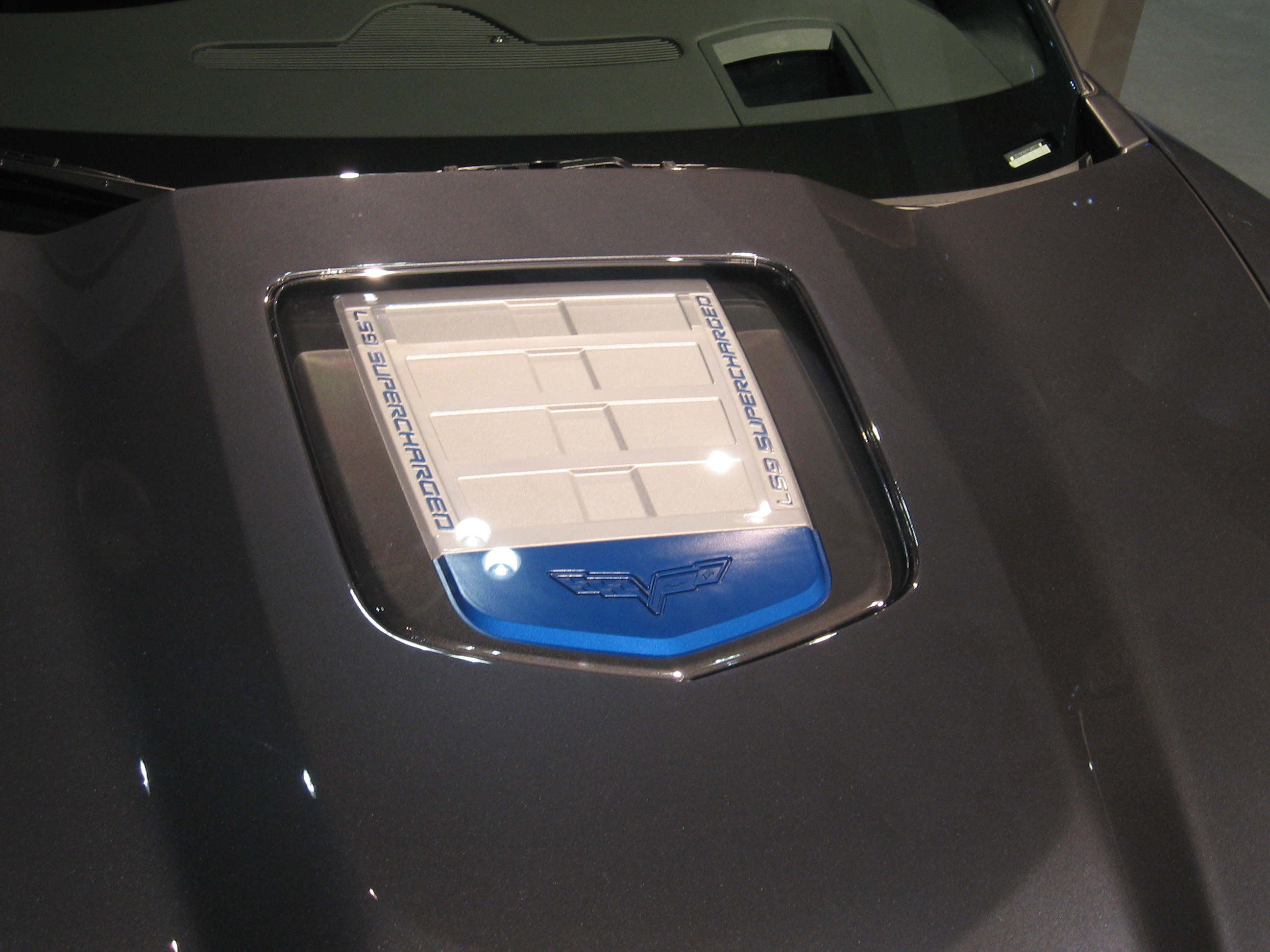
| Chevrolet Corvette ZR1 C6, LS9-powered example | 6.2 L LS9 V8 | Factory 2.3-litre Eaton/sixth-generation Roots supercharger on the LS9. GM identifies the engine, blower size and ZR1 application. | GM Performance catalogue; Lingenfelter TVS2300 description |
Design and application
The 2013 GT500's 5.8-litre engine is distinct from both the earlier 5.4-litre M122 GT500 and the much later 5.2-litre R2650 car. The LS9 shares a nominal 2.3-litre rotor size with the 2013 Ford but has its own manifold, intercooler and drive.
Identification, maintenance and upgrades
Confirm whether the complete blower is an original Ford, GM or aftermarket assembly. Inspect intercooler, pulley offset, drive alignment and bypass. Horsepower depends on the engine and tune, not the 2300 designation alone.
Before increasing speed or load, match the complete fuel, ignition, cooling, bypass and engine-calibration package to the intended use. Refer to the exact supplier's specifications; a generic pulley size or blower displacement is not a safe operating limit.
Sources
- Ford 2013 GT500 supplement: TVS 2300. Accessed 2026-11-14.
- GM Performance: Corvette ZR1 LS9 and 2.3-litre Eaton. Accessed 2026-11-14.
- Eaton R2300 product information. Accessed 2026-11-14.
- Lingenfelter: ZR1 LS9 TVS2300 and LSA TVS1900. Accessed 2026-11-14.