Some BMW M47 and M57 intake manifolds contain swirl flaps: small valves in individual inlet runners that alter the way air enters the cylinder. Wear or failure of a flap, shaft or fastener can allow material into the engine. The result can range from a control fault to severe mechanical damage. Not every engine or manifold has flaps: BMW parts catalogues list a factory manifold without flap control for an E90 325d with the 3.0-litre M57N2. Identify the actual manifold before deciding what is fitted.
What the flaps do
On the M57, each cylinder has a swirl-forming inlet port and a separate tangential inlet port. Where flaps are fitted, they restrict the tangential runner at selected operating points so a greater proportion of air travels through the swirl-forming path. The DDE opens the flaps as conditions and air demand change. This helps combustion and emissions control; a closed flap does not shut off all air to the cylinder. BMW M57 service training; Bimmer technical port explanation.
Flaps may be linked to a vacuum-operated diaphragm and changeover valve or to an electrical actuator, depending on the engine and application. They are separate from the EGR valve, the intake throttle and the turbocharger bypass controls. BMW's M57TU TOP vacuum schematic shows a swirl-flap changeover valve.
Photographs: swirl flaps and intake manifolds
The designs vary by engine and manifold. Check the fitted parts rather than relying on a photograph alone.

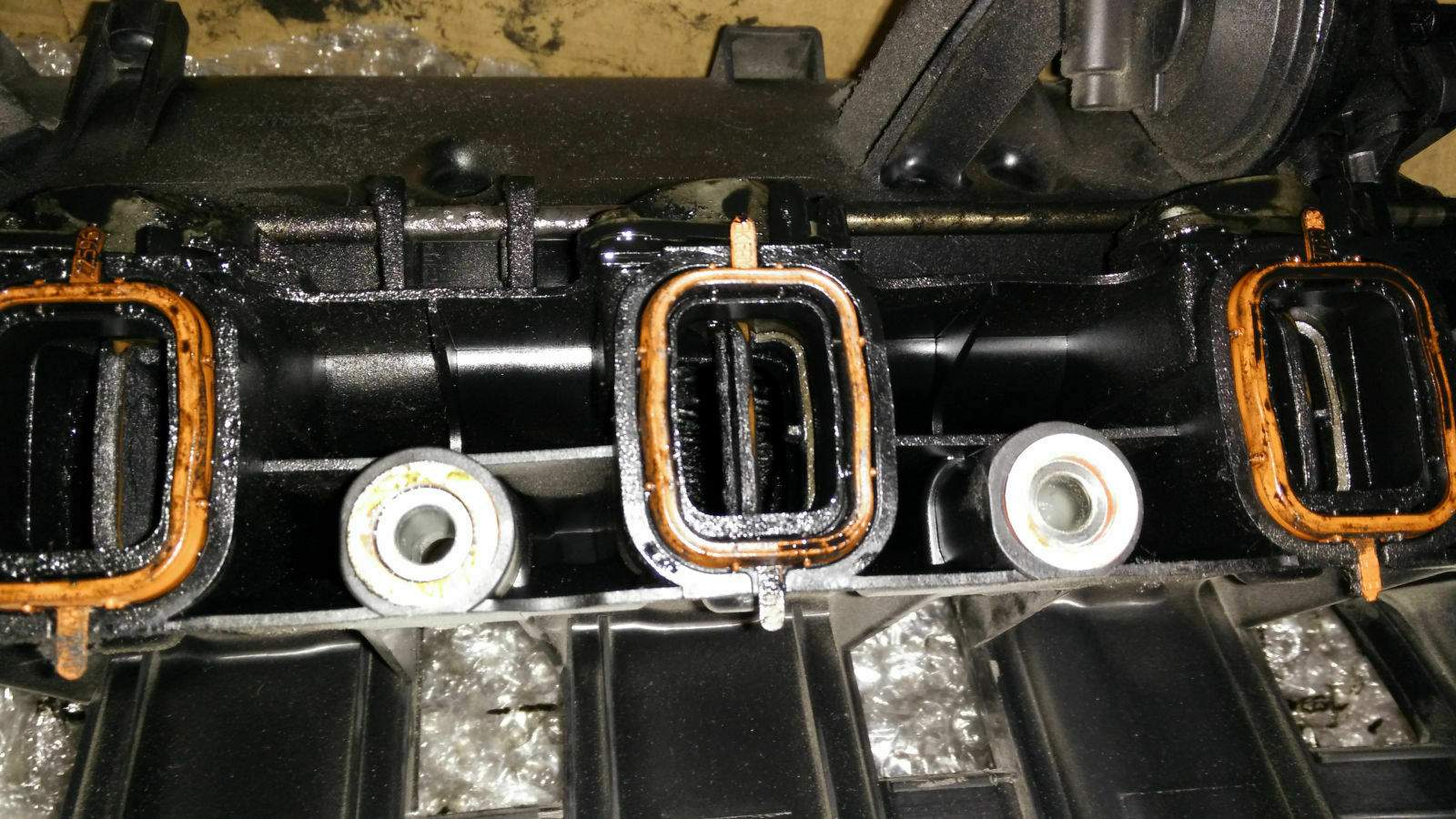
M57TU2 swirl flaps: X5 35d
These photographs show an owner's 2008 E70 X5 35d with an M57TU2D30 engine. The carbon deposits are not, by themselves, evidence of a broken flap.
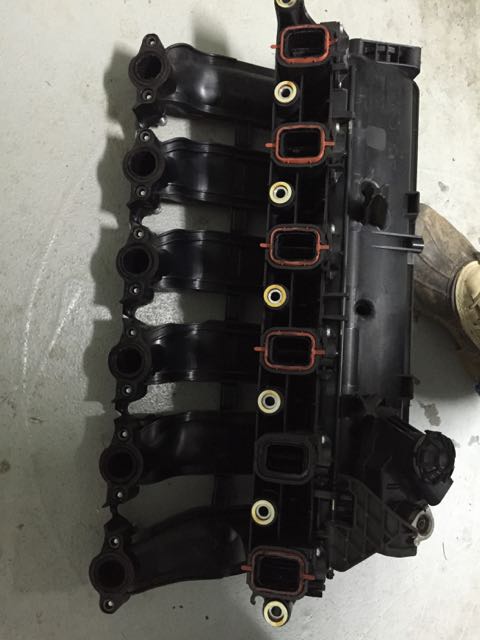

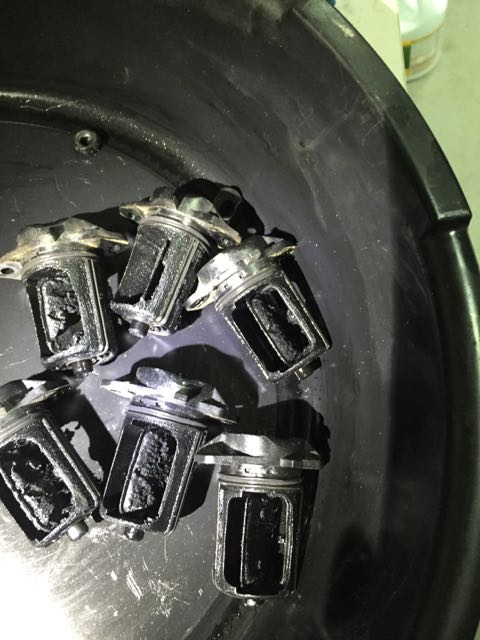
Photographs: sgrice, Xoutpost M57 X5 35d inspection; reproduced with permission supplied by the contributor.
For a separate reported M57 damage case, an X5 35d owner describes a snapped flap shaft and an ingested screw marking the piston and cylinder head. This is an owner's account, not an independently verified teardown; damage severity varies. The 320d photographs below show a separate failure and are not M57 photographs.
Broken flap and engine damage: documented 320d case
The following photographs show a swirl flap and fasteners, then a broken flap from a 320d and the associated damage shown in the same published case. They are not labelled as an M57 failure.
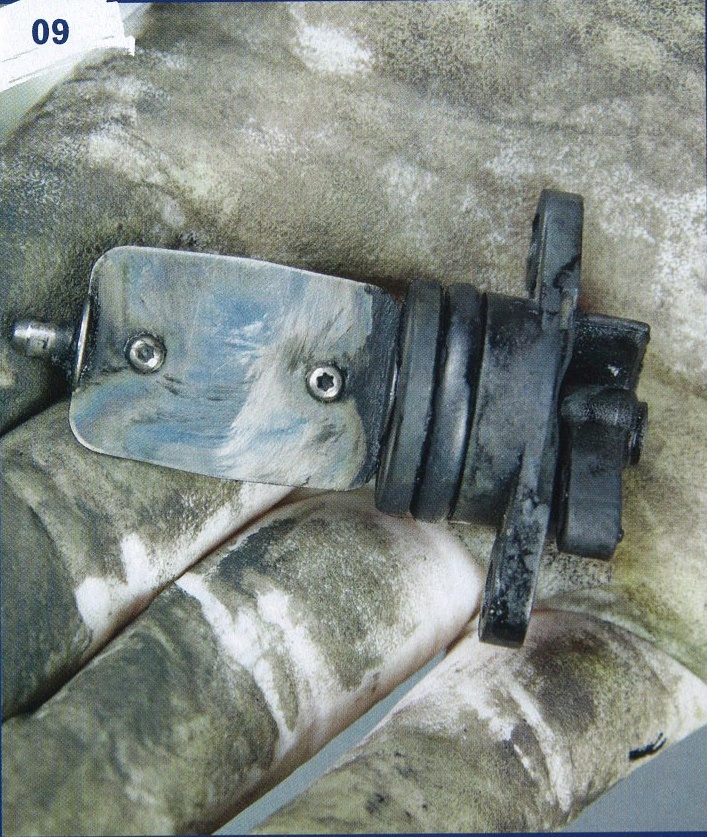
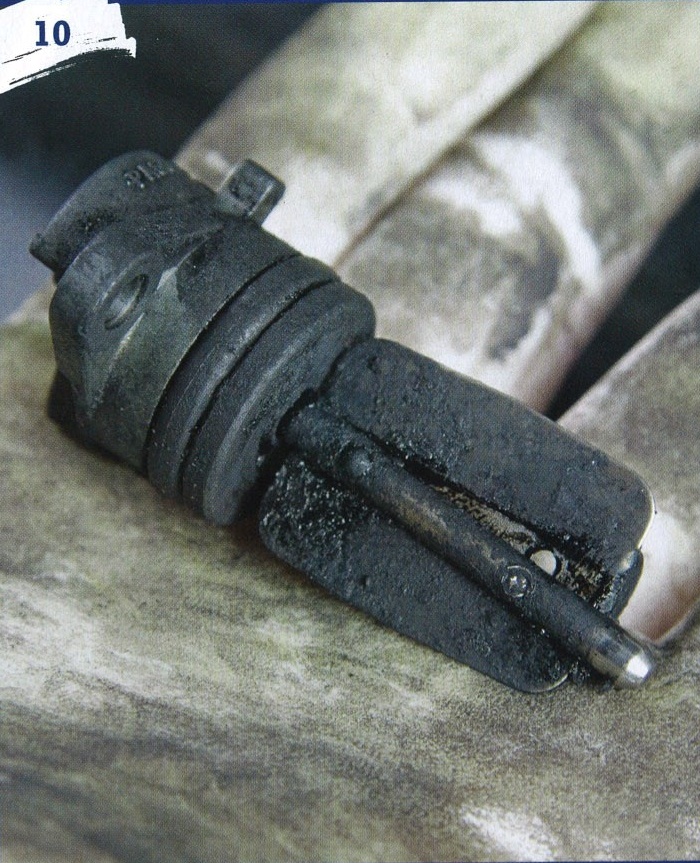
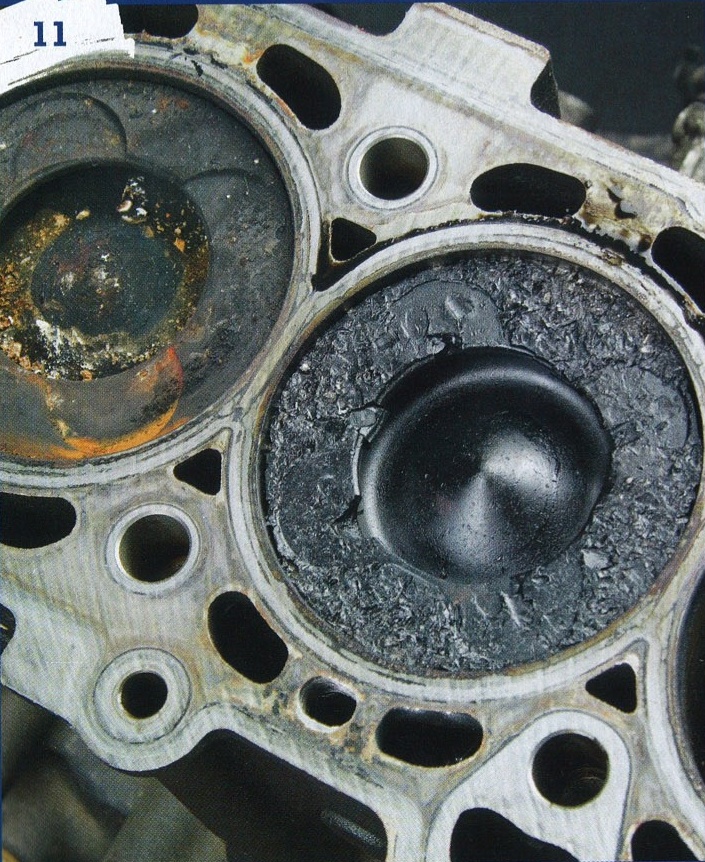
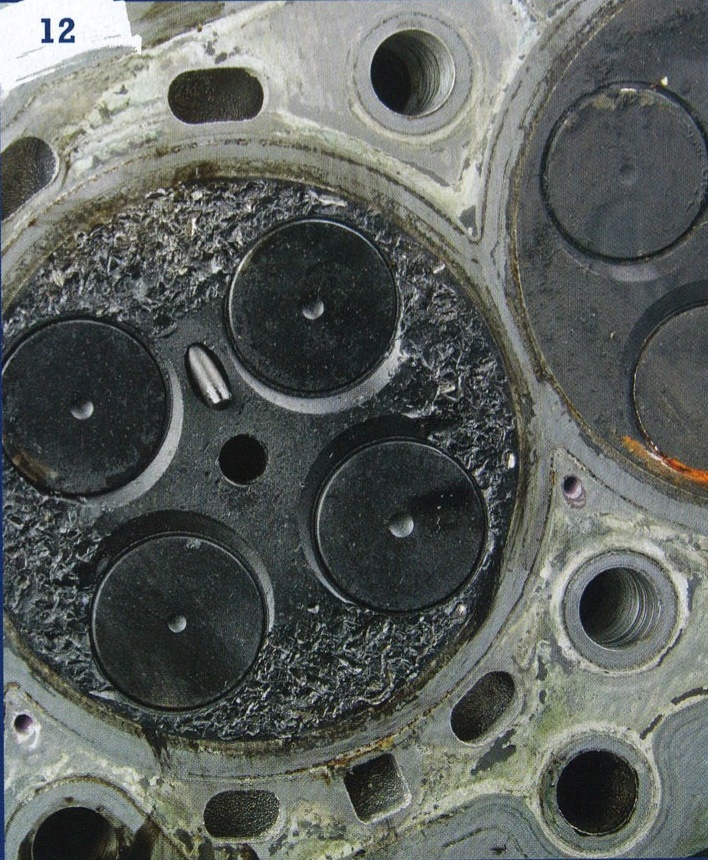
Photographs: Michael Whitestone, Total BMW, May 2009, hosted by PMW; reproduced with permission supplied by the contributor.
For a documented failure case, the Total BMW swirl-flap article hosted by PMW shows a broken 320d flap and the associated piston and cylinder-head damage.
How failure can damage an engine
- Wear or breakage: a plate, spindle, fixing or associated component can loosen or break. EGR and oil deposits can also cause sticking or overload a linkage, although a dirty flap is not evidence that it has fractured.
- Entry into the inlet port: loose material can be carried downstream of the manifold into an inlet passage and, if it passes an open inlet valve, into the cylinder.
- Cylinder and valve damage: a hard fragment can jam an inlet valve or be struck between the piston, valves and cylinder head. Bent valves, damaged valve seats, piston crown or cylinder head and loss of compression are possible. The extent depends on the material and where it travels; damage is not inevitable in every case.
- Downstream damage: fragments that leave through an exhaust valve can strike the exhaust turbine, potentially damaging its wheel or housing and contaminating the exhaust system. A turbo failure can have other causes, so foreign-object damage requires investigation rather than an automatic swirl-flap diagnosis.
Delphi technical bulletin DT565/2 describes loose M47 flap fasteners entering the engine and turbo and recommends inspecting the manifold after foreign-object turbine damage. Turbocharger technical information 2009006 describes M47TU cases with piston, head, valve-seat and turbine damage.
Warning signs and limits
- Rough running, misfire-like vibration, reduced power, smoke, unusual mechanical noise or a warning lamp can have many causes. A broken flap can also give little warning before damage.
- A swirl-flap actuator code identifies a control issue, not proof that a flap has entered the engine. In BMW SI B13 15 10, DDE code 46B7 on the E70/E90 M57Y is associated with binding linkage at the actuator pivot; the bulletin describes an application-specific clip repair.
- Carbon deposits, linkage wear, a disconnected vacuum line or an electrical fault can prevent movement without any piece having entered a cylinder. Diagnose the actual failure before prescribing a repair.
Factory flap-free E90 325d M57TU2
The M57D30TU2 lower-output 325d is a 2,993 cc six-cylinder engine, despite its 325d badge. A BMW parts-catalogue listing for a European E90 325d M57N2, May 2007 describes its intake as “without flap control” and lists manifold 11 61 7 799 625. A catalogue for an E90 LCI 325d M57N2 likewise identifies a manifold without flap control. These examples support the factory flap-free configuration on specified 325d M57N2 models.
This is a factory manifold configuration, not necessarily an aftermarket blanking modification. It does not prove BMW deleted flaps from every late M57: the BMW M57Y 335d/X5 bulletin documents a swirl-flap linkage in those later applications. The evidence here does not establish the reason for BMW's choice or an exact fleet-wide deletion date. Confirm the engine, chassis/VIN, build date and the manifold actually fitted, as engines and manifolds may have been changed.
Identifying a manifold and responding to suspected failure
- Use the vehicle-specific parts catalogue and compare its diagram and part number with the installed manifold. Look for a linked actuator and mechanism where accessible; absence of an external actuator alone does not prove which internal parts remain. Factory flap-free, flap-controlled and previously modified manifolds are different cases.
- With the engine cool, use the correct diagnostic test to check actuator command, linkage movement and any vacuum or electrical supply. Inspect for leaks and carbon restriction. Follow the applicable repair instructions and use new seals or fasteners when specified.
- If a flap, screw or other part is missing, do not start or continue running the engine. Account for the missing parts and inspect the manifold, both inlet passages and cylinders as appropriate. A borescope and compression or leak-down test can help assess damage, but may not find every fragment; further dismantling may be needed.
- If material may have passed through the engine or the turbine shows impact damage, inspect the exhaust manifold and turbocharger and assess downstream components before fitting replacement parts. Establish the source of debris; do not assume every damaged turbo was caused by a flap.
- Repair or replace damaged engine, turbo and intake parts based on inspection. Protect open ports from debris, clean and reconnect the system, and verify correct operation and diagnostic status.
Repair and prevention choices
Options depend on the exact manifold and vehicle: inspect and retain a sound flap assembly, replace a worn manifold or actuator with an application-correct part, or investigate a suitable manifold without flap control where the manufacturer specifies one. Aftermarket blanking kits also exist, but fitment, sealing, fault monitoring, emissions and roadworthiness consequences depend on the installation and jurisdiction. A blanking kit is not equivalent to proving a vehicle left the factory without flaps. Establish the correct parts and legal requirements before changing the original system.
BMW's E90 335d M57Y intake-carbon bulletin provides photographs and model-specific procedures; use the right instructions for the engine being repaired.
Related: BMW M47 engines, BMW M57 engines and inlet-port design, M57 injectors and manifolds and carbon deposits and cleaning.