Essential cookies keep the website secure and working. With your permission, we’ll also use optional cookies for analytics, chat and advertising.
Read our cookie policy.
Cookie settings
Choose your optional cookies
Switch optional categories on or off. Saving replaces your current choice, and you can change it later.
Completely free for BMW professionals and enthusiasts. No need to use cracked or pirated software: Llandow Tuning provides a free BMW EWS editor you can use in your browser, with no software to install.
To our knowledge, this is the world’s first free online BMW EWS editor and, at the time of writing (), the only one of its kind.
Open an EWS dump
Supports EWS 1, 2, 3, 3+ and 4, including the alternate layouts.
Inspect VIN, module information, coding and ten key slots. Review your changes before saving; your original file stays unchanged.
BIN
File checks and limitations
These edits have been compared with the desktop editor but have not been validated on vehicle hardware. VIN and synchronisation check bytes are not recalculated automatically.
Identify your EWS module
Photos, transponders & vehicle applications
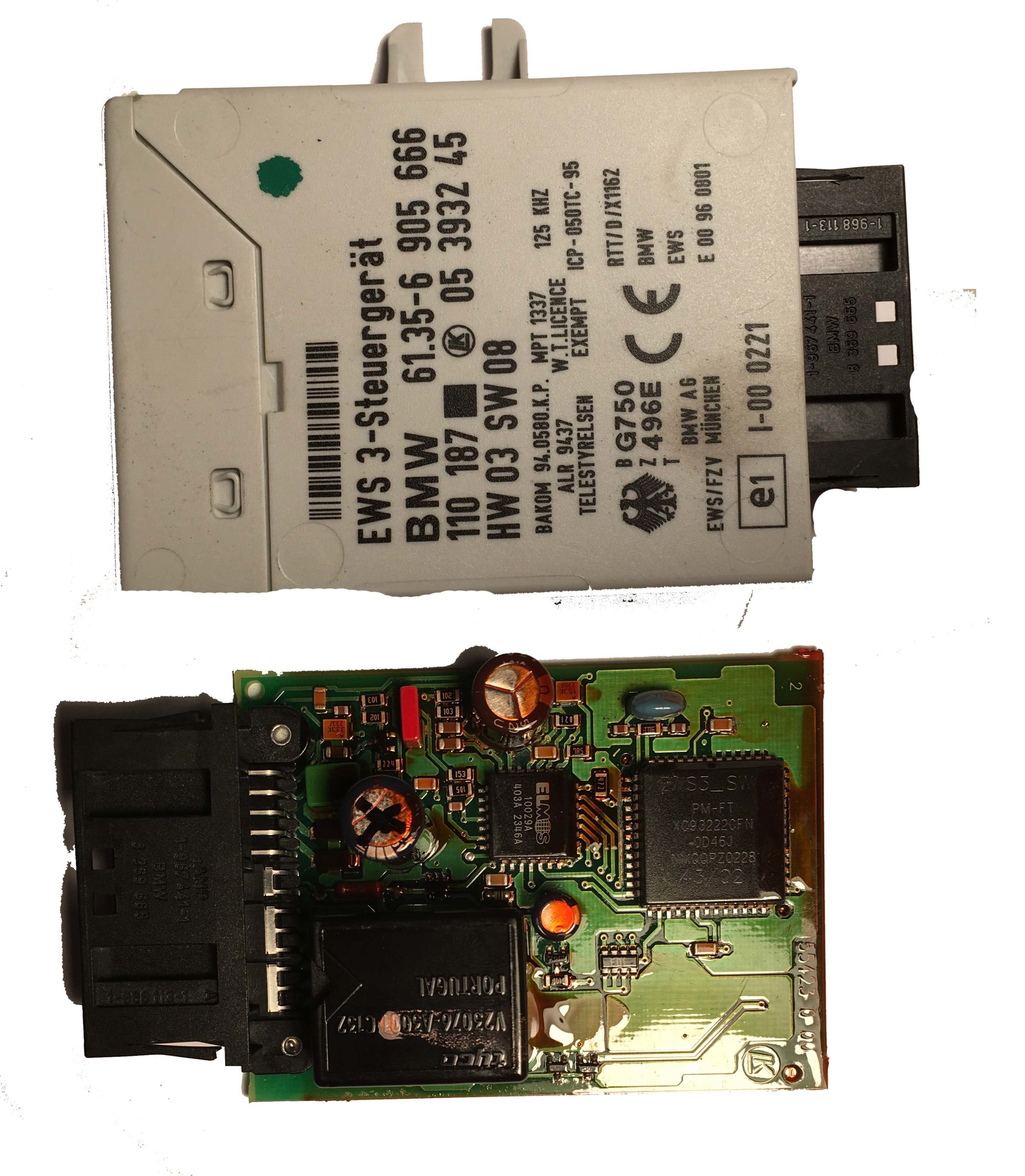
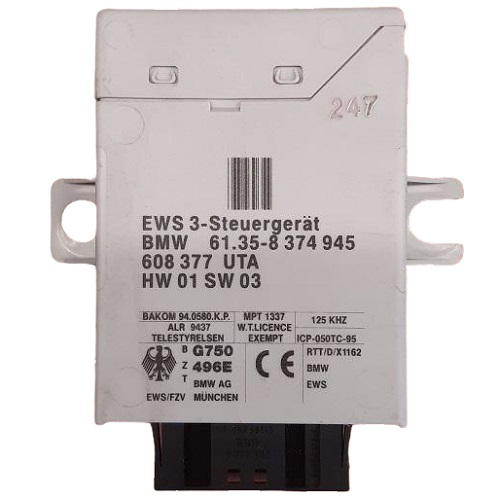
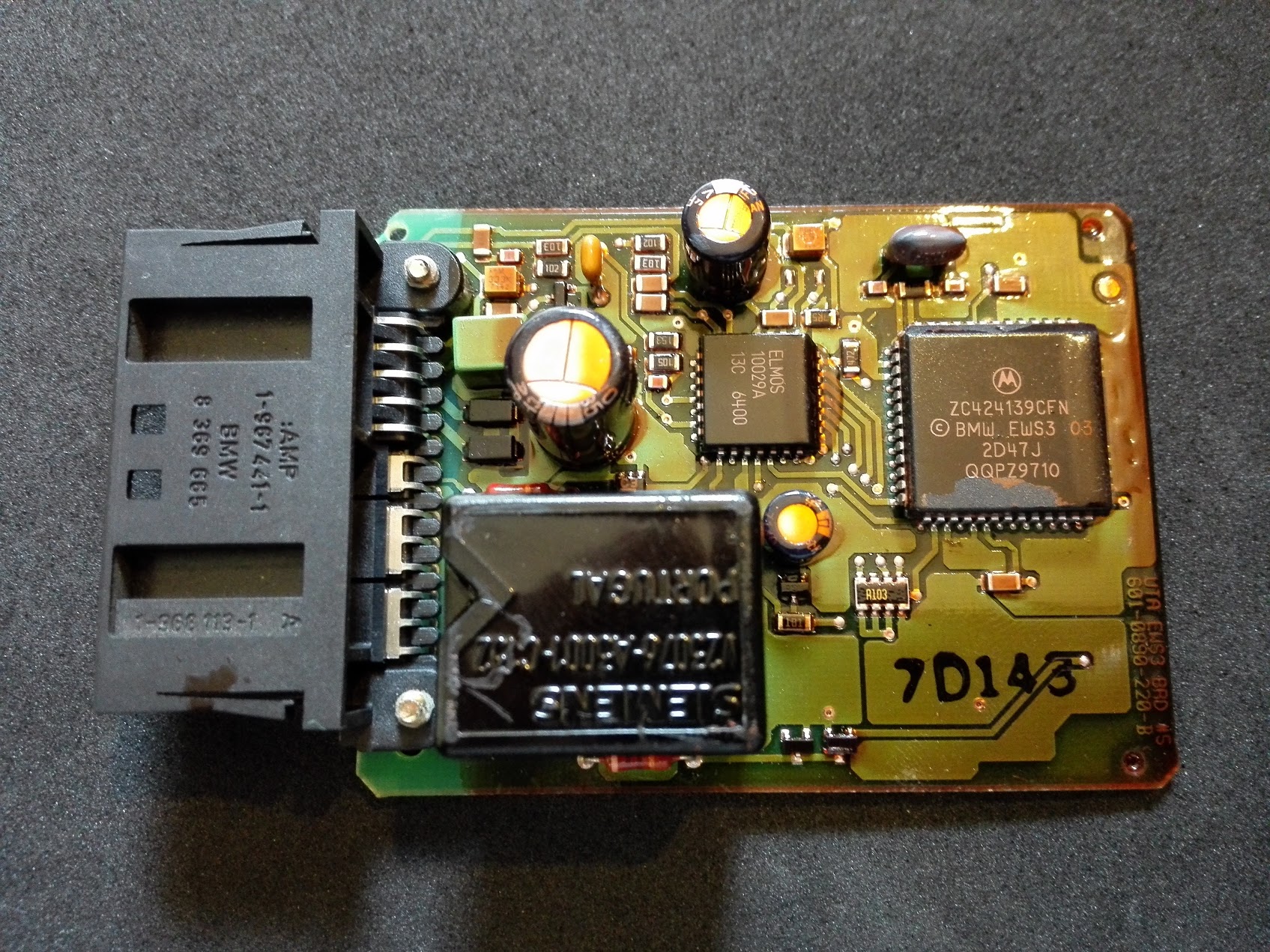
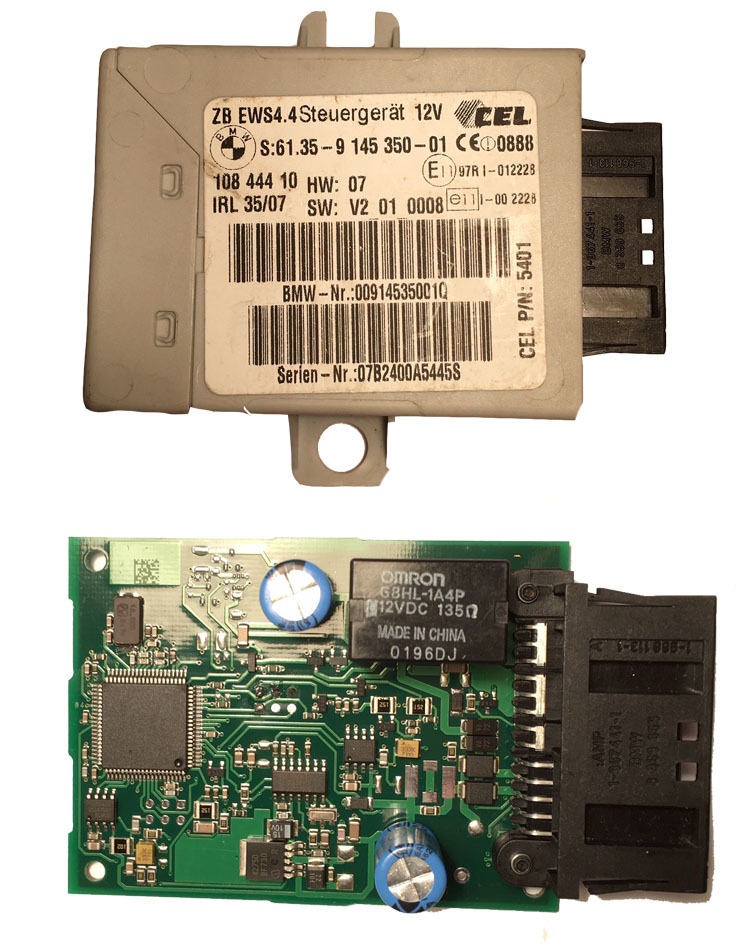
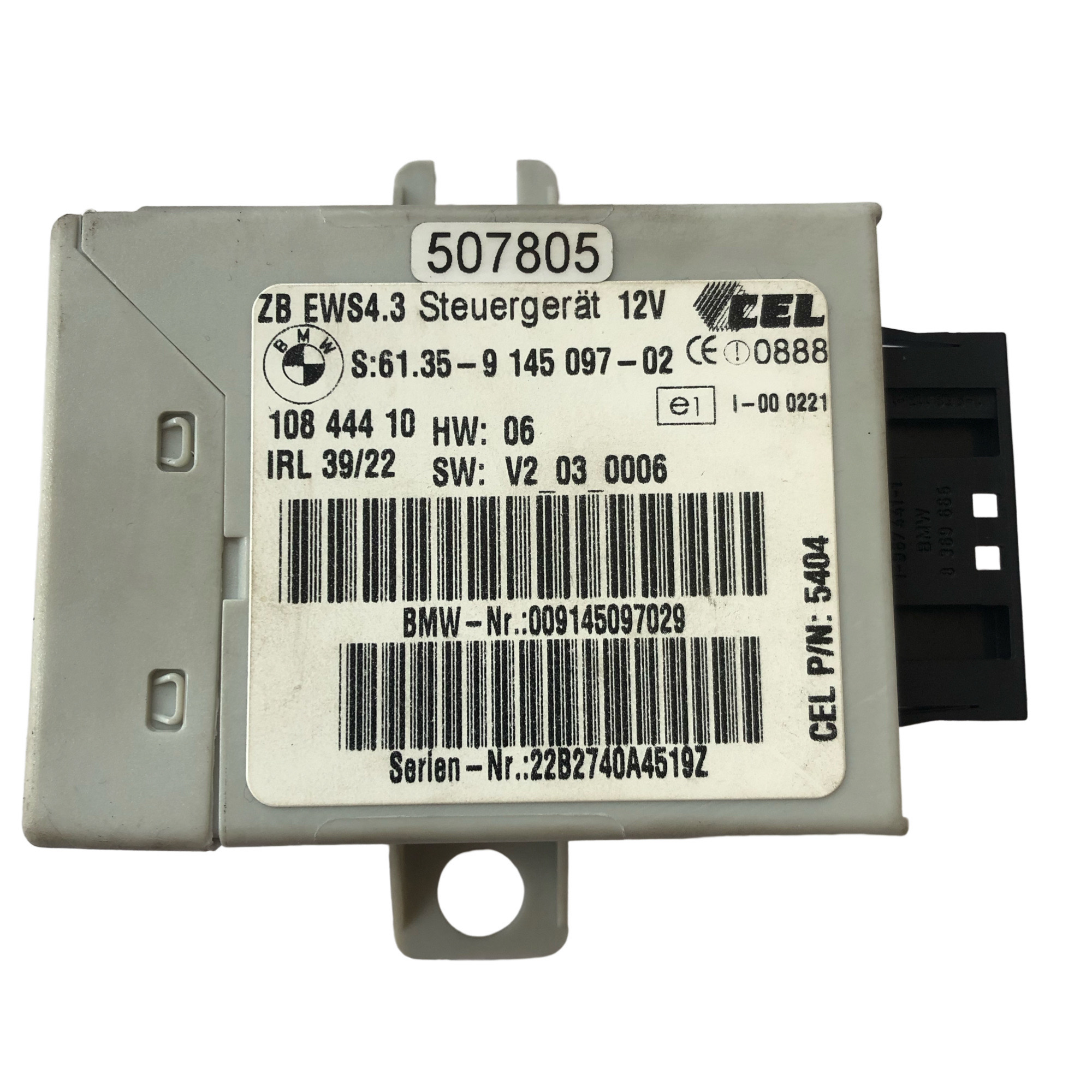
Compare the housing label, HW / SW version and chip marking. Photos are examples, and a matching case does not confirm the correct dump layout.
The key transponder is the chip inside the key; the module MCU is the processor on the EWS board. Chip references below describe common key families and documented replacement types. Confirm the original key with a transponder reader before choosing a replacement.
Abrites lists PCF7935 or ELMOS for EWS4. Vehicle catalogues also group ID46 / PCF7936 and PCF7944AT entries under EWS3.x / EWS4.x; these are not interchangeable by name alone.
Module MCU
Motorola / Freescale MC9S12 (HCS12) family
Common mask
2L86D
Package
Fine-pitch QFP MCU
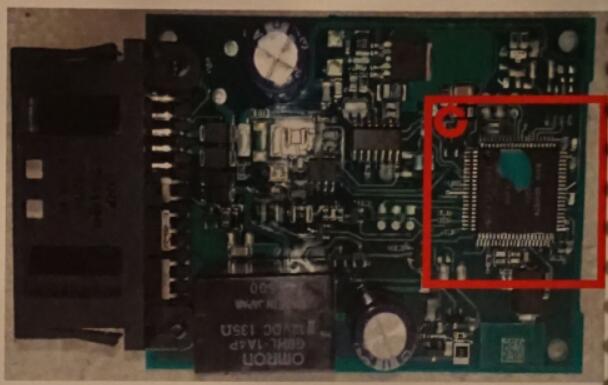
PCB pictured
EWS4.3 example, with the MCU outlined by the source.
EWS4 is used as a family name. Keep the full 4.3 or 4.4 designation and HW / SW information when identifying a module.
Use the EWS4 family references and identify the original key. The 4.3 housing label alone does not establish its chip type.
Module MCU
Motorola / Freescale MC9S12 (HCS12) family
Common mask
2L86D
Example label
61.35-9 145 097-02 · HW 06
Software shown
V2 03 0006 · CEL P/N 5404
The PCB photo is from a different EWS4.3 unit. Board details and component placement can vary with the hardware revision.
Which cars use BMW EWS?
Typical applications are listed below. Production dates, market specifications and replacement modules can change the fitted version. EWS3 / EWS4 catalogue ranges overlap; confirm the module label and diagnostic identification.
BMW EWS generations by vehicle and reference year
Vehicle / chassis
Reference years or build dates
EWS generation
3 Series E36 / 5 Series E34
From January 1995 to end of production
EWS2
3 Series E46
1998–2006
EWS3 family; check later / replacement units
5 Series E39
Early cars / March 1997 / September 1997 onward
EWS2 → EWS3.2 → EWS3.3
7 Series E38
Early cars / September 1996 / May 1997 onward
EWS2 → EWS3.2 → EWS3.3
X3 E83
2004–2010
EWS3 / EWS4 catalogue overlap
X5 E53
1999–2006
EWS3 family; 2005–2006 also listed as EWS3+
Z3
1996–1998 / 1999–2002
EWS2 → EWS3D
Z4 E85 / E86
2002–2008
EWS3 family
Z8 E52
2000–2003
EWS3-family application
MINI Cooper
2001–2006 reference range
EWS3 / EWS4; confirm the build and unit
Range Rover
2003–2005 reference range
BMW-derived EWS3
EWS4.3 and EWS4.4 are not separated reliably in broad model/year catalogues: use the complete BMW part number. The later Z4 E89 (2009–2016) uses CAS3+; see the CAS module guide.
Key and vehicle references: Transpondery BMW catalogue, American Key Supply EWS guide, Autoklíče Praha, BMW EWS training and Abrites BMW documentation. MCU means microcontroller; 2D47J and 2L86D are processor mask identifiers. Photos are credited above. Reference checked 24 September 2026.


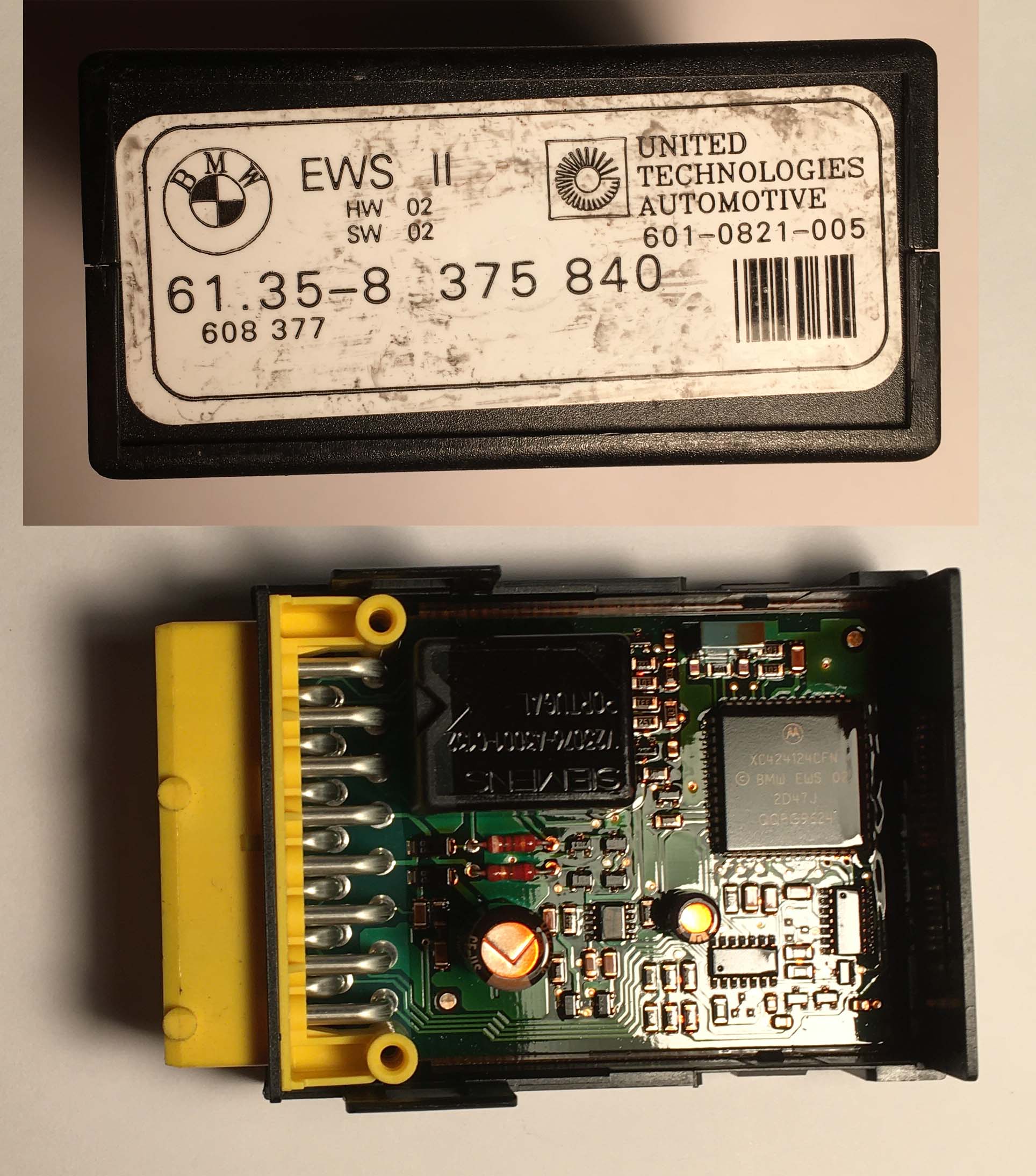 Photo unavailable. Try the full-size photo.