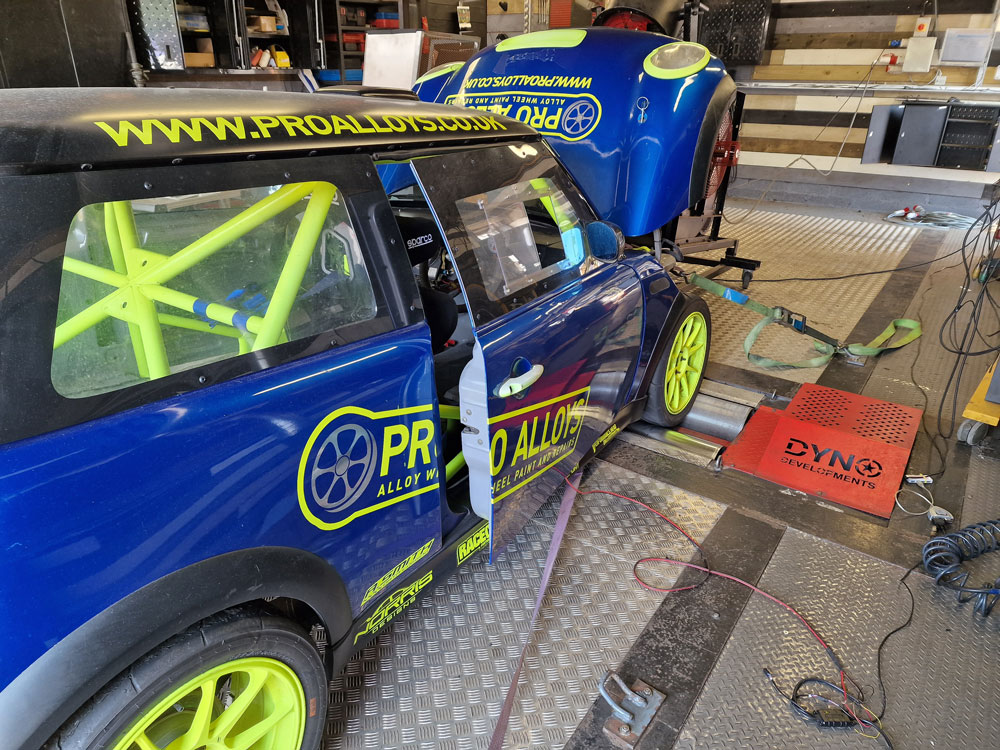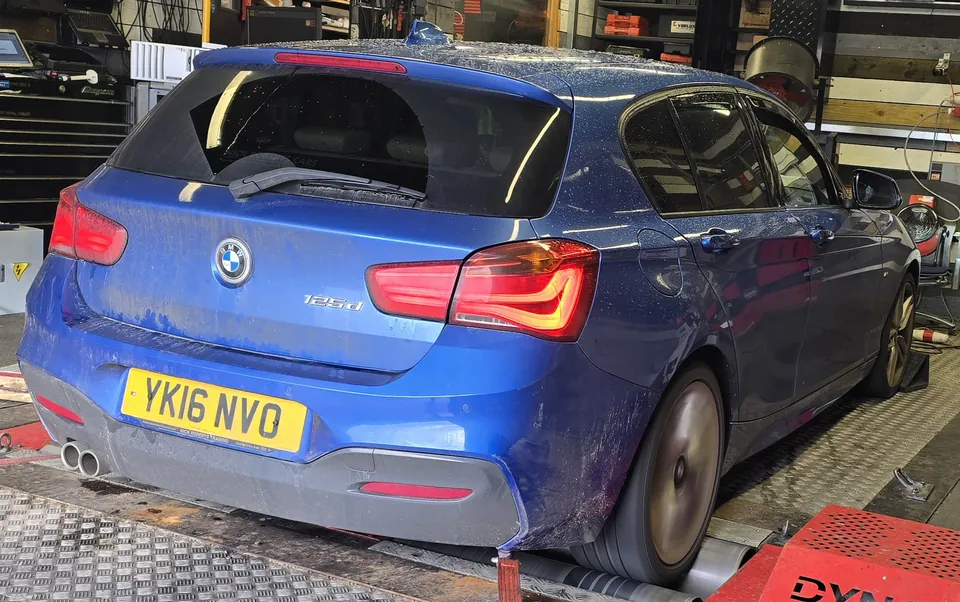

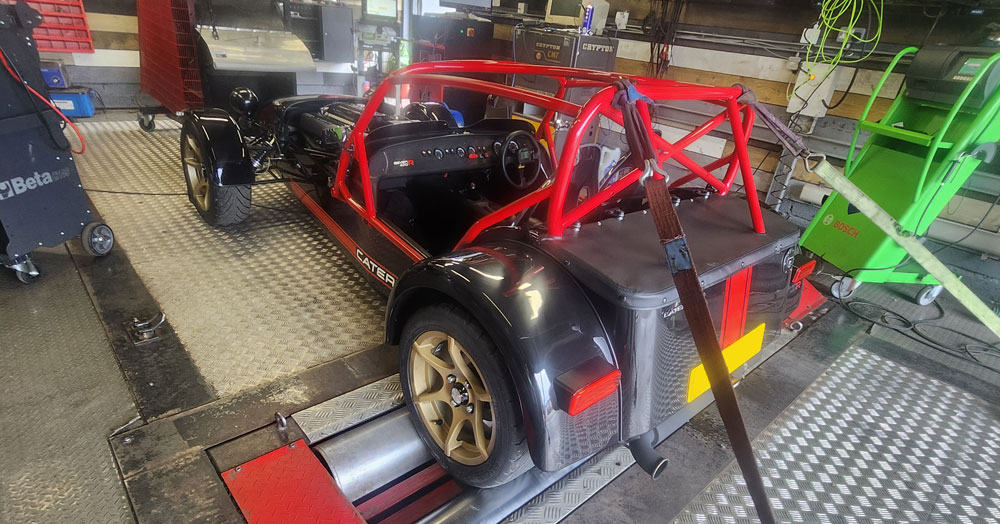
A rolling road is for seeing what the engine is doing under load. The number at the end of the pull is the least interesting part of the session.
On the dyno the car is held in gear, the load is applied, and we can watch boost, fuelling, temperatures and the way the torque arrives. That is how a calibration is checked, and how a car that “doesn’t feel right” is separated into a file problem or a mechanical one. A road test cannot hold the same load for long enough to see it cleanly.
The two cells
Cell one is a Dyno Developments 2WD rolling road, rated to 1200 hp, with 15 kW of fan cooling. It is the bookable cell. Cell two is a MAHA LPS 2000 4WD dyno, with fan cooling, and it is available. A four-wheel-drive car, or a car that will not give a fair pull in two-wheel drive, belongs on cell two. We confirm which cell the car needs when you book.
What a session is, and what it is not
A session is not a guaranteed peak figure, and it is not a repair. If the car is boosting into a leak, limiting on temperature, or pulling boost back because of a fault, the graph shows that. Fixing it is separate work. We would rather stop and say so than keep pulling a car that is already protecting itself.
Not every Stage 1 calibration needs an hour of pulls. The road and the logs tell us a lot. The dyno is there when the question is how the engine answers under a known load, or when a calibration has to be revised against that load before the car leaves. If you want a session, or you want a calibration checked on the rollers, call 01446 355001 or send the registration.