
A good off-the-shelf map can be the right choice. The useful question is whether your car matches the car that map was written for, and whether anyone checked after it was installed.
Off-the-shelf means the calibration was developed for a group of vehicles that share an engine and a hardware level, then installed many times. When the car really is that specification, and it is healthy, a reputable file can be sensible. It is still a file written for a group. It is not adjusted on your turbo, your clutch or your exhaust treatment after it is in the car.
Where it stops being sensible
The car has already been apart. The intercooler, the exhaust, the turbo or the injectors are not the ones the file assumes. Or the car is tired: high mileage, a boost leak, a filter that does not regenerate, a clutch that slips when the torque arrives. An off-the-shelf file has no way to know any of that. Installing it anyway is how a reasonable product gets the blame for a car that was never a match.
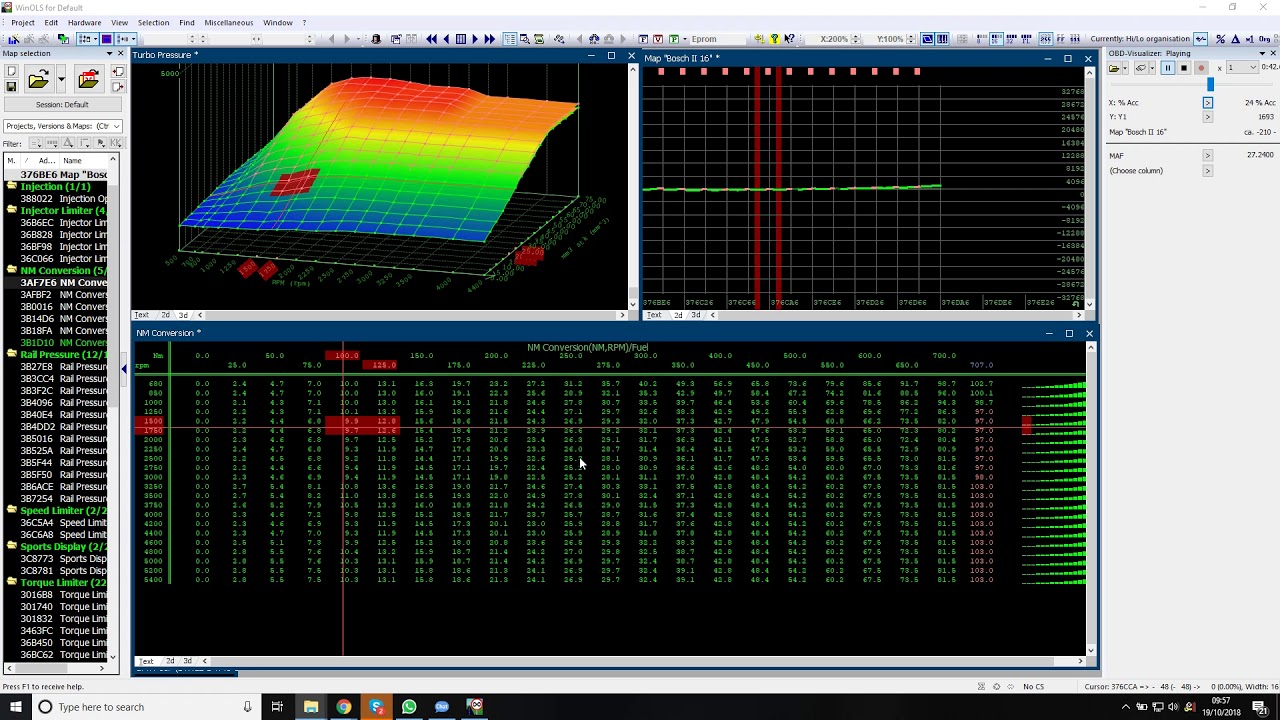
A file that was written automatically, or sent away and posted back, is a third category again. We have written separately about why we do not rate the new wave of automatic writers. A developed off-the-shelf product and a one-click file are not the same thing, even if both arrive through a laptop.
How we treat it
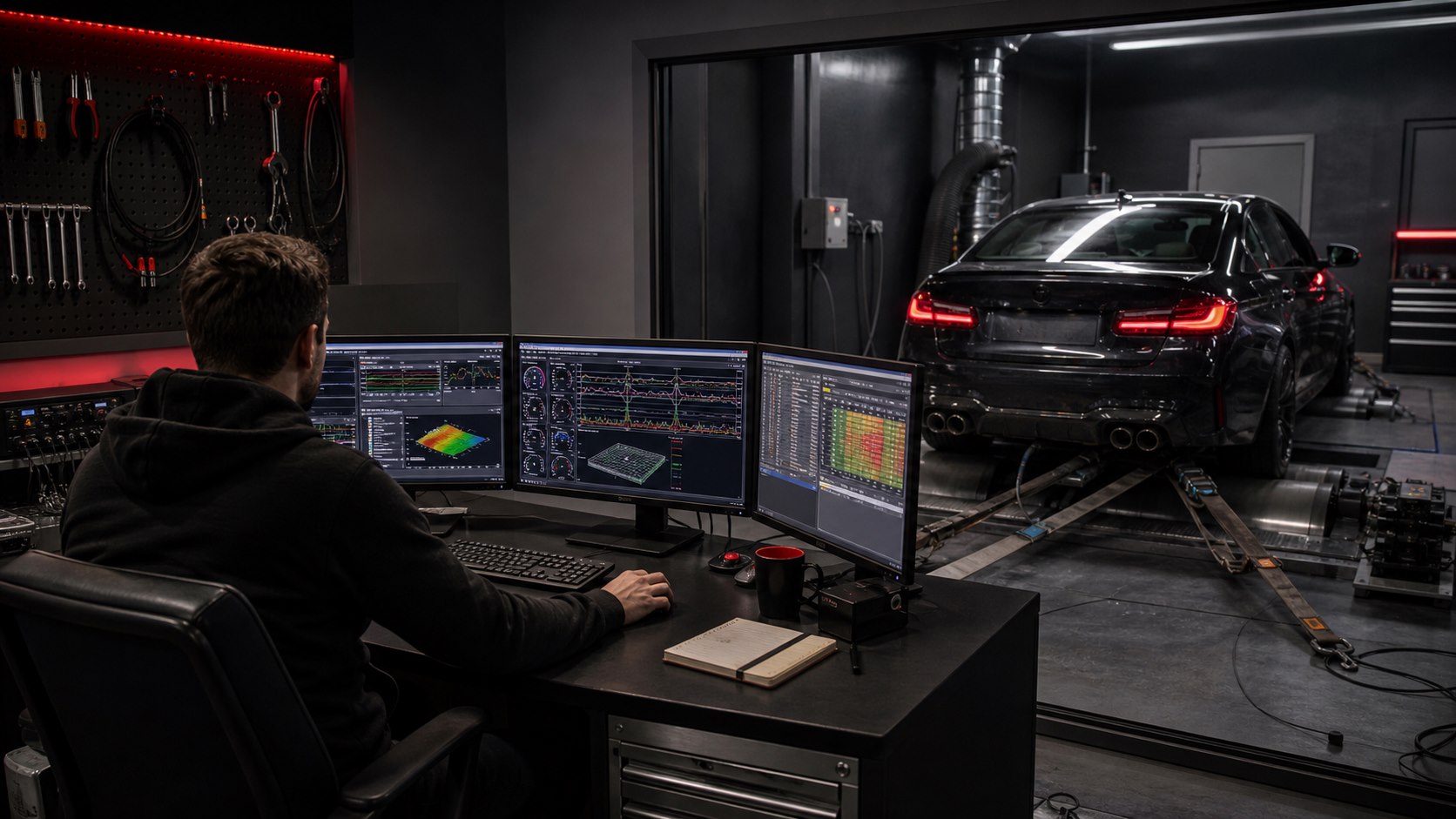
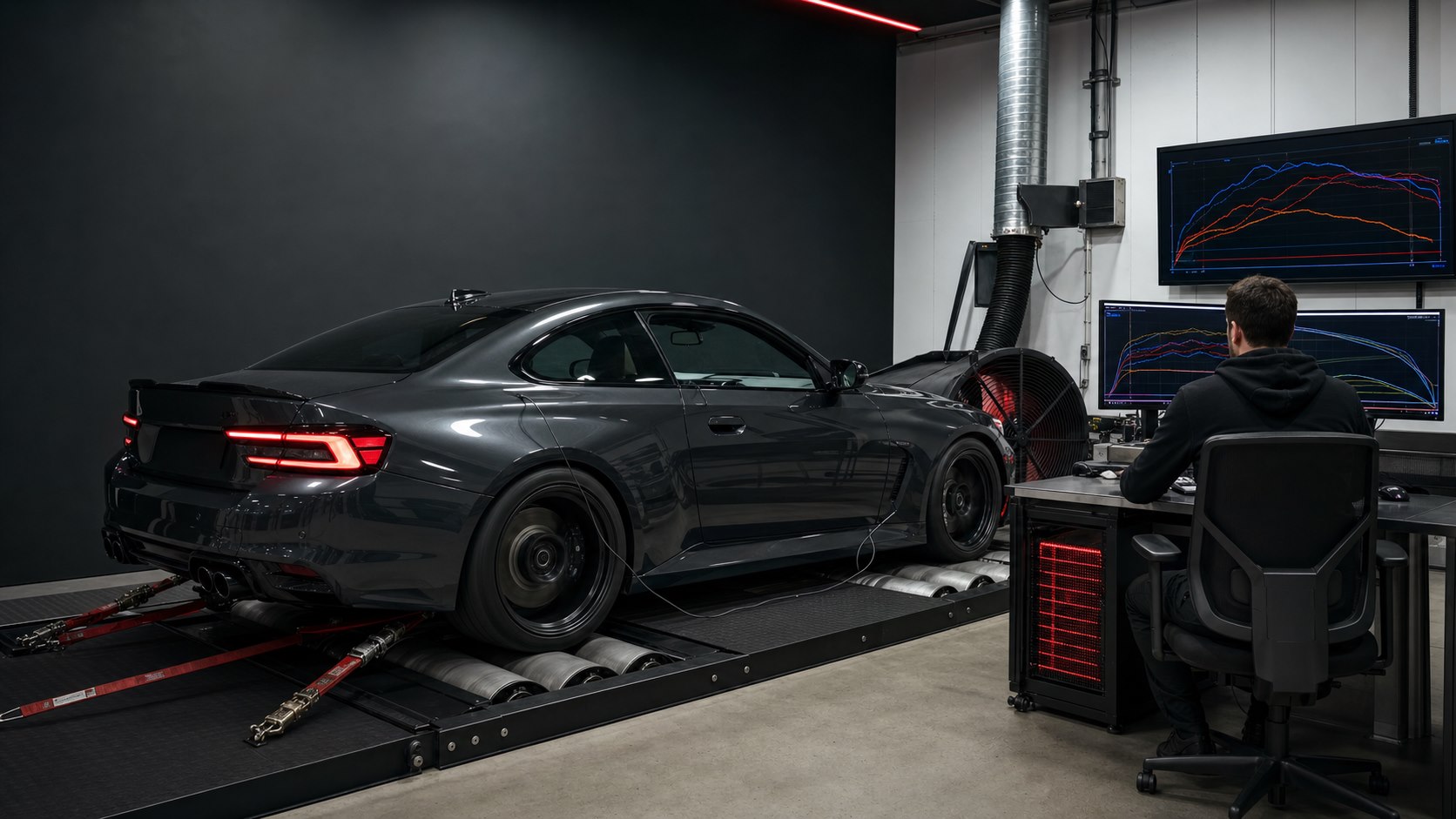
If the car matches a known file and you are happy with that route, say so. If you want the calibration written and checked at Llandow, with the car here, that is the work we do on the rolling road and in the workshop. Neither route is improved by pretending they are the same job.
The longer comparison is on the custom tuning page. If a file is already on the car and it does not feel right, bring it in rather than adding another one on top.