

Llandow workshop · South Wales

Transmission Diagnostics & DSG Guide in South Wales

Modern gearboxes combine mechanical components, electronic controls and software. At Llandow Tuning, we investigate how these work together to diagnose shift faults, vibration, noise and changes in driving behaviour, then agree the appropriate repair, adaptation or software work.
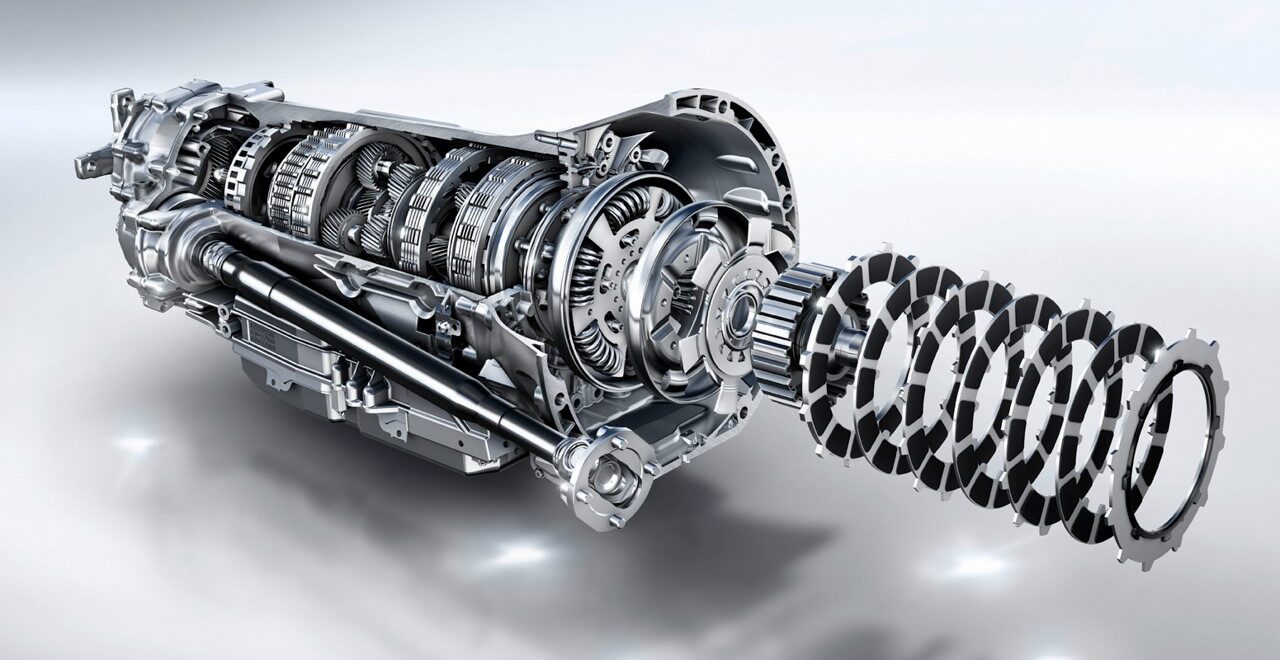
Search the VAG DSG and S tronic gearbox guide for family names, identification codes, hybrid variants and diagnostic information.

Gearbox software assessment at Llandow Tuning

Gearbox symptoms we investigate

  • Harsh, delayed or inconsistent shifts and engagement.
  • Slipping, engine-speed flare or hesitation when changing gear.
  • Judder or vibration pulling away, accelerating or cruising.
  • Whining, rumbling, rattling or knocking that changes with road speed or load.
  • Transmission warnings, limp mode or unavailable gears.
  • Problems after a repair, replacement gearbox, service or software change.

Tell us whether the problem occurs cold or hot, in a particular gear, while turning, on acceleration or on overrun. We welcome vehicle owners and garage referrals with existing test results.

Assess the hardware and the software

We first identify the transmission and its control unit, review the history and available fault information, and discuss a diagnostic plan. Depending on the gearbox and symptoms, investigation can include live data and logged road behaviour, electrical supplies and communication, fluid condition or leakage, and accessible mechanical checks.

Clutch operation, hydraulic control, mechatronics, sensors and the transmission controller can all be relevant. We also consider the engine's torque delivery and related driveline components. The tests depend on the evidence and the access available for the exact vehicle.

Our focus includes supported DSG, DCT and modern automatic transmissions. Manual gearbox and related clutch or drivetrain noise enquiries are also welcome; contact us to agree the scope.

Transmission adaptations and basic settings

Some gearboxes use learned values and setup procedures for clutch engagement and shift control. After relevant repairs or component replacement, a supported adaptation or basic-setting procedure may be required.

We assess the current fault information, mechanical condition and vehicle-specific prerequisites before deciding whether adaptation is appropriate. A reset is not a general cure for wear, slipping or an unidentified fault. Where required, the work includes the relevant learning procedure and checks afterwards.

Remapping the transmission to change its behaviour

On supported gearboxes, TCU tuning can change aspects of shift behaviour, drive and sport mode strategy, clutch engagement or torque coordination. Tell us how you use the car and which behaviour you want to change so we can check what its hardware and software support.

Existing faults need investigation before a performance calibration is considered. An engine remap and transmission calibration should be assessed together. See our gearbox tuning page for this service, and coding and programming for supported module configuration work.

Adapting a gearbox to another car

A replacement or conversion needs the donor and recipient specifications checked before parts are purchased. We can assess the proposed gearbox, controller identity, software and coding requirements, vehicle communication and any relevant start-authorisation or pairing requirements.

Include the recipient registration, engine and current gearbox, donor details, transmission code and controller label numbers. Mechanical fit, ratios and drivetrain suitability matter alongside electronics. We agree feasibility and the required work for the individual project; coding alone cannot make incompatible hardware suitable.

Vibration and noise diagnosis

A vibration felt around the gearbox can originate elsewhere in the drivetrain. We compare when it occurs with road speed, engine speed, selected gear and load, then consider the relevant transmission, clutch or torque converter, mounts, driveshafts and differentials.

For applicable vehicles, related work includes xDrive and transfer-case assessment and Haldex diagnostics. Running irregularities may need engine diagnosis as part of the investigation.

From findings to the next step

We explain what the assessment establishes, what still needs investigation and the appropriate next work. Gearbox servicing, repair and rebuilds are available when suitable. Diagnostic time, dismantling, adaptations, software work and repairs are agreed according to the vehicle and findings.

If the vehicle cannot be driven safely to Llandow, contact us before arranging transport. Bring previous scans, service invoices and details of any programming or parts already fitted.

VAG DSG & S tronic gearbox search and diagnostics

Use this guide to understand the different Volkswagen Group dual-clutch gearboxes before discussing a fault, service, adaptation or software change. It covers the DQ and DL families, the main hybrid variants and a comparison with related PDK and other DCT designs.

Search a family name such as DQ381, a gearbox-type prefix such as 0B5, a vehicle example or a symptom. Examples refer to some versions of each model; the model name and number of gears alone do not identify the fitted transmission.

20 gearbox entries

DQ200

0AM / 0CW

DSG / S tronic

7 speeds
Dry clutches

Transverse

Smaller-engine, front-wheel-drive VW, Audi, SEAT and Škoda applications.

Identification and diagnostics: DQ200

Identify the version

The seven-speed dry-clutch DSG family. 0AM and 0CW identify different service generations. Dry describes the drive clutches; the gear train and hydraulic mechatronic unit still use oil.

Diagnostic focus

For pulling-away judder, missing gears or pressure-related faults, separate clutch behaviour from electrical supply, hydraulic control and gear selection. A pressure fault does not establish which component needs replacing.

Reference: Volkswagen SSP 390: 0AM.

DQ200e

0CG

DSG / S tronic

7 speeds
Dry clutches

Transverse

Earlier Volkswagen Jetta Hybrid applications.

Identification and diagnostics: DQ200e

Identify the version

An early hybrid adaptation with an electric-drive module and an additional engine-separating clutch. It is distinct from the later wet-clutch DQ400e. Volkswagen's Jetta training document specifies a 250 Nm transmission rating; a generic 400 Nm table entry should not be used for this unit.

Diagnostic focus

Establish whether the complaint involves ordinary gear changes, clutch engagement or the transition between electric and engine operation. Review the engine and hybrid-control findings alongside the transmission information.

Reference: Volkswagen SSP 890323: Jetta Hybrid.

DQ250

02E / 0D9

DSG / S tronic

6 speeds
Wet clutches

Transverse

Six-speed Golf, GTI, Audi TT/A3, Leon and Octavia DSG applications.

Identification and diagnostics: DQ250

Identify the version

The established six-speed wet-clutch family, available in front-wheel-drive and all-wheel-drive configurations. The gearbox type, final-drive arrangement and controller generation must be identified before choosing parts or software.

Diagnostic focus

With harsh changes, slipping or judder, compare clutch operation, hydraulic control, fluid history and engine torque delivery. Investigate a flywheel or driveline noise on its own evidence rather than attributing every rattle to the gearbox.

Reference: Volkswagen SSP 851403: 02E, Volkswagen SSP 850183: 0GC and its predecessors.

DQ380

0DE

DSG / S tronic

7 speeds
Wet clutches

Transverse

Chinese-market Volkswagen Group applications.

Identification and diagnostics: DQ380

Identify the version

The 0DE is part of the development path from the 0BH/0BT transmissions to the later 0GC. It is often grouped with DQ381 as DQ38x, but the exact product and controller identity still matter.

Diagnostic focus

For an imported vehicle, confirm market specification and the actual gearbox before applying another model's oil, adaptation procedure or calibration. Diagnostic work follows the fitted hardware and software.

Reference: Volkswagen SSP 850183: 0GC and its predecessors.

DQ381

0GC

DSG / S tronic

7 speeds
Wet clutches

Transverse

Later Golf GTI/R, Audi S3 and other MQB seven-speed applications.

Identification and diagnostics: DQ381

Identify the version

A seven-speed wet-clutch family with revised oil management and a mechanical main pump plus an electric auxiliary hydraulic pump. Front-wheel-drive and all-wheel-drive versions require their own identification.

Diagnostic focus

Compare temperatures, hydraulic operation, clutch behaviour and requested versus achieved gear selection. When a problem appears after start/stop operation or previous repairs, review pump control and the repair history as part of the evidence.

Reference: Volkswagen SSP 850183: 0GC and its predecessors.

DQ400e

0DD

DSG / S tronic

6 speeds
Wet clutches

Transverse

Golf GTE, Passat GTE and Audi A3 e-tron / related plug-in hybrids.

Identification and diagnostics: DQ400e

Identify the version

A six-speed hybrid DSG with an integrated electric motor and an engine-separating clutch as well as the two drive clutches. It has a different architecture and diagnostic context from the seven-speed DQ500.

Diagnostic focus

Describe whether the fault occurs in electric drive, engine drive or when the engine joins in. Engine, gearbox and electric-drive information may need to be assessed together before deciding what is at fault.

Reference: Volkswagen: Golf hybrid powertrains.

DQ400e evo

Confirm the exact service type

DSG / S tronic

6 speeds
Wet-clutch hybrid family

Transverse

Newer 1.5 TSI plug-in hybrids, including Passat eHybrid.

Identification and diagnostics: DQ400e evo

Identify the version

Volkswagen identifies DQ400e evo as its further-developed six-speed hybrid DSG. The sales-family name alone does not establish that an older 0DD unit, controller or service specification is interchangeable.

Diagnostic focus

Record the complete transmission and hybrid-system identification. For transition, drive or charging-related complaints, check which system stores the relevant faults and agree the available diagnostic scope for the vehicle.

Reference: Volkswagen: Passat DQ400e evo.

DQ500

0BT / 0BH / 0DL

DSG / S tronic

7 speeds
Wet clutches

Transverse

Transporter and selected higher-output applications, including RS3 and TT RS.

Identification and diagnostics: DQ500

Identify the version

The higher-capacity transverse seven-speed family. Commercial-vehicle and passenger-car service variants differ. An Audi 0DL gearbox can also contain a mechatronic unit whose part number begins 0GC: that prefix alone does not make the gearbox a DQ381.

Diagnostic focus

Review clutch slip, hydraulic control, operating temperature and the effect of load. On modified vehicles, obtain engine and TCU calibration details before recommending adaptations, repairs or further tuning.

Reference: Volkswagen SSP 850183: 0GC and its predecessors, Audi: 0DL transmission and mechatronic variants.

DL382

0CK / 0CL / 0CJ / 0DN / 0DP

DSG / S tronic

7 speeds
Wet clutches

Longitudinal

Selected Audi A4/A5/A6/Q5 and VW Phideon applications.

Identification and diagnostics: DL382

Identify the version

Audi's longitudinal family includes 7F front-wheel drive (0CK/0DN), 7Q quattro with a centre differential (0CL), and 7A quattro ultra (0CJ/0DP). These are different drivetrain arrangements, not interchangeable labels.

Diagnostic focus

Identify the drive version before interpreting engagement, leakage or vibration complaints. Gearbox control, separate oil systems and the relevant all-wheel-drive components can require different checks.

Reference: Audi SSP 678: DL382 series.

DL382+ / DL382plus

0HL

DSG / S tronic

7 speeds
Wet clutches

Longitudinal

Higher-torque DL382-series Audi applications.

Identification and diagnostics: DL382+ / DL382plus

Identify the version

The strengthened DL382plus variant is identified as 0HL / DL382plus-7A in Audi's training material. The plus suffix is significant when comparing clutches, controllers, parts and calibration support.

Diagnostic focus

Use the fitted software and hardware identifiers when investigating an adaptation failure or a post-repair fault. A procedure or update intended for another DL382 version may not apply.

Reference: Audi SSP 678: DL382 series.

DL382E

0DK

DSG / S tronic

7 speeds
Wet clutches

Longitudinal

Selected Audi longitudinal plug-in hybrid / TFSI e applications.

Identification and diagnostics: DL382E

Identify the version

The hybrid DL382E-7A incorporates an electric-drive module and engine-separating clutch. Audi describes it as the hybrid version of DL382plus-7A; it is separate from the transverse DQ400e.

Diagnostic focus

Investigate the relationship between engine starts, electric operation and gear engagement. The electric-drive controls and their cooling or lubrication information can be relevant alongside the usual gearbox findings.

Reference: Audi SSP 678: DL382 series.

DL382M

0CK / 0CJ, with exact generation checked

DSG / S tronic

7 speeds
Wet clutches

Longitudinal

Newer Audi PPC-platform MHEV plus applications.

Identification and diagnostics: DL382M

Identify the version

Audi's newer DL382M variants add a 48-volt powertrain generator to the gearbox output. They are not the same hybrid arrangement as DL382E. The reused 0CK/0CJ service names make model year and full controller identity especially important.

Diagnostic focus

Explain whether the problem involves shifts, recuperation, engine restarting or low-speed electric assistance. Review the coordinated gearbox and mild-hybrid operation rather than applying an older unit's settings by name alone.

Reference: Audi SSP 688: A5 type FU transmissions.

DL501

0B5

DSG / S tronic

7 speeds
Wet clutches

Longitudinal

Selected Audi quattro S tronic applications, including the B8-era A4/S4/A5/Q5.

Identification and diagnostics: DL501

Identify the version

The longitudinal 0B5 family uses separate hydraulic/clutch and mechanical gear-oil circuits. A seven-speed Audi badge does not establish whether the vehicle has this transmission or a DL382-series unit.

Diagnostic focus

Relate shift quality, clutch engagement, sensor information and leakage to the correct system. Service history should identify which oil circuit was worked on. Confirm the findings before recommending a mechatronic unit or internal work.

Reference: Audi SSP 429: 0B5 S tronic.

DL552 / DL552M

0F0

DSG / S tronic

7 speeds
Wet clutches

Longitudinal

Newer Audi PPC-platform higher-output applications.

Identification and diagnostics: DL552 / DL552M

Identify the version

Audi's DL552-7A has reinforced clutch and gear components and revised hydraulics. DL552M adds the MHEV plus powertrain generator. This is a seven-speed dual-clutch family; the similar AL552 name belongs to a different transmission type.

Diagnostic focus

Check the exact generation, the powertrain-generator equipment where fitted and the software history. For conversions or replacement controllers, assess compatibility across the complete drivetrain before agreeing the work.

Reference: Audi SSP 688: A5 type FU transmissions.

DL800

0BZ

DSG / S tronic

7 speeds
Wet clutches

Longitudinal / mid-engine

Audi R8 S tronic and related Lamborghini Huracán LDF applications.

Identification and diagnostics: DL800

Identify the version

Audi identifies the R8's 0BZ as DL800-7A: a seven-speed wet dual-clutch transmission for its mid-engine layout. Audi's training document lists Audi development and VW Kassel production. Do not infer an eight-speed unit from the DL800 name.

Diagnostic focus

Obtain the exact vehicle and gearbox identity before checking available work. Gear engagement, clutch operation, parking-lock control and the relevant driveline components should be distinguished; this reference entry does not guarantee service coverage for every application.

Reference: Audi SSP 643: R8 0BZ.

DQ511

No production fitment

Historical; not in production

10 speeds proposed
Wet-clutch proposal

Transverse proposal

Cancelled development project; historical reference only.

Identification and diagnostics: DQ511

Identify the version

DQ511 refers to a proposed ten-speed DSG project that did not enter series production. It is included to distinguish an often-repeated name from an actual gearbox fitted to a customer's vehicle.

Diagnostic focus

If a scan, advert or parts listing suggests DQ511, establish the real gearbox identity before proceeding. It should not be used as a production fitment or tuning-support claim.

Reference: Wikipedia: DSG variants and history.

Porsche PDK: 7-speed

Application-specific identification

Related DCT reference

7 speeds
Dual-clutch PDK

Application dependent

Selected 911, 718, earlier Panamera and combustion-engined Macan variants.

Identification and diagnostics: Porsche PDK: 7-speed

Identify the version

PDK is Porsche's dual-clutch name. Its seven-speed applications span different vehicle layouts and transmission designs, so they should not be treated as one interchangeable DSG gearbox.

Diagnostic focus

For a Porsche enquiry, supply the model generation and full transmission identification. We first check the available diagnostic or calibration support for that exact unit.

Reference: Porsche: seven- and eight-speed PDK.

Porsche PDK: 8-speed

Application-specific identification

Related DCT reference

8 speeds
Dual-clutch PDK

Application dependent

Later Panamera and 992-generation 911 PDK applications.

Identification and diagnostics: Porsche PDK: 8-speed

Identify the version

Porsche also uses eight-speed PDK transmissions. Eight forward gears therefore do not rule out a dual-clutch design, but neither do they identify a Volkswagen DSG family.

Diagnostic focus

Confirm the transmission generation and any hybrid equipment before discussing shift faults or software changes. A generic eight-speed DSG label is insufficient for parts, fluid or programming decisions.

Reference: Porsche: seven- and eight-speed PDK.

Lamborghini: 8-speed DCT

Application-specific identification

Related DCT reference

8 speeds
Dual-clutch DCT

Transverse / mid-engine

Newer Revuelto and Temerario hybrid powertrains.

Identification and diagnostics: Lamborghini: 8-speed DCT

Identify the version

These newer Lamborghini applications use an eight-speed dual-clutch design. Lamborghini describes the Temerario transmission as mounted transversely behind the engine; it is separate from the older seven-speed Huracán LDF.

Diagnostic focus

This is included for identification and comparison. Confirm workshop support for the particular vehicle before arranging work; its hybrid controls and layout require model-specific information.

Reference: Lamborghini: Temerario eight-speed DCT.

Bugatti: 7-speed DCT

Bespoke application

Related DCT reference

7 speeds
Dual-clutch DCT

Longitudinal / mid-engine

Veyron and Chiron-era bespoke transmissions.

Identification and diagnostics: Bugatti: 7-speed DCT

Identify the version

Bugatti's seven-speed dual-clutch transmissions belong to the wider history of Volkswagen Group transmission development. They are bespoke units, not passenger-car DQ200/DQ250 variants.

Diagnostic focus

This is a reference comparison rather than a claim that every listed vehicle can be accepted for workshop work. Identify the exact vehicle and required scope before making any service arrangements.

Reference: Bugatti: Veyron transmission.

A code prefix is a starting point, not a parts compatibility check. The entries show common service-type identifiers and selected applications. Full part numbers, suffixes, hardware and software versions, vehicle generation and drivetrain specification can change what fits and what procedures apply.

The historical DQ511 and related DCT entries are labelled separately. Inclusion is reference information; we confirm the diagnostic, repair or tuning work available for your exact gearbox before booking.

How to identify your DSG or S tronic gearbox

  • Vehicle details: send the registration, model year, engine, mileage and whether it is front-wheel drive or four-wheel drive. Tell us if the gearbox has been changed.
  • Transmission identification: a diagnostic scan can report controller part numbers, hardware and software versions and the transmission identification. Send the complete report where possible.
  • Build code and labels: the vehicle data sticker or gearbox label may include a gearbox build code. A three-letter build code, a service type such as 0AM, and a family name such as DQ200 describe different levels of identification.
  • Previous work: include invoices for oil services, clutches, flywheels, mechatronics, programming and adaptations. For a conversion, include the donor details and controller labels.

An engine-size rule or an online parts advert can suggest a family, but the fitted unit and vehicle data need to agree. Replacement gearboxes and shared controller prefixes make assumptions particularly unreliable.

What changes between dual-clutch gearboxes?

A DCT uses two clutches and two gear paths. One path can prepare a gear while the other transmits drive; the controls coordinate gear selection, clutch engagement and engine torque during the change.

Dry and wet: dry drive clutches are not immersed in oil. Wet multi-plate clutches use oil for their operation and cooling. A dry-clutch gearbox still has lubricated gears and hydraulic controls, so dry does not mean oil-free.

Transverse and longitudinal: the DQ families are associated with transverse installations; Audi's DL families are associated with longitudinal installations. Drive layout and hybrid equipment introduce further differences within a family.

DSG, S tronic and other names: DSG and S tronic cover multiple dual-clutch designs. A Tiptronic torque-converter automatic, Multitronic CVT or R tronic automated manual needs its own identification and diagnostic approach.

DSG and DCT symptoms: what we investigate

These are starting points for a diagnostic plan, not diagnoses from a symptom. We compare the complaint with fault information, measured behaviour and the vehicle's repair history, then agree the next tests.

Common dual-clutch transmission complaints and the areas that may need investigation
ComplaintAreas to assess, where relevant to the gearbox
Judder or hesitation pulling awayClutch engagement and slip, learned values, temperature, hydraulic control, flywheel behaviour and engine running quality. Note whether it happens hot, cold, uphill or when reversing.
Harsh shifts, delayed engagement or engine-speed flareRequested and actual gear, input/output speeds, clutch behaviour, fluid history, controller software and engine torque coordination. Explain which change is affected and at what load.
Flashing gear display, limp mode or missing gearsFull transmission faults and their recorded conditions, electrical supply, communication, speed/position signals and hydraulic or selector operation. Preserve the scan before clearing codes.
Whine, rattle, vibration or knockingHow the noise changes with engine speed, road speed, gear and load. Consider the flywheel, mounts, driveshafts, differentials and related drivetrain components as well as the transmission.
Problems after servicing or a previous repairCorrect parts and fluid specification, relevant level-check conditions, electrical connections, coding/software identity and any required basic settings or learning procedure.
Hybrid transition or electric-drive complaintWhether it occurs in electric operation, during an engine start or when combining both power sources. Engine, electric-drive and gearbox findings may need to be reviewed together.

Mechatronic faults and diagnostic codes

The mechatronic assembly combines transmission electronics and hydraulic control. On applicable DQ200 vehicles, codes such as P17BF, P189C or P0841 can make hydraulic-control investigation relevant. The full code text, controller identity and supporting measurements matter; the code alone does not prove an accumulator, pump or complete mechatronic unit is the required repair. Volkswagen's published campaign procedure shows why findings need to be evaluated for the applicable vehicle.

Send the exact fault text, scan date and symptoms, together with any earlier repair findings. We discuss the tests needed to distinguish a control issue, a clutch problem, a mechanical fault or a problem elsewhere in the drivetrain.

Our workshop is at Llandow Trading Estate, near Cowbridge and Llantwit Major, serving the Vale, Barry, Bridgend and the wider South Wales area. Garage referrals are welcome; include your measurements and repair history so the next investigation can build on them.

DSG servicing, adaptations and tuning questions

Does my seven-speed gearbox have dry or wet clutches?

Both designs exist. DQ200 uses dry drive clutches, while families such as DQ381, DQ500 and DL501 use wet clutches. Seven speeds alone cannot decide which oil, service or adaptation procedure is appropriate.

How often should a DSG or S tronic be serviced?

Use the maintenance requirements for the exact gearbox, vehicle, model year and market. Oil specifications, filters, separate circuits and level-setting procedures vary. We check the fitted transmission and service history before recommending gearbox servicing; one universal interval is not suitable for every family.

Can adaptations fix judder or harsh gear changes?

Basic settings and learned values can be relevant after specific repairs or replacement parts. We check faults, mechanical condition and the procedure's prerequisites first. Relearning cannot repair worn clutches, a leak or an unidentified mechanical problem.

Can a DSG remap change how my car drives?

On supported units, transmission software can alter shift strategy and aspects of clutch or torque coordination. Existing faults need investigation first, and the engine and gearbox calibrations need to work together. See gearbox remapping and tuning to discuss the behaviour you want to change.

What torque can my gearbox safely handle?

A family name or a quoted design rating does not establish a safe tuning limit for your car. Hardware revision, clutch condition, temperature management, use and both engine and TCU software matter. We assess the actual vehicle and supported work rather than publishing a blanket stage-based torque promise.

Can you code or adapt a replacement gearbox to a different car?

We first compare donor and recipient hardware, ratios, drivetrain layout, controller identity, communication and software requirements. Coding alone cannot make an incompatible gearbox fit or operate correctly. Send the details before purchasing conversion parts; supported configuration work is described on our coding and programming page.

Is an eight-speed VAG automatic a DSG?

The fitted transmission must be identified. Many eight-speed Tiptronic applications use a torque converter, while Porsche and newer Lamborghini applications can use eight-speed dual-clutch designs. DL800 is a seven-speed family, and DQ511 was a cancelled ten-speed project.

Sources and scope of this gearbox guide

Reviewed 7 October 2026. Written as an original workshop reference using the requested STR Performance guide and Wikipedia overview, with identification details checked against manufacturer training and technical information. Training documents describe particular generations; current vehicle-specific repair information takes precedence for workshop procedures.